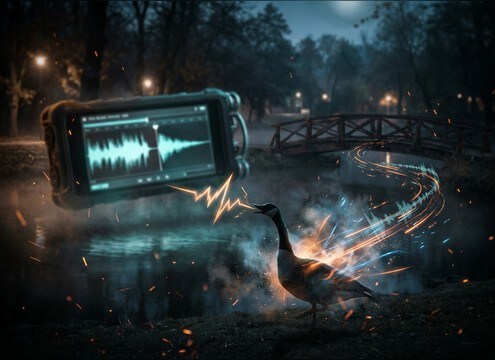
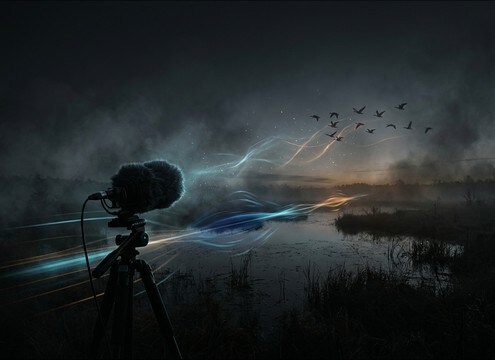

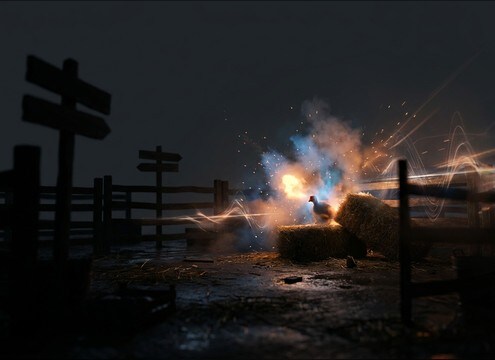
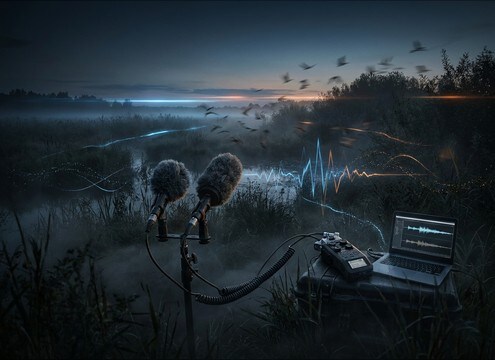
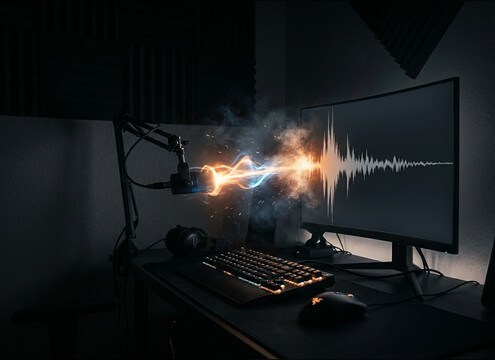


Goose honks can read as cute, aggressive, or purely environmental depending on attack sharpness, pitch wobble, and how much space you hear after the call. Use the library when you just need a clean single honk, and use prompts when you must match a specific on-screen distance, an off-screen flock, or a quiet park moment where the tail and room tone cannot distract.
Pick the perspective first (close vs distant)
The same goose call feels completely different depending on how present the transient is and whether the tail carries air and reflections. Decide whether the honk is on-camera, nearby off-screen, or far across water before you pick or generate.
- Close: sharper transient, more texture, less ambience
- Distant: softened attack, more air, longer perceived decay
- Ask for stereo width only if your scene is wide and outdoor
Control the emotion: calm, warning, or aggressive
A calm honk works as a location cue, while an aggressive burst becomes a comedic sting or a threat beat. Small prompt changes like intensity, repeat rate, and rasp amount can move the sound from cute to confrontational.
- Calm: moderate level, smoother envelope, fewer repeats
- Warning: single firm honk, short tail, minimal clutter
- Aggressive: repeated honks, raspy texture, stronger midrange
Match the space with tail and background tone
Outdoor honks often need a touch of air and consistent room tone so they do not feel pasted on. If your scene already has strong ambience, keep the honk tail tighter and avoid extra environmental noise.
- For quiet scenes, keep room tone subtle but not silent
- For busy scenes, reduce masking by choosing cleaner honks
- Avoid overly long tails that can smear into dialog or music
Build believable sequences (not just single hits)
If your shot shows multiple birds or ongoing action, a short pattern with natural pauses sells the moment better than looping one honk. Generate a call-and-response phrase and cut it to picture.
- Use 10s for a quick exchange, 20s for a short scene bed
- Vary intensity slightly across calls to avoid repetition
- Keep spacing irregular so it feels like real animal timing