





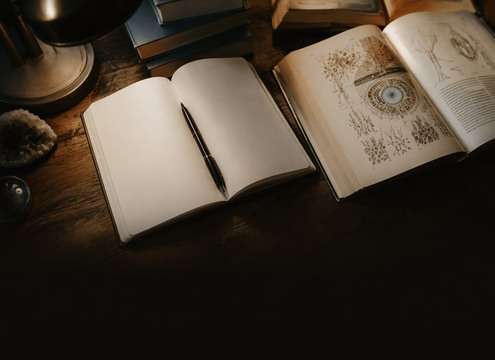



A page turn has a beginning contact, a sheet moving through the air and a landing. A book close has a much shorter attack and a heavier body.
What Makes a Page Turn Sound Natural?
For a book page turning sound effect, describe the page thickness and speed. A quick flip of glossy pages has sharper transients than a slow old-book turn. Small pauses between turns matter when the fingers are visible.
- Paper weight - Thin sheets flutter quickly; cardstock lands with more body.
- Wear - Dry aged pages can rasp, but should not sound like tearing.
- Binding tension - Old hardcovers may creak slightly as they open.
- Hand contact - A finger brushing the edge can give a close-up turn authenticity.
- Surface response - A wood desk, carpet and stone shelf all change a dropped book.
Pick the Right Book Foley for the Action
A hardcover book closing sound effect needs cover weight, contact with the pages and the surface below. If the scene is set in a library, a soft landing is more believable than a dramatic slam.
- Single thin-page turn - Best for one visible page flip in a quiet scene.
- Old manuscript rustle - Adds age to mystery or archive sequences.
- Fast paperback riffling - Conveys searching or impatience.
- Soft hardcover opening - Introduces a study session or diary scene.
- Heavy volume closing - Ends a chapter or dramatic discovery.
- Book dropped on desk - A grounded thud for a prop action.
- Leather spine creak - Communicates old binding before a page moves.
- Stack of books shifting - Works for library comedy or a cluttered shelf.