

Echo Sound Prompts: Tunnels, Caves & Receding Voices

The first sound tells you what happened; the reflections tell you where. Compare a tight interior bounce with a long open-air repeat and listen to the distance each suggests.

How to Generate Echo
Sound Effects with AI

Identify the original sound first, then describe the reflective environment. A tunnel, canyon and tiled bathroom should not share the same delay pattern or decay.

1

Open the AI Sound Effects Generator

Visit the Media.io AI Sound Effects Generator to create an original sound from a text description.

2

Enter a Sound Effect Prompt

Describe the sound you want. Example prompt: A single adult voice calling "Hello" into a huge limestone cavern; dry onset, one delayed low-volume return followed by irregular long natural reflections, no music. Adjust its source or acoustic detail to fit your scene.

3

Choose Duration and Generate

Select 5s, 10s, 20s or 40s, then choose 1, 2, 3 or 4 sounds to generate. Click Generate to create your variations.

4

Preview and Download

Listen for one recognizable original attack followed by believable reflections. Select the take that suggests the correct distance without washing out the action. Preview the result, then download and save your chosen sound effect.

Make a Voice or Footstep Feel Far Away: Where to Use the Sounds

Echo is a storytelling clue. These scenes use the gap and softness of a returning sound to signal scale, isolation and changing perspective.

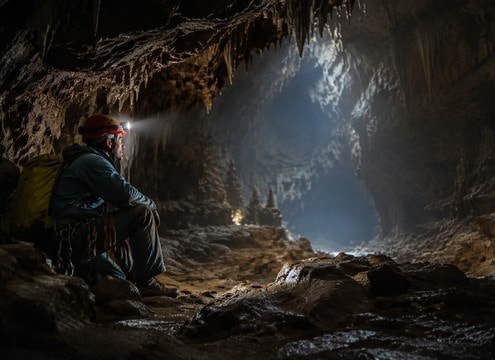
Cave dialogue scene for echo audio

Cave dialogue

A lost explorer calls into a cavern and hears one delayed reply, establishing enormous distance.

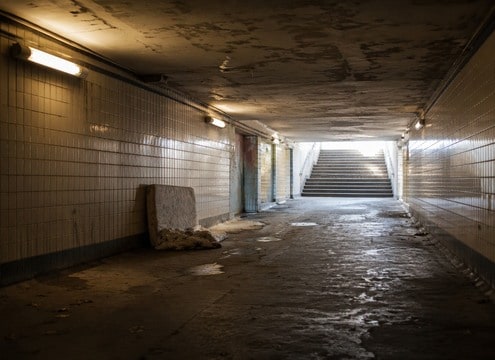
Subway passage scene for echo audio

Subway passage

Footsteps repeat along tile while the platform stays empty, making a quiet scene uncomfortable.

Mountain rescue scene for echo audio

Mountain rescue

A faraway shout returns from a cliff face before the camera finds its source.

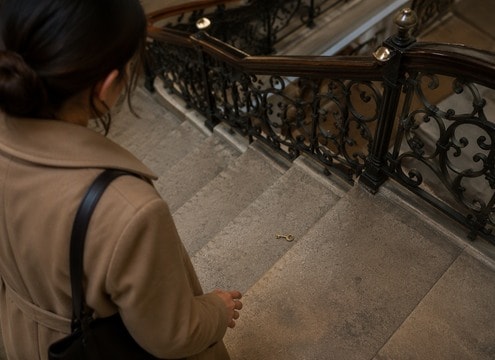
Stone stairwell scene for echo audio

Stone stairwell

A dropped key produces hard short reflections that reveal narrow concrete walls.

Dream transition scene for echo audio

Dream transition

An everyday phrase decays into a long airy echo as a character enters a memory.

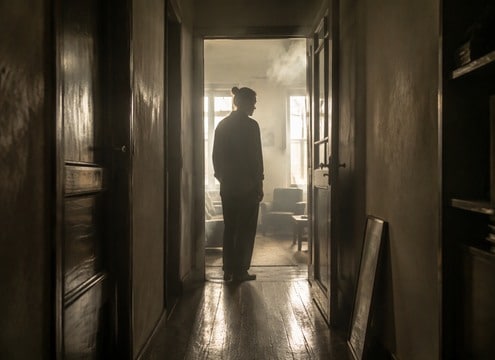
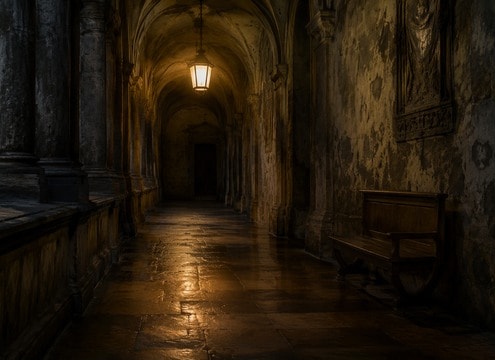
Haunted corridor scene for echo audio

Haunted corridor

A gentle metallic tap develops a hollow echo rather than an obvious monster cue.

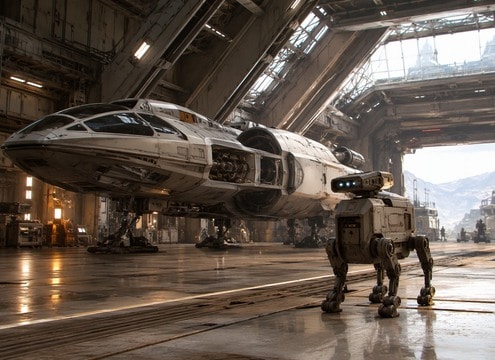
Sci-fi hangar scene for echo audio

Sci-fi hangar

A coded beep ricochets through a cavernous metal interior and anchors scale.

Podcast flashback scene for echo audio

Podcast flashback

A short spoken line shifts into a spacious acoustic perspective between scenes.

Hear the Space Before You See It

A useful echo has source, delay and decay. Change one of those variables and the perceived location changes with it.

Compare Cavern Call and Tiled Tunnel Footsteps

Give Caves Wide, Uneven Returns

Large irregular stone spaces can send a call back in separated, diminishing reflections. A neat studio-style slap delay would feel too artificial.

Set the Space for Cave dialogue

Make Tunnel Footsteps Tight and Hard

Tile and concrete reflect quickly and brightly. Keep the walker recognizable so the reflections are not mistaken for a second person behind them.

Describe Canyon Whistle Precisely

Let Canyons Stay Outdoors

A canyon whistle can return clearly once or twice against a quiet outdoor bed. Dense indoor-style reverb makes the open landscape feel enclosed.

Find the Beat in Subway passage

Use Small Metallic Sounds to Reveal Architecture

A key clink in a stairwell can map an unseen narrow space. The high-frequency attack makes each early reflection easier to hear.

Balance Distant Voice Fade

Shift Perspective for Dreams

An ordinary phrase can become uncanny when its delayed tail stretches while the dry voice recedes. Make the change gradual if the visual transition is soft.

Refine Abandoned Hall Knock

Keep Distance Distinct from Volume

A distant voice is not only quieter. Its reflections and brightness change too; lower the direct attack relative to its surroundings.

Echo Versus Reverb: What
the Listener Actually Hears

Echo and reverb are related, but not identical experiences. With echo, you can hear a separate return of the original event. Reverb blends many close reflections into a tail. A cave call, tile footstep and metallic hangar beep may all reflect, yet their surfaces and distances make each return different.

Write Reflections into the Sound Prompt

Describe a dry source, the surface or location, the number of audible returns and the tail length. For a voice in a canyon, one or two distant repeats are more specific than a generic request for a big echo.

  • Cavern Call - A single adult voice calling "Hello" into a huge limestone cavern; dry onset, one delayed low-volume return followed by irregular long natural reflections, no music.
  • Tiled Tunnel Footsteps - Three measured boot steps on tile; each step repeats quickly along a narrow underground passage, hard-wall reflections and quiet decay, no crowd.
  • Canyon Whistle - One clear human whistle projected over a rocky canyon, separated echo returning twice at decreasing levels, open-air background nearly silent.
  • Stairwell Key Clink - Small brass key falls on concrete, bright metal ping and three tight hard-wall stairwell repeats with natural decay, isolated.
  • Distant Voice Fade - Single wordless distant human call that grows more diffuse in an outdoor valley with gradual high-frequency loss and long delayed reflection.

Test the Sound at Scene Level

A long tail can obscure the next line of dialogue. Place the cue on the event, audition with the other tracks enabled and shorten reflections that outlast the camera move. Spaciousness should clarify location, not confuse sequence.

  • Cave dialogue - A lost explorer calls into a cavern and hears one delayed reply, establishing enormous distance.
  • Subway passage - Footsteps repeat along tile while the platform stays empty, making a quiet scene uncomfortable.
  • Mountain rescue - A faraway shout returns from a cliff face before the camera finds its source.
  • Stone stairwell - A dropped key produces hard short reflections that reveal narrow concrete walls.
  • Dream transition - An everyday phrase decays into a long airy echo as a character enters a memory.
  • Haunted corridor - A gentle metallic tap develops a hollow echo rather than an obvious monster cue.
  • Sci-fi hangar - A coded beep ricochets through a cavernous metal interior and anchors scale.
  • Podcast flashback - A short spoken line shifts into a spacious acoustic perspective between scenes.

FAQs About Echo
Sound Effects

Clear answers about acoustic reflections, voice distance and matching echo to different spaces.

What is the difference between an echo and reverb?

An echo preserves a noticeably separate repeat, whereas reverb often blends many closely spaced reflections. A canyon call needs a clear delay; a tiled room may need a dense short tail.

How can I make a voice echo inside a tunnel?

Describe the original voice, hard surfaces, distance and repetition interval. Keep the first syllable audible, then add quick reflections rather than washing the entire phrase in reverb.

Can I create realistic echoing footsteps with AI?

Yes, try isolated steps on a named surface with repeated wall reflections. Check that the step timing remains believable and that the echo does not become a second walker.

Which echo works for a mountain or canyon scene?

Use one or two separated returns with less brightness than the original, rather than a dense indoor hall reverb. A very long fade can make the open space sound artificial.

What should an echo sound prompt include?

Identify a dry source, the reflecting location and how many clear repeats you want. Add delay length, perceived distance and an instruction to avoid music if you need a clean effect.

Can a small room have a noticeable echo?

A hard-surfaced room often produces short, bright reflections that blend into reverb. For separated repeats, a longer corridor or larger reflective space is usually more plausible.

How do I stop an echo effect from covering the next line?

Use fewer or quieter repeats, shorten the decay or place the effect earlier. Always audition with dialogue, not only as a solo sound.

More Sound Effects for
Cave dialogue and Beyond

Build the rest of the environment with footsteps, whispers, beeps or distant ambience while leaving the reflections audible.

sound

Radio Sound Effects

10+ free sounds
sound

Girl Voice Sound Effects

10+ free sounds
sound

Voice Sound Effects

10+ free sounds
sound

Police Radio Chatter Sound Effects

10+ free sounds
sound

Whisper Sound Effects

10+ free sounds
sound

Wind Sound Effect

10+ free sounds
sound

Radio Static Sound Effect

10+ free sounds
sound

Wind Chime Sound Effects

10+ free sounds
sound

Ding Ding Ding Sound Effects

10+ free sounds
sound

Transformer Sound Effects

10+ free sounds
sound

Cheering Sound Effects

10+ free sounds
sound

Breathe In Sound Effects

10+ free sounds
sound

Dinosaur Sound Effects

10+ free sounds
sound

Ringtone Sound Effects

10+ free sounds
sound

Cash Counting Machine Sound Effects

10+ free sounds
sound

All Sound Effects

Browse the full library
media.io

AI Video Generator star

Easily generate videos from text or images

Generate