
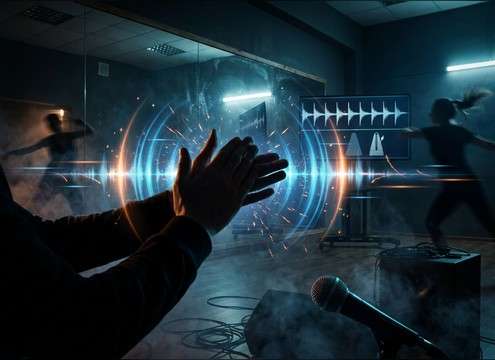


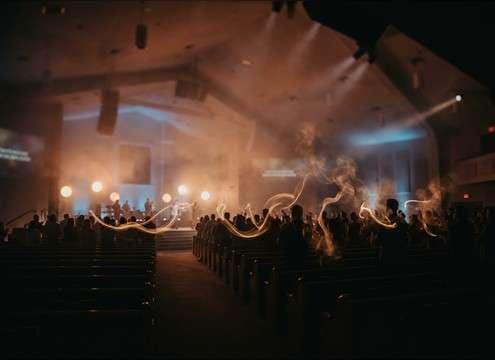


A good double-clap is all about timing clarity: the transient should read instantly, and the tail should match the space of your scene. Use the library to find a ready-made clip, or prompt the generator with details like spacing, distance, and room size to get a version that sits in your mix without sounding pasted in.
Decide the clap spacing and feel
"Clap-clap" can be a tight flam, two evenly spaced hits, or a cue-style double-tap. Your edit dictates which one sounds intentional.
- For quick cues, ask for "two quick claps with a tiny gap"
- For rehearsal counting, ask for "evenly spaced double claps at a steady pace"
- If it feels rushed, increase the gap slightly instead of making it louder
Match the space: dry vs room vs hall
Room tone and reflections change how believable the clap feels. A dry clap cuts through; a roomy clap helps sell a location.
- Dry/close-mic: minimal reflections, best under dialogue
- Small room: short decay and early reflections for indoor scenes
- Hall/distant: softer transient with longer decay for stage distance
Control transient snap and harshness
Claps are transient-heavy and can sound sharp on earbuds. Dialing the attack and brightness helps them translate across devices.
- Use words like "crisp transient" for definition or "soft attack" for gentler cues
- If it's too spiky, choose a softer version rather than boosting reverb
- Keep peaks consistent when you need repeated cues
Avoid common "fake clap" giveaways
Most claps fail because they have the wrong tail, unrealistic stereo width, or a cut-off that feels abrupt. Build prompts to prevent those artifacts.
- Avoid overly long decay unless you're clearly in a large space
- Don't over-widen stereo for a single person clap—save width for small groups
- Ask for a "clean cutoff with natural room tone" to prevent unnatural endings