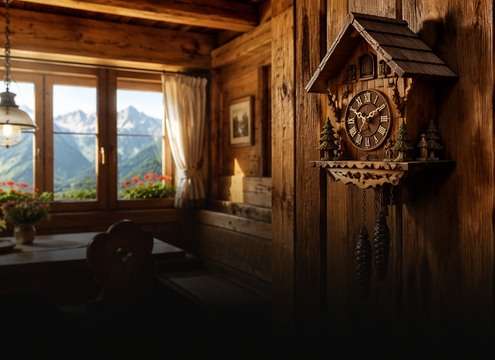
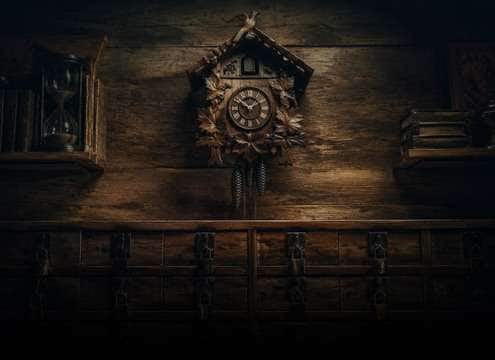
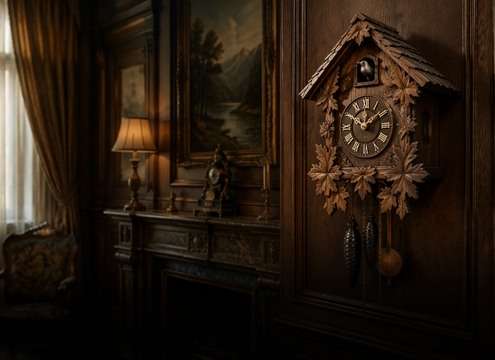
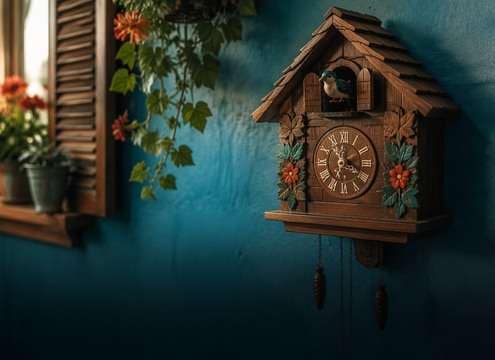
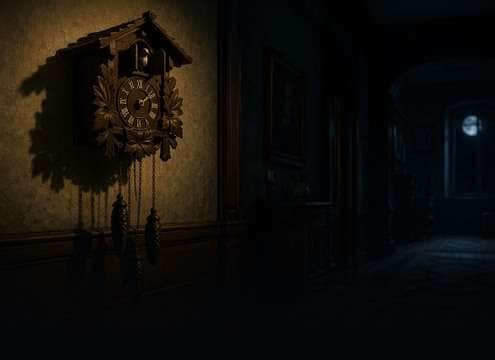
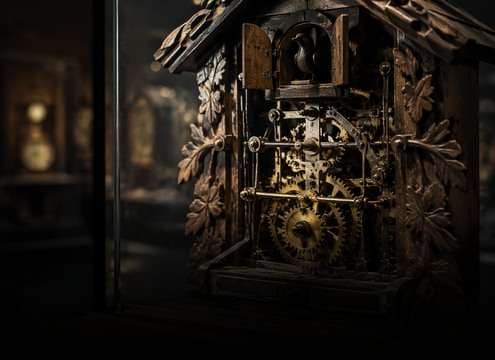
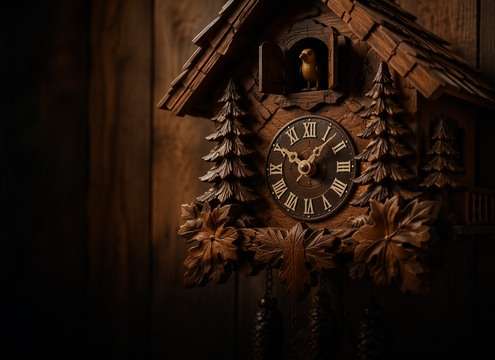
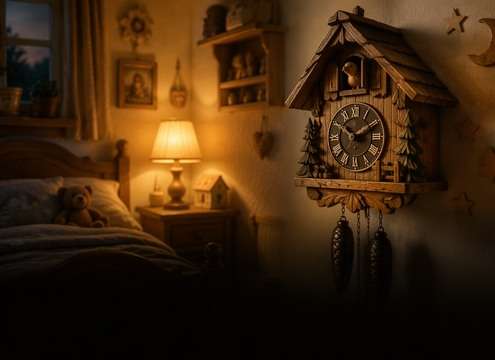


The distinctive sound is a small machine performing a repeated action. The sound should respect the order and spacing of its visible parts.
Clock Bird Versus Wild Cuckoo
A traditional cuckoo clock chime sound effect is a brief mechanical two-note call, not a full woodland bird recording. Add a slight wooden-box resonance and consistent repetitions when the camera shows the clock in a room.
- Pulse spacing - Pendulum ticks should be regular unless the clock is intentionally broken.
- Door click - A tiny mechanical release tells the listener that a bird hatch opened.
- Call pitch - The cuckoo has a recognizable two-note contour, not a random bird chirp.
- Wooden body - A carved clock resonates differently from metal bells.
- Room context - Kitchen, museum and hallway perspectives change how the chime carries.
Build a Believable Hourly Sequence
A cuckoo clock ticking sound effect can run quietly before the announcement. When the door opens, add a short click; after the call, return to pendulum movement. For suspense, a missing tick can do more than an extra loud chime.
- One cuckoo call - Fits a simple close-up mechanism demo.
- Two clock bird calls - Useful when the clock announces an hour.
- Bare pendulum ticking - Builds quiet atmosphere in a room.
- Clock hatch opening - Matches an animated wooden door moving.
- Winding key squeak - Shows human interaction with an older clock.
- Antique musical flourish - Suggests a decorative clock rather than a bare mechanism.
- Uneven broken ticking - Adds tension in a mystery or horror scene.
- Full clock sequence - Combines tick, hatch, bird call and return to stillness.