





Home>Comparison>Higgsfield AI

Higgsfield AI Video Generator Review

Higgsfield AI is best understood as a cinematic AI creative suite for motion-led visual experiments. It fits creators who care about camera movement, stylized image-to-video effects, mobile-friendly ideation, and high-impact visual concepts. Media.io is stronger when those cinematic tests need to become lightweight product videos, story clips, ad variants, music-led visuals, or social-ready assets with practical browser polish.

Core Features of Higgsfield AI

Higgsfield AI is an AI creative platform for generating cinematic images, videos, motion effects, and visual concepts from prompts or reference assets. It is mainly used by creators and marketers who want to test camera movement, stylized visuals, and short-form video ideas before final editing.

Core Feature Overview

  • Cinematic Camera Motion: Camera motion is Higgsfield AI's clearest strength, especially for stylized visual hooks, product teasers, fashion clips, and creator-first motion tests.
  • Image-to-Video Effects: Image-to-video effects help creators turn portraits, product frames, and reference images into short cinematic motion experiments.
  • Creator-First Presets: Creator-first presets speed up trend-style motion tests when teams want several visual directions before choosing a campaign route.
  • Mobile-Friendly Ideation: Mobile-friendly ideation supports fast creative exploration from prompts, saved images, references, and social trends.
Cinematic Camera Motion in Higgsfield AI

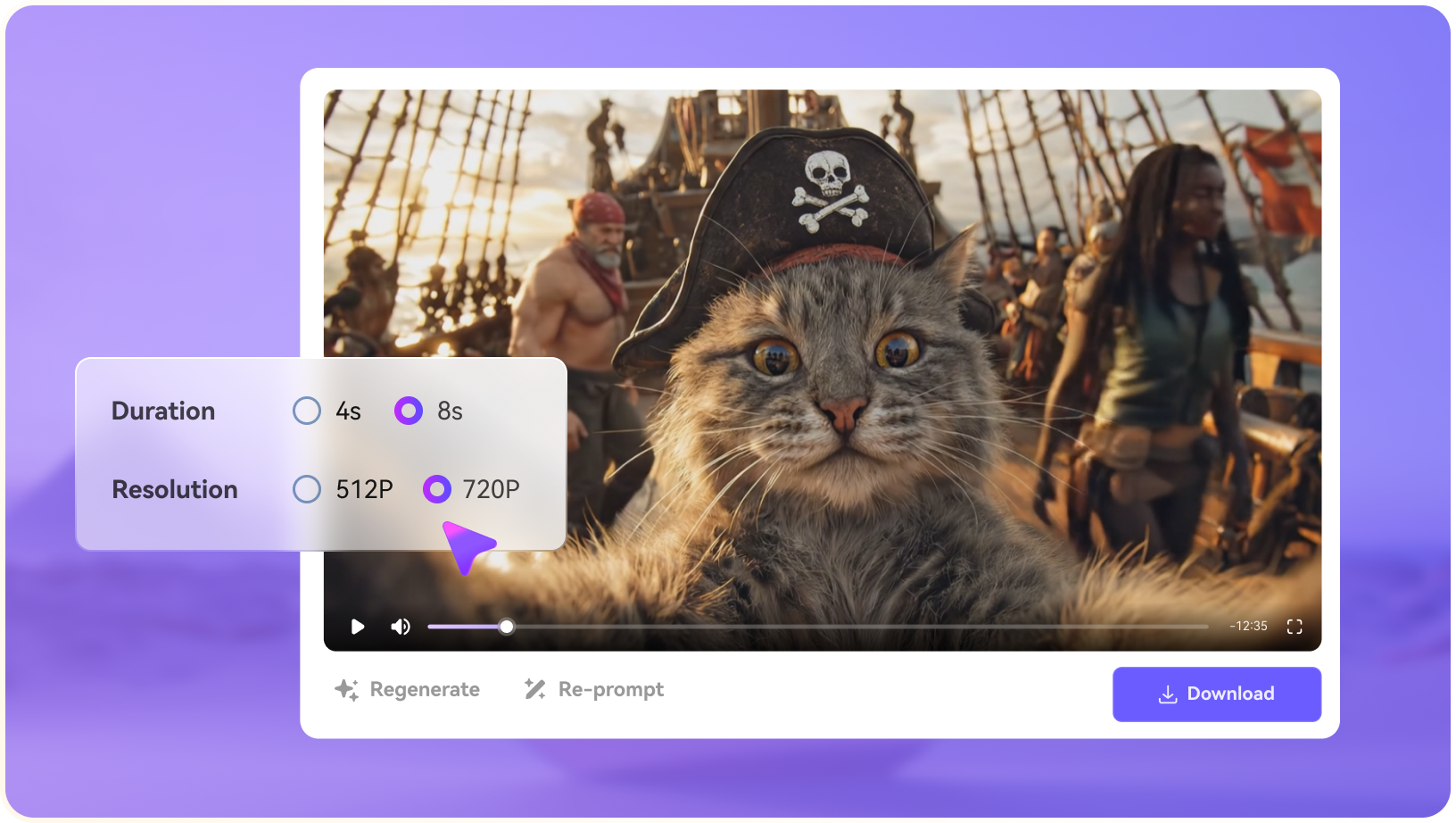
Higgsfield AI's cinematic camera motion is the clearest reason to evaluate the product: it helps creators test punch-ins, orbit moves, dolly-style motion, fashion-style camera language, and dramatic visual hooks from prompts or reference assets. That makes it useful for mood reels, creator concepts, beauty shots, product teasers, and short-form visual experiments where the motion itself is the creative idea. Media.io is a better comparison when the same visual direction needs to become a scenario-based asset, such as an ad variant, story opener, product clip, or music-led social video built from image-to-video, AI video effects, sound effects, and light polish.

Higgsfield AI Cinematic Camera Motion

Image-to-Video Effects in Higgsfield AI

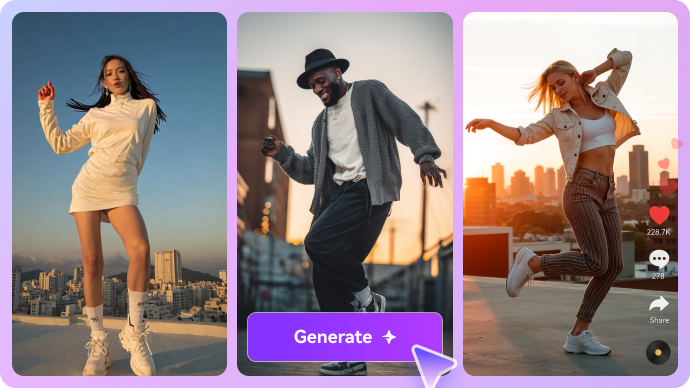
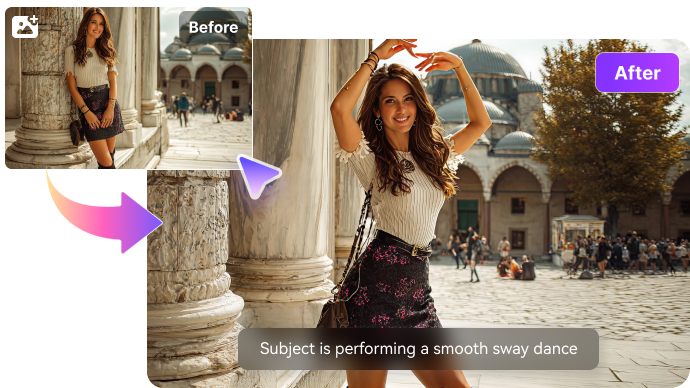
Image-to-video effects in Higgsfield AI are useful when the user already has a portrait, fashion shot, product frame, or visual reference and wants to see how it behaves with stylized motion. The strongest tests use real campaign assets instead of generic demo images, because image quality, composition, subject clarity, and camera intent strongly affect the result. Media.io AI Image to Video is the stronger Media.io entry point when creators want to animate a source image for a concrete scene, then add light support such as subtitles, sound, resizing, or export.

Higgsfield AI Image-to-Video Effects

Creator-First Presets in Higgsfield AI

Creator-first presets are valuable when speed and trend fit matter more than building a shot from scratch. They can help social creators, fashion marketers, and visual teams test several camera looks or effect directions before deciding which one deserves a campaign version. Media.io fits a different stage: AI Video Effects, AI Ad Generator, AI Music Video Generator, and AI Sound Effects Generator are more useful when the preset idea needs to become a product ad, music-led visual, or lightweight story asset.

Higgsfield AI Creator-First Presets

Mobile-Friendly Ideation in Higgsfield AI

Mobile-friendly ideation matters because many Higgsfield-style ideas start as fast creator experiments: a saved image, a reference frame, a short prompt, or a social trend that needs quick motion testing. That workflow is useful for creative direction, but teams still need to check whether the idea can carry a real message, offer, product, or story beat. Media.io is stronger when the team has moved from exploration to scenario creation and wants text-to-video, image-to-video, AI ad concepts, sound effects, or AI music video assets in a lightweight browser workflow.

Higgsfield AI Mobile-Friendly Ideation

How to Use Media.io AI Video Generator

1
2
3
1
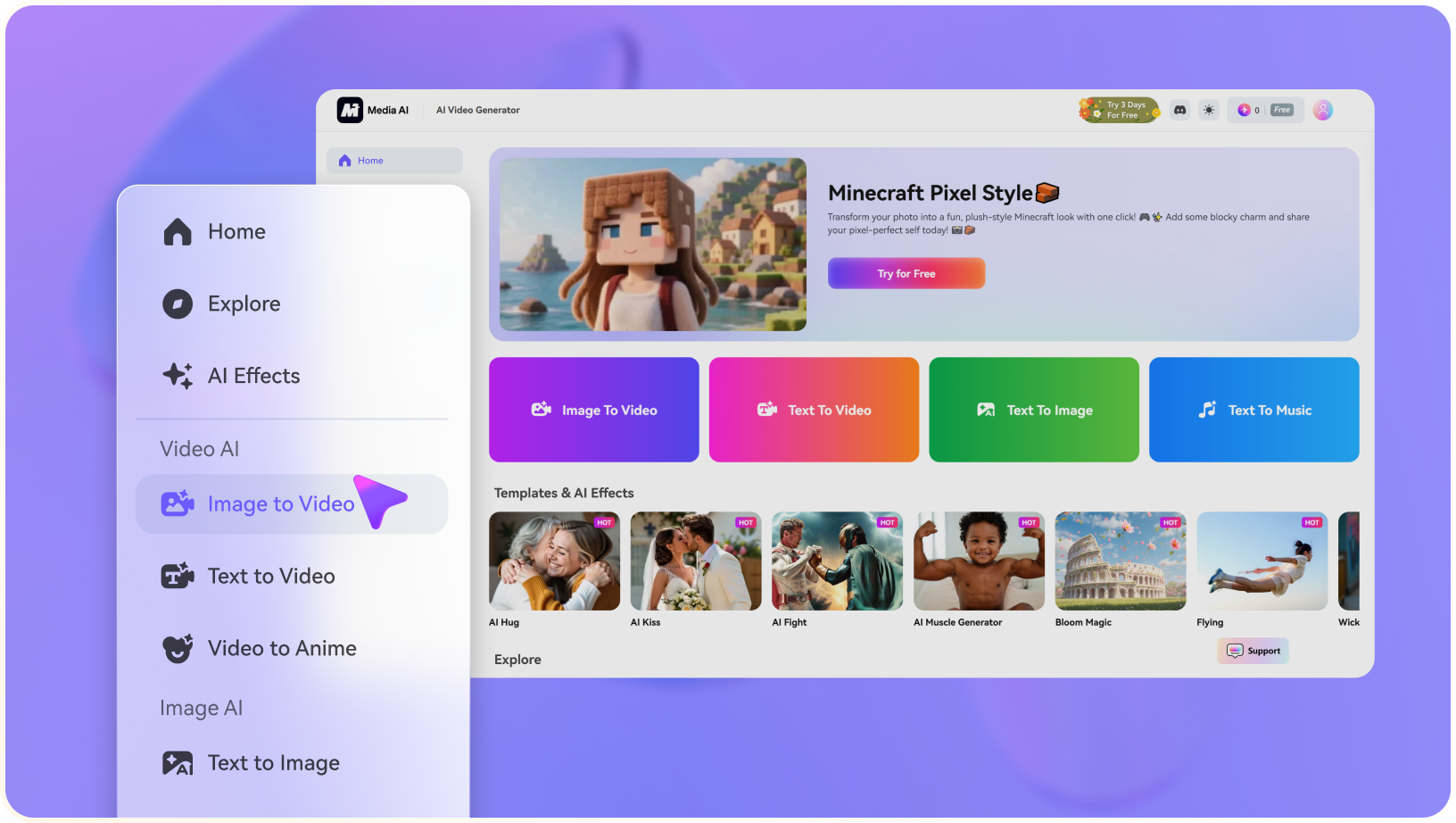
Step 1: Open Media.io and Choose Your Input

Launch Media.io AI Video Generator and choose whether to start from text or an image.

2
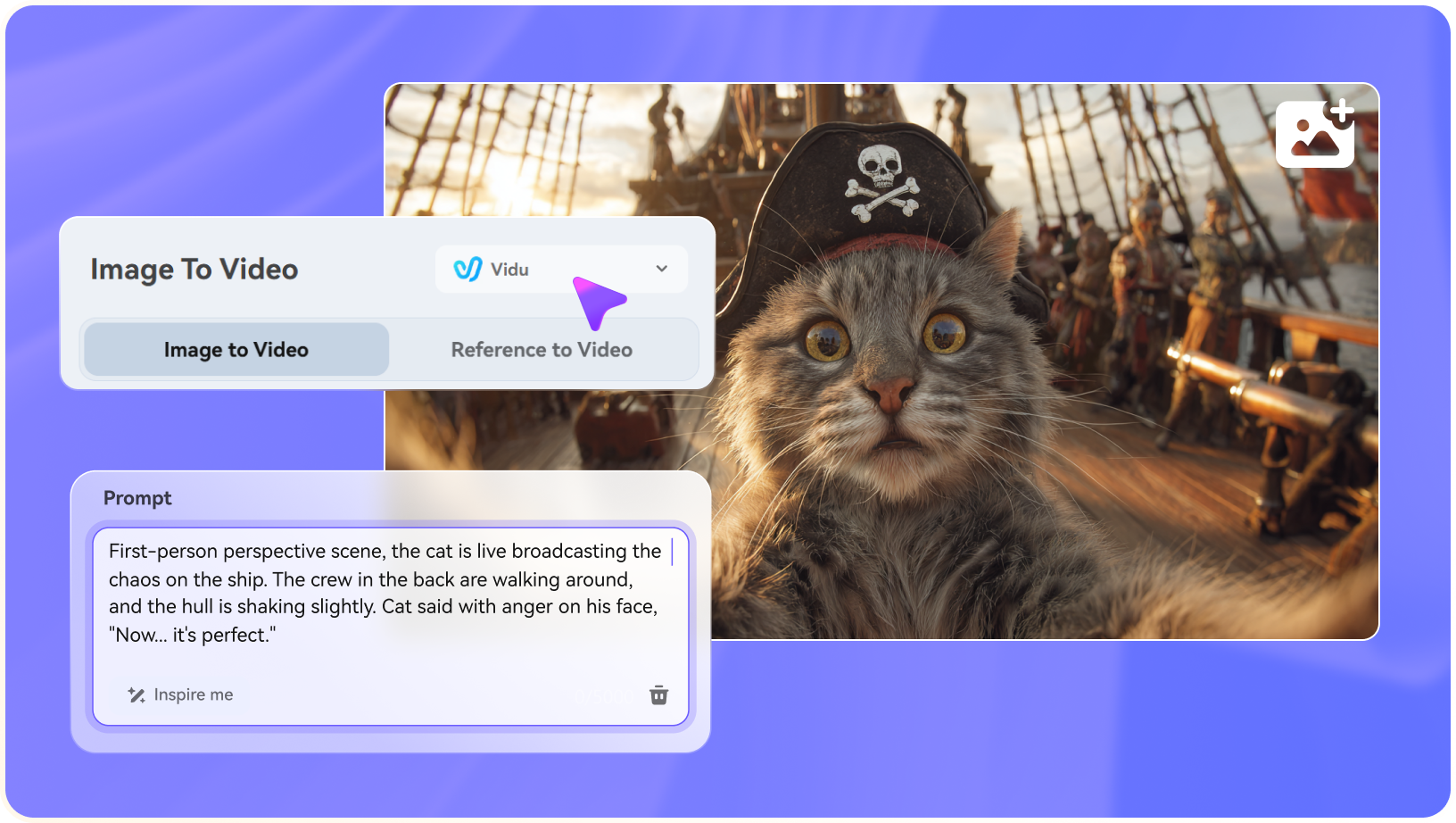
Step 2: Describe the Video or Upload a Reference

Enter a concise prompt, upload a source image when needed, and specify the motion, camera style, mood, or output goal.

3
Step 3: Generate, Preview, and Continue Editing

Generate the clip, preview the result, then use light polish tools such as enhancement, subtitles, music, resizing, or export when the asset needs them.

step1 visit media.io
step2 choose a model and upload an image
step3 generate video from photo

Real-World Use Cases: Where Higgsfield AI Fits

Higgsfield AI fits creator workflows where cinematic motion, camera language, and visual experimentation are the main job, especially before a team commits to a full campaign edit.

Cinematic Social Hooks

Creators can use Higgsfield AI to test camera-forward hooks for Reels, Shorts, TikTok, product teasers, fashion clips, beauty visuals, and creator promos. It is strongest when the motion style is the hook, while Media.io becomes more relevant when the chosen look needs AI ad concepts, sound effects, music-led visuals, or simple platform variants.

Product and Fashion Motion Tests

A product photo, outfit shot, portrait, or lifestyle frame can become a fast motion concept before a team commits to a shoot or heavier edit. The best tests use real brand assets, because composition, lighting, subject separation, and camera intent all affect whether the generated motion feels usable.

Creative Direction Moodboards

Higgsfield AI can help agencies and creators turn static references into short motion samples for moodboards, pitch decks, campaign planning, or client alignment. These clips are useful for deciding a visual direction, but they still need message clarity, rights review, and a publishing plan before becoming final campaign assets.

Where Higgsfield AI Falls Short

The strongest limitations are practical workflow boundaries, source-rights concerns, and production-readiness checks around Higgsfield AI's actual feature set.

Motion Style Can Outrun the Message

Higgsfield AI is compelling when camera movement is the creative hook, but cinematic motion alone does not guarantee a clear product story, ad concept, or social message. Teams should test whether the effect supports the content goal instead of only looking impressive.

Reference Quality Matters

Image-to-video and motion effects depend heavily on the source frame. Low-resolution images, unclear subjects, weak composition, busy backgrounds, or vague prompts can make the result harder to control.

Preset Looks Can Become Familiar

Creator-first presets are fast, but repeated camera moves or trend-like effects can make multiple clips feel similar. Brand teams should customize the concept, prompt, sound, and final scene logic before publishing.

Higgsfield AI vs Media.io: Which One Fits Your Workflow?

Higgsfield AI and Media.io overlap around AI video creation, but they are strongest at different jobs. Higgsfield is better for cinematic motion exploration, while Media.io is stronger when the brief needs scenario-based generation with AI Video Effects, AI Image to Video, URL to Ads, AI Music Video Generator, and lightweight support tools.

Workflow Need Higgsfield AI Media.io
Cinematic Camera MotionStrong Fit best fit
Strong for testing stylized camera moves, motion-led hooks, and cinematic visual treatments from prompts or reference assets.
Better when the camera idea needs to become a specific story clip, product visual, or short-form asset with supporting AI media tools.
Image-to-Video EffectsUseful for turning portraits, fashion shots, product frames, and visual references into motion experiments with a cinematic feel.Strong for lightweight AI Image to Video workflows when the user wants source-image animation for ads, social clips, explainers, or product scenes.
Preset-Led Creator LooksStrong Fit best fit
Strong when creators want quick preset-style camera looks, trend tests, and visual hooks without building every shot manually.
More relevant when preset-style visuals need to connect with AI Video Effects, product scenes, music-led clips, or campaign drafts.
Scenario-Based Product or Ad VideoCan help explore the visual direction, but the output may still need a clearer product message, offer, sound, and campaign structure.Strong Fit best fit
Stronger for lightweight scenario creation with URL to Ads, AI Image to Video, text-to-video, image assets, and social-ready variants.
Music, Sound, and Social VariantsUseful when the visual effect is the main creative test, but audio-led variations are not the core comparison point.Strong Fit best fit
Stronger when the brief needs AI Music Video Generator, AI Sound Effects Generator, text-to-music, lyrics-to-song, or other audio-led support assets.
Light Polish After GenerationMay require another workflow for captions, cleanup, resizing, conversion, or handoff after the motion test is chosen.Strong Fit best fit
Better for light support around generated assets, including enhancement, object removal, subtitles, resizing, conversion, and export.
Best for Cinematic Motion

Choose Higgsfield AI When You Need:

Higgsfield AI is better suited when the main objective is cinematic motion exploration rather than building a complete scenario video from multiple generated assets.

  • Camera-forward motion tests for fashion, beauty, product teasers, creator clips, or visual hooks
  • Image-to-video experiments where the movement style is the main creative question
  • Preset-led creator looks that help test trend-friendly social concepts quickly
  • Mobile-friendly ideation before a team commits to a larger campaign edit
  • A visual exploration tool for moodboards, pitch concepts, and cinematic references
Explore Higgsfield AI
Best for Scenario Generation

Choose Media.io When You Need:

Media.io is stronger when a cinematic motion test needs to become a lightweight scenario asset for ads, social posts, product visuals, or music-led content.

  • AI Image to Video and AI Text to Video for source-image animation, product visuals, story clips, and short-form scenes
  • AI Video Effects when the goal is a preset-style creative play rather than a fully custom cinematic motion test
  • URL to Ads for turning product, URL, or marketing inputs into lightweight campaign drafts
  • AI Music Video Generator and AI Sound Effects Generator when the visual concept needs music-led motion, atmosphere, or social sound design
  • Light enhancement, object removal, subtitles, resizing, conversion, and export when the generated asset needs practical support
Try AI Video Now

Final Verdict

Our Take

Higgsfield AI is strongest when the creative brief is about cinematic motion, camera-led visual hooks, and fast image-to-video experimentation. It is especially useful for creators, fashion teams, product marketers, and social video makers who want to test how a still image or visual reference might move before committing to a heavier edit.

Its limits appear when the motion test needs to become a more specific content asset, such as a product ad, story opener, music-led social clip, or campaign variant with sound, captions, and light polish. Media.io is a better fit when the next step is lightweight scenario-based generation with AI Image to Video, AI Text to Video, AI Video Effects, AI Ad Generator, AI Music Video Generator, and sound effects.

Bottom line: Choose Higgsfield AI for cinematic motion exploration and creator-first visual effects. Choose Media.io when you want to turn a visual direction into a lightweight ad, story clip, product scene, music-led video, or social-ready generated asset.

Higgsfield AI FAQ

What is Higgsfield AI best used for?
faqfaq

Higgsfield AI is most relevant when its strengths around cinematic motion effects and creator-focused image-to-video experimentation match the user's production task.

Consider Higgsfield AI if you need cinematic motion effects and creator-focused image-to-video experimentation and are prepared to verify current source rights, pricing, output limits, and export requirements.

It depends on the job. A specialized competitor can be better for its narrow strongest workflow, while Media.io is more practical when lightweight AI video, image, audio, music, and character generation need to stay connected.

Not completely in most production workflows. AI-generated clips often still need trimming, captions, enhancement, music, conversion, brand review, and platform-specific exports.

Check the current official terms for commercial use, input ownership, likeness rights, watermark behavior, and plan restrictions before publishing or selling generated work.

Support varies by product, model, plan, and release date. Verify current official documentation before relying on image-to-video for production work.

Some AI video platforms provide APIs or developer workflows, but availability can change. Treat API access as a volatile fact unless official documentation confirms it.

Media.io is a practical alternative when you need lightweight AI video generation plus image-to-video, text-to-video, AI music video, sound effects, enhancement, object removal, subtitles, music, resizing, conversion, and browser-based export.

Choose Media.io when the bottleneck is not only testing media, but creating a specific scenario asset from generated or existing video, image, audio, music, character, or product materials.

What Creators Say About Media.io AI Video Generator

Media.io user
Sarah L.

Content Creator

starstarstarstarstar

Media.io makes it easier to test different AI video styles without jumping between platforms.

I usually start with a product photo or a short prompt, generate a few motion directions, and then keep the stronger version for social posts. Having image-to-video, sound, basic polish, subtitles, and export options in the same browser workspace saves a lot of cleanup time.

Media.io user
John D.

Social Media Marketer

starstarstarstarstar

I can start with a prompt or image, then resize, caption, and polish the result before publishing.

For campaign tests, the useful part is speed: our team can turn one concept into multiple short video drafts, compare hooks, add captions, and prepare different aspect ratios without rebuilding the whole asset from scratch.

Media.io user
Emily T.

Freelance Designer

starstarstarstarstar

The browser workflow is approachable when experimenting with unfamiliar AI video models.

When a client needs a quick visual direction, I can create motion samples from reference images, refine the mood, and send a cleaner preview before committing to a full edit. It works well for concept boards, ads, and lightweight story videos.

Media.io Online Tools Quality Rating:
vote 4.7 (162,357 Votes)
media.io

AI Video Generator star

Easily generate videos from text or images

Generate