

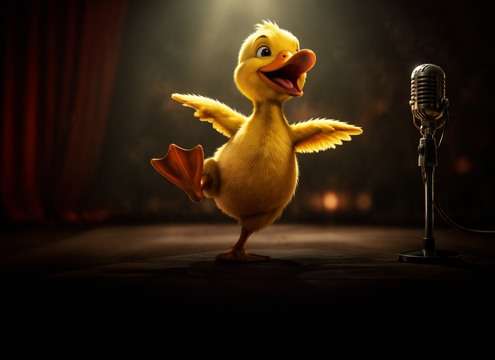







A real duck call has organic nasal texture and variation. Cartoon quacks exaggerate those qualities; a rubber duck works more like a squeezed reed or air toy.
What Makes a Real Quack Recognizable?
A duck quack sound effect should suggest one bird using its voice, often with a nasal body and irregular rhythm. The same animal sounds different close to the microphone than across a windy pond. A flock should not be ten perfectly repeated copies of one recording.
- Call rhythm - Natural quacks vary slightly in spacing and emphasis.
- Vocal texture - Real calls have a nasal, organic resonance.
- Perspective - Nearby calls are brighter; distant ducks merge with pond ambience.
- Flock layering - Use staggered birds rather than mechanically repeated unison.
- Toy distinction - A squeezed rubber duck should squeak, not imitate a pond recording exactly.
Use Call Count and Setting to Tell the Story
For a cartoon duck quack sound effect, a higher pitch or exaggerated short burst might serve the joke. When the shot shows a yellow rubber toy, choose a compressed squeak instead of a wildlife quack to preserve the physical logic.
- Single mallard quack - Useful for an animal identification cue.
- Two answering ducks - Adds interaction to wildlife scenes.
- Quiet duckling contact - Pairs with young birds in a gentle scene.
- Flock at pond - Builds farm or wetland atmosphere.
- Rubber duck squeak - Fits toy ads and bath-time comedy.
- Funny cartoon quack - Punctuates an animated reaction.
- Distant marsh call - Establishes location in an outdoor story.
- Startled sharp quack - Reacts quickly to a sudden movement.