


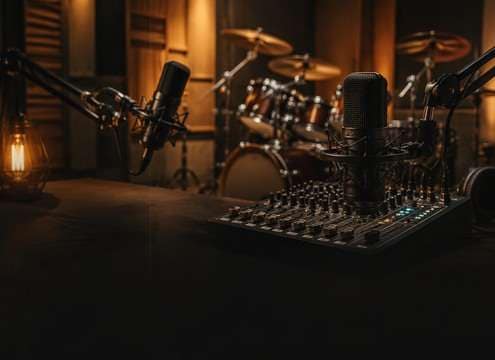


The perceived power of a drum comes from its initial transient, resonant body and the room around it. Bigger is not always better.
Understand Attack, Body and Decay
A deep bass drum hit sound effect has a slow, weighty body; a snare cuts through with a shorter sharp crack. A joke rimshot depends on timing and dryness, while trailer percussion can breathe for a second after the cut.
- Transient - The first millisecond tells you whether a hit feels soft, hard or explosive.
- Resonance - Low shells linger, while a small snare speaks quickly.
- Beater choice - Hands, sticks and mallets change brightness and attack.
- Room size - A long hall tail is cinematic but can smear a fast cut.
- Layering - Keep separately generated hits short enough to combine without phase-like muddiness.
Choose the Drum by Editing Purpose
For rapid gameplay, reduce reverb so successive strikes stay distinct. For a ceremonial moment, allow more room sound. If you need a complete rhythmic bed rather than individual strikes, use a dedicated drum beat or drum roll category.
- Dry snare crack - Best for quick editing markers and comic beats.
- Deep concert bass drum - Adds low-end authority to titles and announcements.
- Muted tom - Offers rhythm-like motion without introducing full music.
- Wood rim click - Provides precise small-scale UI and animation accent.
- Large hall taiko-style strike - Suggests ritual, scale or dramatic anticipation.
- Brush tap - Useful for intimate, soft or lighthearted scenes.
- Double-hit rimshot - A familiar joke punctuation when timed after dialogue.
- Tumbling tom fill - Bridges a transition without becoming a long drum loop.