Home>AI Prompts>25 ChatGPT Ice Skating Photo Prompts to Catch the Moment
25 ChatGPT Ice Skating Photo Prompts to Catch the Moment
Bring winter scenes to life with ChatGPT ice skating photo prompts for graceful action shots, romantic rink moments, and expressive on-ice portraits. Explore outdoor ice rinks, figure skating poses, festive lights, and cinematic ice reflections. Customize outfits, camera angles, and lighting to create AI images with a sporty, playful, or dreamy winter aesthetic.
Explore blue-hour rink portraits, skating couples and ice-action edits created with Media.io - powered by ChatGPT.
How to Create an Ice Skating Photo with ChatGPT Prompts
Skating is a full-body activity, so the source photo and final crop determine whether blades, posture and contact with the ice will look believable.
1
Choose a matching reference image
Upload a full-body standing or walking photo for skating action, or a couple photo showing both people. A close selfie works better for a rinkside portrait.
2
Copy a rink moment, not just a season
Select a rail-side pause, easy glide, lace-up detail, blue-hour date or trained skater portrait. Include safe balance, outfit and ice contact.
3
Inspect blades, hands and light
Generate with Media.io, then inspect skate blades touching the ice, fingers on the rail and realistic reflections. Avoid impossible jumps from a beginner source photo.
25 ChatGPT Ice Skating Photo Prompts for Rinks, Couples and Skaters
First Steps at the Rink Rail
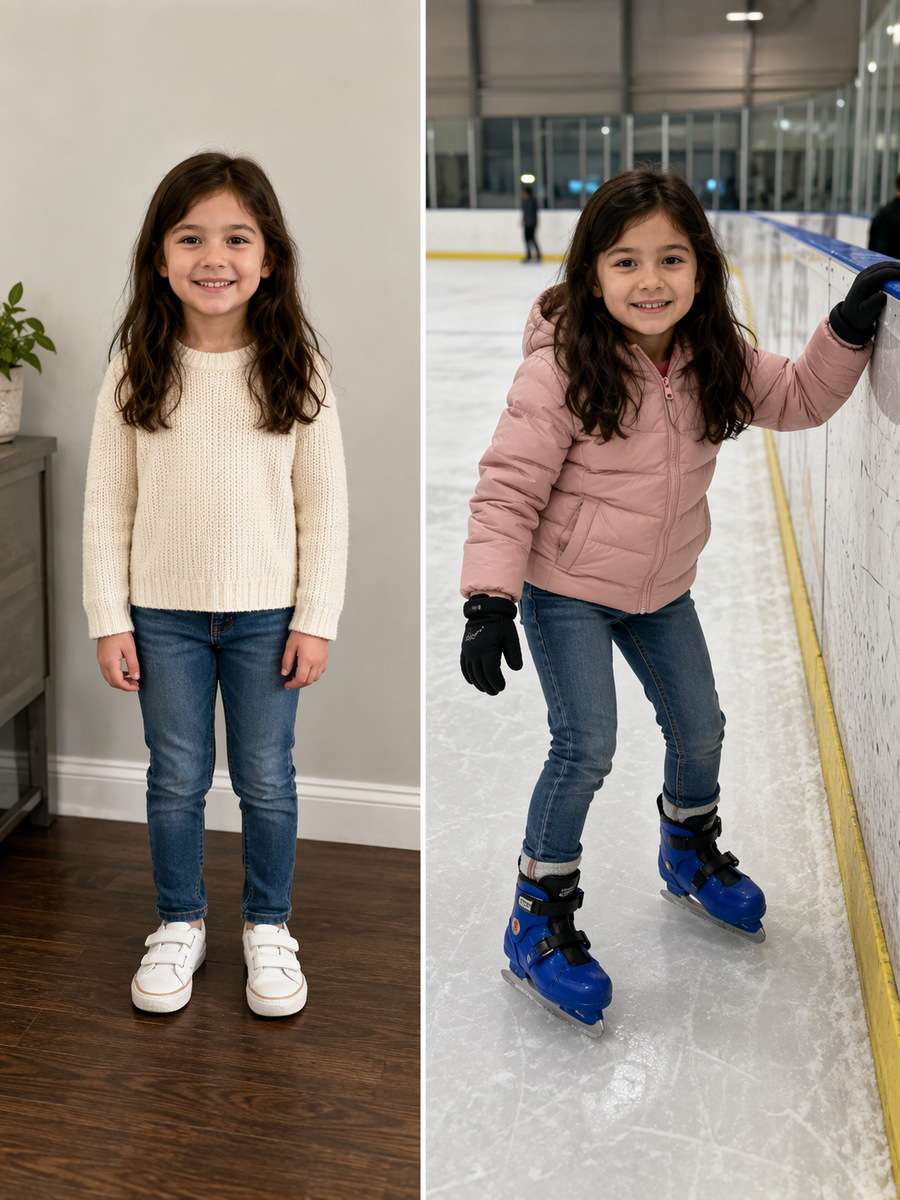
Use my original photo as the source for a rink edit. Best reference: a full-length standing photo of a beginner. Stage a winter rink candid with bent knees, one glove holding the rail, rental skates fully planted and a small nervous smile. No unsupported airborne trick or floating skate blades. Keep complete boots and skates in frame for action shots; use a stable horizon and natural shadows. Maintain the original faces, hairstyles, age and exact number of people. Keep body weight balanced, skates anatomically correct and blades physically contacting the rink; give the ice a believable shadow or reflection. Do not invent sports awards or risky impossible tricks. Avoid hovering skates, missing feet, frozen facial expressions, extra fingers and unrealistic body torsion.
Blue-Hour String Lights Glide
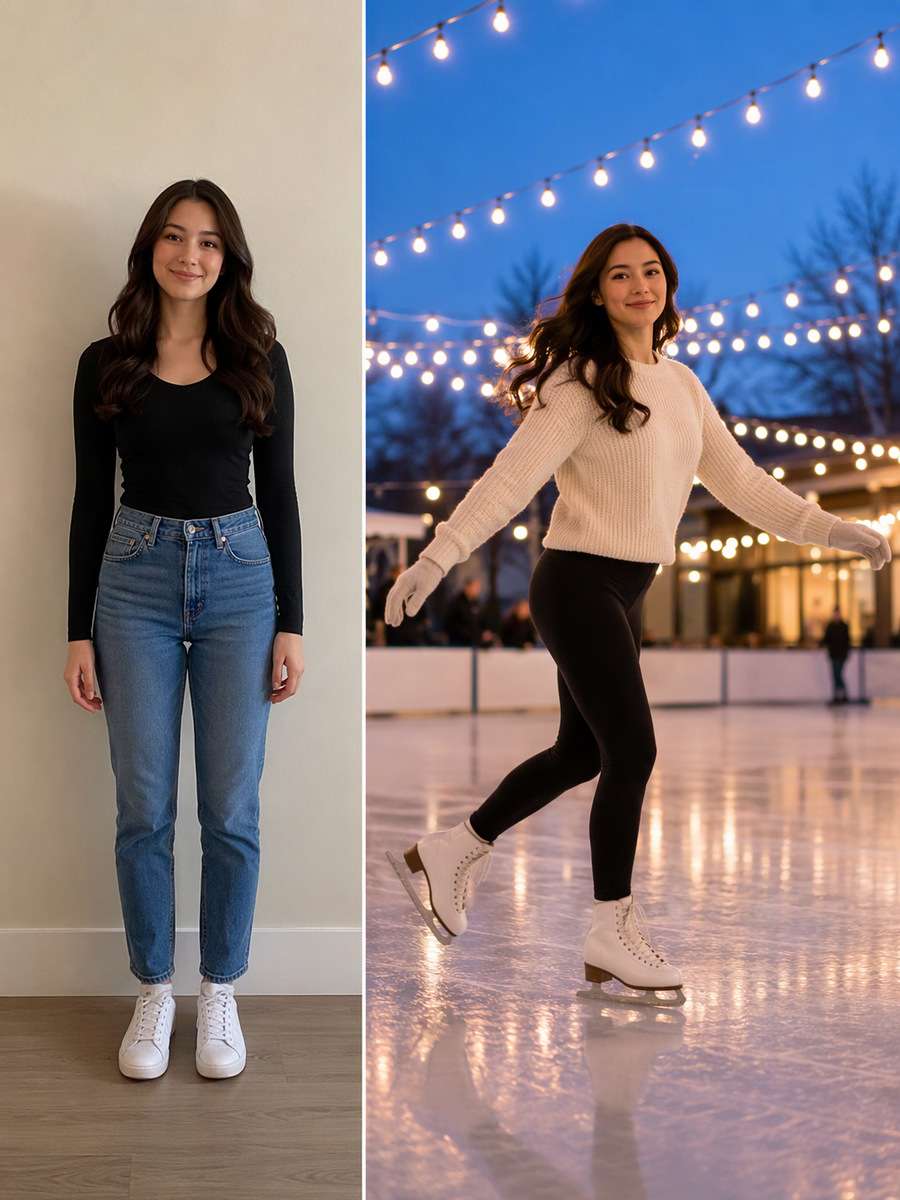
Keep the real subject from the attached picture. Ideal starting image: a full-body moving or walking source. Stage an easy side-on rink glide at dusk under warm string lights with face sharp and slight motion behind. One support blade contacts ice and casts a matching reflection. Let the winter light fall physically on faces and ice without washing out the main action. Maintain the original faces, hairstyles, age and exact number of people. Keep body weight balanced, skates anatomically correct and blades physically contacting the rink; give the ice a believable shadow or reflection. Do not invent sports awards or risky impossible tricks. Avoid hovering skates, missing feet, frozen facial expressions, extra fingers and unrealistic body torsion.
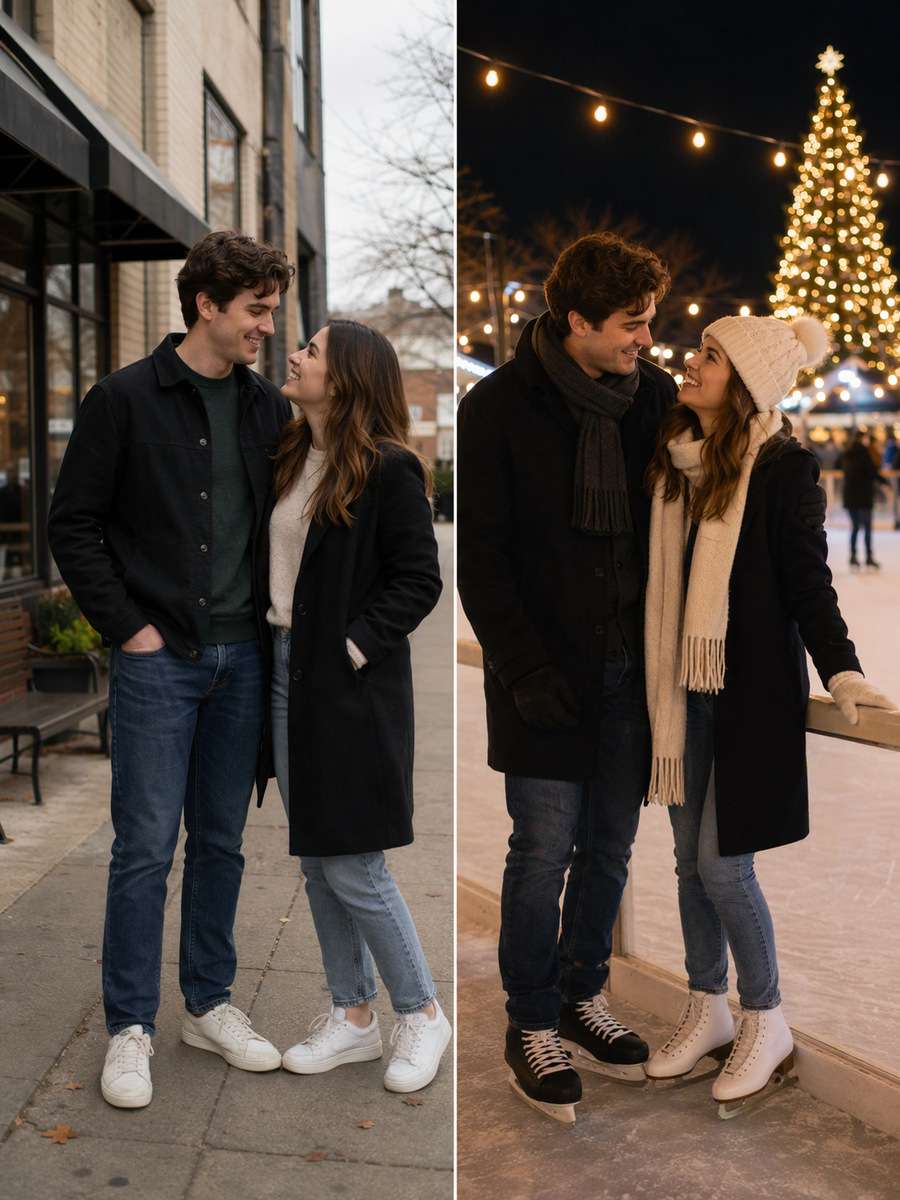
Couple Hand-in-Hand Entry
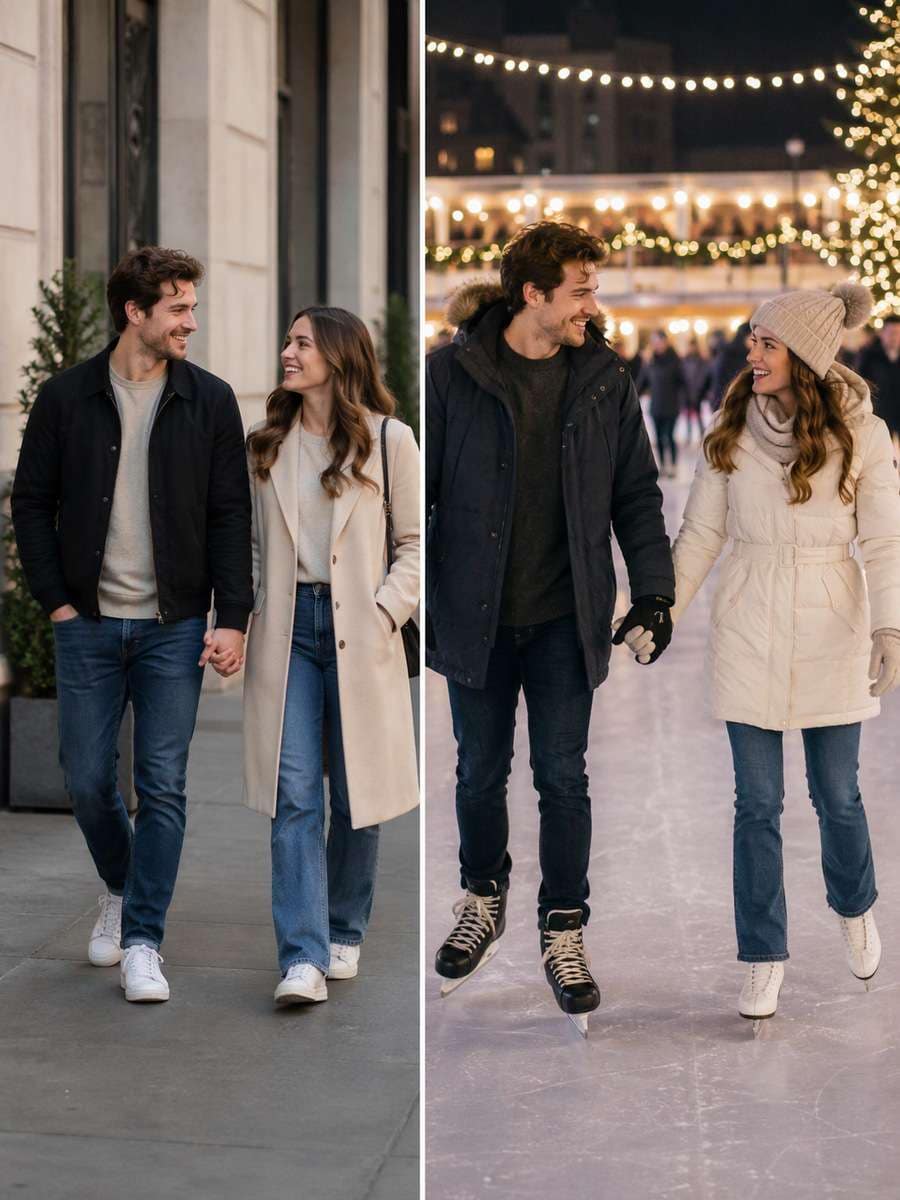
Preserve every actual face shown in the upload. Suitable source: a source photo already showing exactly two people. Stage the same pair entering a festive rink with hands joined, winter coats and gentle first-glide balance. Keep exactly two distinct faces and natural connected arms. Keep complete boots and skates in frame for action shots; use a stable horizon and natural shadows. Maintain the original faces, hairstyles, age and exact number of people. Keep body weight balanced, skates anatomically correct and blades physically contacting the rink; give the ice a believable shadow or reflection. Do not invent sports awards or risky impossible tricks. Avoid hovering skates, missing feet, frozen facial expressions, extra fingers and unrealistic body torsion.
Lacing Skates on the Bench
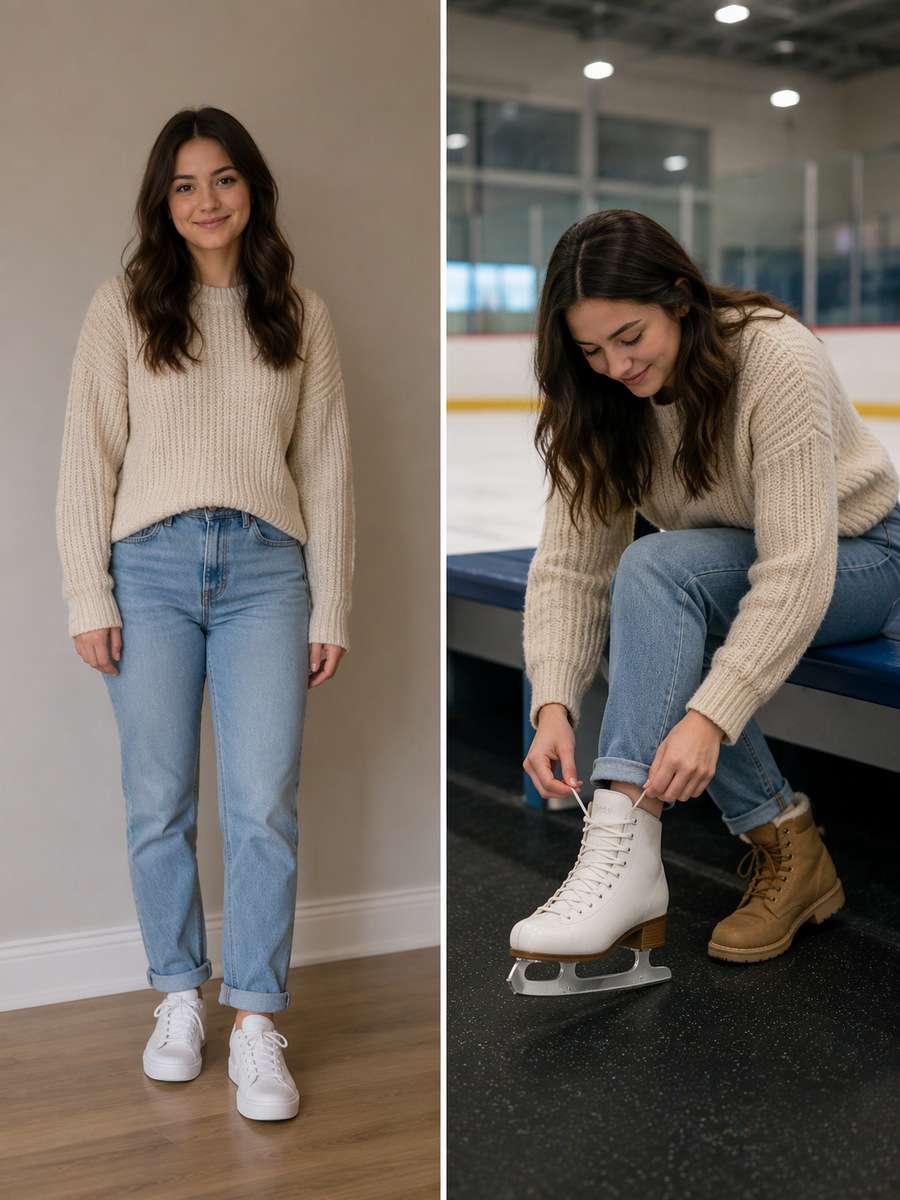
Treat the source as a record of the person's proportions. Start with a seated source with visible hands. Stage a quiet bench-side detail of tying one white skate, knit sleeves, rink blurred behind and practical footwear. Count fingers and shoelaces correctly; no skating on the bench. Let the winter light fall physically on faces and ice without washing out the main action. Maintain the original faces, hairstyles, age and exact number of people. Keep body weight balanced, skates anatomically correct and blades physically contacting the rink; give the ice a believable shadow or reflection. Do not invent sports awards or risky impossible tricks. Avoid hovering skates, missing feet, frozen facial expressions, extra fingers and unrealistic body torsion.
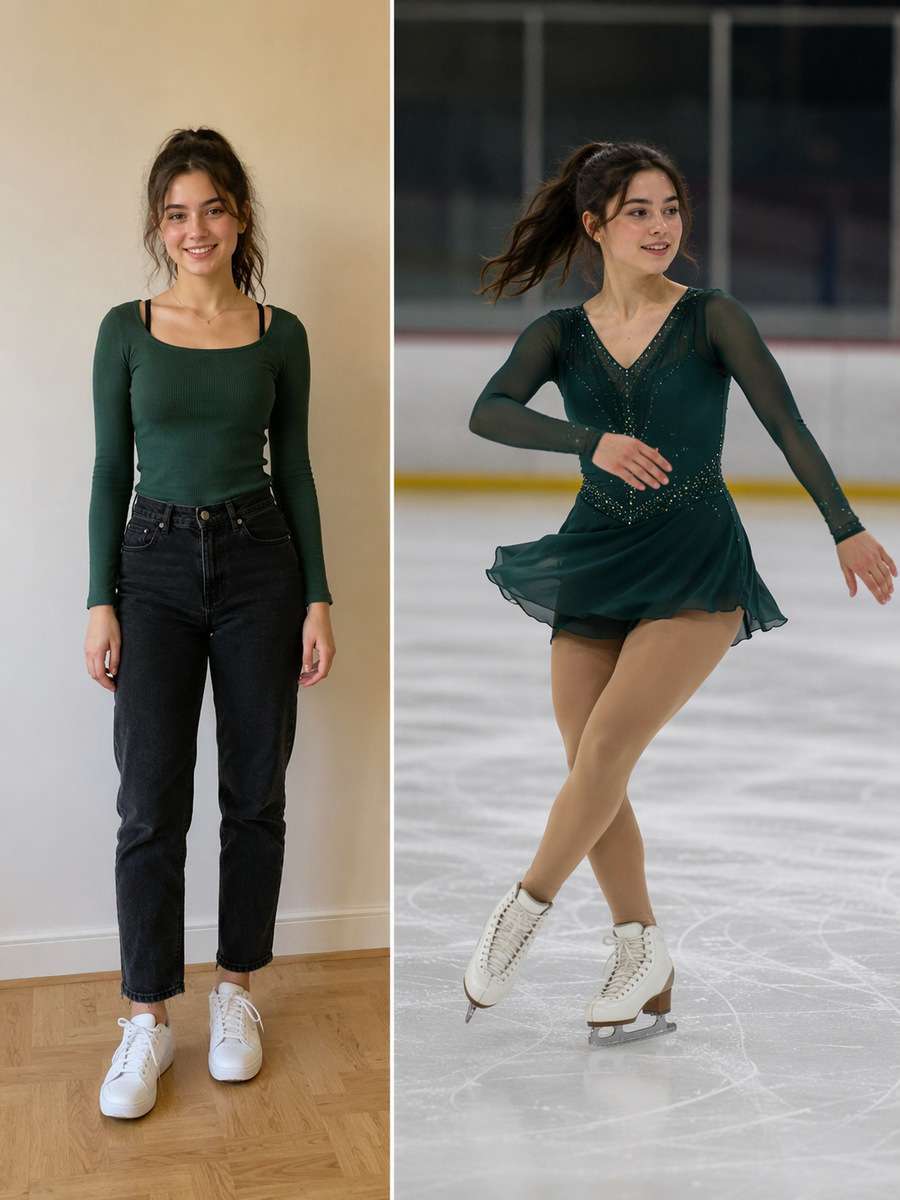
Figure Skater Practice Hold
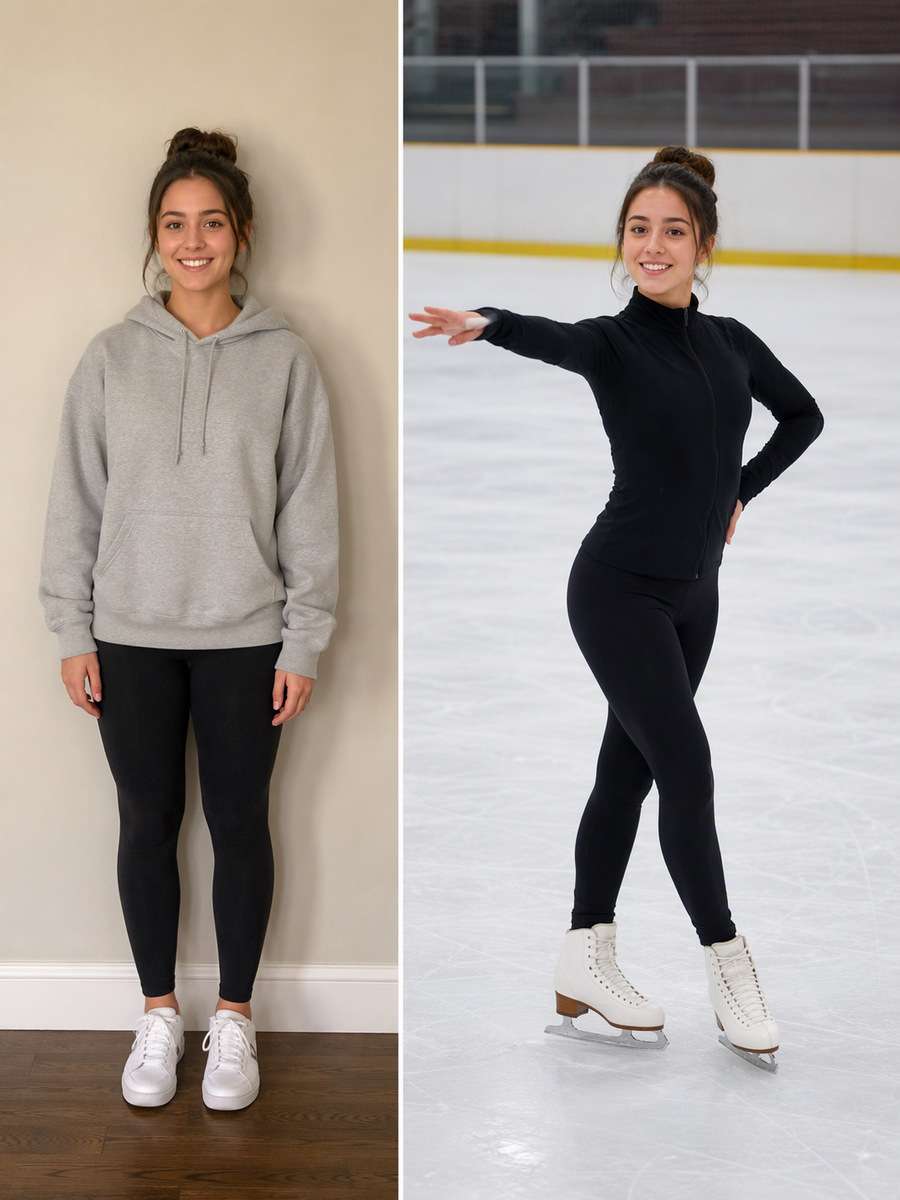
Use a matching input photograph before changing the rink scene. Recommended: a full-body source photo of a trained adult skater. Stage a controlled static practice pose with one extended arm, fitted training outfit and plain arena ice. No imagined Olympic achievement or gravity-defying jump. Keep complete boots and skates in frame for action shots; use a stable horizon and natural shadows. Maintain the original faces, hairstyles, age and exact number of people. Keep body weight balanced, skates anatomically correct and blades physically contacting the rink; give the ice a believable shadow or reflection. Do not invent sports awards or risky impossible tricks. Avoid hovering skates, missing feet, frozen facial expressions, extra fingers and unrealistic body torsion.
Festive Outdoor Rink Date
Use my original photo as the source for a rink edit. Best reference: a couple photo with both adults visible. Stage a smiling two-person winter moment at rail under a distant decorated tree and warm bulbs. Keep both faces and visible skates at sensible scale. Let the winter light fall physically on faces and ice without washing out the main action. Maintain the original faces, hairstyles, age and exact number of people. Keep body weight balanced, skates anatomically correct and blades physically contacting the rink; give the ice a believable shadow or reflection. Do not invent sports awards or risky impossible tricks. Avoid hovering skates, missing feet, frozen facial expressions, extra fingers and unrealistic body torsion.
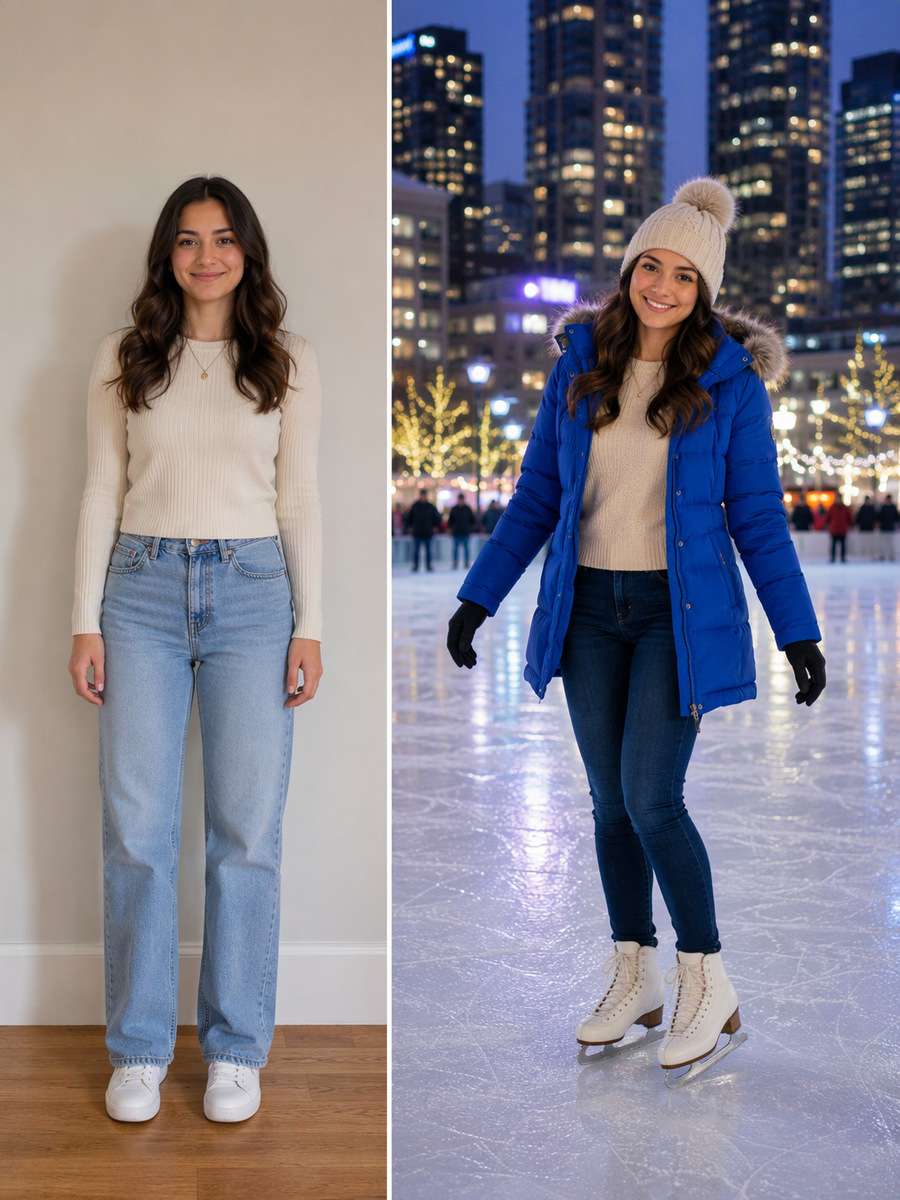
City Plaza Rink Portrait
Keep the real subject from the attached picture. Ideal starting image: a full-length standing photograph. Stage an evening urban rink portrait with distant high-rise windows, cobalt winter coat and glistening ice. Avoid any recognizable landmark identity claims or text logos. Keep complete boots and skates in frame for action shots; use a stable horizon and natural shadows. Maintain the original faces, hairstyles, age and exact number of people. Keep body weight balanced, skates anatomically correct and blades physically contacting the rink; give the ice a believable shadow or reflection. Do not invent sports awards or risky impossible tricks. Avoid hovering skates, missing feet, frozen facial expressions, extra fingers and unrealistic body torsion.
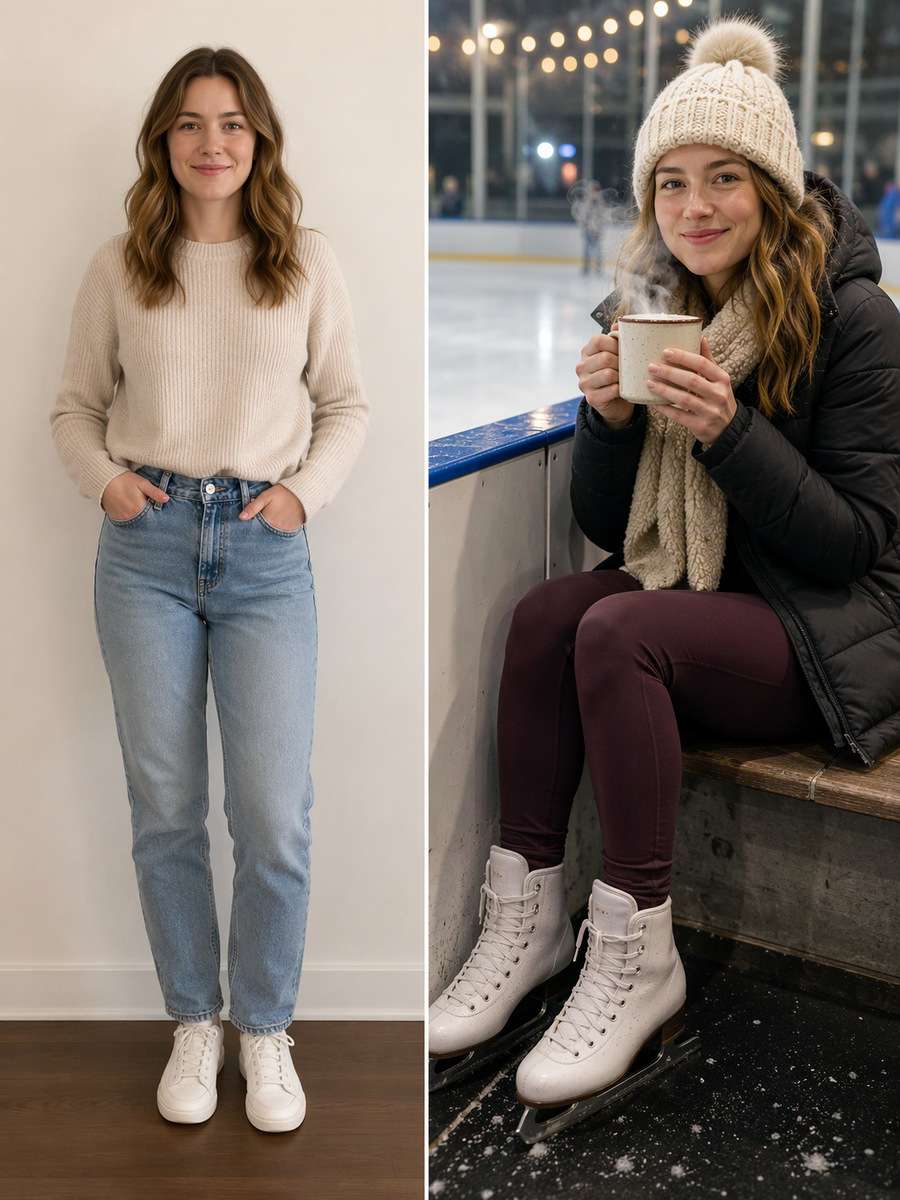
Hands Around Hot Chocolate
Preserve every actual face shown in the upload. Suitable source: a source photo of one seated adult. Stage a warm-up rinkside close-up holding a mug while skates remain visible near a bench, steam catching cold air. Cup and hands anatomically consistent and safely off the ice. Let the winter light fall physically on faces and ice without washing out the main action. Maintain the original faces, hairstyles, age and exact number of people. Keep body weight balanced, skates anatomically correct and blades physically contacting the rink; give the ice a believable shadow or reflection. Do not invent sports awards or risky impossible tricks. Avoid hovering skates, missing feet, frozen facial expressions, extra fingers and unrealistic body torsion.
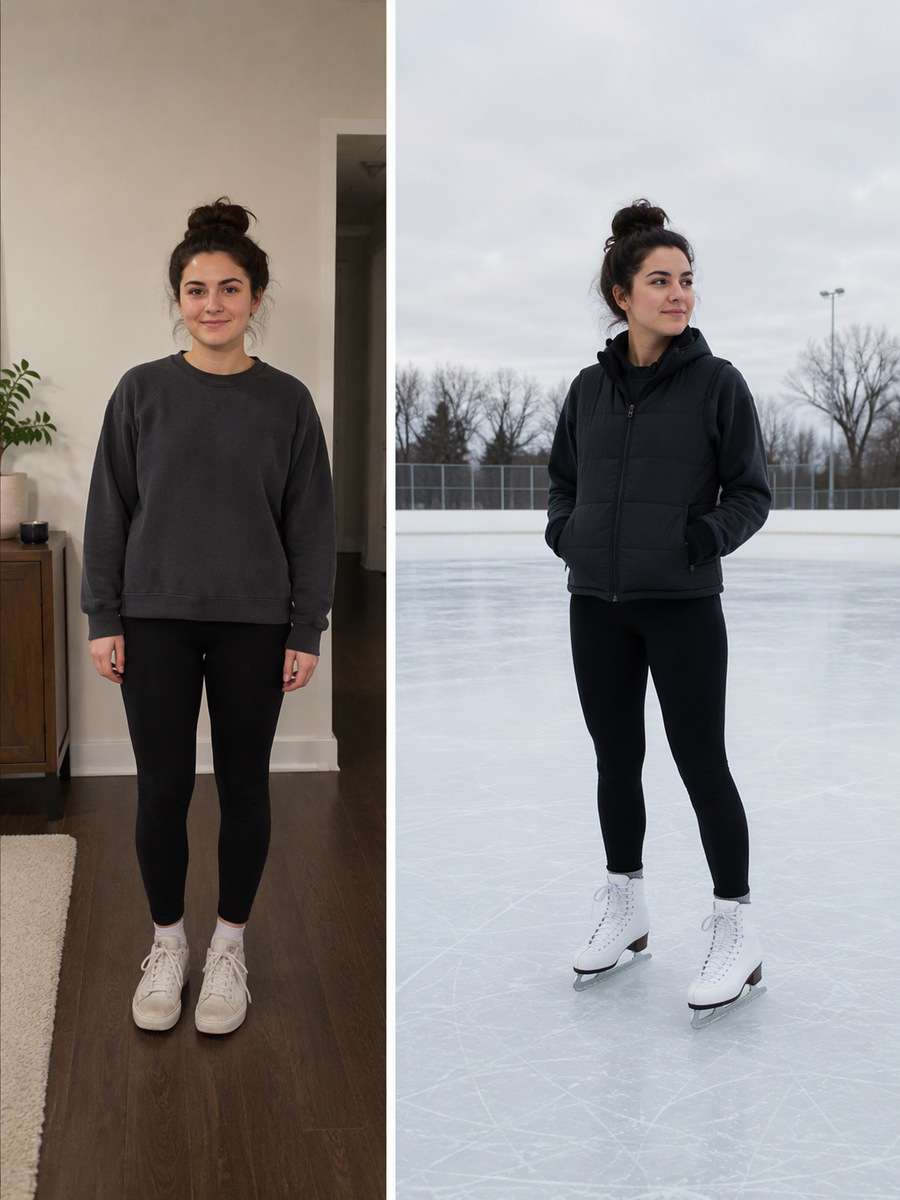
Quiet Morning Empty Rink
Treat the source as a record of the person's proportions. Start with a standing full-body photo. Stage a solitary calm portrait on a lightly frosted outdoor rink with soft overcast sky and large negative space. Show actual blade contact; avoid a dangerous frozen lake claim. Keep complete boots and skates in frame for action shots; use a stable horizon and natural shadows. Maintain the original faces, hairstyles, age and exact number of people. Keep body weight balanced, skates anatomically correct and blades physically contacting the rink; give the ice a believable shadow or reflection. Do not invent sports awards or risky impossible tricks. Avoid hovering skates, missing feet, frozen facial expressions, extra fingers and unrealistic body torsion.
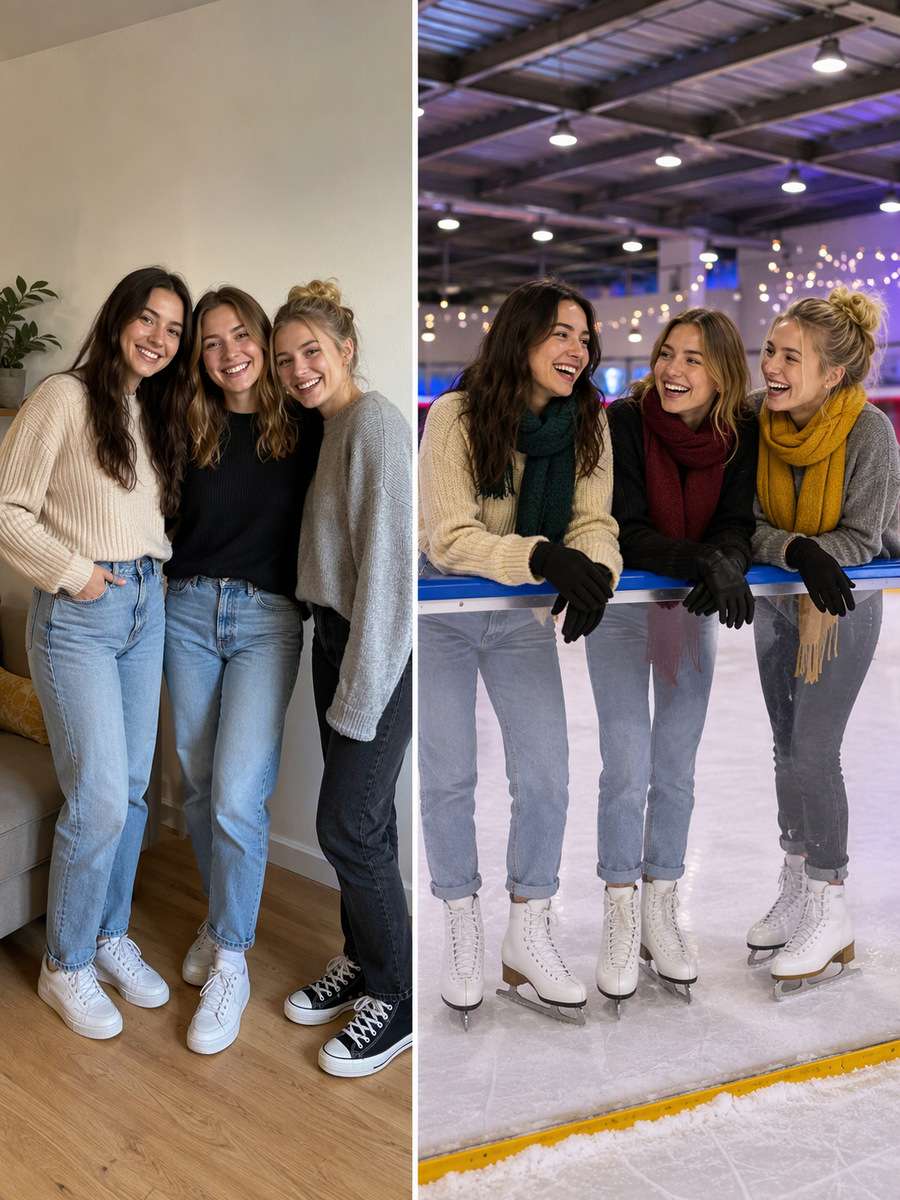
Friends Laughing at the Rail
Use a matching input photograph before changing the rink scene. Recommended: a source group photo showing three friends. Stage three friends in different colored scarves leaning against the barrier with skates visible and cheerful expressions. No fourth person and no fused gloves or faces. Let the winter light fall physically on faces and ice without washing out the main action. Maintain the original faces, hairstyles, age and exact number of people. Keep body weight balanced, skates anatomically correct and blades physically contacting the rink; give the ice a believable shadow or reflection. Do not invent sports awards or risky impossible tricks. Avoid hovering skates, missing feet, frozen facial expressions, extra fingers and unrealistic body torsion.
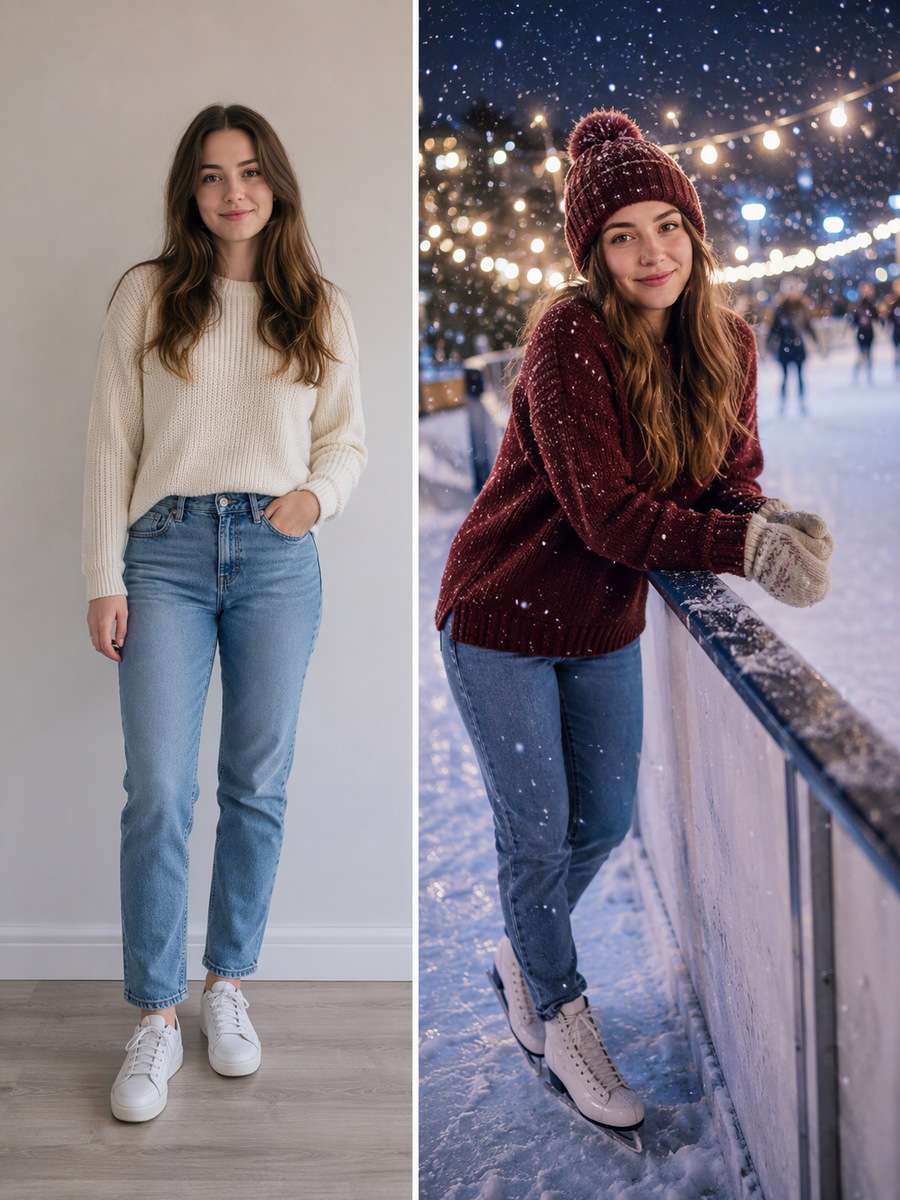
Snowflakes in Warm Bulbs
Use my original photo as the source for a rink edit. Best reference: a clear head-and-shoulders selfie. Stage a rinkside close portrait in burgundy hat with tiny falling flakes lit by warm bulbs and cool blue surroundings. Keep flakes away from eyes and facial identity readable. Keep complete boots and skates in frame for action shots; use a stable horizon and natural shadows. Maintain the original faces, hairstyles, age and exact number of people. Keep body weight balanced, skates anatomically correct and blades physically contacting the rink; give the ice a believable shadow or reflection. Do not invent sports awards or risky impossible tricks. Avoid hovering skates, missing feet, frozen facial expressions, extra fingers and unrealistic body torsion.
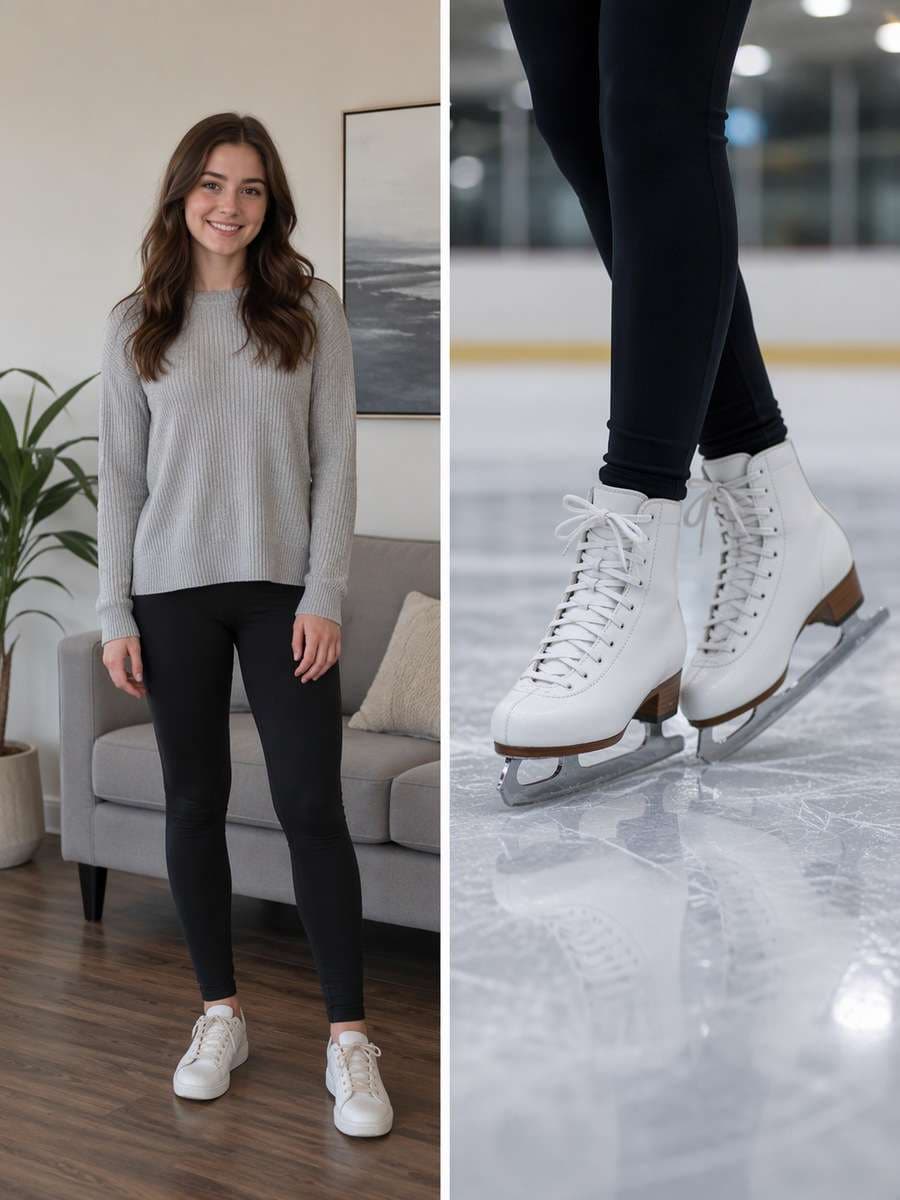
Figure Skate Boot Detail
Keep the real subject from the attached picture. Ideal starting image: a photo showing legs and skates or boots. Stage a close crop of white figure skates, tied laces, scratched ice and precise blade reflection. Avoid inconsistent number of blades or untied floating laces. Let the winter light fall physically on faces and ice without washing out the main action. Maintain the original faces, hairstyles, age and exact number of people. Keep body weight balanced, skates anatomically correct and blades physically contacting the rink; give the ice a believable shadow or reflection. Do not invent sports awards or risky impossible tricks. Avoid hovering skates, missing feet, frozen facial expressions, extra fingers and unrealistic body torsion.
Spin Exit Candid
Preserve every actual face shown in the upload. Suitable source: a full-body photo of a practiced skater. Stage an athlete decelerating from a small controlled spin, arms settling and skate marks curving on ice. One supporting blade on the ice, no extreme impossible rotation. Keep complete boots and skates in frame for action shots; use a stable horizon and natural shadows. Maintain the original faces, hairstyles, age and exact number of people. Keep body weight balanced, skates anatomically correct and blades physically contacting the rink; give the ice a believable shadow or reflection. Do not invent sports awards or risky impossible tricks. Avoid hovering skates, missing feet, frozen facial expressions, extra fingers and unrealistic body torsion.
Retro Community Rink Photo
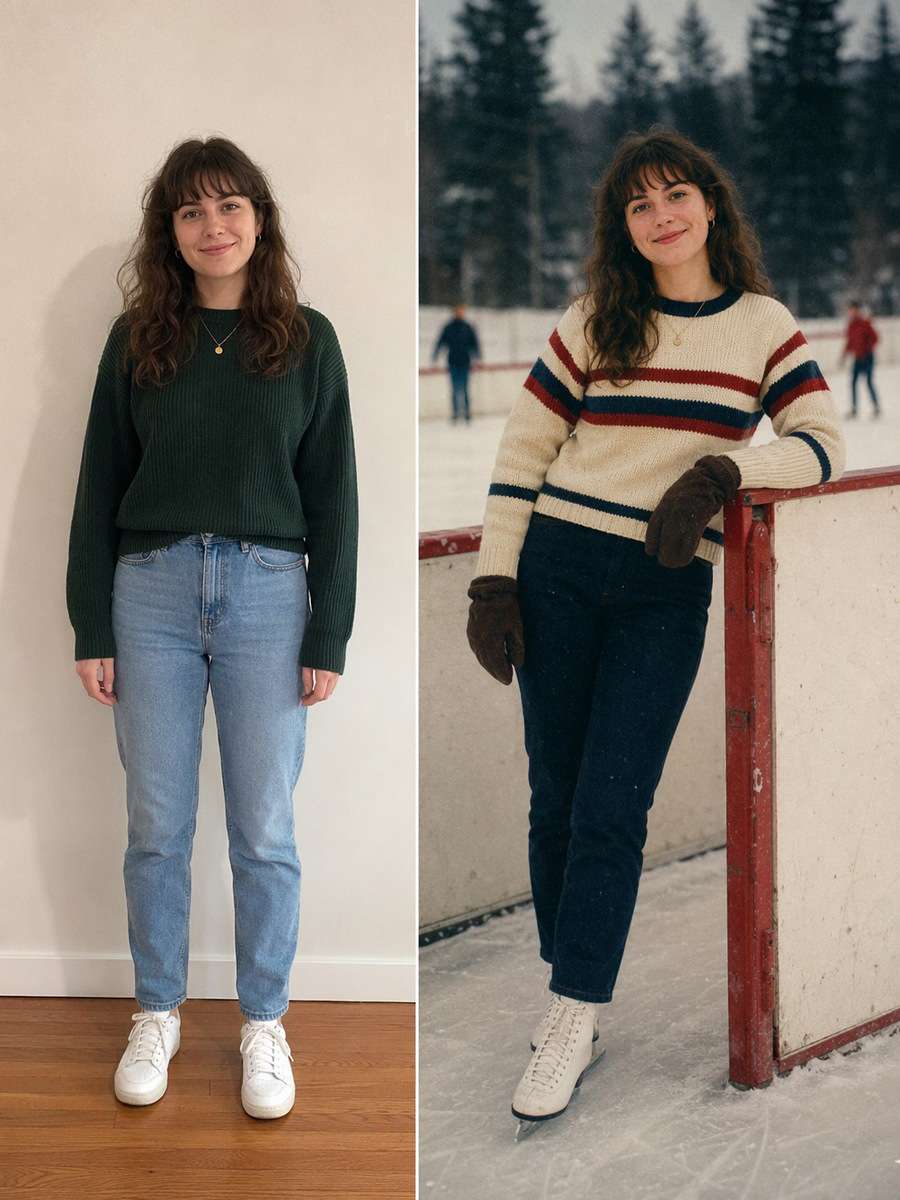
Treat the source as a record of the person's proportions. Start with a casual full-length adult photo. Stage an analog-film winter rink portrait with vintage striped sweater, simple red railing and understated grain. Avoid fake time stamps or invented historic location signs. Let the winter light fall physically on faces and ice without washing out the main action. Maintain the original faces, hairstyles, age and exact number of people. Keep body weight balanced, skates anatomically correct and blades physically contacting the rink; give the ice a believable shadow or reflection. Do not invent sports awards or risky impossible tricks. Avoid hovering skates, missing feet, frozen facial expressions, extra fingers and unrealistic body torsion.
Learning With a Partner
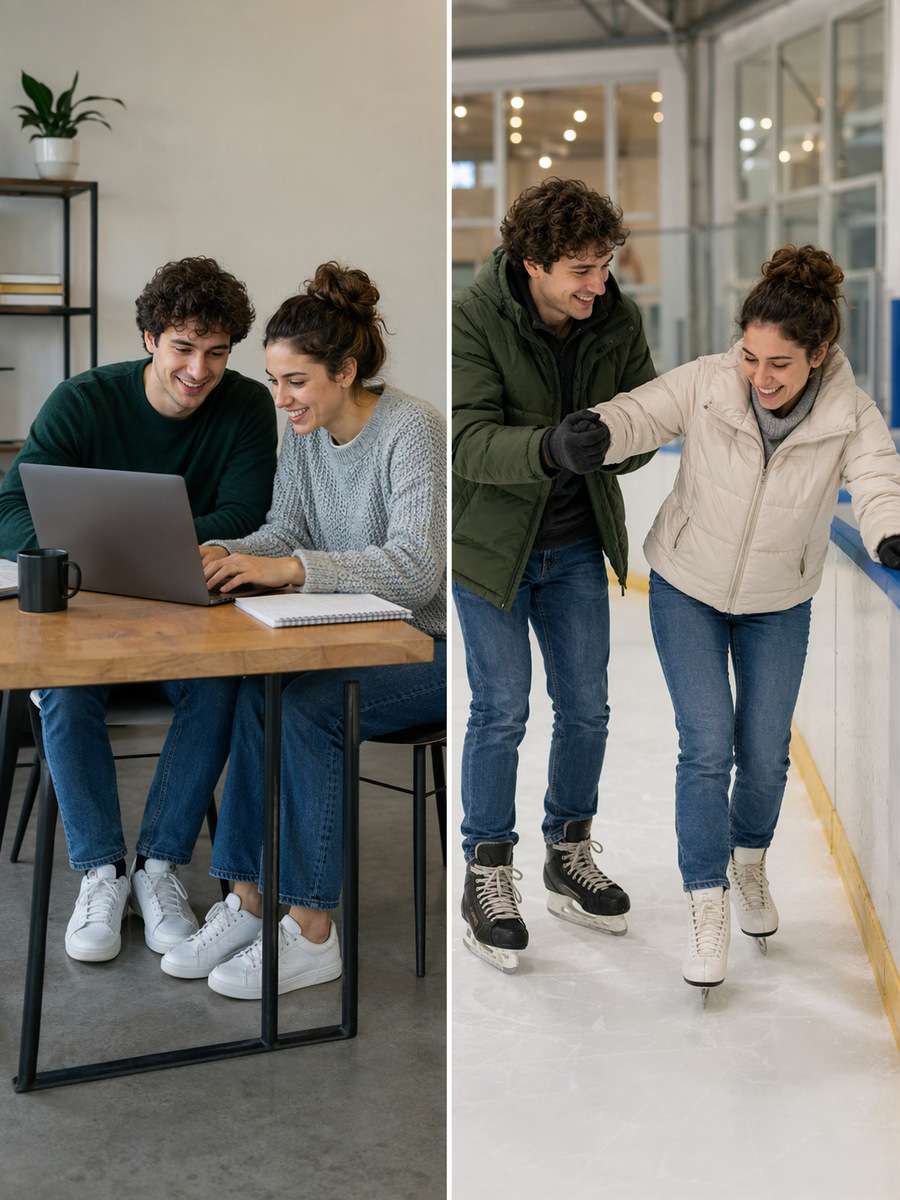
Use a matching input photograph before changing the rink scene. Recommended: a photo already showing two people. Stage one friend helps the other balance near the barrier, gloves linked and genuine amused expressions. Keep their height relationship and two pairs of skates plausible. Keep complete boots and skates in frame for action shots; use a stable horizon and natural shadows. Maintain the original faces, hairstyles, age and exact number of people. Keep body weight balanced, skates anatomically correct and blades physically contacting the rink; give the ice a believable shadow or reflection. Do not invent sports awards or risky impossible tricks. Avoid hovering skates, missing feet, frozen facial expressions, extra fingers and unrealistic body torsion.
Indoor Practice Under Cool Lights
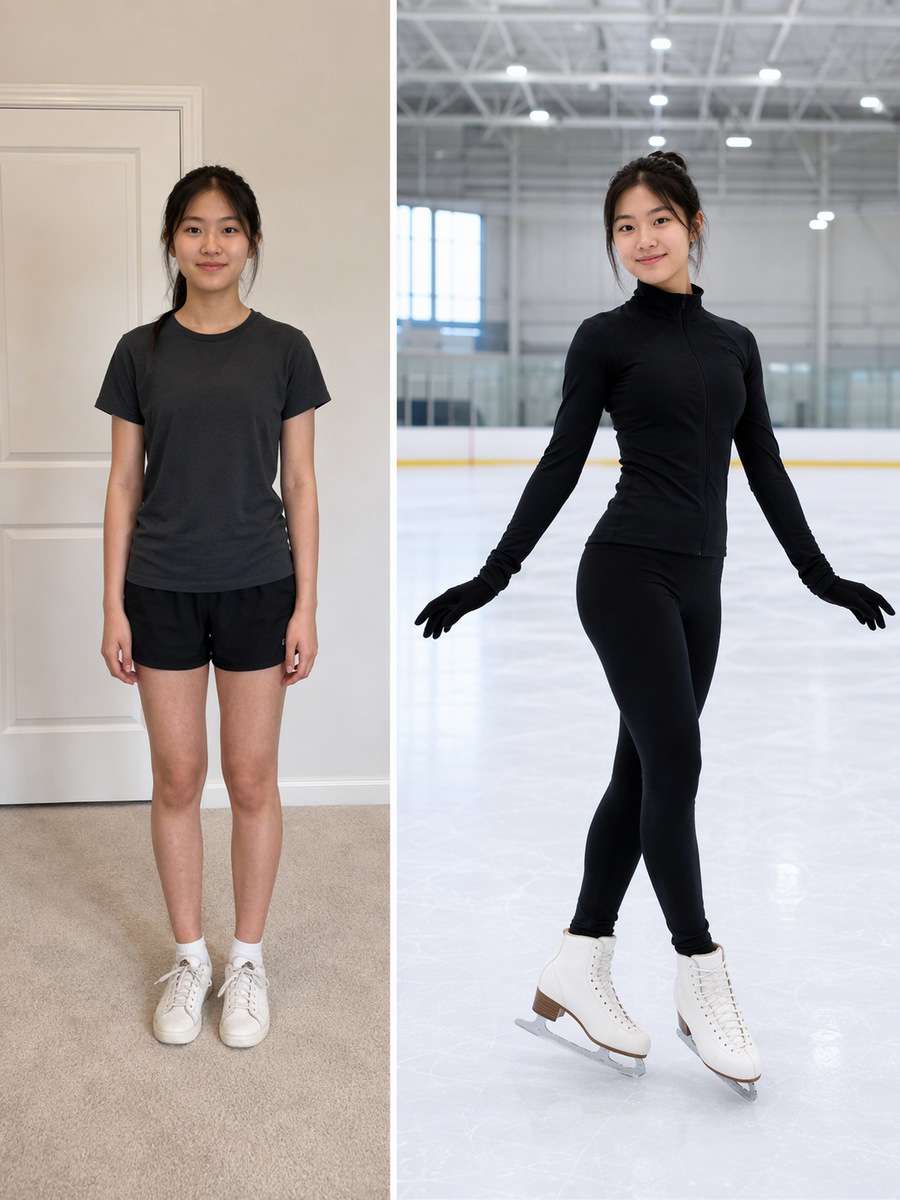
Use my original photo as the source for a rink edit. Best reference: a full-body athletic source. Stage a clean bright indoor ice arena rehearsal portrait, black training attire, white skates and natural overhead light. Do not add fake competition banners or medals. Let the winter light fall physically on faces and ice without washing out the main action. Maintain the original faces, hairstyles, age and exact number of people. Keep body weight balanced, skates anatomically correct and blades physically contacting the rink; give the ice a believable shadow or reflection. Do not invent sports awards or risky impossible tricks. Avoid hovering skates, missing feet, frozen facial expressions, extra fingers and unrealistic body torsion.
Rinkside Scarf Adjustment
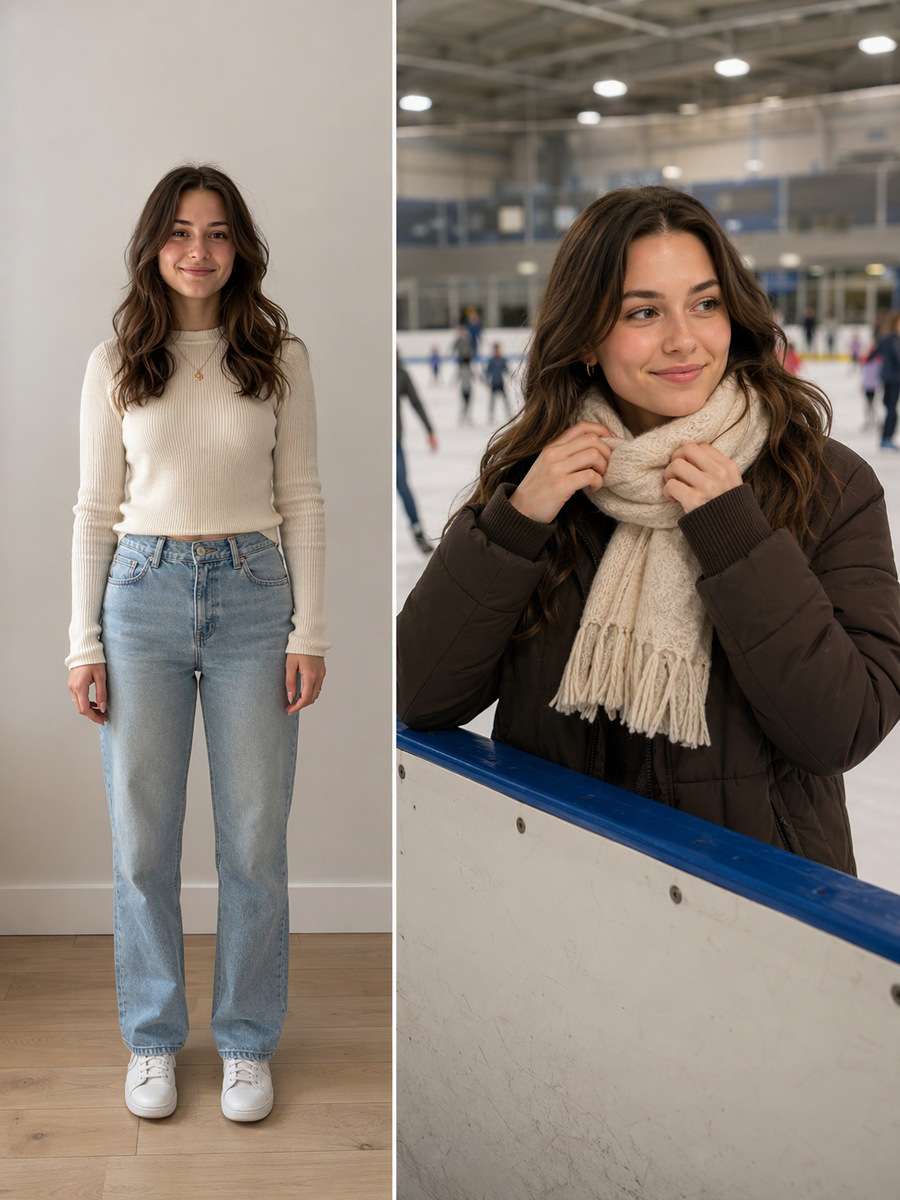
Keep the real subject from the attached picture. Ideal starting image: a source waist-up portrait. Stage a mid-chest winter candid adjusting a scarf while standing safely behind the rink barrier, blurred skaters beyond. Hands and scarf must be plausible; no on-ice phone handling. Keep complete boots and skates in frame for action shots; use a stable horizon and natural shadows. Maintain the original faces, hairstyles, age and exact number of people. Keep body weight balanced, skates anatomically correct and blades physically contacting the rink; give the ice a believable shadow or reflection. Do not invent sports awards or risky impossible tricks. Avoid hovering skates, missing feet, frozen facial expressions, extra fingers and unrealistic body torsion.
Mid-Glide Side Profile
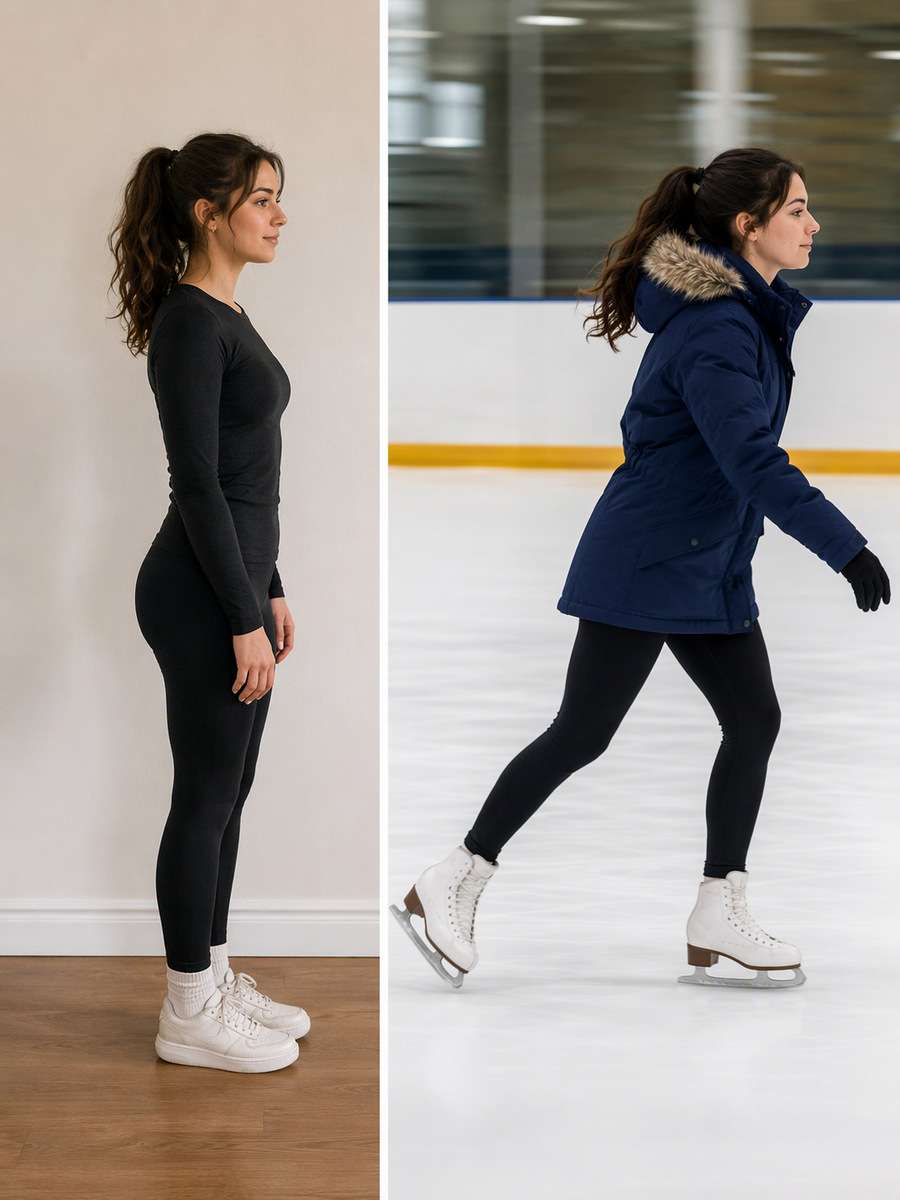
Preserve every actual face shown in the upload. Suitable source: a full-body source showing sideways stance. Stage a relaxed skater moving left to right in a navy parka, one leg pushing and light background motion blur. Face profile recognizable and blade direction consistent. Let the winter light fall physically on faces and ice without washing out the main action. Maintain the original faces, hairstyles, age and exact number of people. Keep body weight balanced, skates anatomically correct and blades physically contacting the rink; give the ice a believable shadow or reflection. Do not invent sports awards or risky impossible tricks. Avoid hovering skates, missing feet, frozen facial expressions, extra fingers and unrealistic body torsion.
Family Rink Portrait
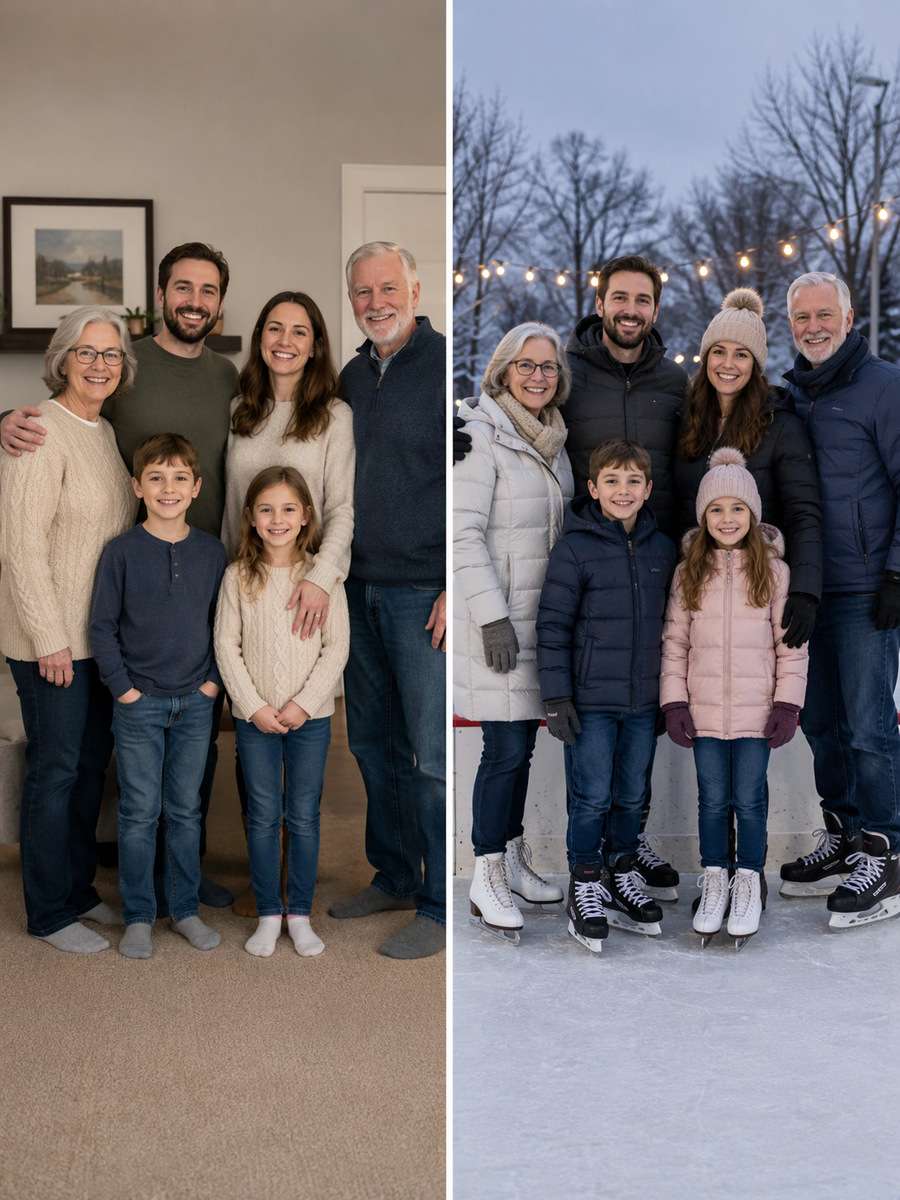
Treat the source as a record of the person's proportions. Start with a family source photo with exact family members. Stage a safe stationary multigenerational group portrait along an outdoor rink barrier, winter jackets and one pair of skates per person. Keep the exact original people; no young child performing risky stunts. Keep complete boots and skates in frame for action shots; use a stable horizon and natural shadows. Maintain the original faces, hairstyles, age and exact number of people. Keep body weight balanced, skates anatomically correct and blades physically contacting the rink; give the ice a believable shadow or reflection. Do not invent sports awards or risky impossible tricks. Avoid hovering skates, missing feet, frozen facial expressions, extra fingers and unrealistic body torsion.
Skate Bag After Practice
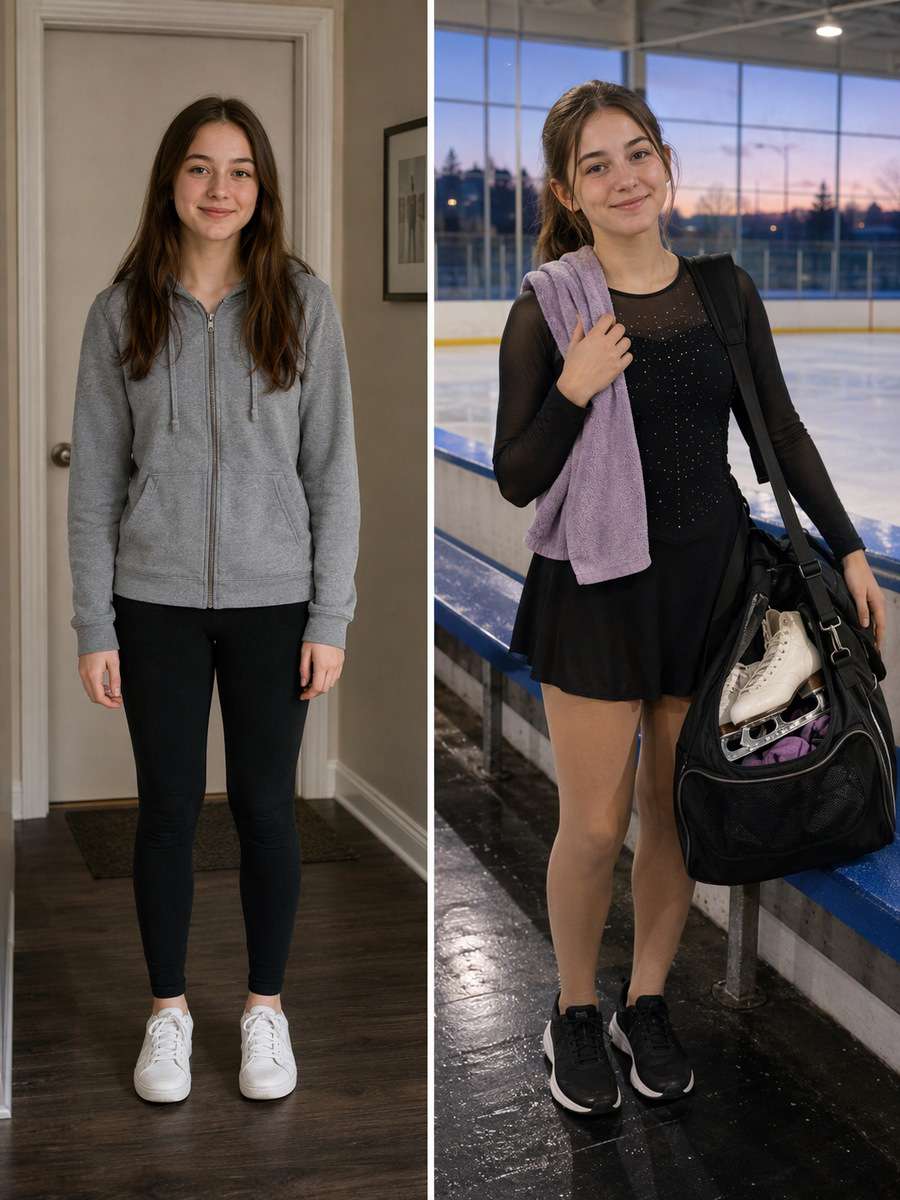
Use a matching input photograph before changing the rink scene. Recommended: a standing athlete portrait. Stage an end-of-session photo beside the bench with skates carried in a shoulder bag and towel, early evening light. Skates should not appear on feet if carried in the bag. Let the winter light fall physically on faces and ice without washing out the main action. Maintain the original faces, hairstyles, age and exact number of people. Keep body weight balanced, skates anatomically correct and blades physically contacting the rink; give the ice a believable shadow or reflection. Do not invent sports awards or risky impossible tricks. Avoid hovering skates, missing feet, frozen facial expressions, extra fingers and unrealistic body torsion.
Snowy Rink Entrance
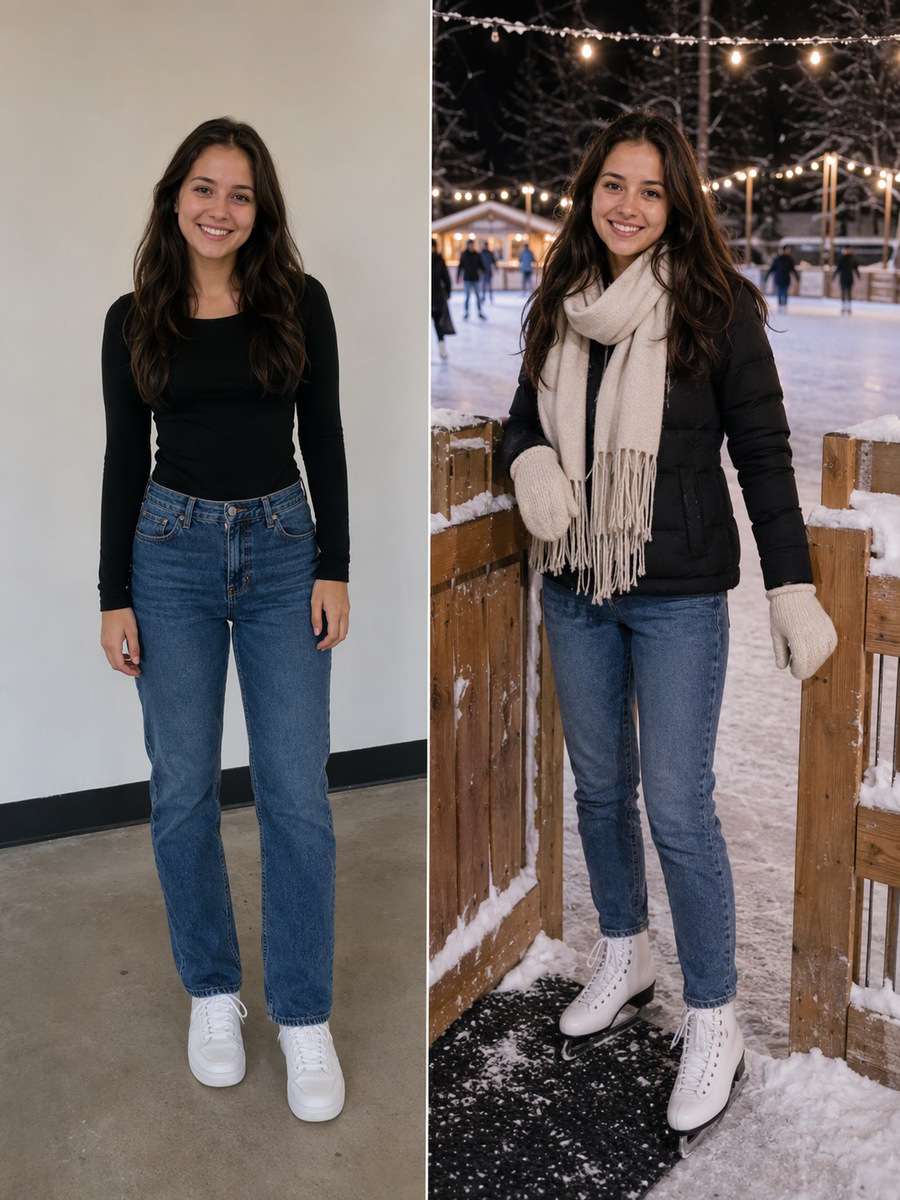
Use my original photo as the source for a rink edit. Best reference: a standing source photograph. Stage a full-body portrait at the rink gate with scarf, rental skates and a wood entry fence dusted with snow. No invented ticket prices or signage, plausible shadows. Keep complete boots and skates in frame for action shots; use a stable horizon and natural shadows. Maintain the original faces, hairstyles, age and exact number of people. Keep body weight balanced, skates anatomically correct and blades physically contacting the rink; give the ice a believable shadow or reflection. Do not invent sports awards or risky impossible tricks. Avoid hovering skates, missing feet, frozen facial expressions, extra fingers and unrealistic body torsion.
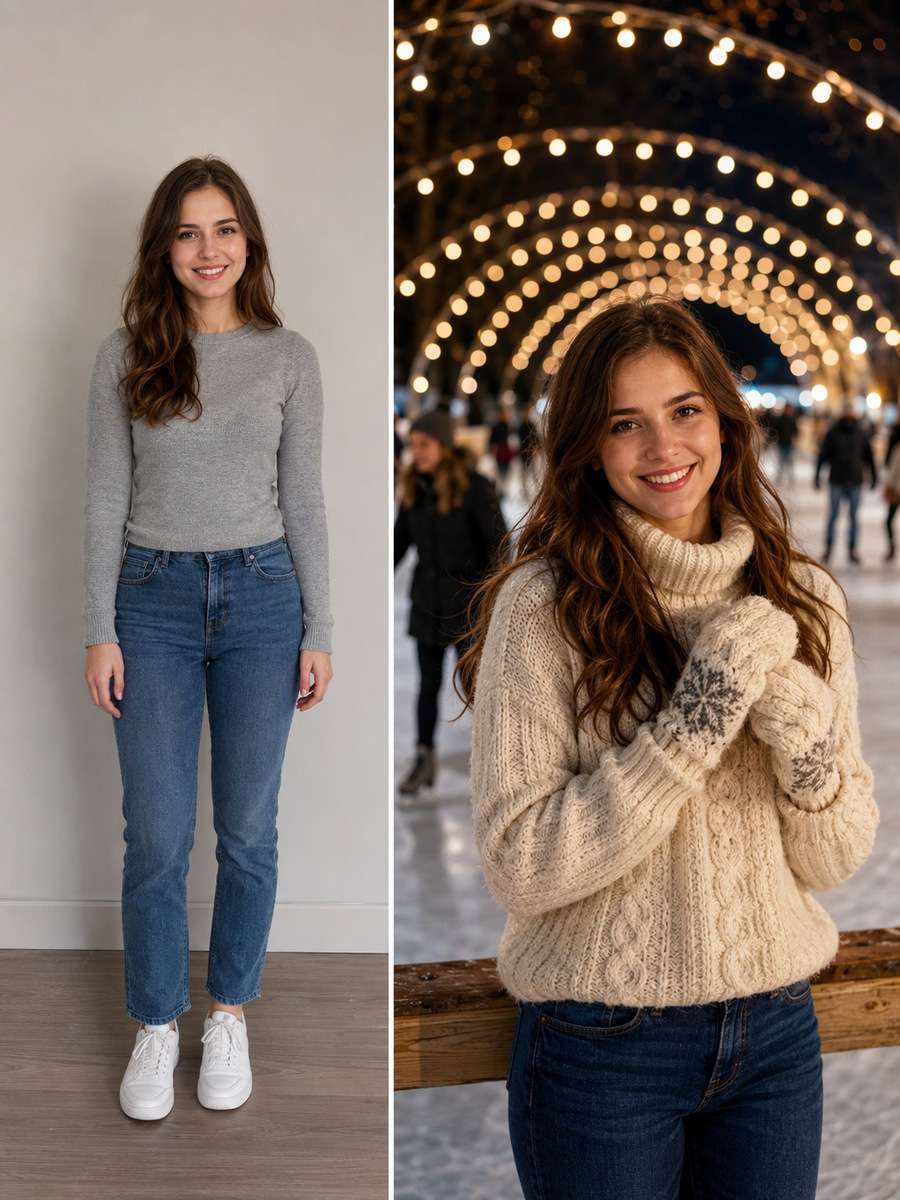
Holiday Light Rink Portrait
Keep the real subject from the attached picture. Ideal starting image: a portrait selfie. Stage a waist-up winter portrait by warm bulb arches, knitted mittens and lightly defocused skaters in the background. Keep face clean and avoid halos or overbloomed lights. Let the winter light fall physically on faces and ice without washing out the main action. Maintain the original faces, hairstyles, age and exact number of people. Keep body weight balanced, skates anatomically correct and blades physically contacting the rink; give the ice a believable shadow or reflection. Do not invent sports awards or risky impossible tricks. Avoid hovering skates, missing feet, frozen facial expressions, extra fingers and unrealistic body torsion.
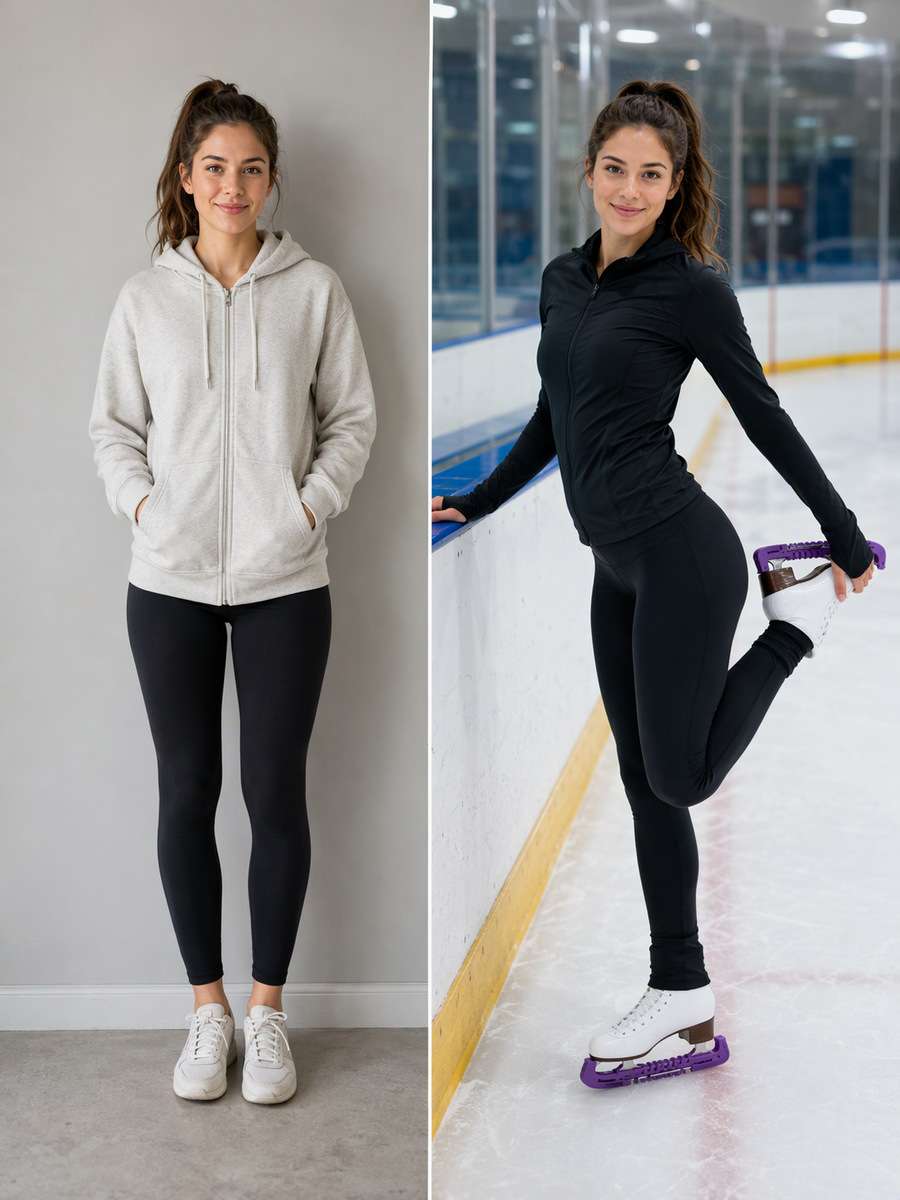
Athlete Warm-Up Stretch
Preserve every actual face shown in the upload. Suitable source: a full-body athletic pose reference. Stage a trained adult performing a safe standing off-ice ankle stretch beside the barrier, skate guards visible. Keep both feet supported and do not imply a jump. Keep complete boots and skates in frame for action shots; use a stable horizon and natural shadows. Maintain the original faces, hairstyles, age and exact number of people. Keep body weight balanced, skates anatomically correct and blades physically contacting the rink; give the ice a believable shadow or reflection. Do not invent sports awards or risky impossible tricks. Avoid hovering skates, missing feet, frozen facial expressions, extra fingers and unrealistic body torsion.
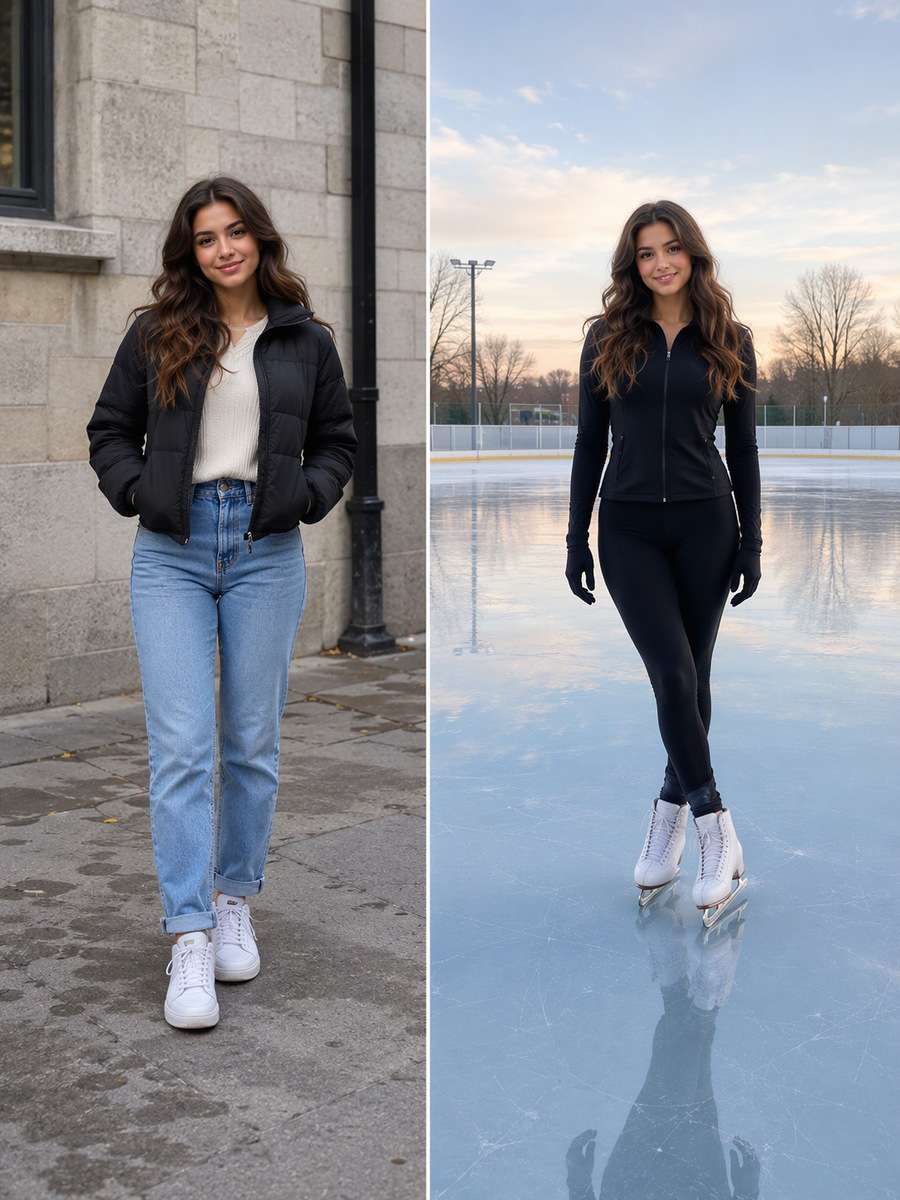
Mirror-Flat Ice Reflection
Treat the source as a record of the person's proportions. Start with a full-body source photo. Stage a poised centered rink portrait with distinct skate reflections on freshly resurfaced ice and pale sky light. Reflections align under blades, not a water-lake mirror. Let the winter light fall physically on faces and ice without washing out the main action. Maintain the original faces, hairstyles, age and exact number of people. Keep body weight balanced, skates anatomically correct and blades physically contacting the rink; give the ice a believable shadow or reflection. Do not invent sports awards or risky impossible tricks. Avoid hovering skates, missing feet, frozen facial expressions, extra fingers and unrealistic body torsion.
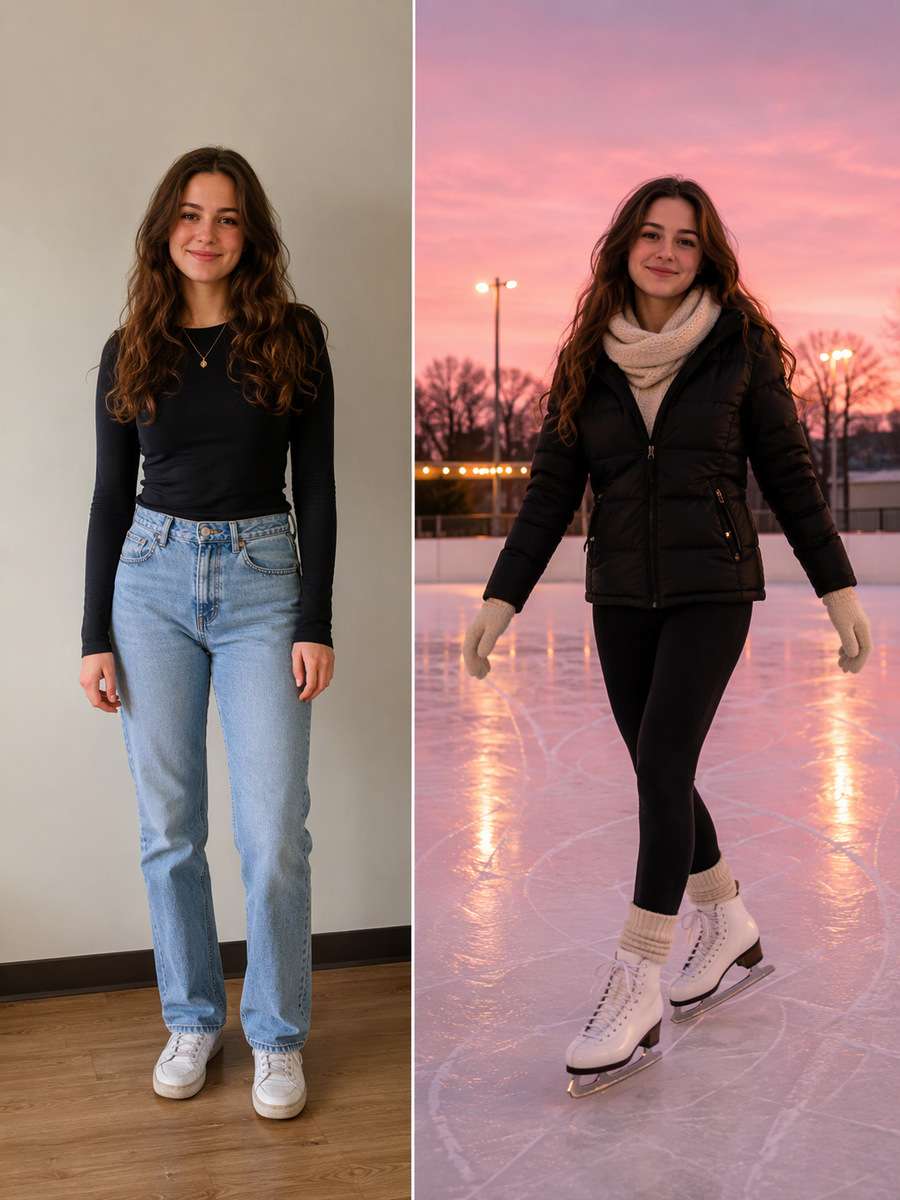
Final Lap Sunset Memory
Use a matching input photograph before changing the rink scene. Recommended: a photo of one or two real subjects. Stage a mellow end-of-day slow glide under pink winter sky with visible track lines and soft warm rink lights. Keep source subject count, supported blades and real facial likeness. Keep complete boots and skates in frame for action shots; use a stable horizon and natural shadows. Maintain the original faces, hairstyles, age and exact number of people. Keep body weight balanced, skates anatomically correct and blades physically contacting the rink; give the ice a believable shadow or reflection. Do not invent sports awards or risky impossible tricks. Avoid hovering skates, missing feet, frozen facial expressions, extra fingers and unrealistic body torsion.
Skating scenes fail when the body becomes a floating fashion pose. A convincing frame needs a clear support foot and believable travel direction. AI ice rink photoshoot prompts work best when the skate blade, support leg and camera angle tell the same story.
Describe the Movement Precisely
For beginners, ask for a hand on the rail, bent knees and small steady steps, not elite jumps.
For a trained figure skater, use a matching full-body reference and describe an achievable posed extension or rehearsal hold.
Keep boot, ankle and skate-blade geometry visible; request slight directional motion in the background rather than smearing the face.
Use the Rink Light as Part of the Story
Outdoor blue hour combines a cool sky with warm string lights; indoor arena light is often bright and even.
Ask for reflected light on the ice and physically plausible shadows under the blades.
If the photo includes a couple, keep exactly the original two people and preserve each person's face, height relationship and hands.
Ice Skating Photos Worth Saving and Sharing
An honest wobble and a smooth glide tell different stories. Match the image mood to the experience you want to remember.
Winter Date Portraits
Create a warm two-person skating moment without blending faces or hands.
Beginner Rink Photo Dump
Mix lace-up details, rail-side laughter and a careful first glide.
Figure Skating Portfolio Ideas
Explore posed athlete images that preserve realistic blade, limb and costume anatomy.
Seasonal Social Covers
Use blue-hour lighting and skates in frame so the setting reads instantly.
FAQs About ChatGPT Ice Skating Photo Prompts
1. What is a good ChatGPT ice skating photo prompt?
Name a specific rink action, clothing, lighting and crop. Include blade contact with the ice, body balance and identity preservation instead of asking for a generic winter portrait.
2. Can I make a couple ice skating photo from one picture?
Yes, if the original picture already contains both people. Ask to retain exactly two recognizable faces and a plausible hand-holding pose.
3. Why do AI ice skating photos sometimes show floating feet?
Prompts may omit the blades and contact points. Ask for full visible skates with blades resting on the ice and shadows or small reflections directly below.
4. How should figure skating photo editing prompts handle action poses?
Begin with a matching full-body athletic reference, state whether the pose is an easy glide or a supported practice hold, and keep blade contact realistic. Avoid inventing elite tricks from a close selfie.
5. How do I get an aesthetic night ice rink photo?
Use blue-hour or dark-sky lighting, a warm light source at the rink edge, clear facial features and restrained reflections on the ice. Keep the subject brighter than the background.
Recreate the viral No Scrubs dance with your own photo. Bring the iconic moves to life with AI.
Join the Dance Trend
Wassup in a Minute AI
Turn your photo into a streetwear anime character and sway to the beat in the viral white-background edit.
Create Your Anime Sway
AI Video Character Swap
What if someone else starred in your video? Swap any on-screen character with your favorite character using AI and bring a whole new twist to your scenes!