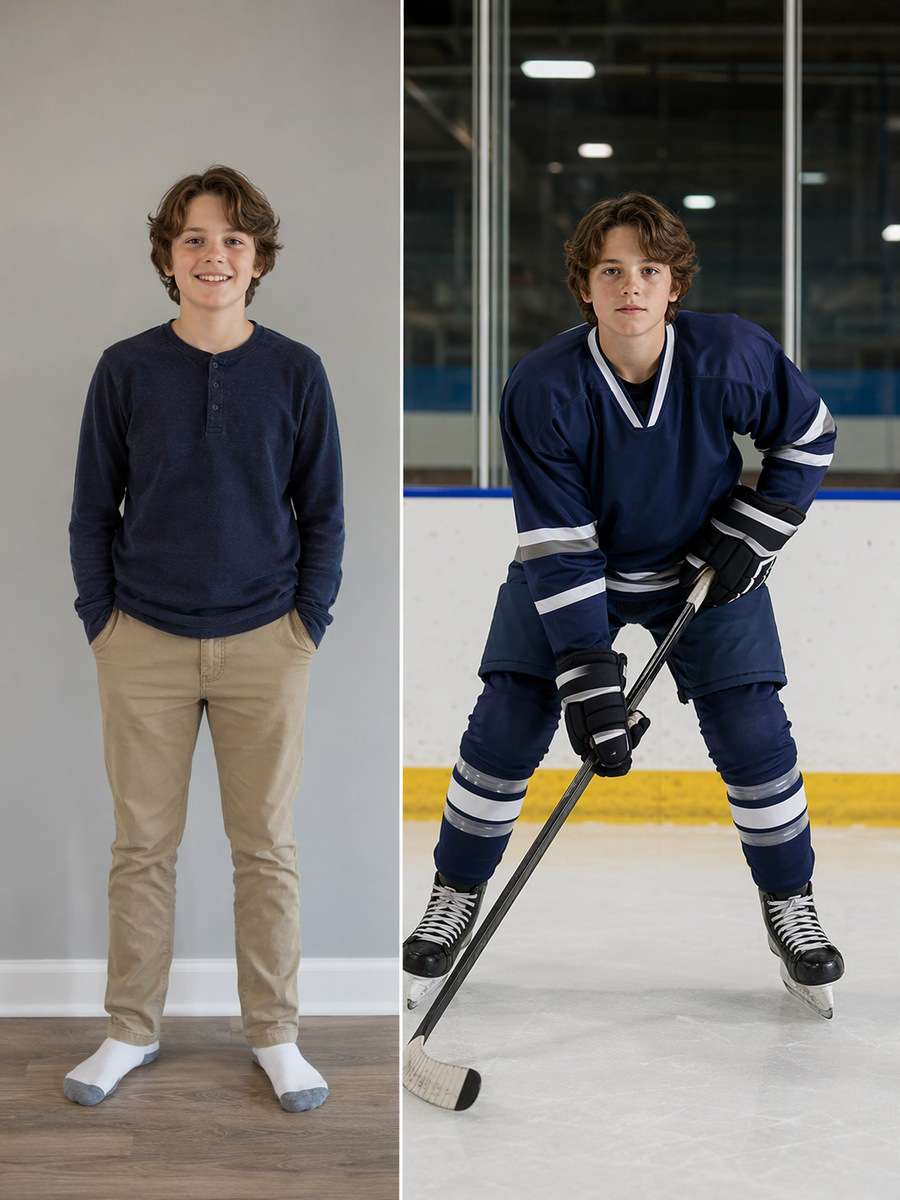
Home>AI Prompts>25 ChatGPT Ice Hockey Player Photo Prompts with Rink Action
25 ChatGPT Ice Hockey Player Photo Prompts with Rink Action
A hockey portrait should still look like the athlete who takes the ice. These ChatGPT Ice Hockey Player Photo Prompts include power poses with a stick, rink-side player photos, locker-room moments and crisp action near the boards. Match the protective equipment of the athlete, skating posture and jersey details to the reference image. From serious team-media portraits to energetic sports posters, every scene should feel physically possible on ice.
See rink-action shots, hockey roster portraits and player posters made with Media.io - powered by ChatGPT.
How to Make an Ice Hockey Player Poster from a Photo
Hockey player photography with real gear and rink geometry starts with a real source photo and a scene you can clearly describe. Use this three-step workflow to keep the result believable.
1
Choose the source photo that fits the scene
A consented athlete reference with full equipment where possible. Check that the source has enough visible detail for the visual change you plan, and only use pictures you are authorized to edit.
2
Copy a scene-specific editing prompt
Choose one of the 25 scene ideas below, then specify its camera position, setting and important materials. Protective gear fit and stick blade and puck placement help keep this edit on-theme.
3
Generate and review the result
Open the linked Media.io ChatGPT image-to-image tool, upload your own reference and paste the chosen prompt. Check incorrect hockey sticks, swapped jersey numbers, flying puck scale and unsafe collision poses before using the image publicly.
25 Hockey Player Action and Team-Media Photo Ideas
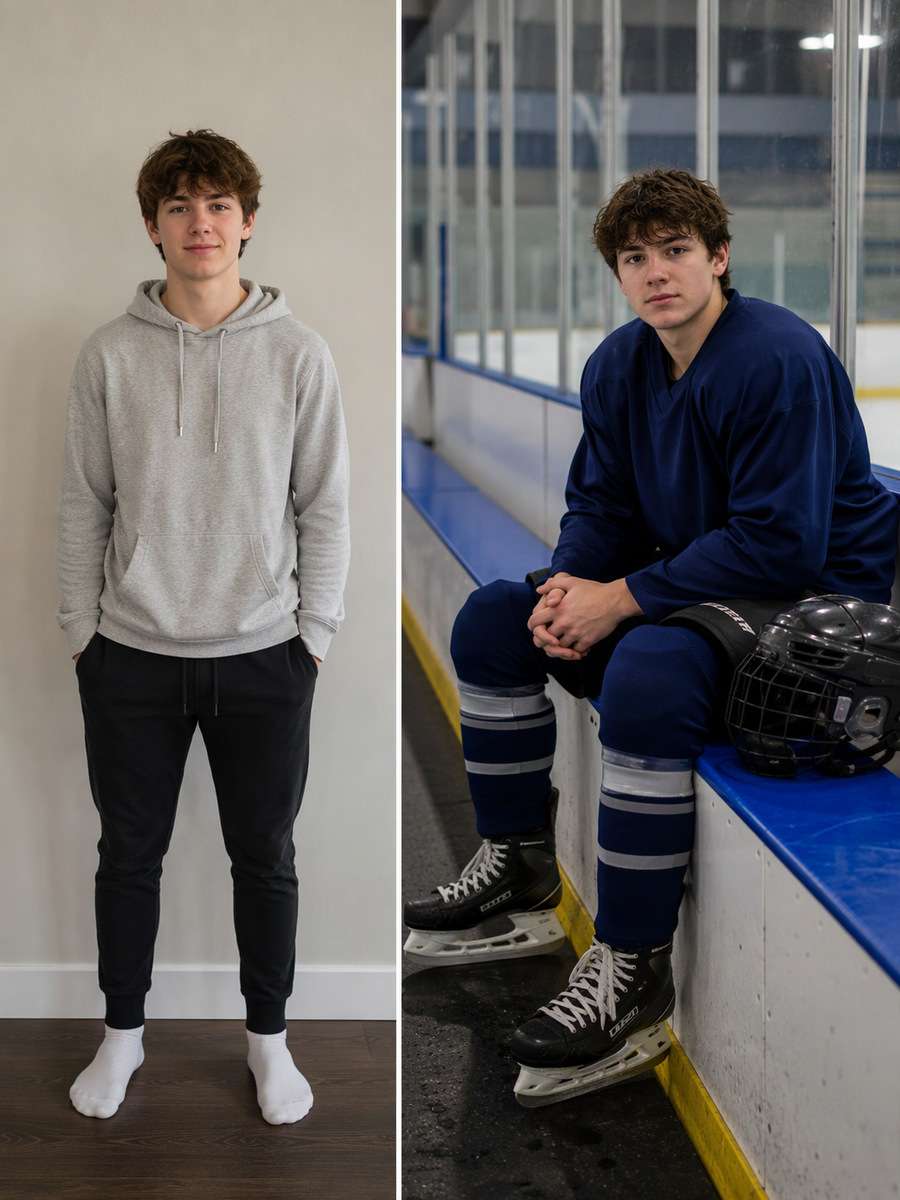
Rink Media Day Player Portrait
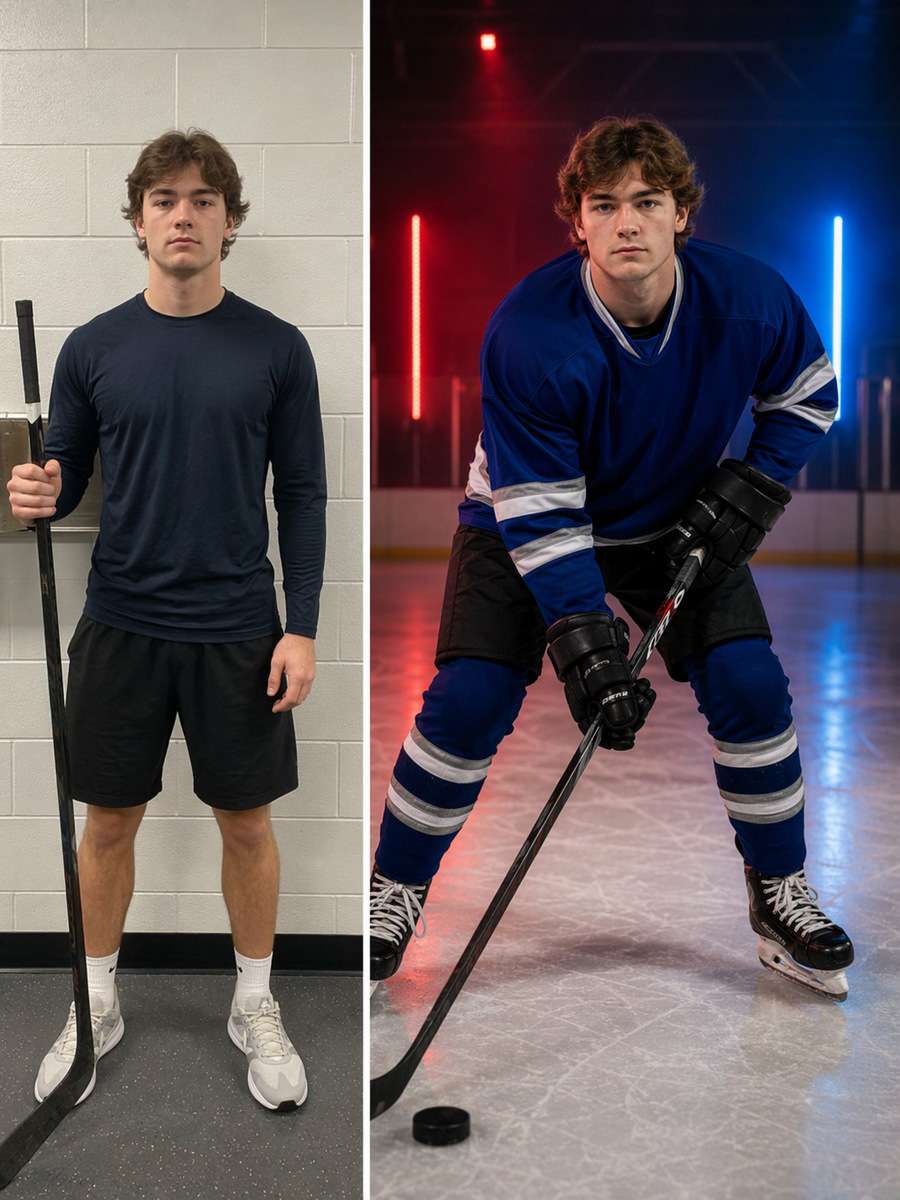
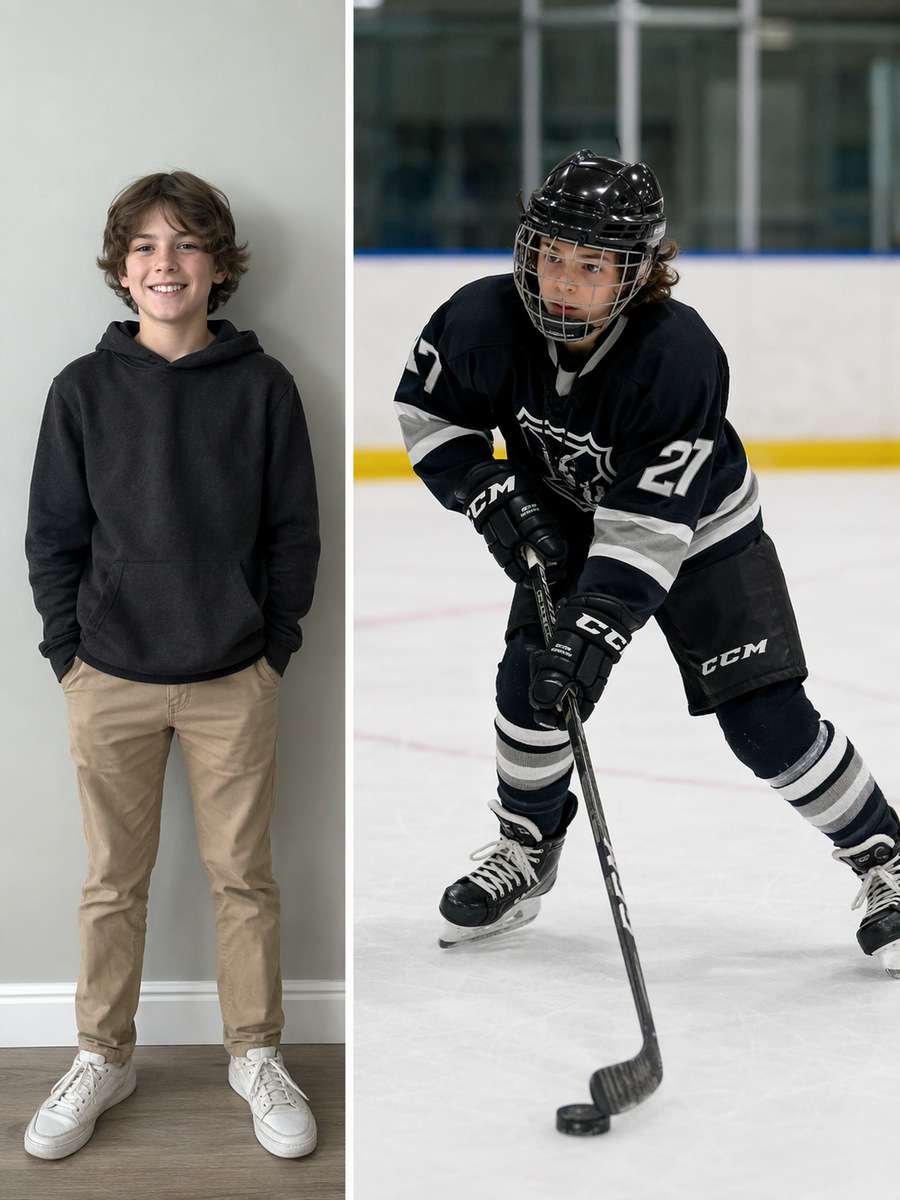
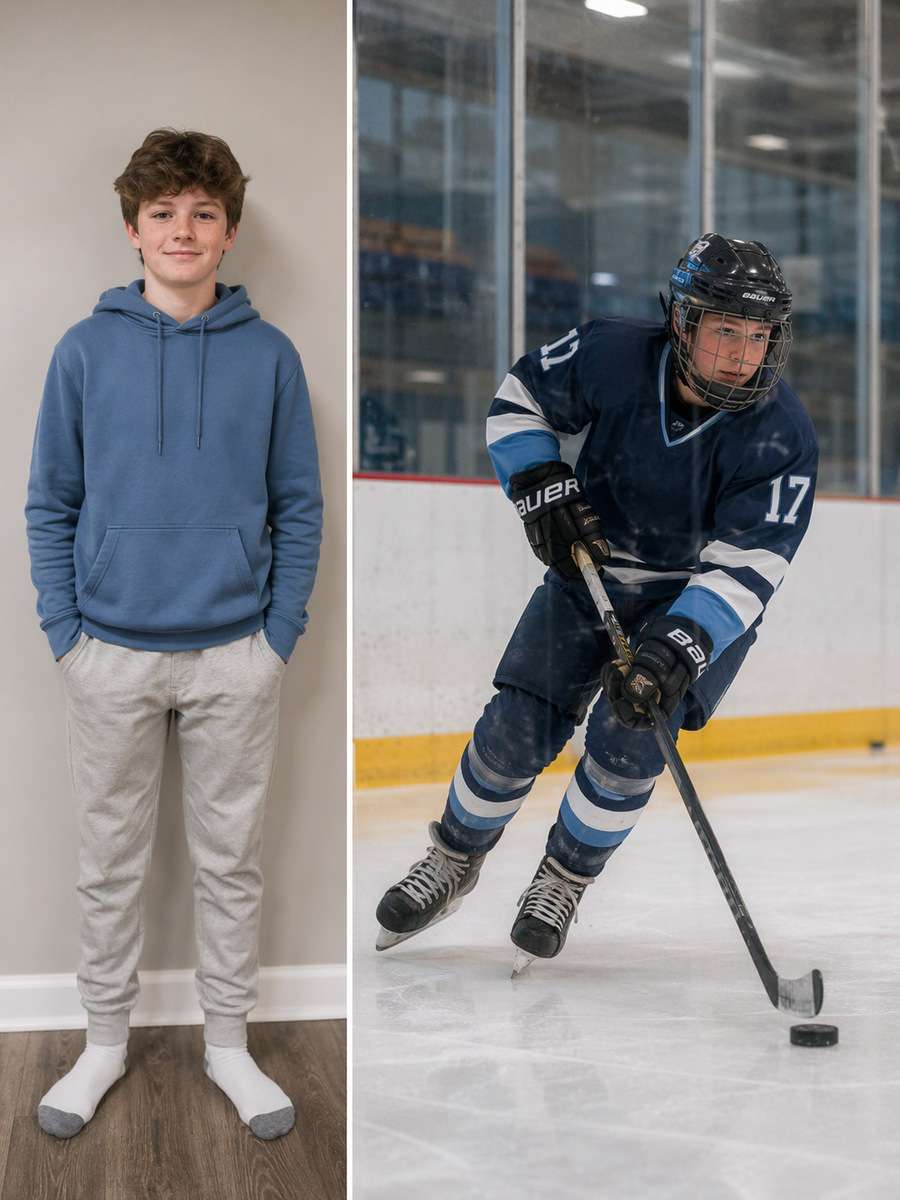
Use the original uploaded portrait as the person reference. For this particular concept, make a confident athlete pose in complete real hockey pads near boards, stick grounded and face recognizable. Preserve the actual athlete or instructor identity, and show equipment, weight distribution and body movement that are physically possible and safe. Match environmental reflections and shadows to the actual light sources. Preserve true jersey colors, helmet and pad geometry, correct stick grip, blades contacting ice and realistic puck size; avoid fictional sponsor logos, trophies or dangerous impacts. Avoid these common errors: incorrect hockey sticks, swapped jersey numbers, flying puck scale and unsafe collision poses. Create a usable standalone image suitable for team media day, athlete posters and hockey club pages.
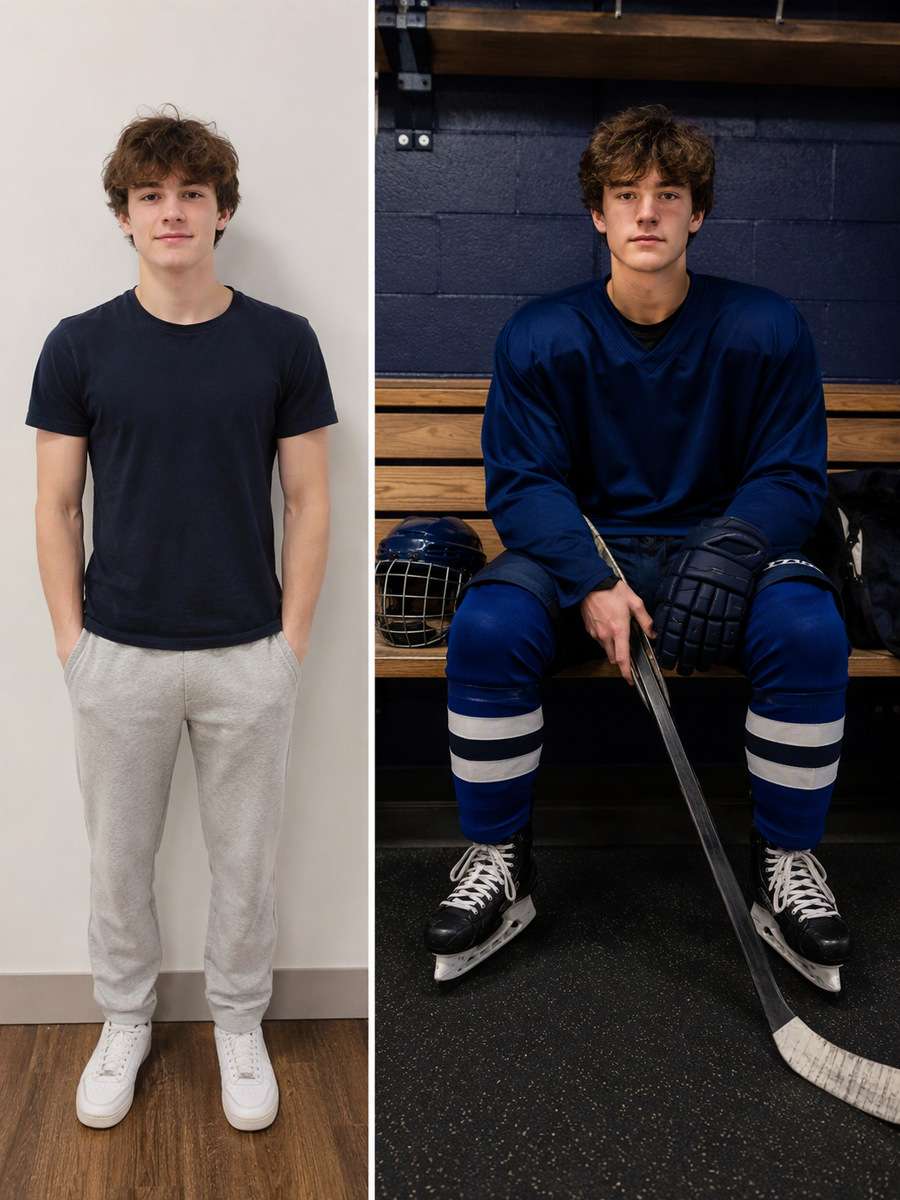
Locker Room Jersey Portrait
Restyle the existing photograph, retaining the same individual. For this particular concept, seat a player on wooden bench with gear arranged neatly, accurate jersey color and no fictitious team crest. Preserve the actual athlete or instructor identity, and show equipment, weight distribution and body movement that are physically possible and safe. Choose framing that gives the subject and its key details enough space to be recognizable. Preserve true jersey colors, helmet and pad geometry, correct stick grip, blades contacting ice and realistic puck size; avoid fictional sponsor logos, trophies or dangerous impacts. Avoid these common errors: incorrect hockey sticks, swapped jersey numbers, flying puck scale and unsafe collision poses. Create a usable standalone image suitable for team media day, athlete posters and hockey club pages.
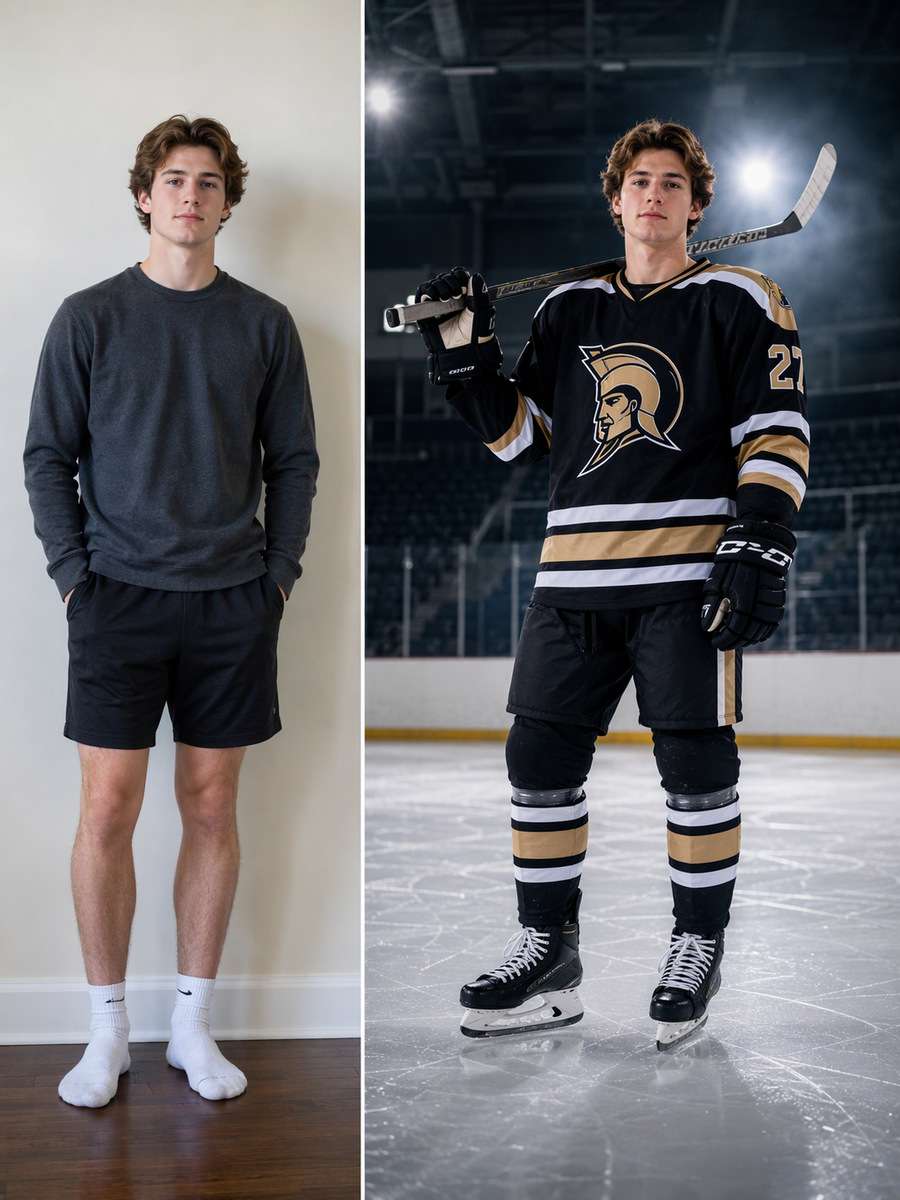
Stick on Shoulder Hero Shot
Begin with a clear consented selfie or body portrait. For this particular concept, show player holding a correctly shaped hockey stick over one shoulder on ice, skate blades touching surface. Preserve the actual athlete or instructor identity, and show equipment, weight distribution and body movement that are physically possible and safe. Use natural material textures and avoid forced high saturation or artificial glow. Preserve true jersey colors, helmet and pad geometry, correct stick grip, blades contacting ice and realistic puck size; avoid fictional sponsor logos, trophies or dangerous impacts. Avoid these common errors: incorrect hockey sticks, swapped jersey numbers, flying puck scale and unsafe collision poses. Create a usable standalone image suitable for team media day, athlete posters and hockey club pages.
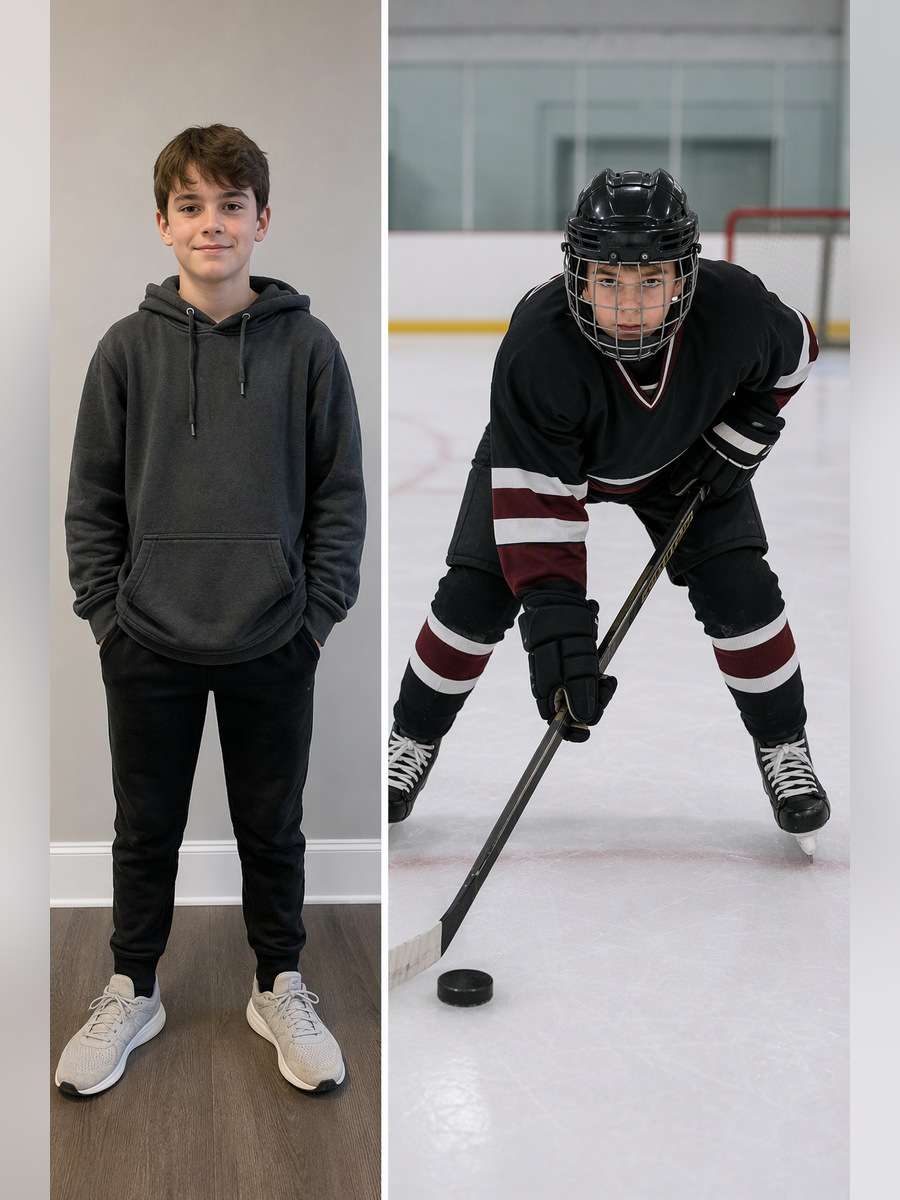
Faceoff Ready Position
Use the original uploaded portrait as the person reference. For this particular concept, capture player crouched in safe faceoff stance with glove on stick and puck at correct small scale. Preserve the actual athlete or instructor identity, and show equipment, weight distribution and body movement that are physically possible and safe. Keep hand positions, object contact points and camera perspective plausible. Preserve true jersey colors, helmet and pad geometry, correct stick grip, blades contacting ice and realistic puck size; avoid fictional sponsor logos, trophies or dangerous impacts. Avoid these common errors: incorrect hockey sticks, swapped jersey numbers, flying puck scale and unsafe collision poses. Create a usable standalone image suitable for team media day, athlete posters and hockey club pages.
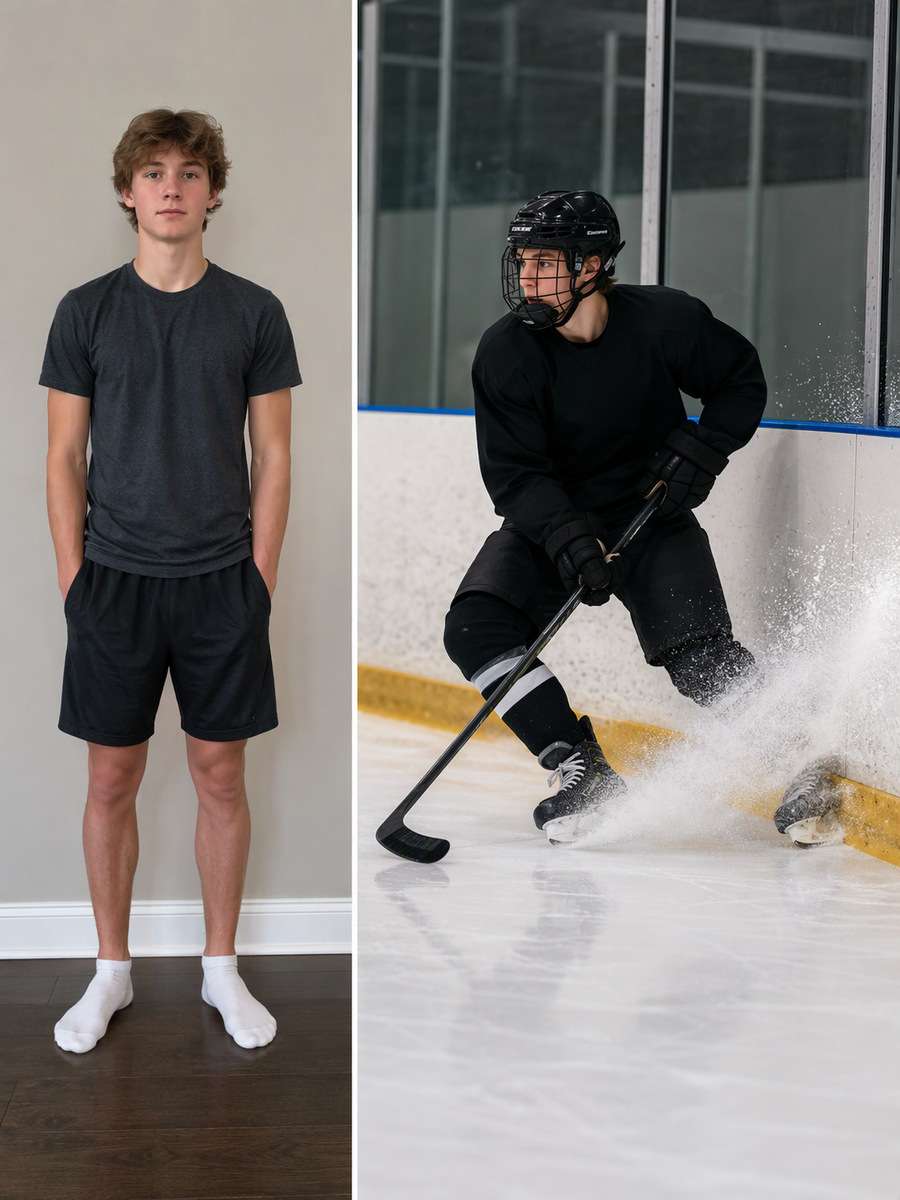
Skate Spray at Corner
Restyle the existing photograph, retaining the same individual. For this particular concept, freeze a safe controlled turn near rink boards with realistic ice spray behind blade, no body collision. Preserve the actual athlete or instructor identity, and show equipment, weight distribution and body movement that are physically possible and safe. Finish with restrained photographic detail rather than generic AI glamour effects. Preserve true jersey colors, helmet and pad geometry, correct stick grip, blades contacting ice and realistic puck size; avoid fictional sponsor logos, trophies or dangerous impacts. Avoid these common errors: incorrect hockey sticks, swapped jersey numbers, flying puck scale and unsafe collision poses. Create a usable standalone image suitable for team media day, athlete posters and hockey club pages.
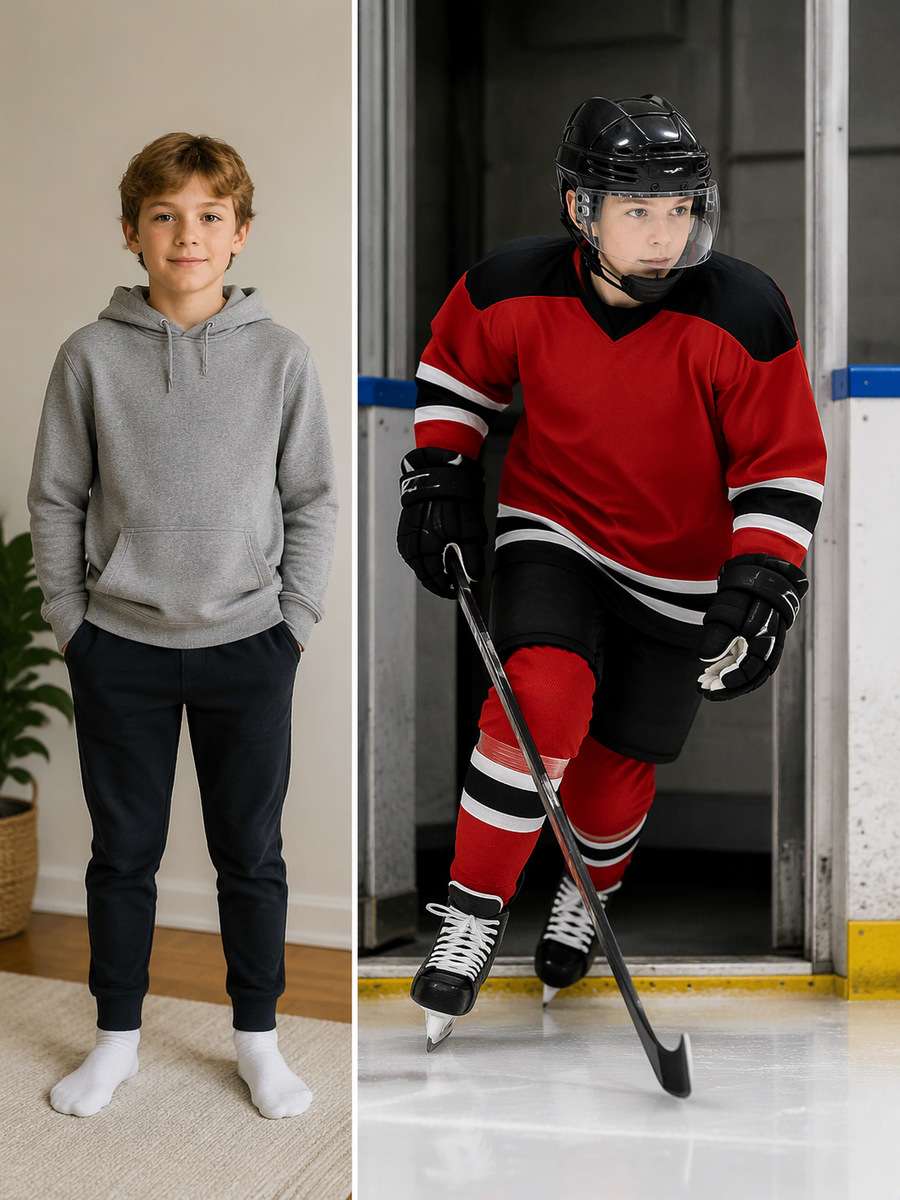
Helmet and Visor Detail
Begin with a clear consented selfie or body portrait. For this particular concept, frame athlete with fitted helmet and visible visor at rink entrance, no distorted face under plastic. Preserve the actual athlete or instructor identity, and show equipment, weight distribution and body movement that are physically possible and safe. Match environmental reflections and shadows to the actual light sources. Preserve true jersey colors, helmet and pad geometry, correct stick grip, blades contacting ice and realistic puck size; avoid fictional sponsor logos, trophies or dangerous impacts. Avoid these common errors: incorrect hockey sticks, swapped jersey numbers, flying puck scale and unsafe collision poses. Create a usable standalone image suitable for team media day, athlete posters and hockey club pages.
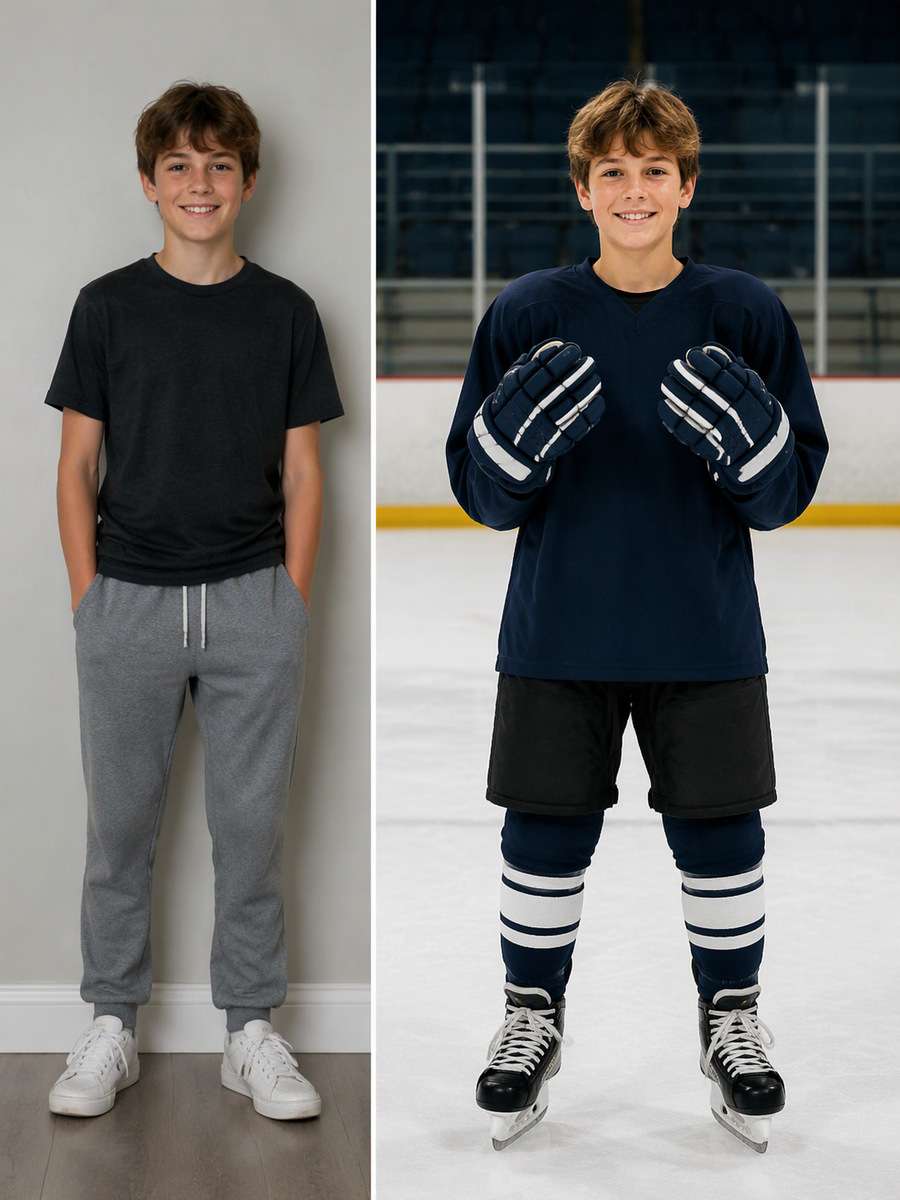
Hockey Gloves Close Portrait
Use the original uploaded portrait as the person reference. For this particular concept, photograph player holding both gloves in front of jersey in team photo setup with clearly separated fingers. Preserve the actual athlete or instructor identity, and show equipment, weight distribution and body movement that are physically possible and safe. Choose framing that gives the subject and its key details enough space to be recognizable. Preserve true jersey colors, helmet and pad geometry, correct stick grip, blades contacting ice and realistic puck size; avoid fictional sponsor logos, trophies or dangerous impacts. Avoid these common errors: incorrect hockey sticks, swapped jersey numbers, flying puck scale and unsafe collision poses. Create a usable standalone image suitable for team media day, athlete posters and hockey club pages.
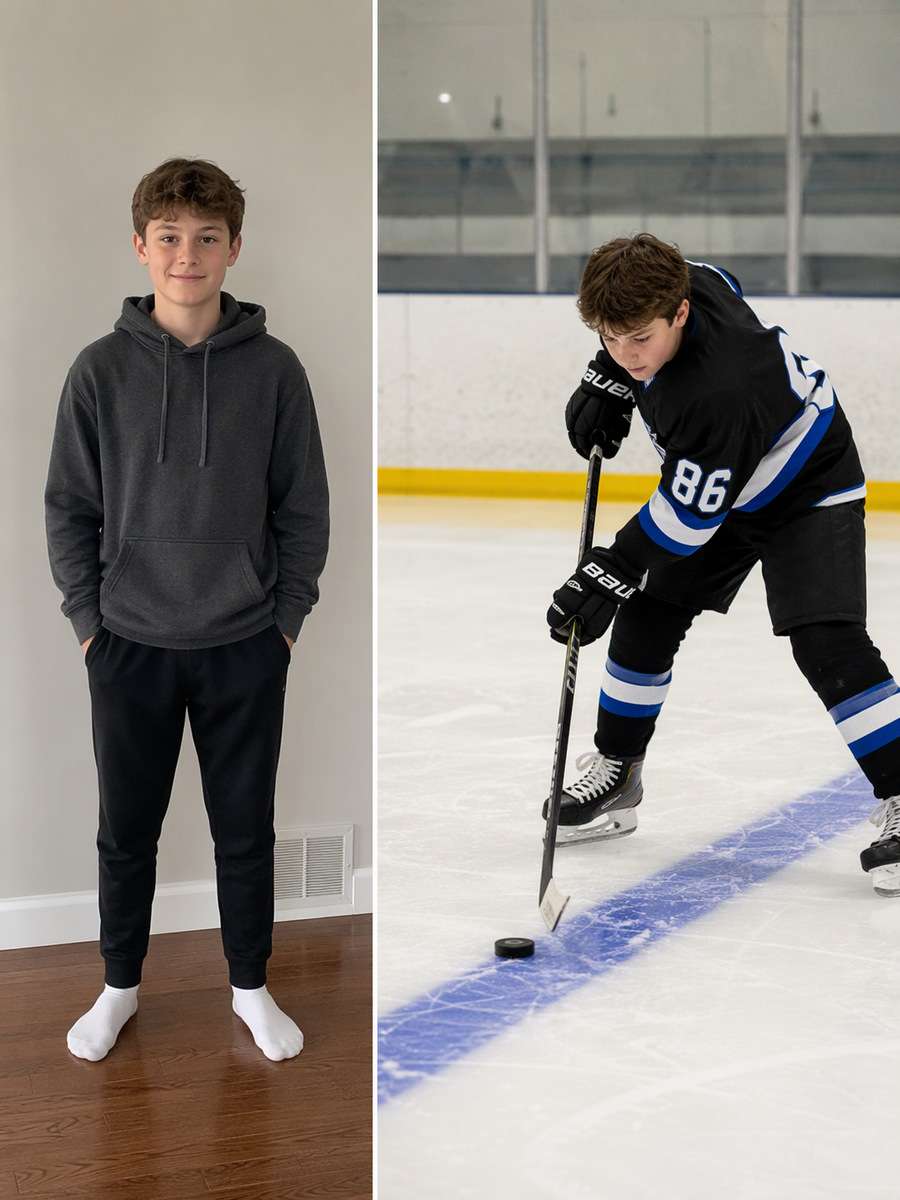
Blue Line Shooting Practice
Restyle the existing photograph, retaining the same individual. For this particular concept, show one skater preparing a controlled practice shot from blue line, realistic stick blade and puck. Preserve the actual athlete or instructor identity, and show equipment, weight distribution and body movement that are physically possible and safe. Use natural material textures and avoid forced high saturation or artificial glow. Preserve true jersey colors, helmet and pad geometry, correct stick grip, blades contacting ice and realistic puck size; avoid fictional sponsor logos, trophies or dangerous impacts. Avoid these common errors: incorrect hockey sticks, swapped jersey numbers, flying puck scale and unsafe collision poses. Create a usable standalone image suitable for team media day, athlete posters and hockey club pages.
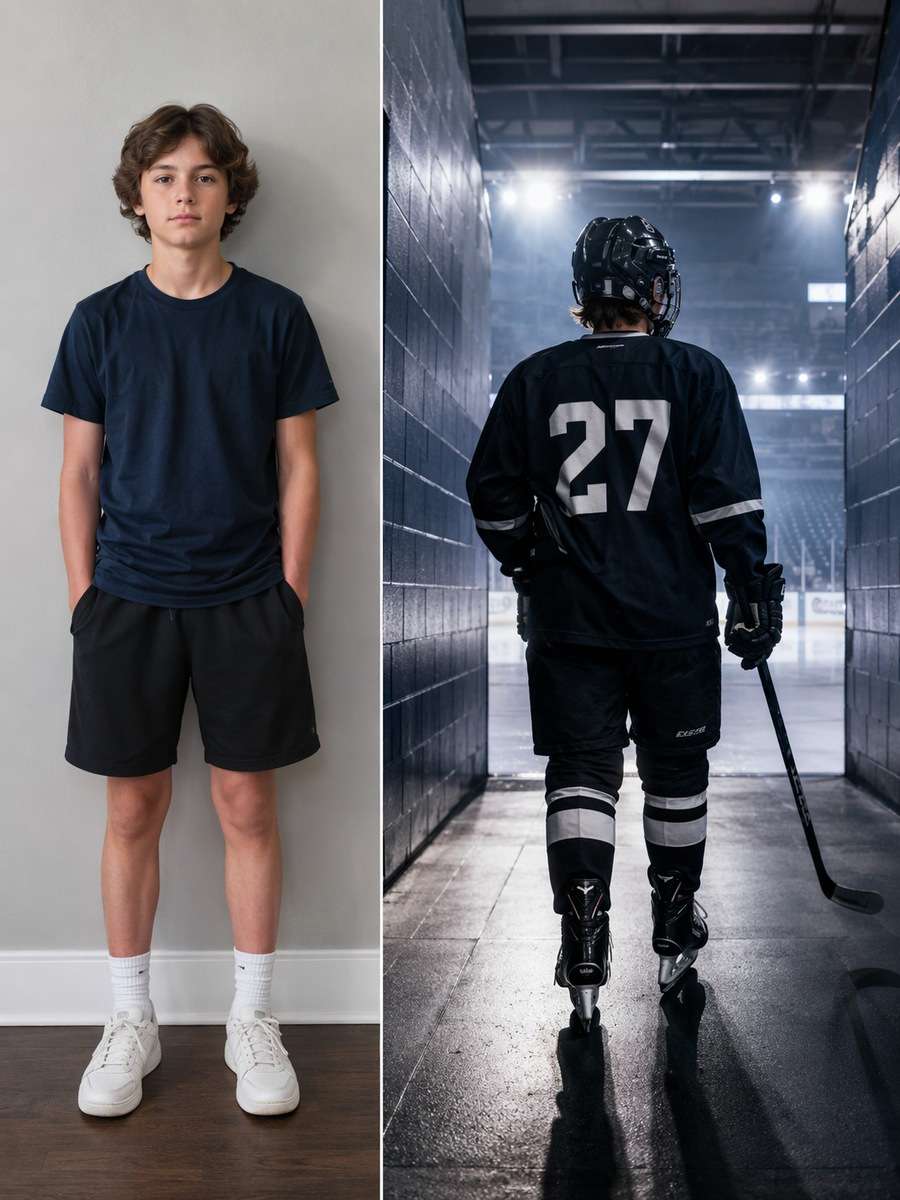
Cold Arena Tunnel Arrival
Begin with a clear consented selfie or body portrait. For this particular concept, frame fully equipped player walking from locker tunnel toward bright rink with real pad proportions. Preserve the actual athlete or instructor identity, and show equipment, weight distribution and body movement that are physically possible and safe. Keep hand positions, object contact points and camera perspective plausible. Preserve true jersey colors, helmet and pad geometry, correct stick grip, blades contacting ice and realistic puck size; avoid fictional sponsor logos, trophies or dangerous impacts. Avoid these common errors: incorrect hockey sticks, swapped jersey numbers, flying puck scale and unsafe collision poses. Create a usable standalone image suitable for team media day, athlete posters and hockey club pages.
Rink-Side Bench Moment
Use the original uploaded portrait as the person reference. For this particular concept, capture athlete seated on bench during break, helmet beside them and hockey boards visible. Preserve the actual athlete or instructor identity, and show equipment, weight distribution and body movement that are physically possible and safe. Finish with restrained photographic detail rather than generic AI glamour effects. Preserve true jersey colors, helmet and pad geometry, correct stick grip, blades contacting ice and realistic puck size; avoid fictional sponsor logos, trophies or dangerous impacts. Avoid these common errors: incorrect hockey sticks, swapped jersey numbers, flying puck scale and unsafe collision poses. Create a usable standalone image suitable for team media day, athlete posters and hockey club pages.
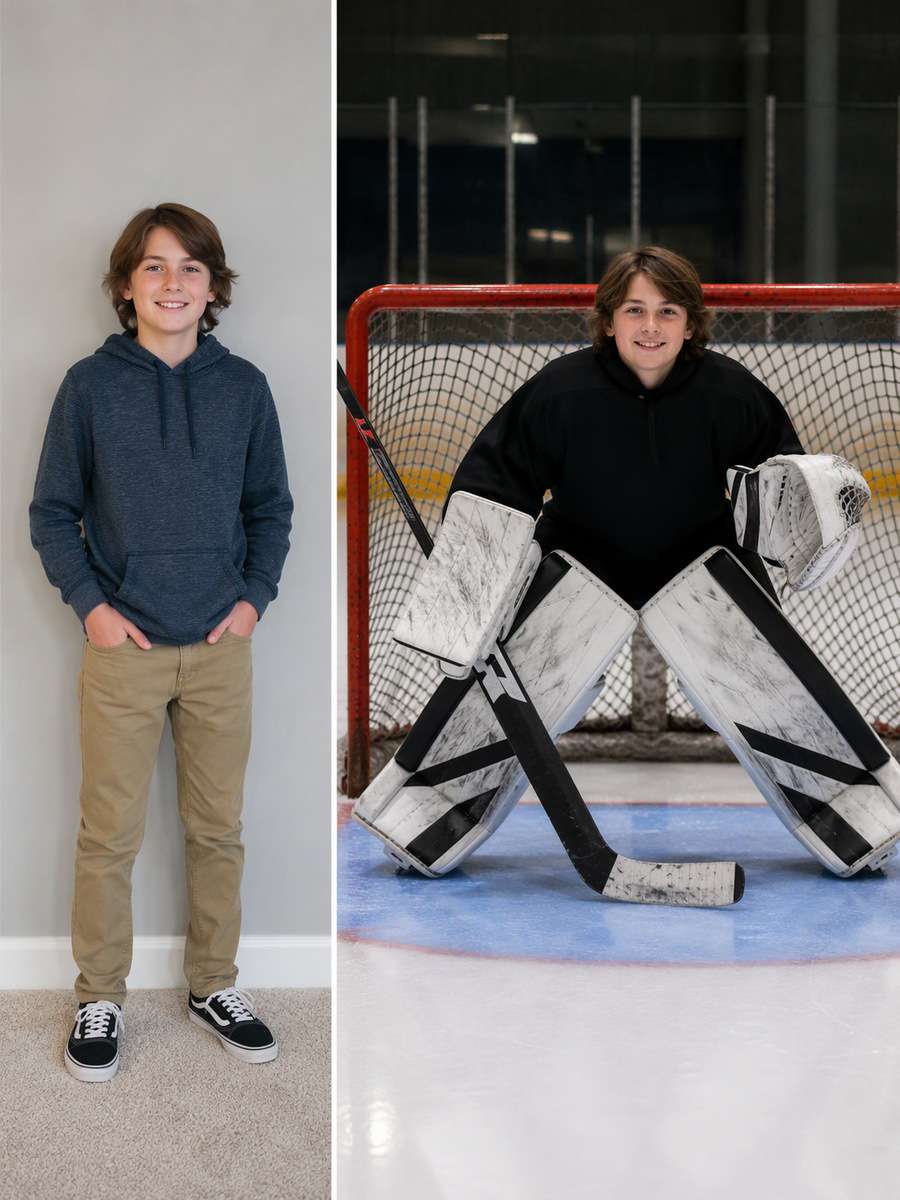
Goalie Equipment Portrait
Restyle the existing photograph, retaining the same individual. For this particular concept, make goalkeeper pose in appropriate wide leg pads and blocker beside empty net, no impossible stick grip. Preserve the actual athlete or instructor identity, and show equipment, weight distribution and body movement that are physically possible and safe. Match environmental reflections and shadows to the actual light sources. Preserve true jersey colors, helmet and pad geometry, correct stick grip, blades contacting ice and realistic puck size; avoid fictional sponsor logos, trophies or dangerous impacts. Avoid these common errors: incorrect hockey sticks, swapped jersey numbers, flying puck scale and unsafe collision poses. Create a usable standalone image suitable for team media day, athlete posters and hockey club pages.
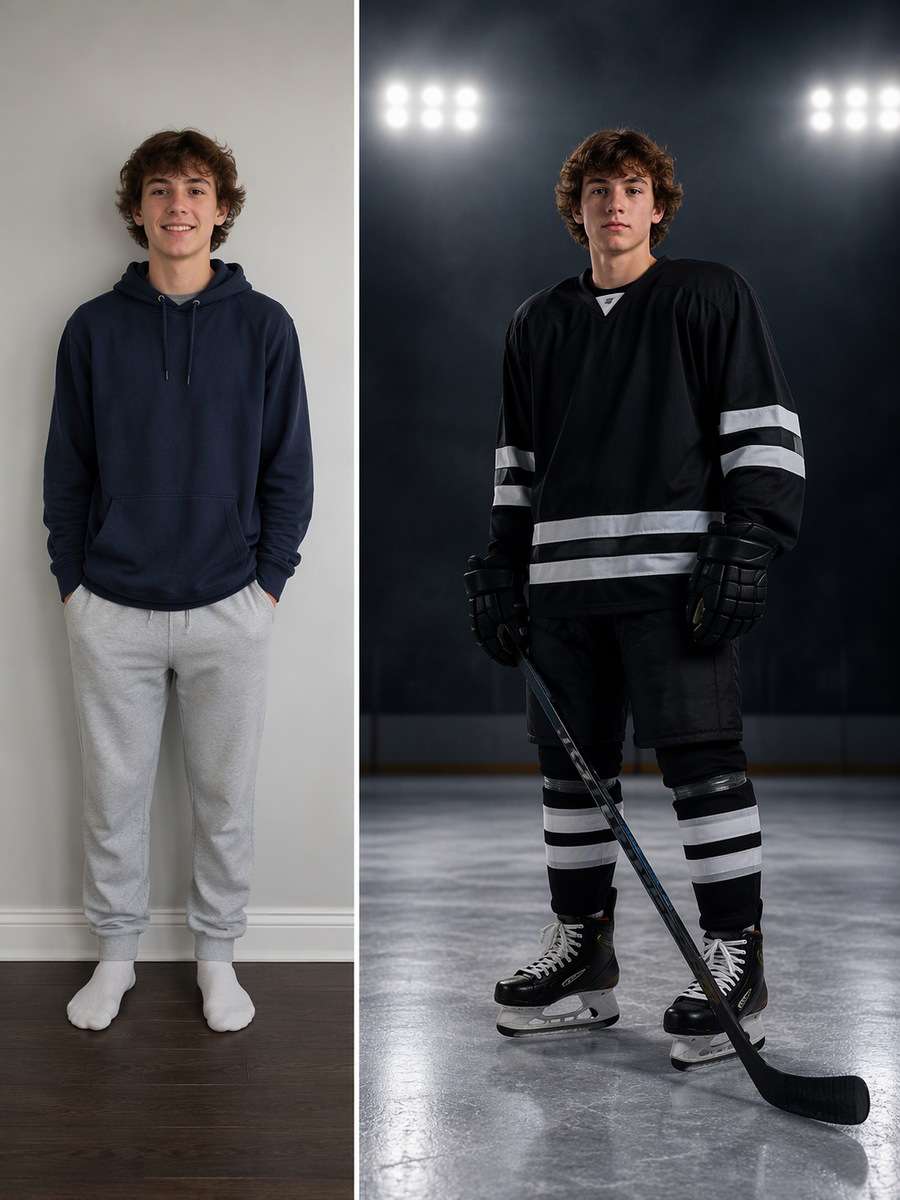
Team Roster Dark Backdrop
Begin with a clear consented selfie or body portrait. For this particular concept, create neutral dark media-day portrait with jersey texture visible and space for later roster text. Preserve the actual athlete or instructor identity, and show equipment, weight distribution and body movement that are physically possible and safe. Choose framing that gives the subject and its key details enough space to be recognizable. Preserve true jersey colors, helmet and pad geometry, correct stick grip, blades contacting ice and realistic puck size; avoid fictional sponsor logos, trophies or dangerous impacts. Avoid these common errors: incorrect hockey sticks, swapped jersey numbers, flying puck scale and unsafe collision poses. Create a usable standalone image suitable for team media day, athlete posters and hockey club pages.
Hockey Stick Tape Macro
Use the original uploaded portrait as the person reference. For this particular concept, focus on taped blade near ice with athlete visible behind, genuine skate and puck proportions. Preserve the actual athlete or instructor identity, and show equipment, weight distribution and body movement that are physically possible and safe. Use natural material textures and avoid forced high saturation or artificial glow. Preserve true jersey colors, helmet and pad geometry, correct stick grip, blades contacting ice and realistic puck size; avoid fictional sponsor logos, trophies or dangerous impacts. Avoid these common errors: incorrect hockey sticks, swapped jersey numbers, flying puck scale and unsafe collision poses. Create a usable standalone image suitable for team media day, athlete posters and hockey club pages.
Red and Blue Arena Lights
Restyle the existing photograph, retaining the same individual. For this particular concept, add restrained red-blue arena accent behind one player while keeping real skin and jersey color accurate. Preserve the actual athlete or instructor identity, and show equipment, weight distribution and body movement that are physically possible and safe. Keep hand positions, object contact points and camera perspective plausible. Preserve true jersey colors, helmet and pad geometry, correct stick grip, blades contacting ice and realistic puck size; avoid fictional sponsor logos, trophies or dangerous impacts. Avoid these common errors: incorrect hockey sticks, swapped jersey numbers, flying puck scale and unsafe collision poses. Create a usable standalone image suitable for team media day, athlete posters and hockey club pages.
Outdoor Winter Rink Player
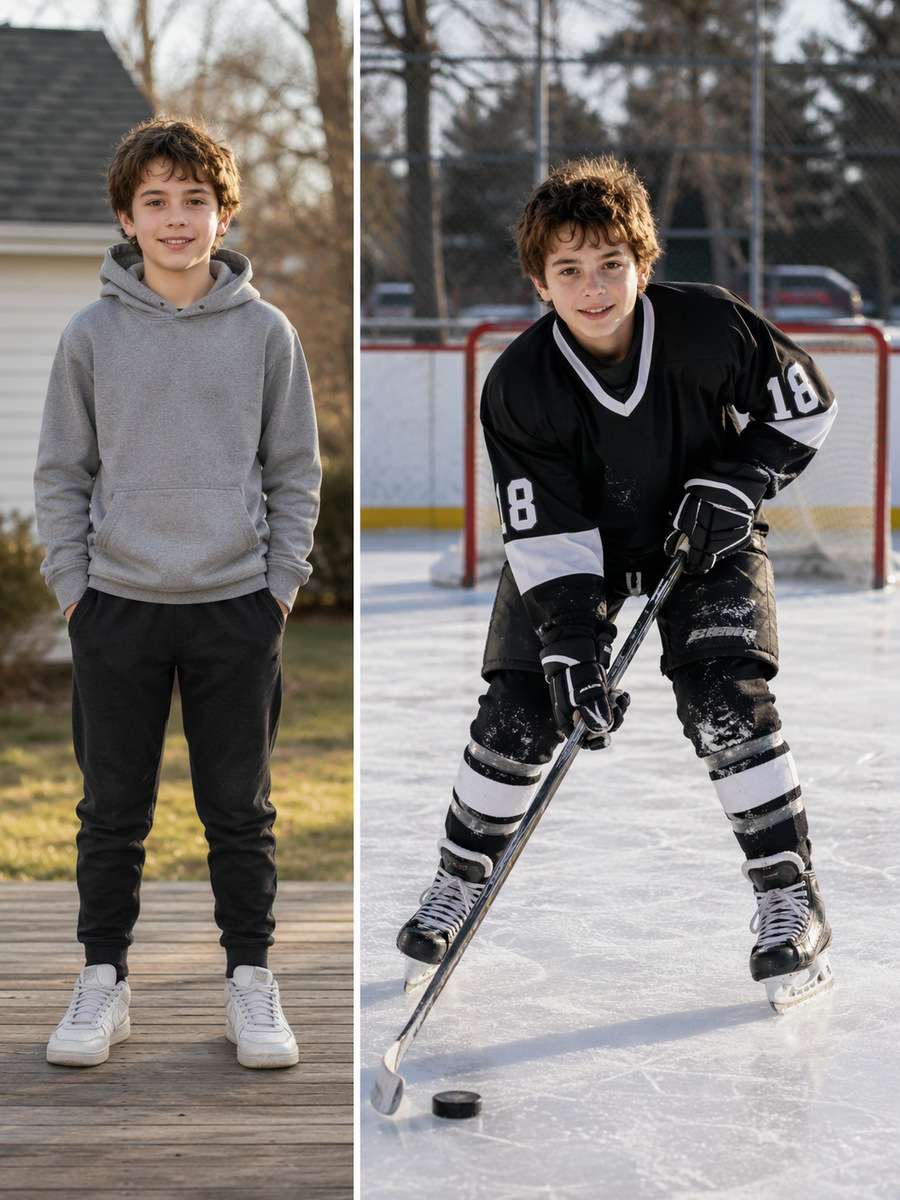
Begin with a clear consented selfie or body portrait. For this particular concept, portray player at an outdoor community rink under daylight with boots and ice conditions realistic. Preserve the actual athlete or instructor identity, and show equipment, weight distribution and body movement that are physically possible and safe. Finish with restrained photographic detail rather than generic AI glamour effects. Preserve true jersey colors, helmet and pad geometry, correct stick grip, blades contacting ice and realistic puck size; avoid fictional sponsor logos, trophies or dangerous impacts. Avoid these common errors: incorrect hockey sticks, swapped jersey numbers, flying puck scale and unsafe collision poses. Create a usable standalone image suitable for team media day, athlete posters and hockey club pages.
Hockey Captain Portrait Concept
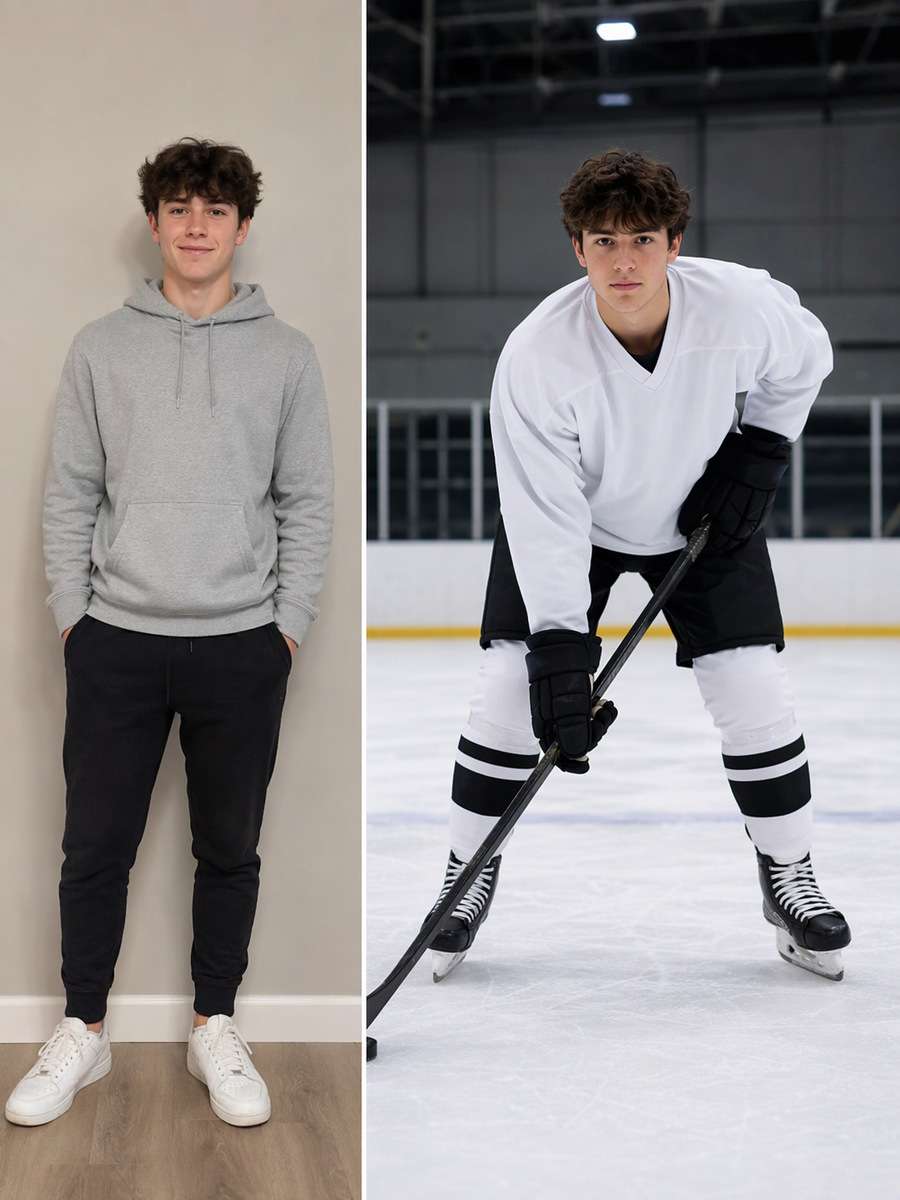
Use the original uploaded portrait as the person reference. For this particular concept, show player posing with blank plain jersey and stick, no fabricated captain badge or fictional championship claim. Preserve the actual athlete or instructor identity, and show equipment, weight distribution and body movement that are physically possible and safe. Match environmental reflections and shadows to the actual light sources. Preserve true jersey colors, helmet and pad geometry, correct stick grip, blades contacting ice and realistic puck size; avoid fictional sponsor logos, trophies or dangerous impacts. Avoid these common errors: incorrect hockey sticks, swapped jersey numbers, flying puck scale and unsafe collision poses. Create a usable standalone image suitable for team media day, athlete posters and hockey club pages.
Practice Drill Side Profile
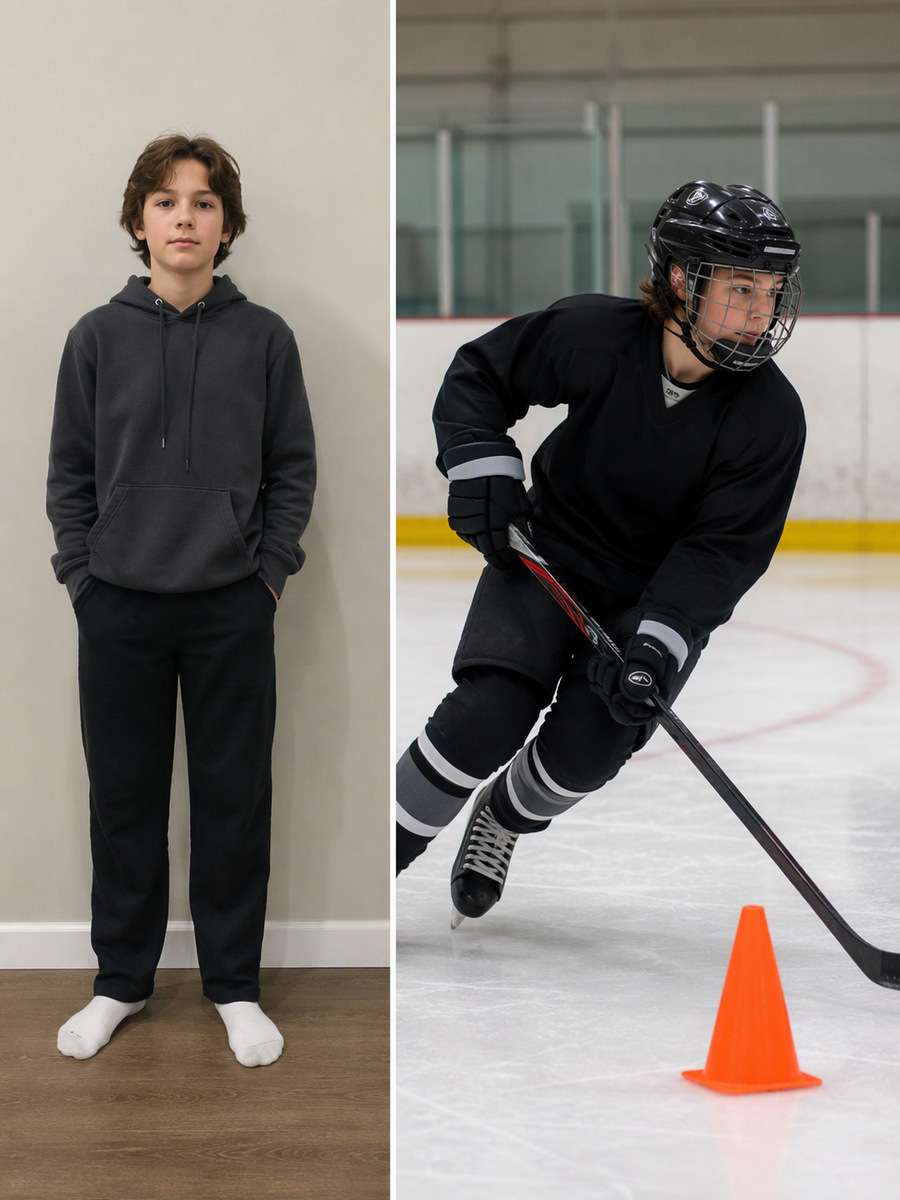
Restyle the existing photograph, retaining the same individual. For this particular concept, capture athlete skating around safe cone at practice with genuine knee bend and arms balanced. Preserve the actual athlete or instructor identity, and show equipment, weight distribution and body movement that are physically possible and safe. Choose framing that gives the subject and its key details enough space to be recognizable. Preserve true jersey colors, helmet and pad geometry, correct stick grip, blades contacting ice and realistic puck size; avoid fictional sponsor logos, trophies or dangerous impacts. Avoid these common errors: incorrect hockey sticks, swapped jersey numbers, flying puck scale and unsafe collision poses. Create a usable standalone image suitable for team media day, athlete posters and hockey club pages.
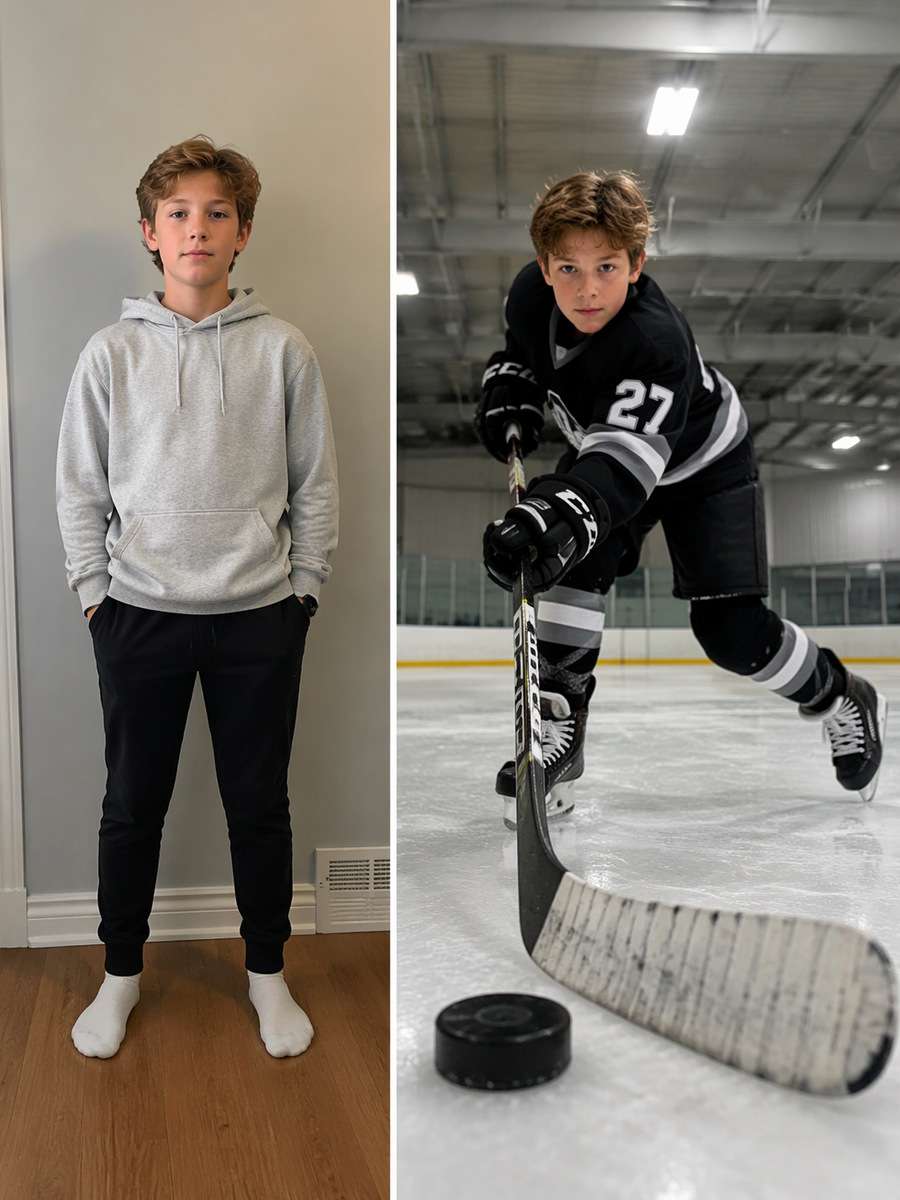
Freeze Frame Puck Control
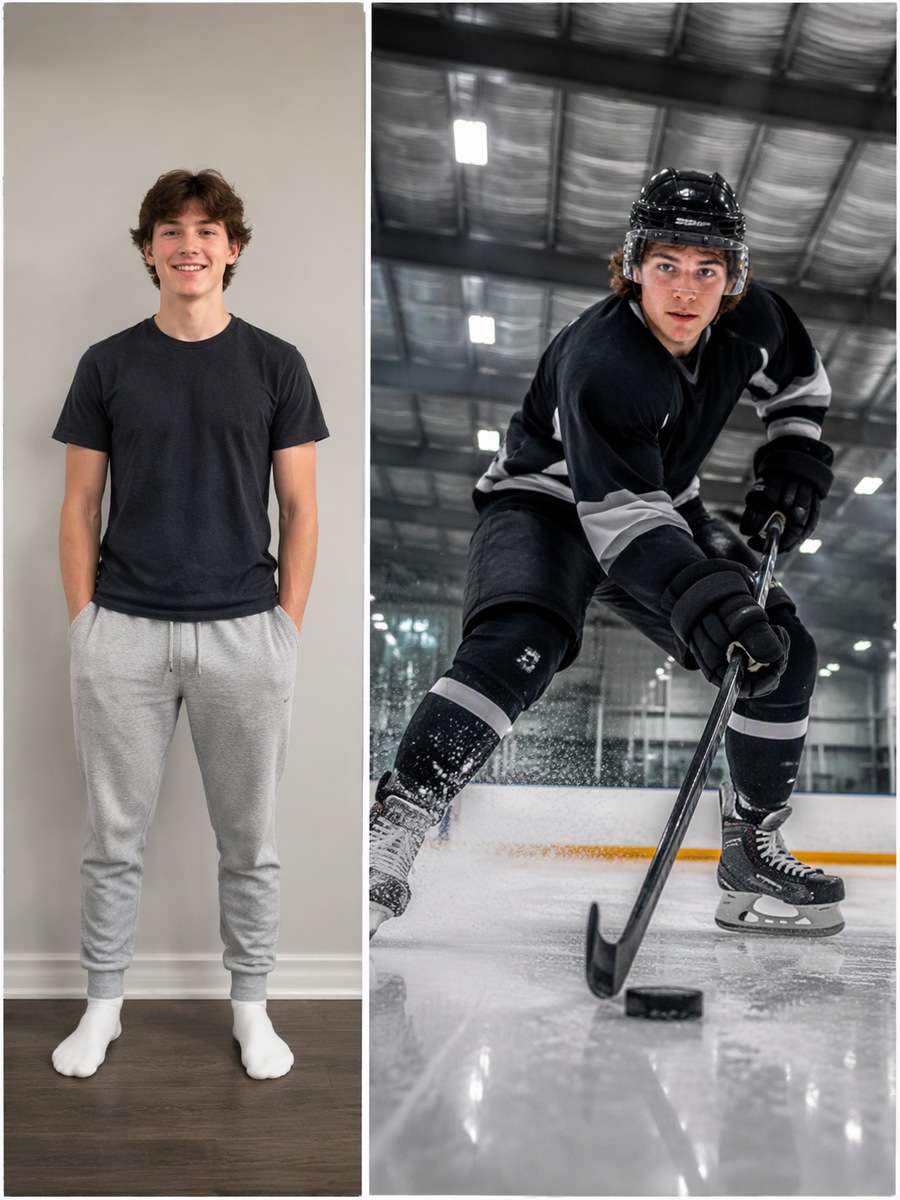
Begin with a clear consented selfie or body portrait. For this particular concept, show stickhandling action with one puck touching ice ahead of blade, hockey gloves anatomically correct. Preserve the actual athlete or instructor identity, and show equipment, weight distribution and body movement that are physically possible and safe. Use natural material textures and avoid forced high saturation or artificial glow. Preserve true jersey colors, helmet and pad geometry, correct stick grip, blades contacting ice and realistic puck size; avoid fictional sponsor logos, trophies or dangerous impacts. Avoid these common errors: incorrect hockey sticks, swapped jersey numbers, flying puck scale and unsafe collision poses. Create a usable standalone image suitable for team media day, athlete posters and hockey club pages.
Pre-Game Skate Laces
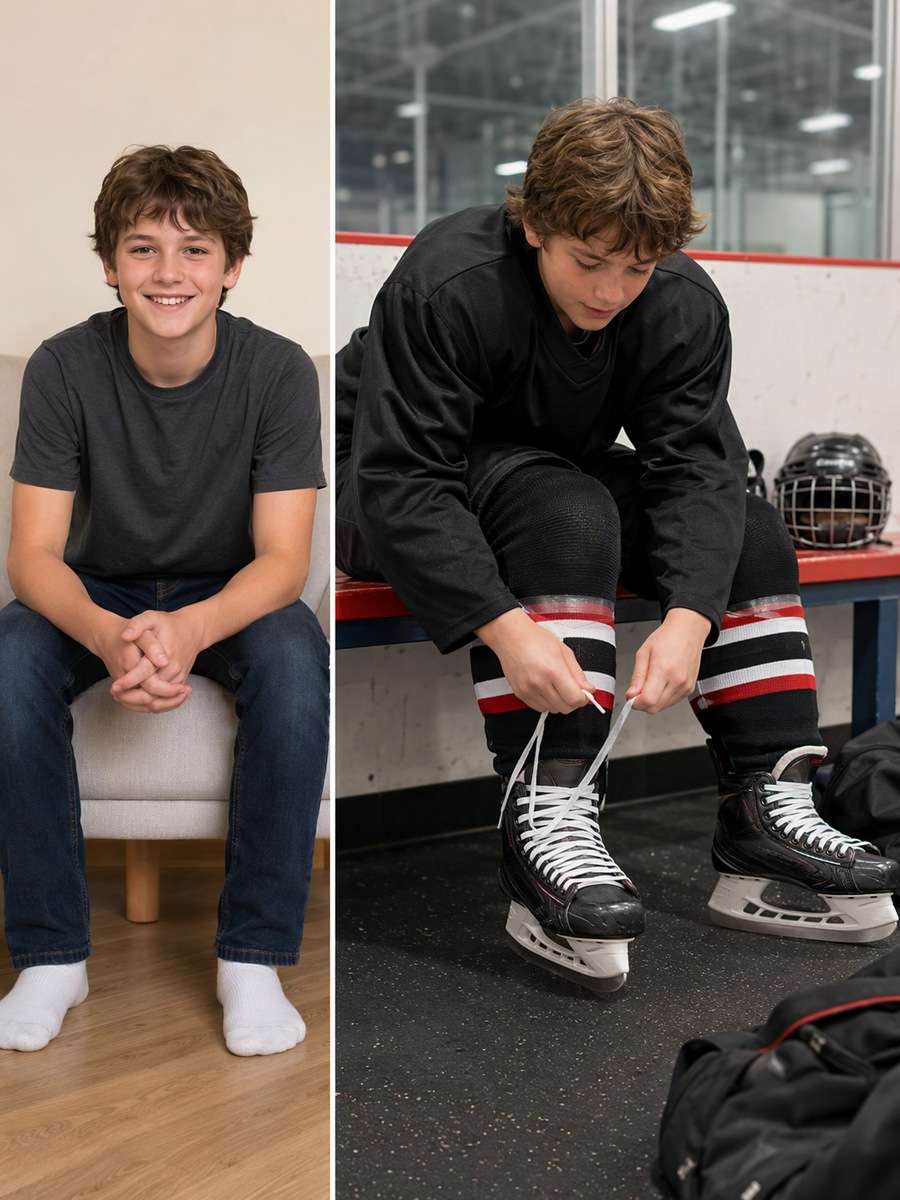
Use the original uploaded portrait as the person reference. For this particular concept, photograph player safely seated tying skates, real lace path and complete protective equipment nearby. Preserve the actual athlete or instructor identity, and show equipment, weight distribution and body movement that are physically possible and safe. Keep hand positions, object contact points and camera perspective plausible. Preserve true jersey colors, helmet and pad geometry, correct stick grip, blades contacting ice and realistic puck size; avoid fictional sponsor logos, trophies or dangerous impacts. Avoid these common errors: incorrect hockey sticks, swapped jersey numbers, flying puck scale and unsafe collision poses. Create a usable standalone image suitable for team media day, athlete posters and hockey club pages.
Arena Glass Reflection
Restyle the existing photograph, retaining the same individual. For this particular concept, shoot a player through rink glass with mild reflections, no doubled real face and accurate boards. Preserve the actual athlete or instructor identity, and show equipment, weight distribution and body movement that are physically possible and safe. Finish with restrained photographic detail rather than generic AI glamour effects. Preserve true jersey colors, helmet and pad geometry, correct stick grip, blades contacting ice and realistic puck size; avoid fictional sponsor logos, trophies or dangerous impacts. Avoid these common errors: incorrect hockey sticks, swapped jersey numbers, flying puck scale and unsafe collision poses. Create a usable standalone image suitable for team media day, athlete posters and hockey club pages.
Ice Surface Low Angle
Begin with a clear consented selfie or body portrait. For this particular concept, frame a rink action portrait from ice-level camera, correct blade contact and separate ice spray. Preserve the actual athlete or instructor identity, and show equipment, weight distribution and body movement that are physically possible and safe. Match environmental reflections and shadows to the actual light sources. Preserve true jersey colors, helmet and pad geometry, correct stick grip, blades contacting ice and realistic puck size; avoid fictional sponsor logos, trophies or dangerous impacts. Avoid these common errors: incorrect hockey sticks, swapped jersey numbers, flying puck scale and unsafe collision poses. Create a usable standalone image suitable for team media day, athlete posters and hockey club pages.
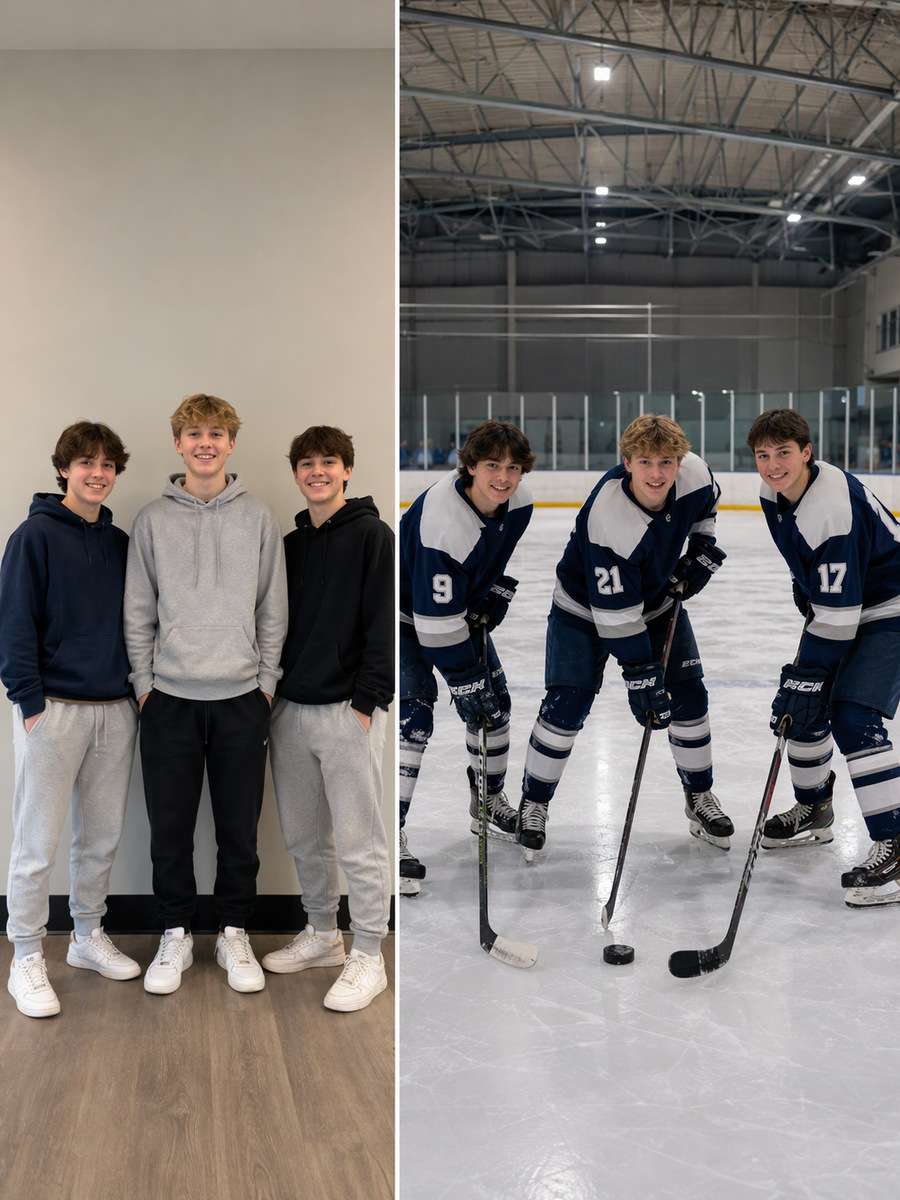
Hockey Team Small Group
Use the original uploaded portrait as the person reference. For this particular concept, arrange three teammates in coordinated real equipment on ice, distinct faces and no false logos. Preserve the actual athlete or instructor identity, and show equipment, weight distribution and body movement that are physically possible and safe. Choose framing that gives the subject and its key details enough space to be recognizable. Preserve true jersey colors, helmet and pad geometry, correct stick grip, blades contacting ice and realistic puck size; avoid fictional sponsor logos, trophies or dangerous impacts. Avoid these common errors: incorrect hockey sticks, swapped jersey numbers, flying puck scale and unsafe collision poses. Create a usable standalone image suitable for team media day, athlete posters and hockey club pages.
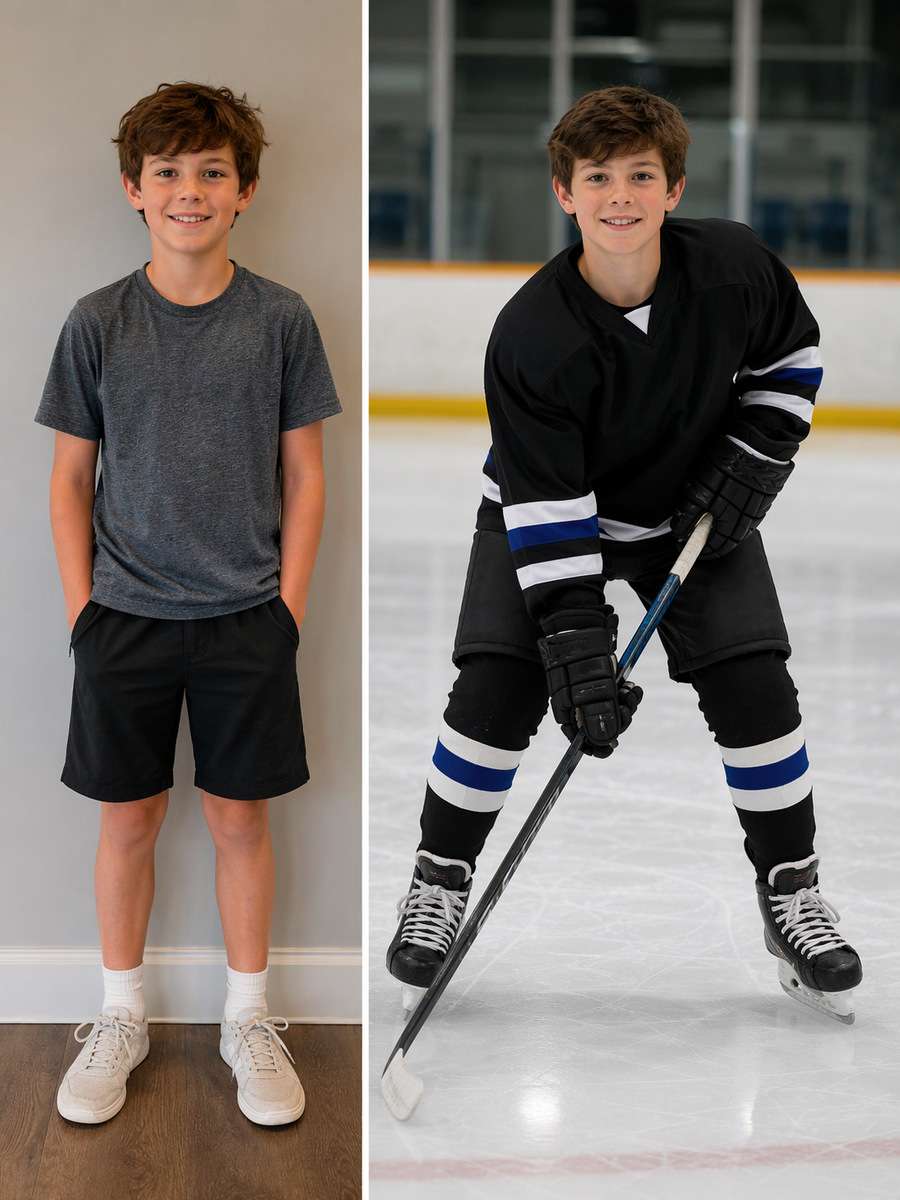
Bright Youth Club Portrait
Restyle the existing photograph, retaining the same individual. For this particular concept, make guardian-approved youth player head-to-toe portrait in complete fitted pads with age-appropriate safe stance. Preserve the actual athlete or instructor identity, and show equipment, weight distribution and body movement that are physically possible and safe. Use natural material textures and avoid forced high saturation or artificial glow. Preserve true jersey colors, helmet and pad geometry, correct stick grip, blades contacting ice and realistic puck size; avoid fictional sponsor logos, trophies or dangerous impacts. Avoid these common errors: incorrect hockey sticks, swapped jersey numbers, flying puck scale and unsafe collision poses. Create a usable standalone image suitable for team media day, athlete posters and hockey club pages.
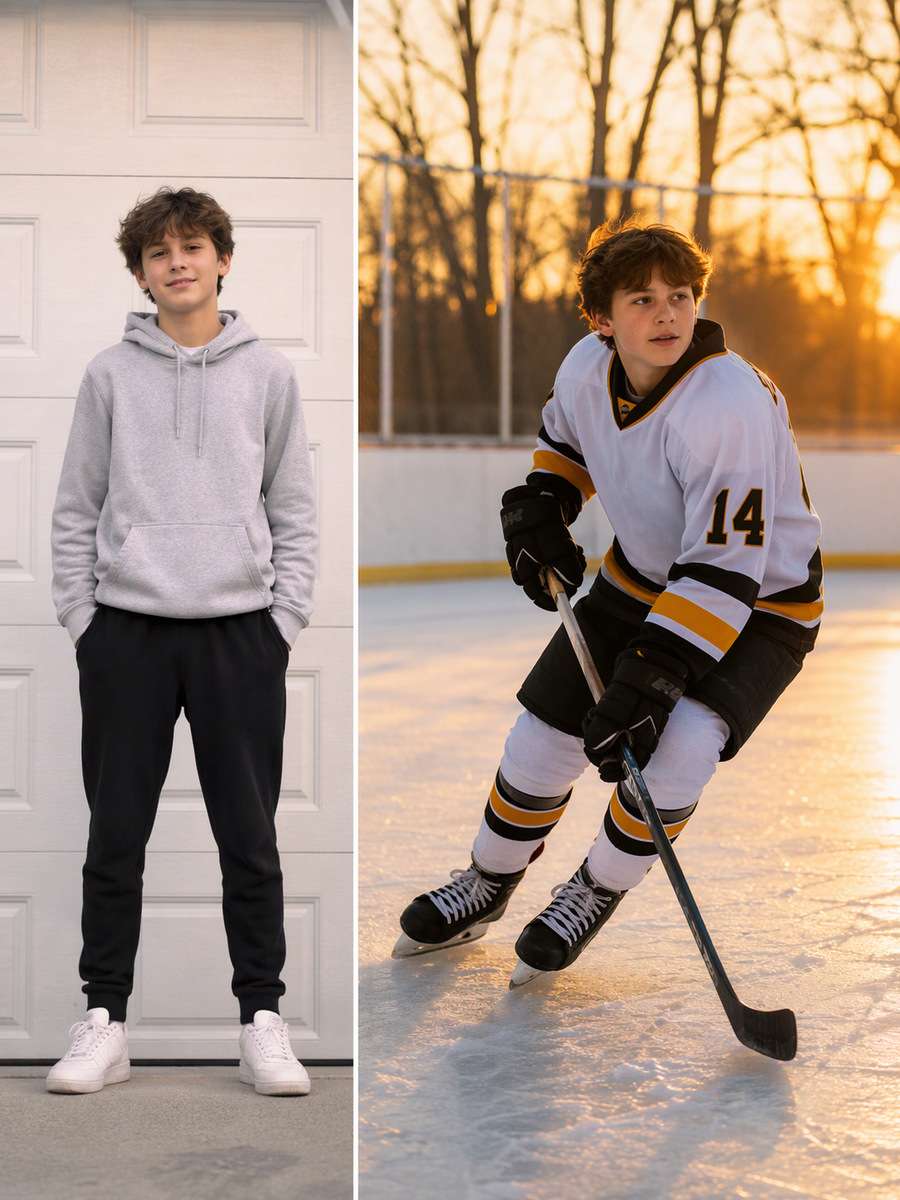
Golden Light Outdoor Rink
Begin with a clear consented selfie or body portrait. For this particular concept, compose an original rink portrait in low winter sun with warm light against cold ice. Preserve the actual athlete or instructor identity, and show equipment, weight distribution and body movement that are physically possible and safe. Keep hand positions, object contact points and camera perspective plausible. Preserve true jersey colors, helmet and pad geometry, correct stick grip, blades contacting ice and realistic puck size; avoid fictional sponsor logos, trophies or dangerous impacts. Avoid these common errors: incorrect hockey sticks, swapped jersey numbers, flying puck scale and unsafe collision poses. Create a usable standalone image suitable for team media day, athlete posters and hockey club pages.
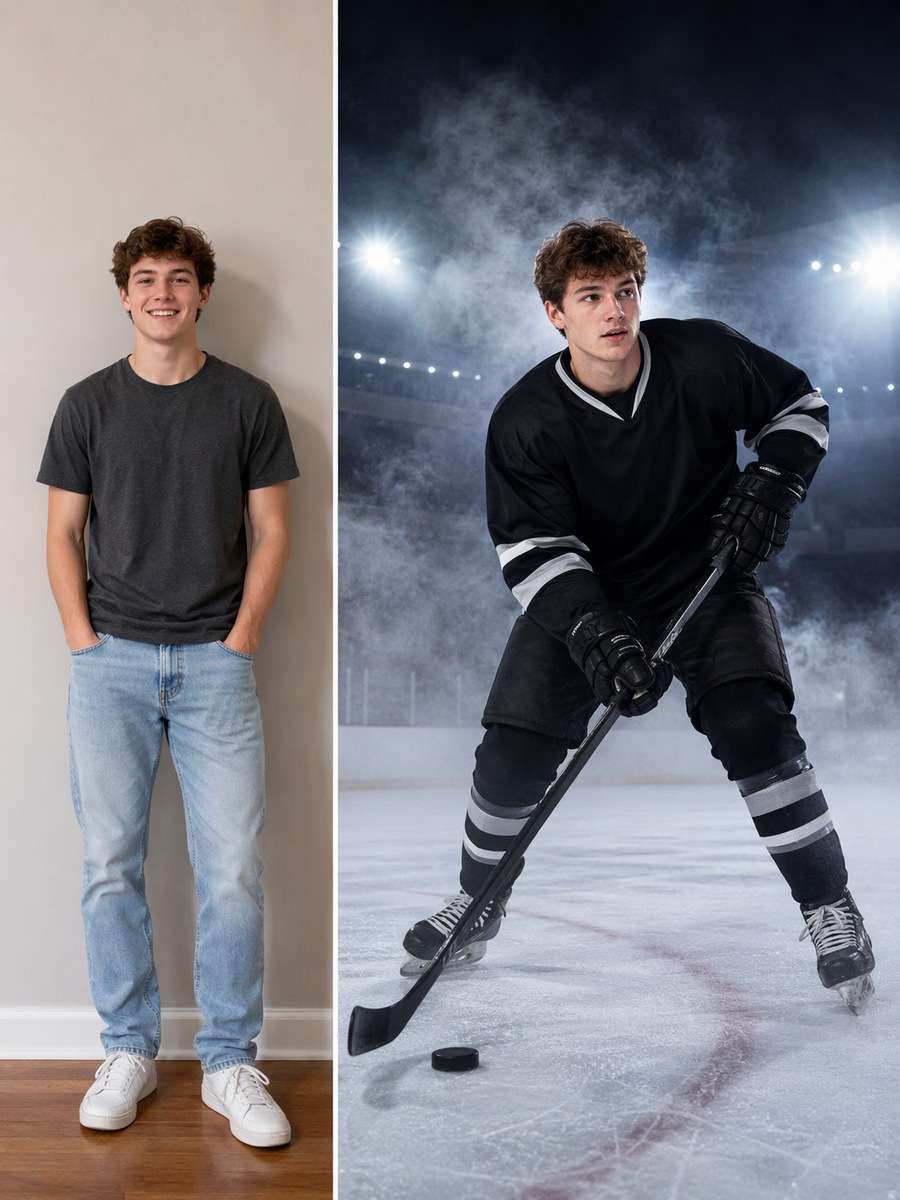
High Energy Sports Poster
Use the original uploaded portrait as the person reference. For this particular concept, create a dramatic hockey player poster concept with arena haze and blank text space, no fabricated trophies. Preserve the actual athlete or instructor identity, and show equipment, weight distribution and body movement that are physically possible and safe. Finish with restrained photographic detail rather than generic AI glamour effects. Preserve true jersey colors, helmet and pad geometry, correct stick grip, blades contacting ice and realistic puck size; avoid fictional sponsor logos, trophies or dangerous impacts. Avoid these common errors: incorrect hockey sticks, swapped jersey numbers, flying puck scale and unsafe collision poses. Create a usable standalone image suitable for team media day, athlete posters and hockey club pages.
Get the Details Right for Ice Hockey Player Photo Prompts
Hockey player photography with real gear and rink geometry works best when you decide on the input, visual scene and subject constraints before generating. A strong edit should feel specific to the subject, not a stock-style filter.
Start With the Right Original Photo
Best source: a consented athlete reference with full equipment where possible.
Use visible protective gear fit as the visual anchor. Build around stick blade and puck placement rather than adding unrelated decoration.
Preserve source truth: Preserve true jersey colors, helmet and pad geometry, correct stick grip, blades contacting ice and realistic puck size; avoid fictional sponsor logos, trophies or dangerous impacts.
Refine Style Without Losing Accuracy
Work deliberately with rink board geometry and ice spray physics.
The result should be appropriate for team media day, athlete posters and hockey club pages.
Common errors to correct: incorrect hockey sticks, swapped jersey numbers, flying puck scale and unsafe collision poses.
Ways to Use Ice Hockey Player Photo Prompts
Pick a practical outlet for team media day, athlete posters and hockey club pages; these four uses call for slightly different crops, detail levels and lighting.
Team roster graphic
Use a dedicated source-photo edit built around protective gear fit. For team roster graphic, adjust framing and background to fit the final display while keeping the original subject accurate.
Player media portrait
Use a dedicated source-photo edit built around stick blade and puck placement. For player media portrait, adjust framing and background to fit the final display while keeping the original subject accurate.
Game-night poster
Use a dedicated source-photo edit built around rink board geometry. For game-night poster, adjust framing and background to fit the final display while keeping the original subject accurate.
Athlete social profile
Use a dedicated source-photo edit built around ice spray physics. For athlete social profile, adjust framing and background to fit the final display while keeping the original subject accurate.
FAQs About Ice Hockey Player Photo Prompts
1. How can AI hockey portraits preserve correct equipment?
Begin with a source showing the player and real gear. Keep the jersey, helmet, pads, stick blade and skates consistent, and check that blades touch ice during action scenes.
2. Can an ice hockey poster keep a players real jersey number?
Supply a clear jersey reference and specify the number only if it is legible. AI may distort text, so verify the numeral and any club marks before public use.
3. What is a safe physically realistic hockey action scene?
Choose an ordinary stride, controlled stickhandling or a team media-day pose rather than an impossible collision. Check skate contact, puck size and stick blade orientation.
4. What should I check when editing photos for team media day, athlete posters and hockey club pages?
Compare the result with the source for factual details. In particular, avoid incorrect hockey sticks, swapped jersey numbers, flying puck scale and unsafe collision poses. If you share the image publicly, distinguish a synthetic edit from a documentary photograph where necessary.
Recreate the viral No Scrubs dance with your own photo. Bring the iconic moves to life with AI.
Join the Dance Trend
Wassup in a Minute AI
Turn your photo into a streetwear anime character and sway to the beat in the viral white-background edit.
Create Your Anime Sway
AI Video Character Swap
What if someone else starred in your video? Swap any on-screen character with your favorite character using AI and bring a whole new twist to your scenes!