Home>AI Prompts>Turn Your Photos into Enamel Pins: 25 ChatGPT Prompts
Turn Your Photos into Enamel Pins: 25 ChatGPT Prompts
Explore ChatGPT enamel pin photo prompts for creative product photography, detailed macro shots, and styled flat lays. Showcase enamel finishes, metallic edges, and intricate designs against backgrounds ranging from denim jackets to minimalist studio setups. Customize each AI photo prompt to create visuals for pin collections, online shops, or social media.
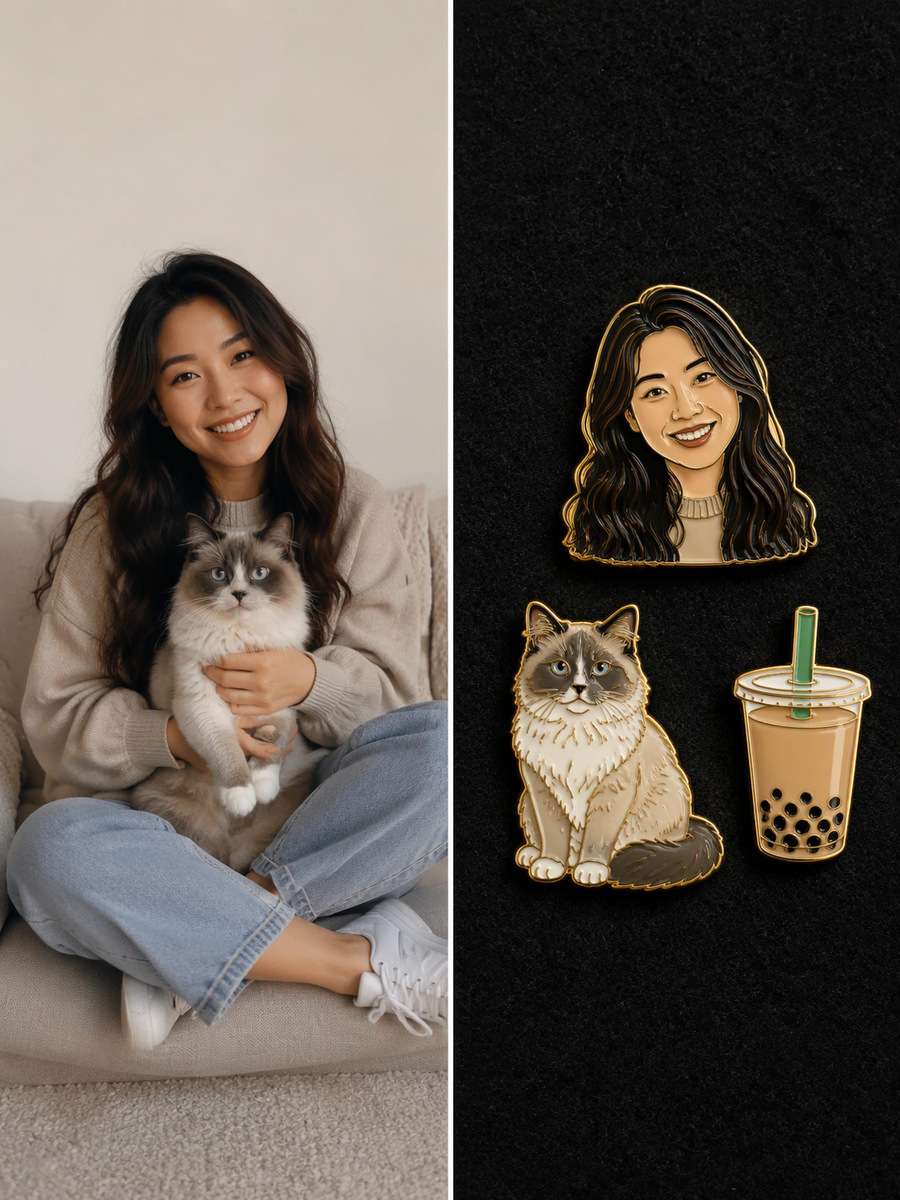
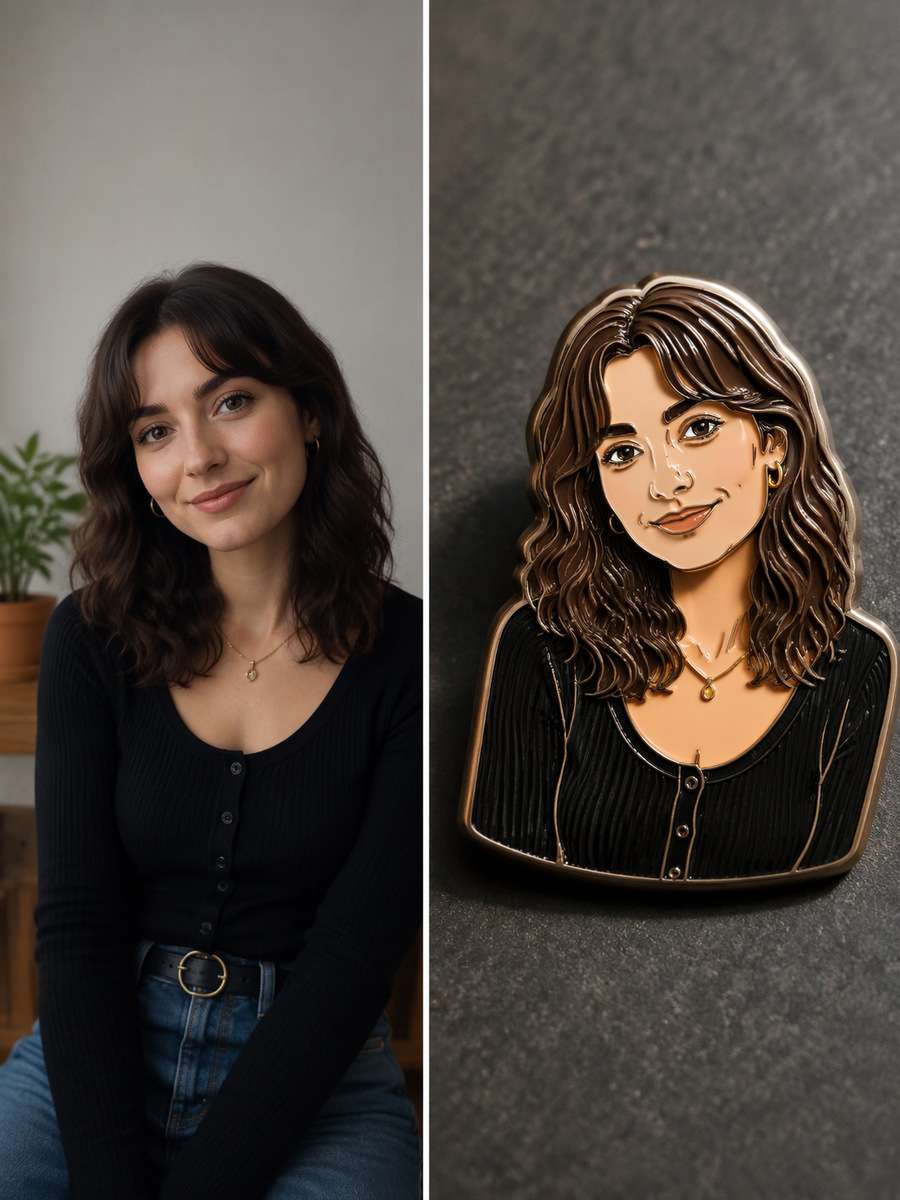
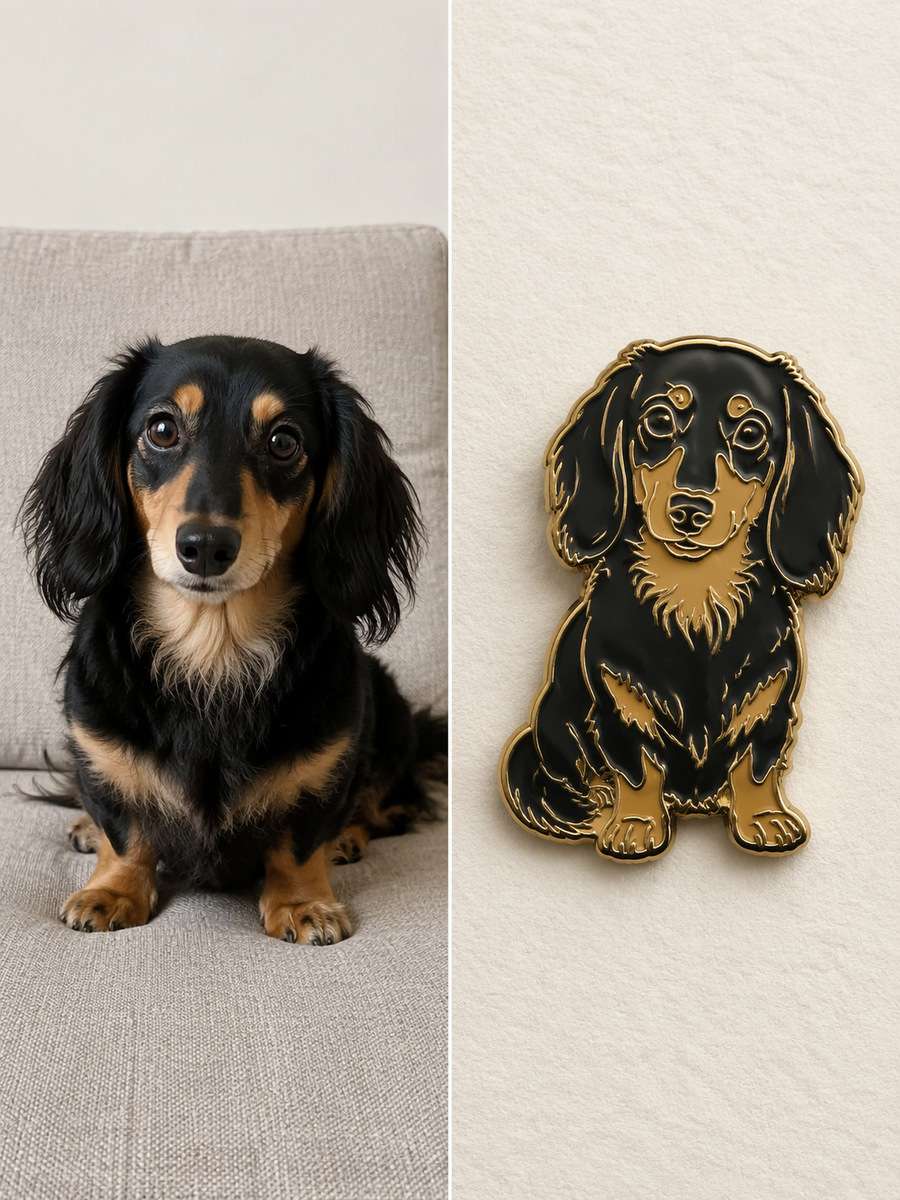
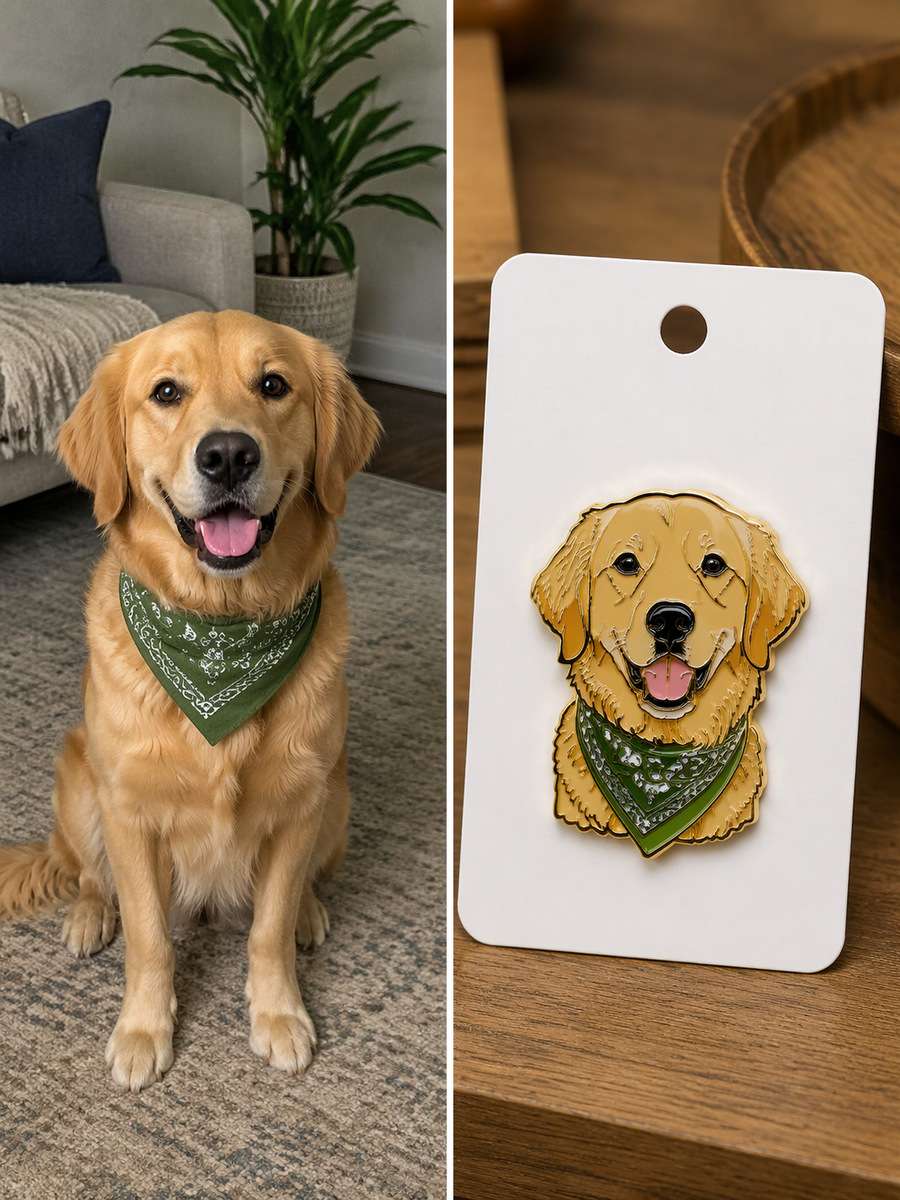
See photo-based portrait, pet and collectible enamel pin concepts created with Media.io - powered by ChatGPT.
How to Turn a Photo into an Enamel Pin Design with ChatGPT Prompts
An enamel pin is not a printed photograph. Start with a clear visual reference, then decide how to simplify it into metal-bounded color shapes.
1
Choose a recognizable source photo
Upload a front-facing portrait, a pet photo with distinct markings, or one clearly isolated object. For a custom pin, select a subject that will read at small size.
2
Copy a pin-specific art prompt
Choose hard enamel for polished level color or soft enamel for raised outlines and recessed color. Specify the metal finish, five to seven color regions and a complete die-cut silhouette.
3
Check the pin before using the design
Generate on Media.io and inspect closed color cells, edge thickness and recognizable features. Treat the result as a visual concept; a manufacturer must check production feasibility and artwork files.
25 ChatGPT Enamel Pin Photo Prompts for Portraits, Pets and Keepsakes
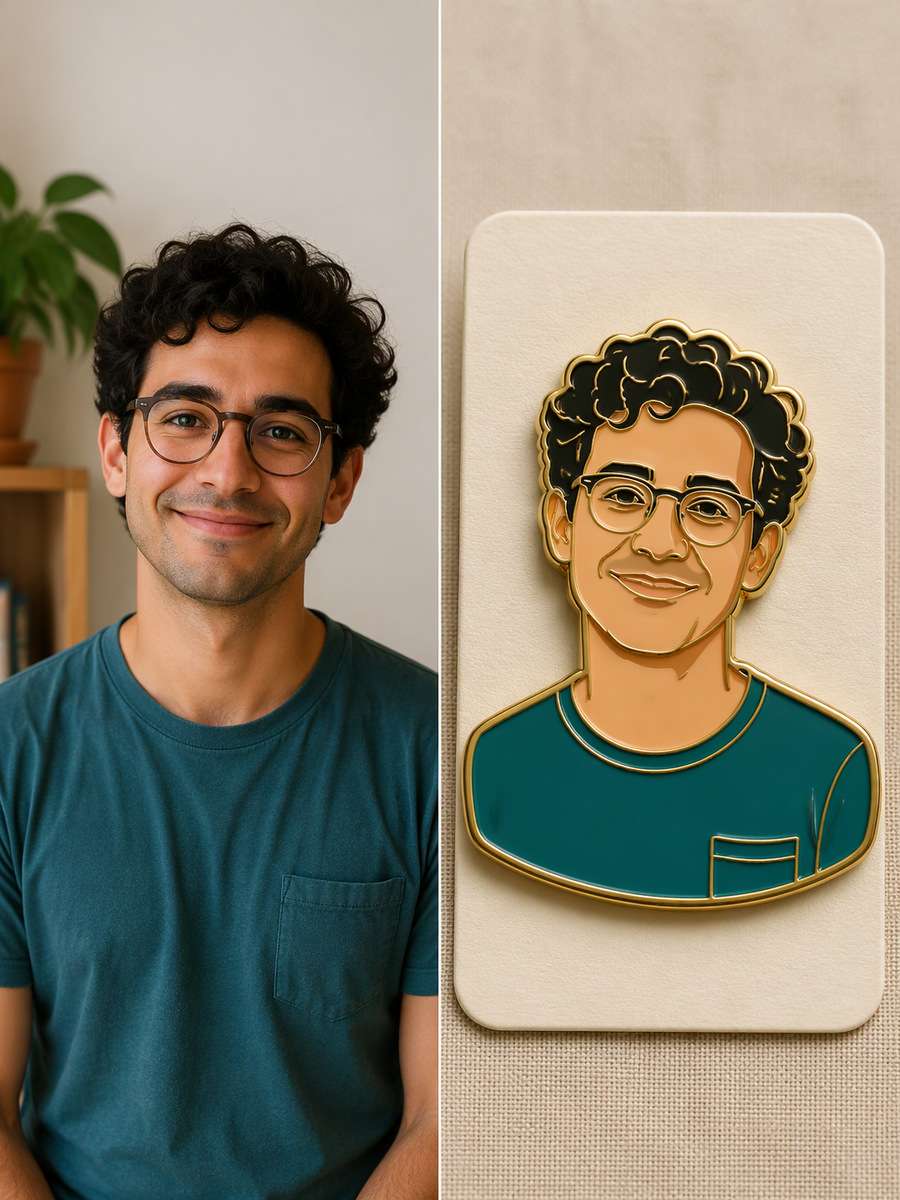
Gold-Rim Self-Portrait
Inspect the supplied photo carefully. Suitable input: one clear shoulder-up selfie with visible hairline. Create a die-cut polished hard-enamel bust on ivory backing card, warm gold borders, teal shirt and five opaque facial color regions. Keep the original hair silhouette and glasses if present; no photographic skin pasted over enamel. Use five to seven solid enamel colors, a coherent die-cut metal edge and a visible small product scale. Retain identity through large readable shapes: hair silhouette, face proportions, animal markings or the original object's defining contour. Translate details into opaque enamel cells with substantial connected metal partitions; the final subject must look like a three-dimensional collectible pin, never a printed sticker. Avoid photorealistic skin pasted on metal, hairline metal walls, tiny illegible lettering and color fields escaping the outer edge.
Black Nickel Streetwear Portrait
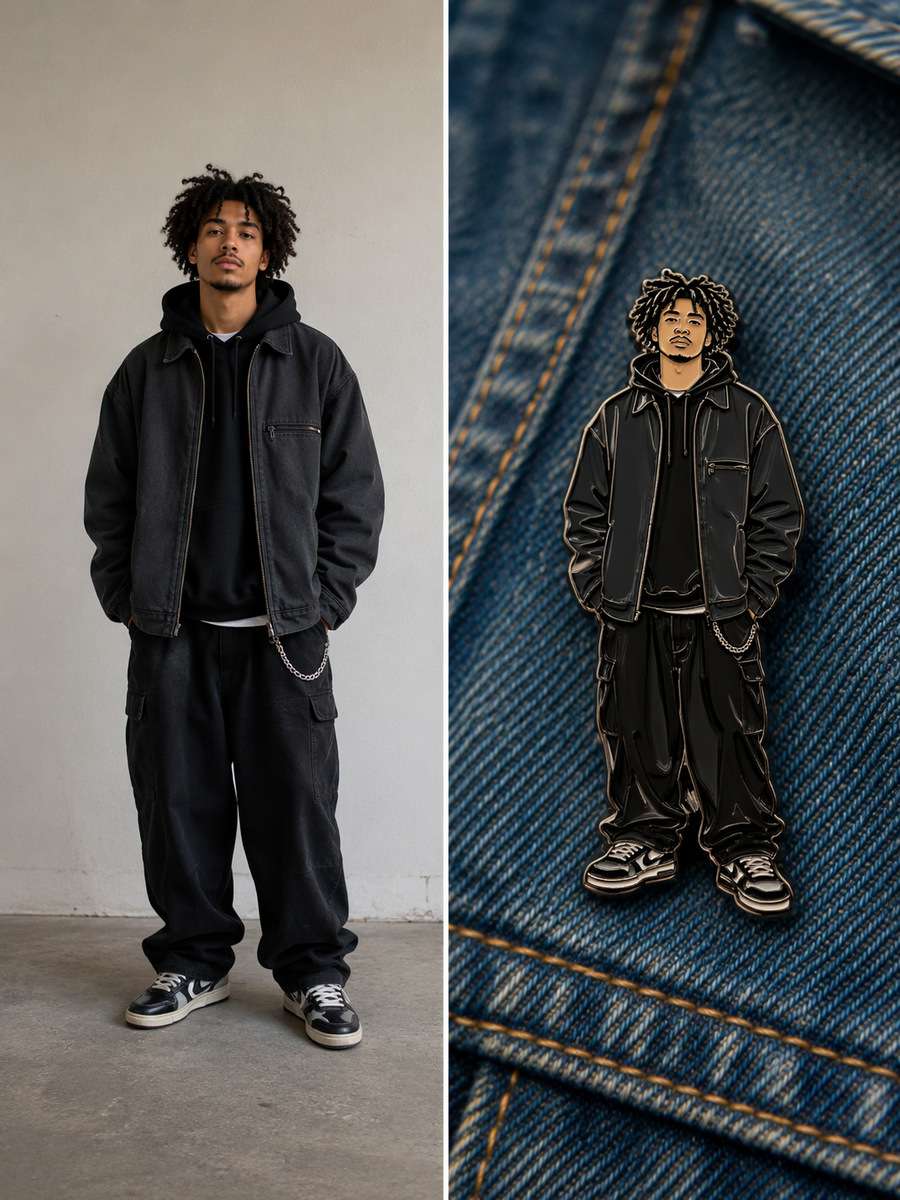
Take the recognizable subject from my uploaded picture. A suitable source is a front-facing street outfit portrait. Create a small black-nickel soft-enamel silhouette with oversized jacket and sneakers reduced to graphic cells, pinned to denim. Keep jacket shape and face outline; raised separators cannot become loose black brushstrokes. Use five to seven solid enamel colors, a coherent die-cut metal edge and a visible small product scale. Retain identity through large readable shapes: hair silhouette, face proportions, animal markings or the original object's defining contour. Translate details into opaque enamel cells with substantial connected metal partitions; the final subject must look like a three-dimensional collectible pin, never a printed sticker. Avoid photorealistic skin pasted on metal, hairline metal walls, tiny illegible lettering and color fields escaping the outer edge.
Rose-Gold Smile Pin
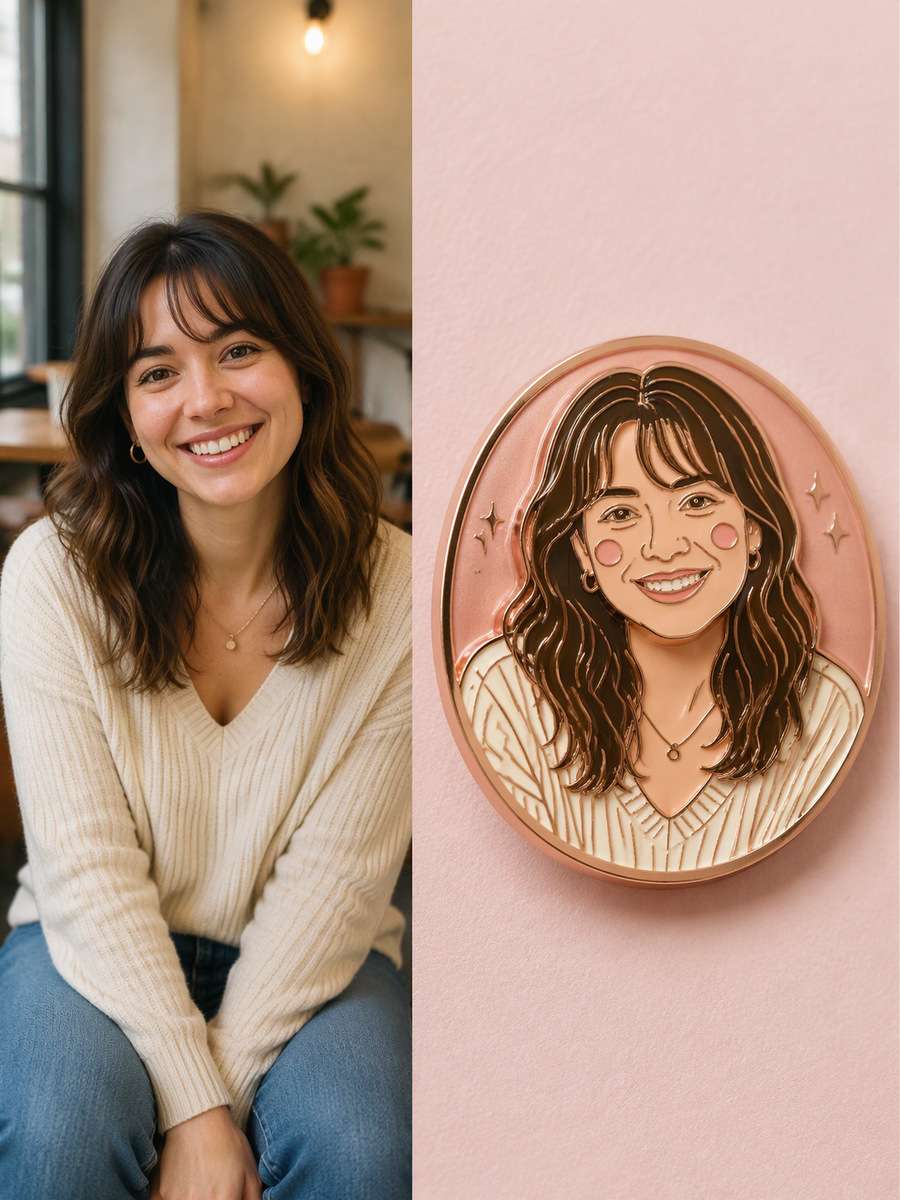
Begin with my original photo and reduce its identity cues into metalwork. Best input: a close face photo with a broad smile. Create a rounded rose-gold enamel cameo with simplified cheeks and two highlight cells on soft blush card stock. Match the person's smile and hairstyle without smooth photoreal teeth or gradient cheeks. Show credible raised partitions and glossy recessed color on an actual dimensional pin object. Retain identity through large readable shapes: hair silhouette, face proportions, animal markings or the original object's defining contour. Translate details into opaque enamel cells with substantial connected metal partitions; the final subject must look like a three-dimensional collectible pin, never a printed sticker. Avoid photorealistic skin pasted on metal, hairline metal walls, tiny illegible lettering and color fields escaping the outer edge.
Monochrome Portrait Badge
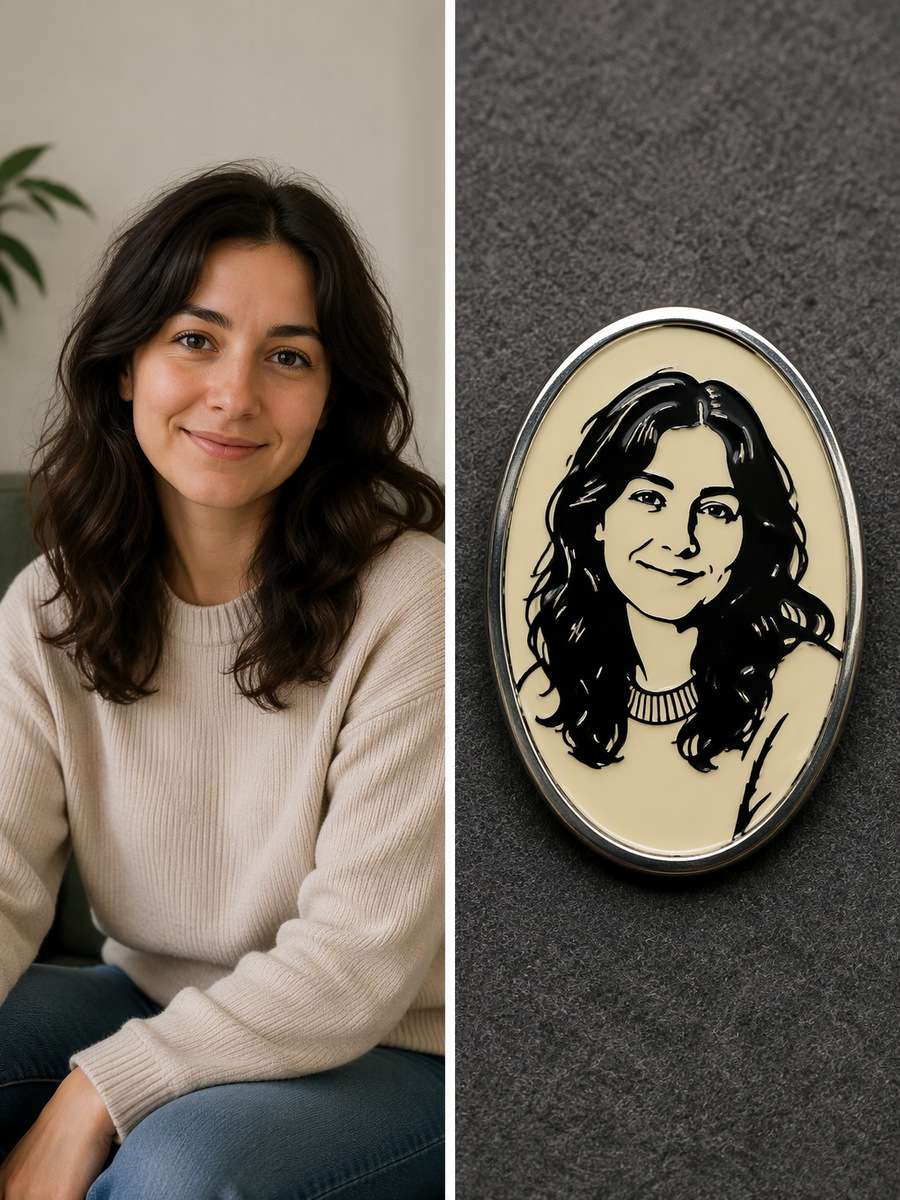
Design around the actual pictured subject. Choose a high-contrast side-profile photo. Create a black-and-cream hard-enamel silhouette inside a silver oval rim, photographed on slate felt. Keep nose and chin profile recognizably shaped; avoid excessive thin lines. Use five to seven solid enamel colors, a coherent die-cut metal edge and a visible small product scale. Retain identity through large readable shapes: hair silhouette, face proportions, animal markings or the original object's defining contour. Translate details into opaque enamel cells with substantial connected metal partitions; the final subject must look like a three-dimensional collectible pin, never a printed sticker. Avoid photorealistic skin pasted on metal, hairline metal walls, tiny illegible lettering and color fields escaping the outer edge.
Graduation Portrait Mini Pin
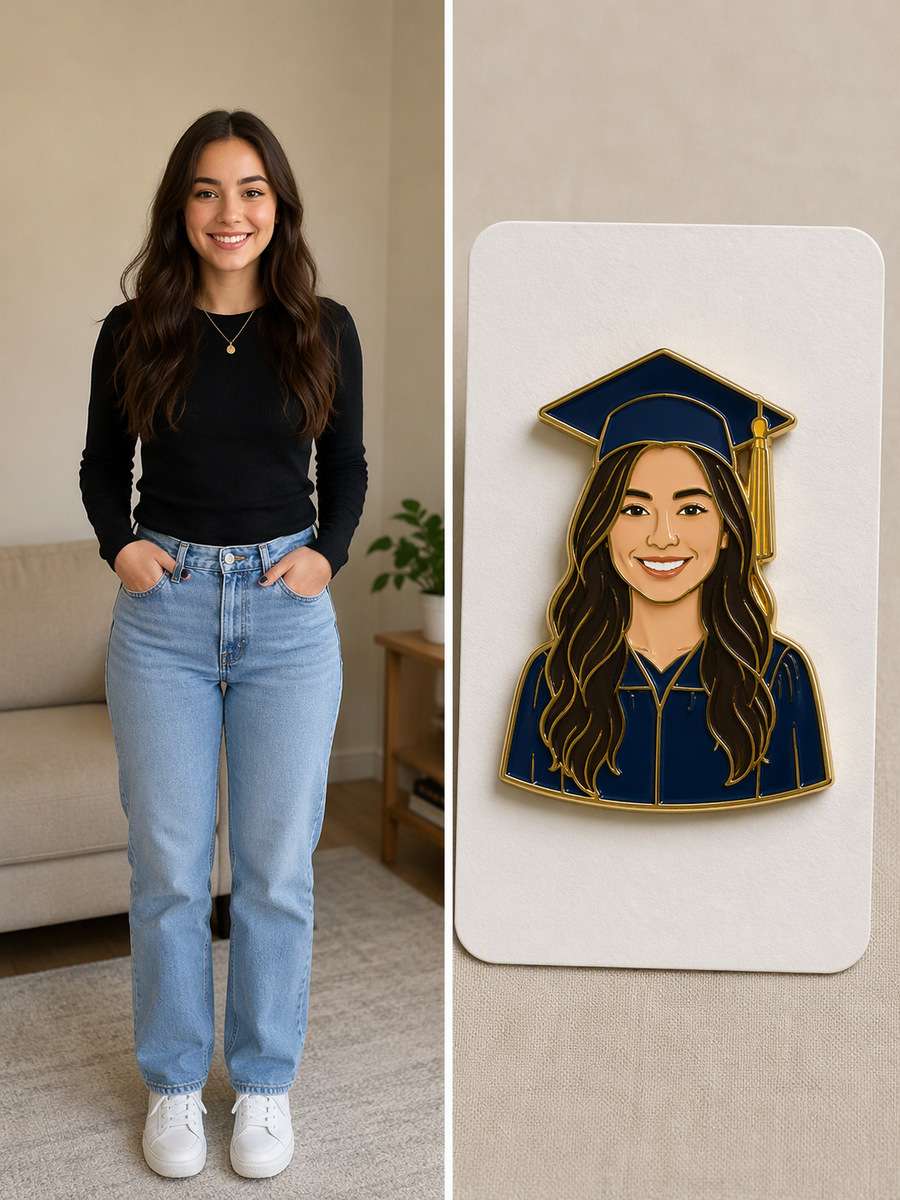
Transform the identifiable person, pet or object visible in my photo. Preferred reference: a real portrait taken at graduation. Create a compact mortarboard-and-face collectible with navy and gold cells, attached to a blank greeting-card backing. Respect real hair and face proportions; no unreadable graduation-year lettering. Use five to seven solid enamel colors, a coherent die-cut metal edge and a visible small product scale. Retain identity through large readable shapes: hair silhouette, face proportions, animal markings or the original object's defining contour. Translate details into opaque enamel cells with substantial connected metal partitions; the final subject must look like a three-dimensional collectible pin, never a printed sticker. Avoid photorealistic skin pasted on metal, hairline metal walls, tiny illegible lettering and color fields escaping the outer edge.
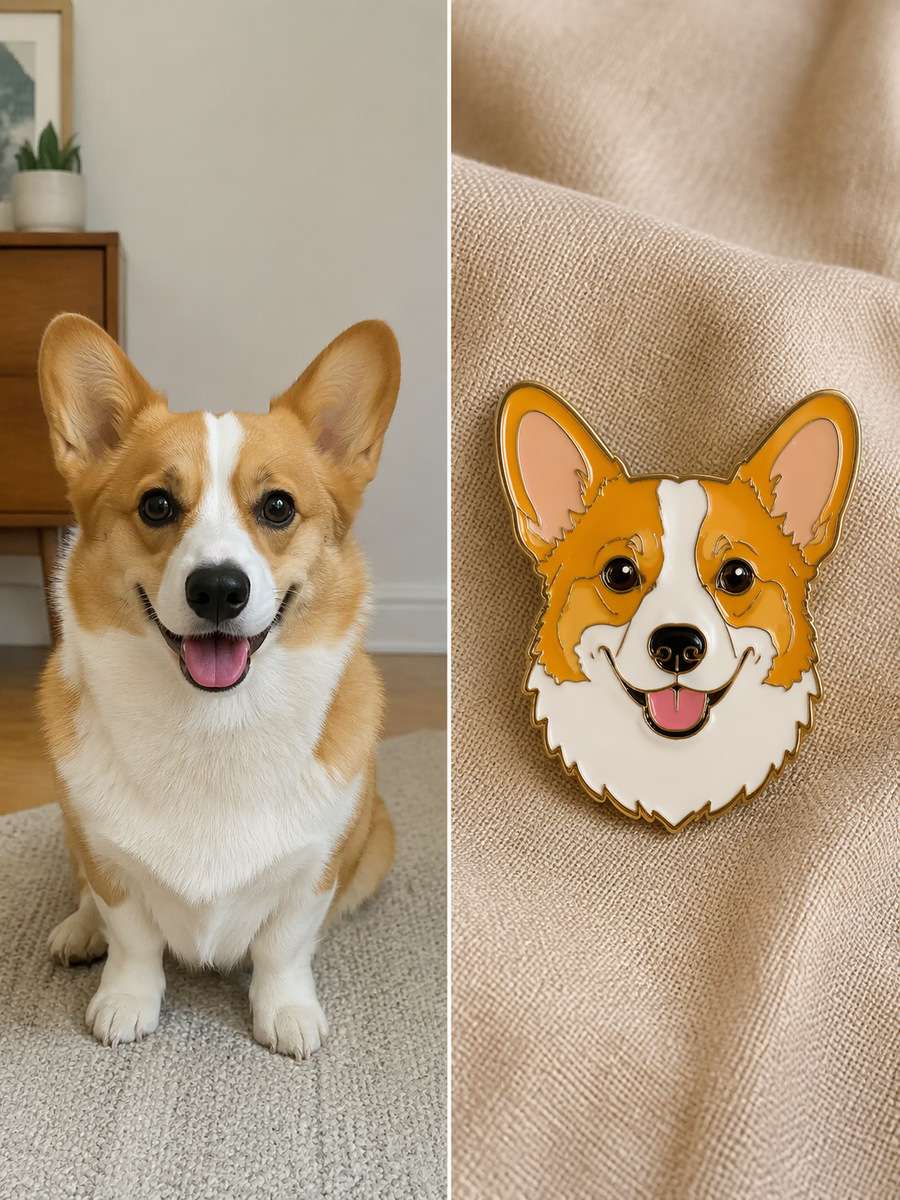
Corgi Ears Character Pin
Inspect the supplied photo carefully. Suitable input: a dog portrait with ears clearly visible. Create a bright orange-and-white pet-head enamel pin with metal-defined cheeks and nose on natural linen. Preserve ear angle and coat markings; avoid individual fur strands or human-like eyes. Show credible raised partitions and glossy recessed color on an actual dimensional pin object. Retain identity through large readable shapes: hair silhouette, face proportions, animal markings or the original object's defining contour. Translate details into opaque enamel cells with substantial connected metal partitions; the final subject must look like a three-dimensional collectible pin, never a printed sticker. Avoid photorealistic skin pasted on metal, hairline metal walls, tiny illegible lettering and color fields escaping the outer edge.
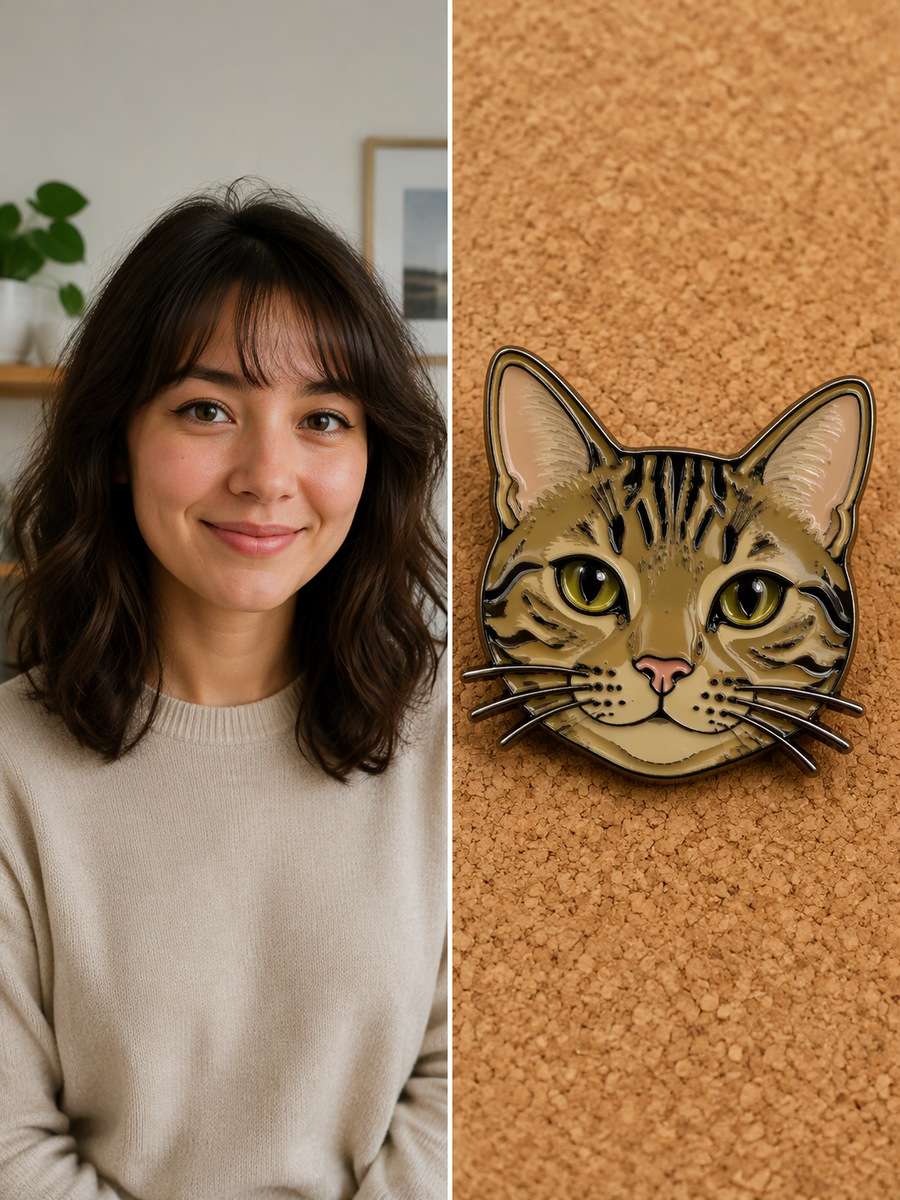
Tabby Cat Face Pin
Take the recognizable subject from my uploaded picture. A suitable source is a close pet photo with visible stripes. Create a die-cut tabby face with dark nickel whisker accents and glossy honey enamel on cork. Keep forehead stripe pattern and whisker pads; no extra ears or dangling whiskers outside the metal rim. Use five to seven solid enamel colors, a coherent die-cut metal edge and a visible small product scale. Retain identity through large readable shapes: hair silhouette, face proportions, animal markings or the original object's defining contour. Translate details into opaque enamel cells with substantial connected metal partitions; the final subject must look like a three-dimensional collectible pin, never a printed sticker. Avoid photorealistic skin pasted on metal, hairline metal walls, tiny illegible lettering and color fields escaping the outer edge.
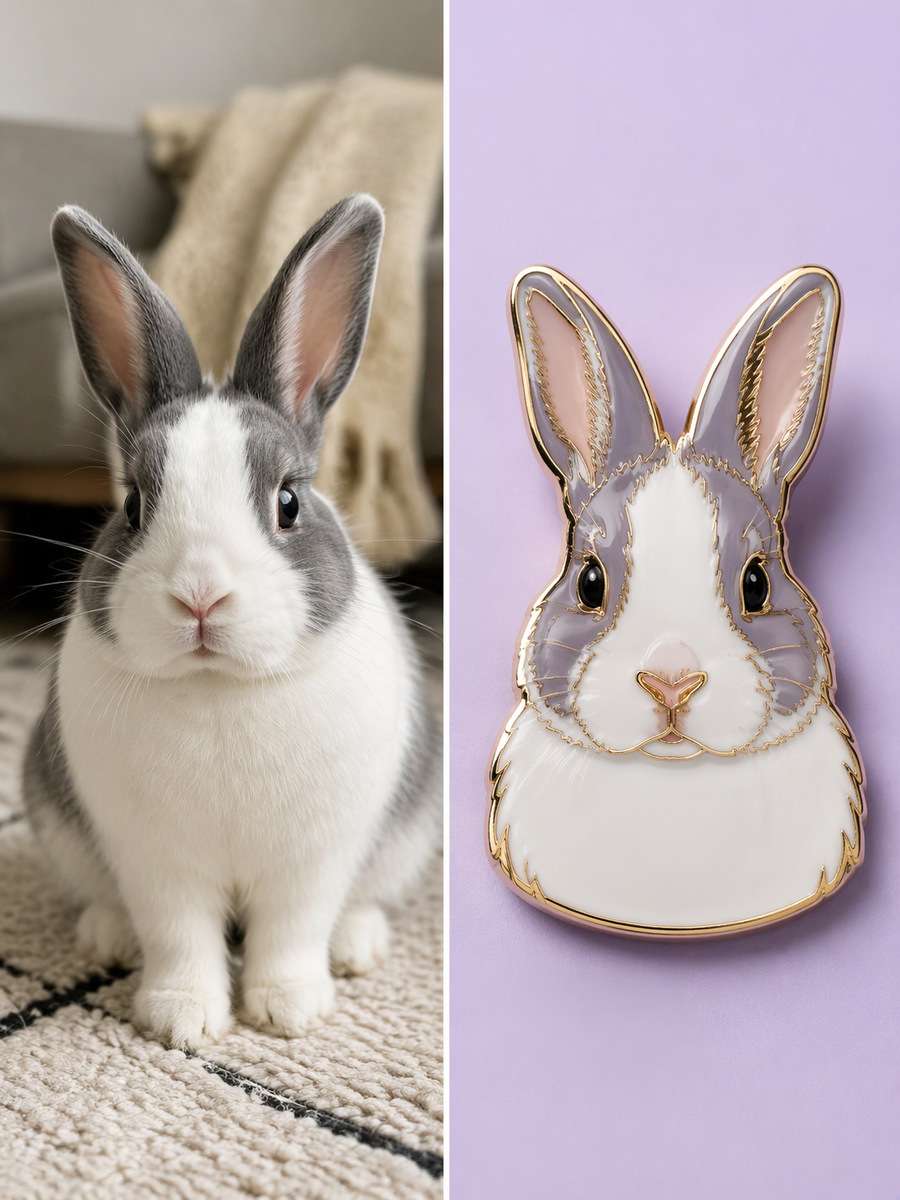
Rabbit Nose-and-Ears Pin
Begin with my original photo and reduce its identity cues into metalwork. Best input: a real rabbit photo. Create a pastel lilac soft-enamel bunny bust with tall ears, tiny metal nose border and translucent-looking polished highlights. Preserve original ear lengths and nose shape; all colored regions remain closed. Use five to seven solid enamel colors, a coherent die-cut metal edge and a visible small product scale. Retain identity through large readable shapes: hair silhouette, face proportions, animal markings or the original object's defining contour. Translate details into opaque enamel cells with substantial connected metal partitions; the final subject must look like a three-dimensional collectible pin, never a printed sticker. Avoid photorealistic skin pasted on metal, hairline metal walls, tiny illegible lettering and color fields escaping the outer edge.
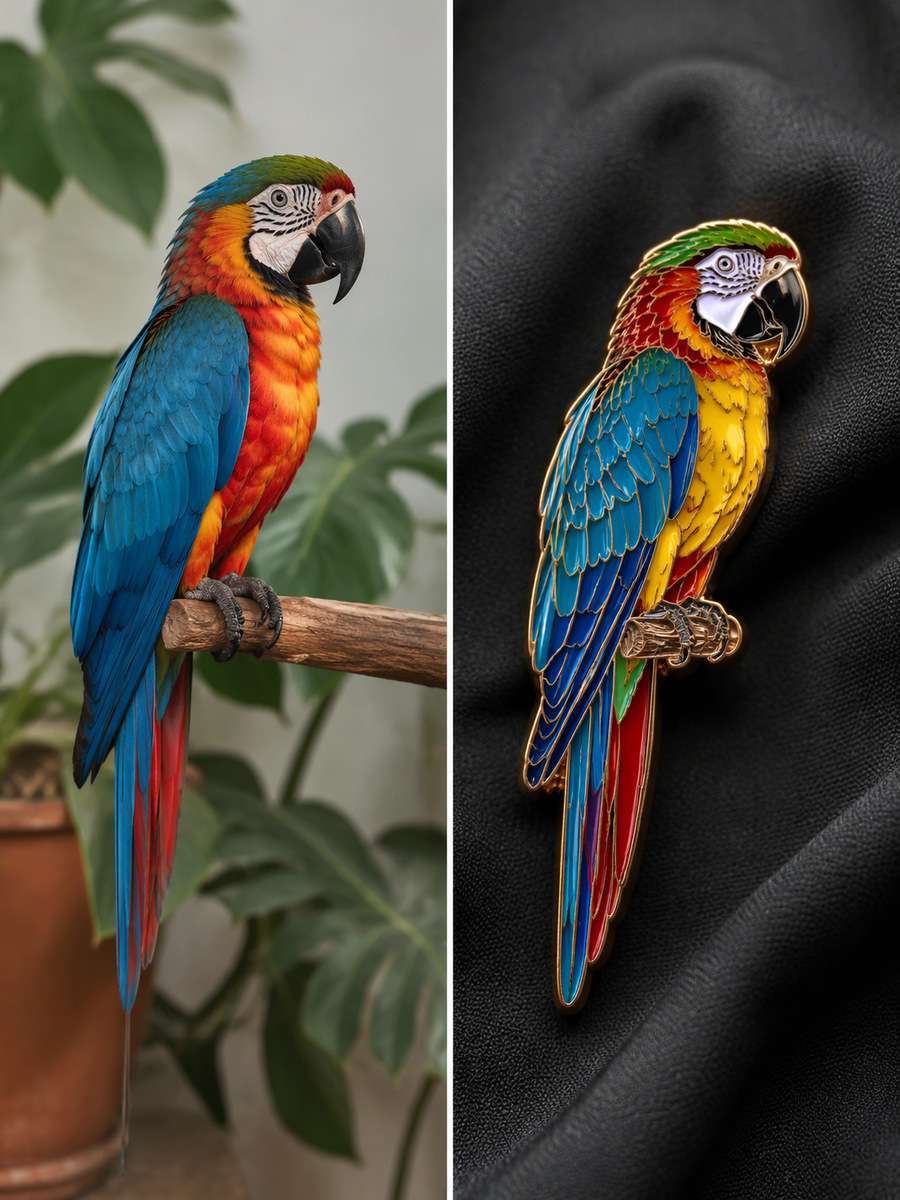
Parrot Feather Color Pin
Design around the actual pictured subject. Choose a pet bird perched in a reference photo. Create a vivid six-color macaw-like bird pin with layered wing cells and copper rim on dark cloth. Follow the actual bird's color pattern and beak silhouette, not a random new species. Show credible raised partitions and glossy recessed color on an actual dimensional pin object. Retain identity through large readable shapes: hair silhouette, face proportions, animal markings or the original object's defining contour. Translate details into opaque enamel cells with substantial connected metal partitions; the final subject must look like a three-dimensional collectible pin, never a printed sticker. Avoid photorealistic skin pasted on metal, hairline metal walls, tiny illegible lettering and color fields escaping the outer edge.
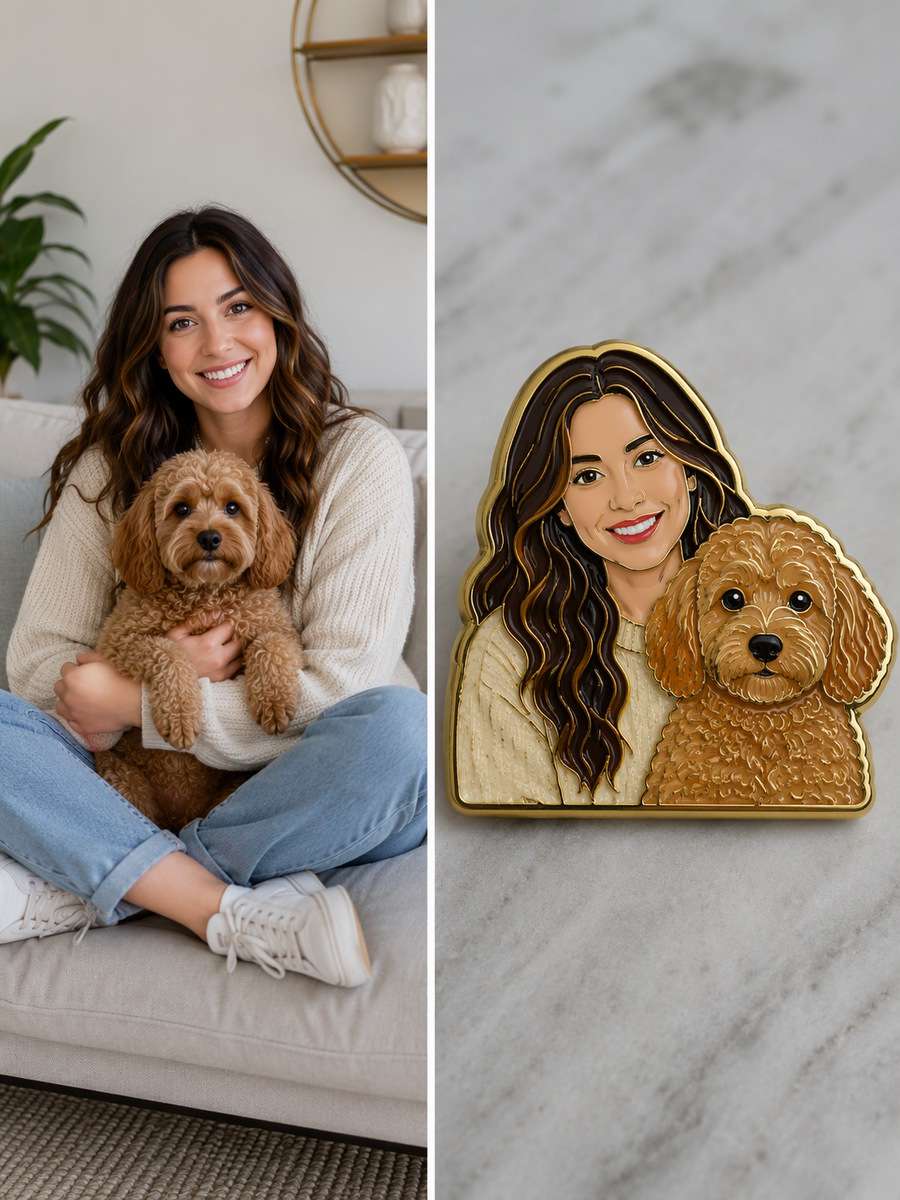
Pet-and-Owner Duo Pin
Transform the identifiable person, pet or object visible in my photo. Preferred reference: a photo already showing a person and one pet. Create a compact two-subject cameo with the person's hair silhouette beside the pet's distinctive ears, gold die-cut edge. Keep exactly the two original subjects and recognizable size relationship. Use five to seven solid enamel colors, a coherent die-cut metal edge and a visible small product scale. Retain identity through large readable shapes: hair silhouette, face proportions, animal markings or the original object's defining contour. Translate details into opaque enamel cells with substantial connected metal partitions; the final subject must look like a three-dimensional collectible pin, never a printed sticker. Avoid photorealistic skin pasted on metal, hairline metal walls, tiny illegible lettering and color fields escaping the outer edge.
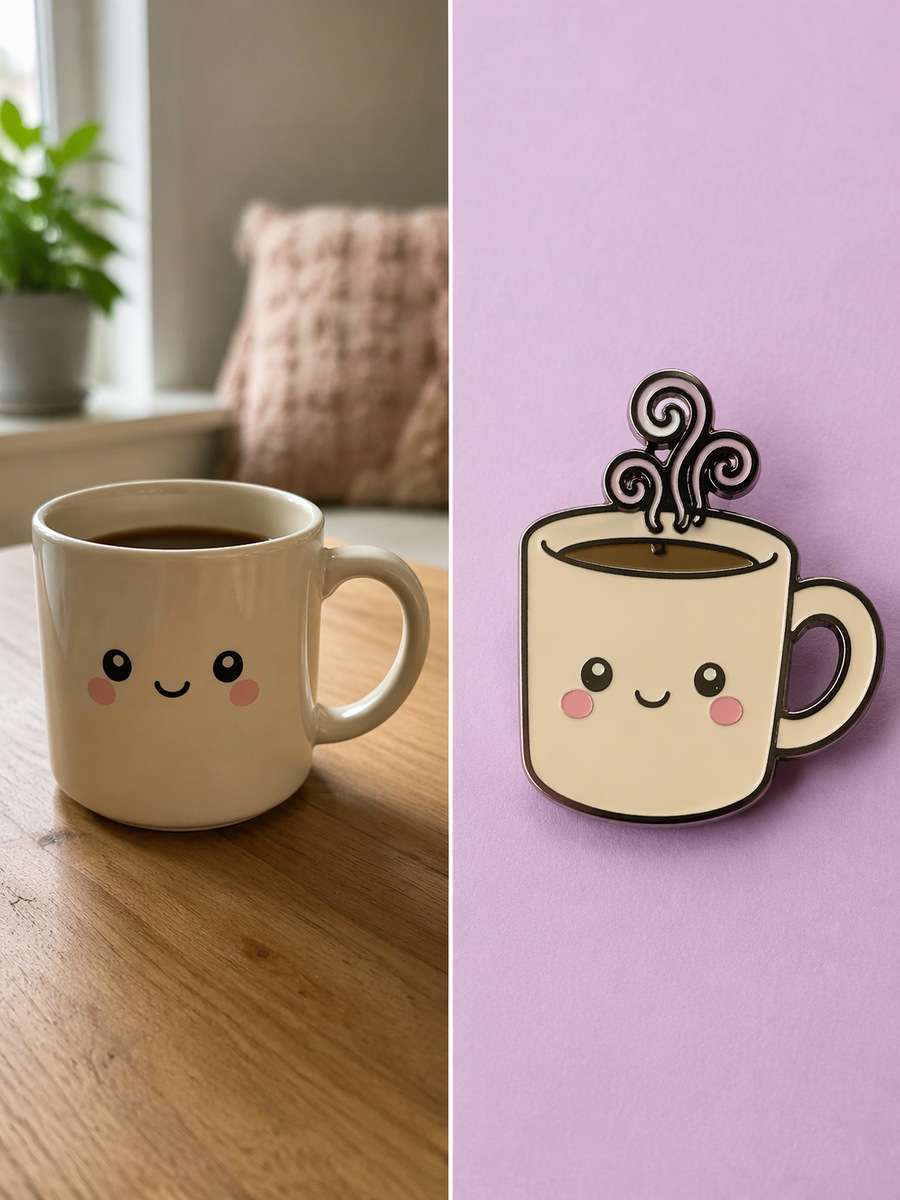
Cafe Mug Mascot Pin
Inspect the supplied photo carefully. Suitable input: a clear photograph of one ceramic coffee cup. Create a cheerful steaming cup hard-enamel badge with thick cream mug silhouette, black nickel outlines and five pastel cells. Use the actual mug's handle and color; steam must be enclosed metal swirls, not realistic vapor. Use five to seven solid enamel colors, a coherent die-cut metal edge and a visible small product scale. Retain identity through large readable shapes: hair silhouette, face proportions, animal markings or the original object's defining contour. Translate details into opaque enamel cells with substantial connected metal partitions; the final subject must look like a three-dimensional collectible pin, never a printed sticker. Avoid photorealistic skin pasted on metal, hairline metal walls, tiny illegible lettering and color fields escaping the outer edge.
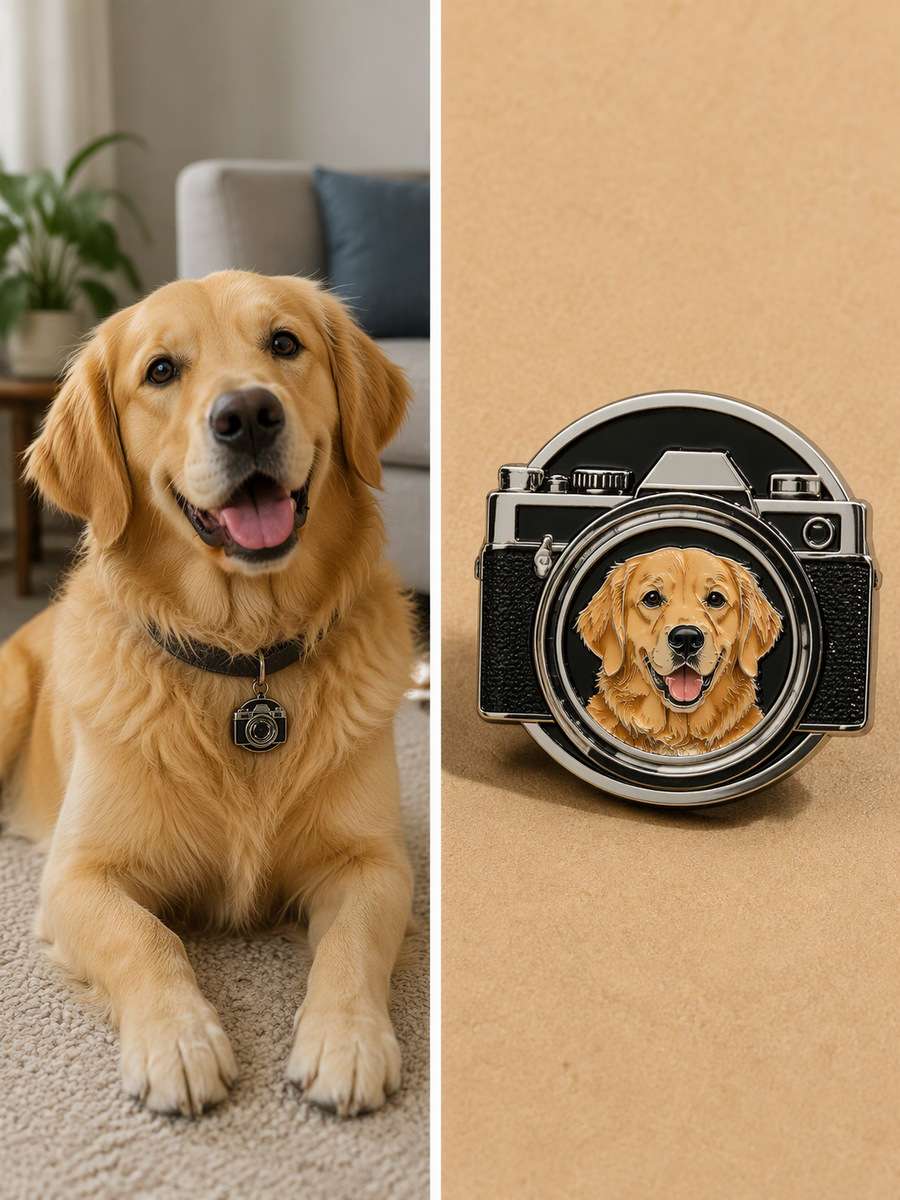
Camera Lens Pin
Take the recognizable subject from my uploaded picture. A suitable source is a real photo of a personal camera. Create a round lens-and-body collector pin with silver-ring bezel, black enamel camera details and short shadow on kraft paper. Preserve the camera's basic proportions without illegible brand badges. Show credible raised partitions and glossy recessed color on an actual dimensional pin object. Retain identity through large readable shapes: hair silhouette, face proportions, animal markings or the original object's defining contour. Translate details into opaque enamel cells with substantial connected metal partitions; the final subject must look like a three-dimensional collectible pin, never a printed sticker. Avoid photorealistic skin pasted on metal, hairline metal walls, tiny illegible lettering and color fields escaping the outer edge.
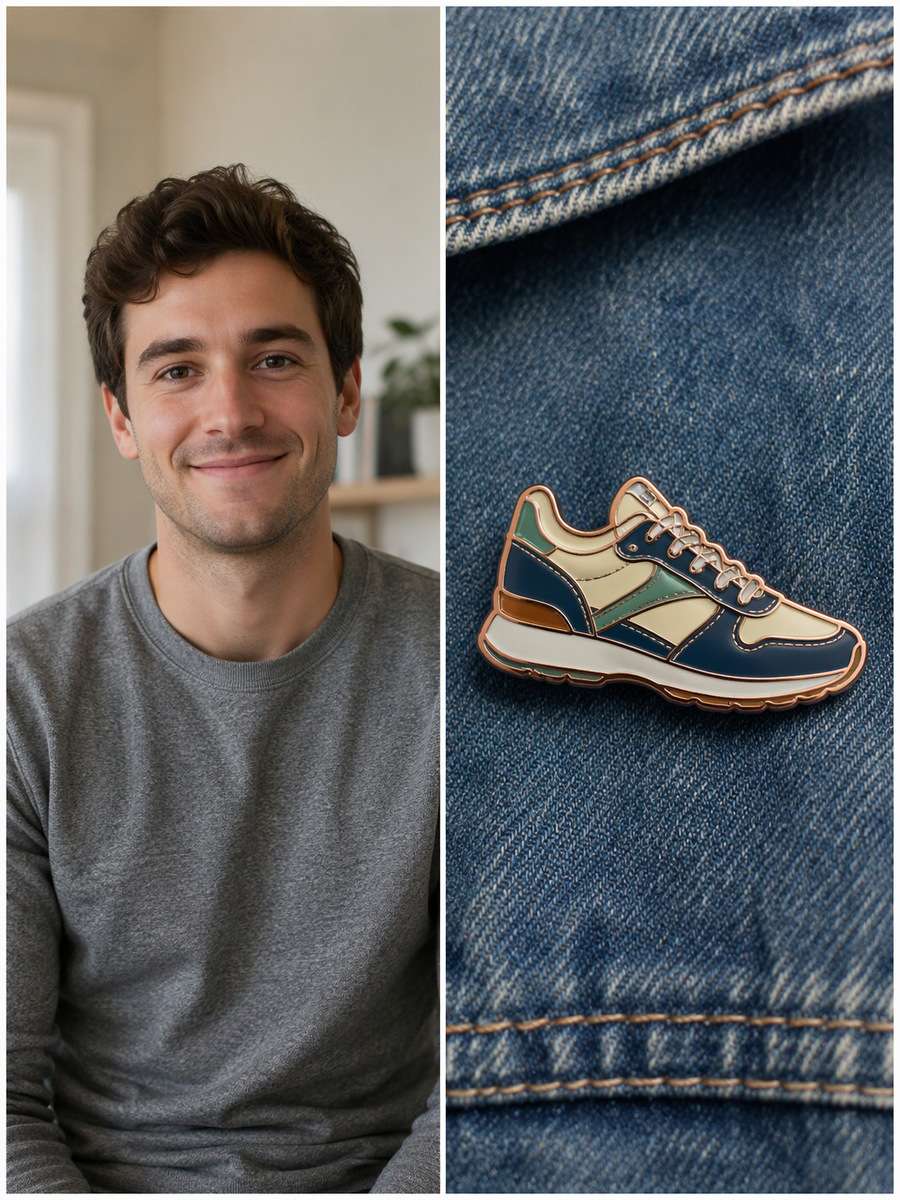
Running Shoe Profile Pin
Begin with my original photo and reduce its identity cues into metalwork. Best input: a side-view sneaker photo. Create a six-color layered sneaker enamel pin with copper outsole edge, displayed against raw denim. Follow the original shoe silhouette and lace direction; avoid hairline metal details. Use five to seven solid enamel colors, a coherent die-cut metal edge and a visible small product scale. Retain identity through large readable shapes: hair silhouette, face proportions, animal markings or the original object's defining contour. Translate details into opaque enamel cells with substantial connected metal partitions; the final subject must look like a three-dimensional collectible pin, never a printed sticker. Avoid photorealistic skin pasted on metal, hairline metal walls, tiny illegible lettering and color fields escaping the outer edge.
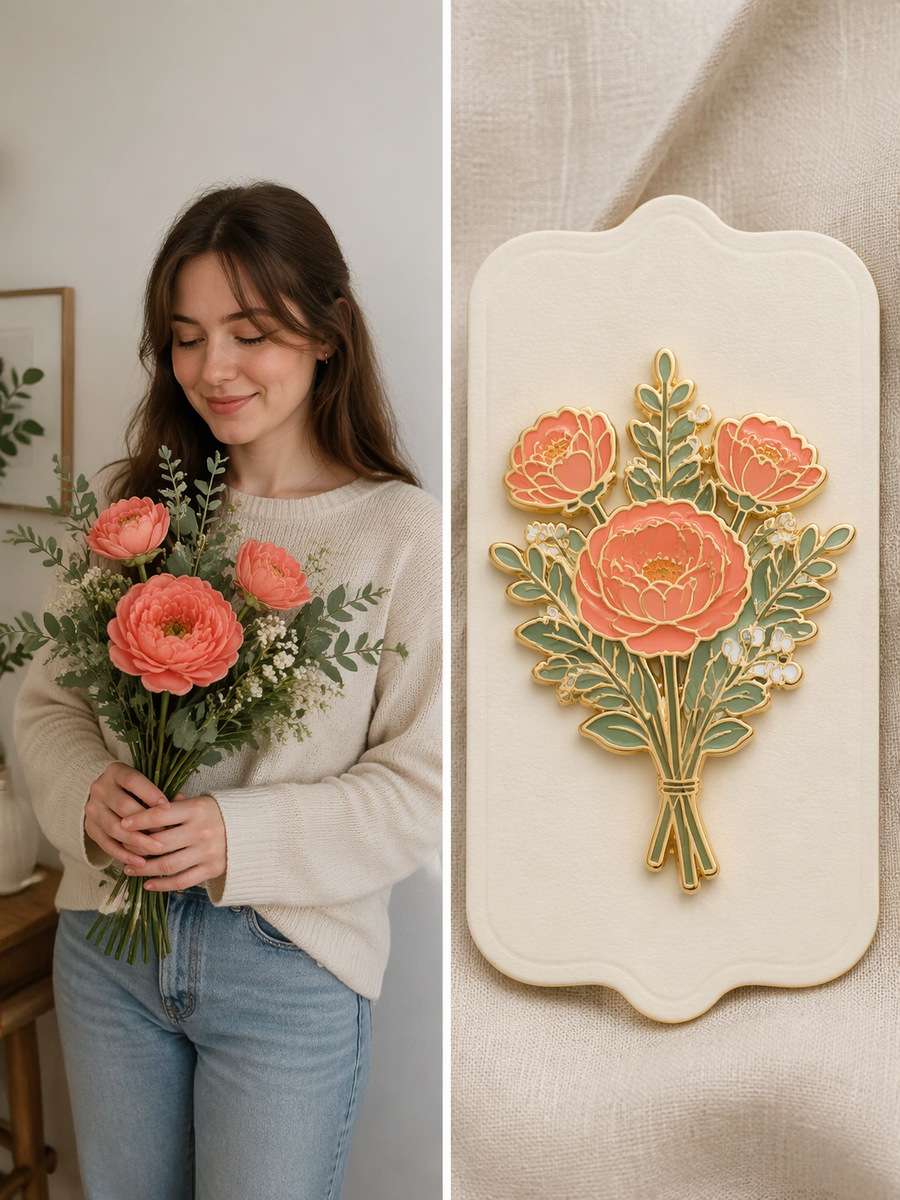
Flower Bouquet Pin
Design around the actual pictured subject. Choose one original bouquet photo. Create a three-blossom enamel silhouette with broad coral and sage cells, pale gold stems and ivory presentation card. Simplify petal details without losing the bouquet's dominant flower shapes. Use five to seven solid enamel colors, a coherent die-cut metal edge and a visible small product scale. Retain identity through large readable shapes: hair silhouette, face proportions, animal markings or the original object's defining contour. Translate details into opaque enamel cells with substantial connected metal partitions; the final subject must look like a three-dimensional collectible pin, never a printed sticker. Avoid photorealistic skin pasted on metal, hairline metal walls, tiny illegible lettering and color fields escaping the outer edge.
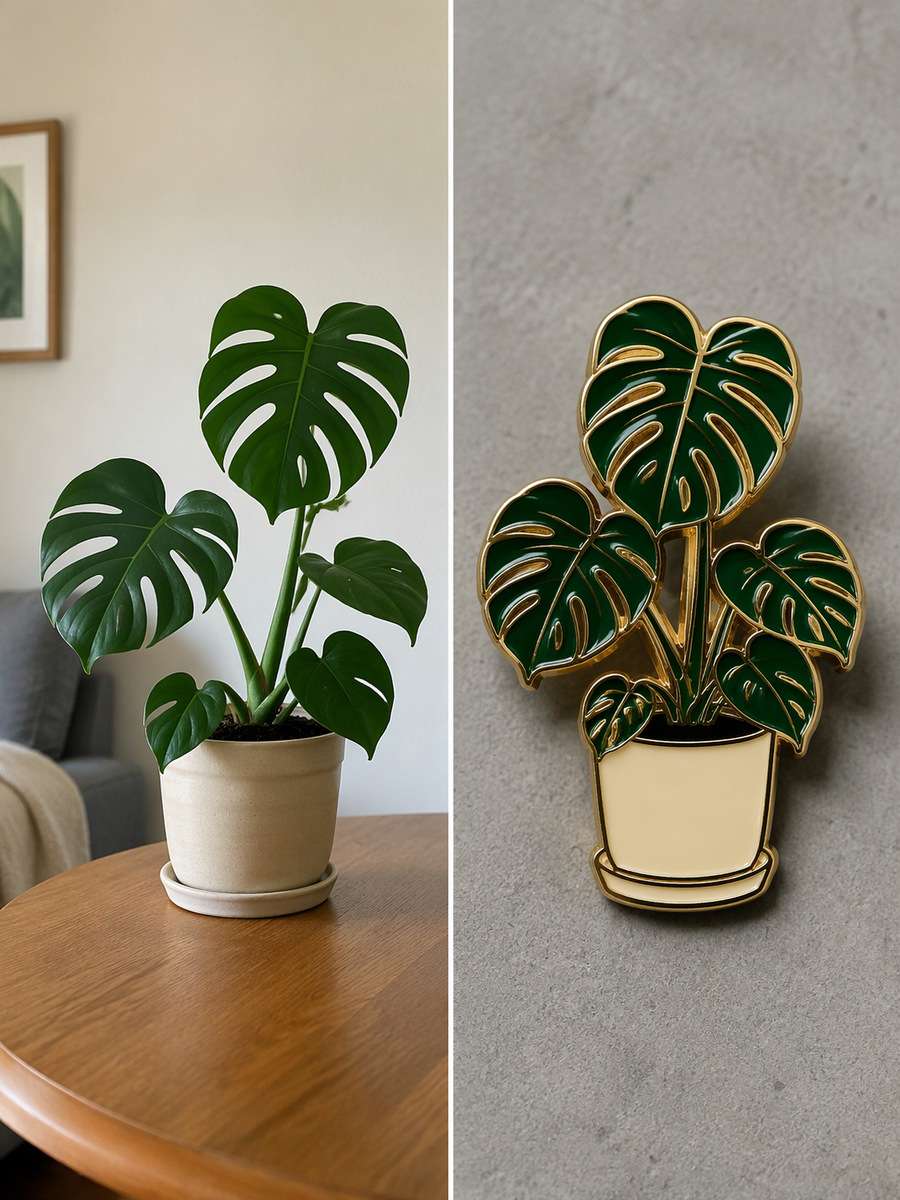
Original Houseplant Pin
Transform the identifiable person, pet or object visible in my photo. Preferred reference: a photo of a distinctive potted plant. Create a monstera-style leaf-and-pot enamel pin with cutout leaf gaps and dark green color fields, photographed on warm gray. Match the specific reference leaf shape and pot profile; keep cutouts metal-supported. Show credible raised partitions and glossy recessed color on an actual dimensional pin object. Retain identity through large readable shapes: hair silhouette, face proportions, animal markings or the original object's defining contour. Translate details into opaque enamel cells with substantial connected metal partitions; the final subject must look like a three-dimensional collectible pin, never a printed sticker. Avoid photorealistic skin pasted on metal, hairline metal walls, tiny illegible lettering and color fields escaping the outer edge.
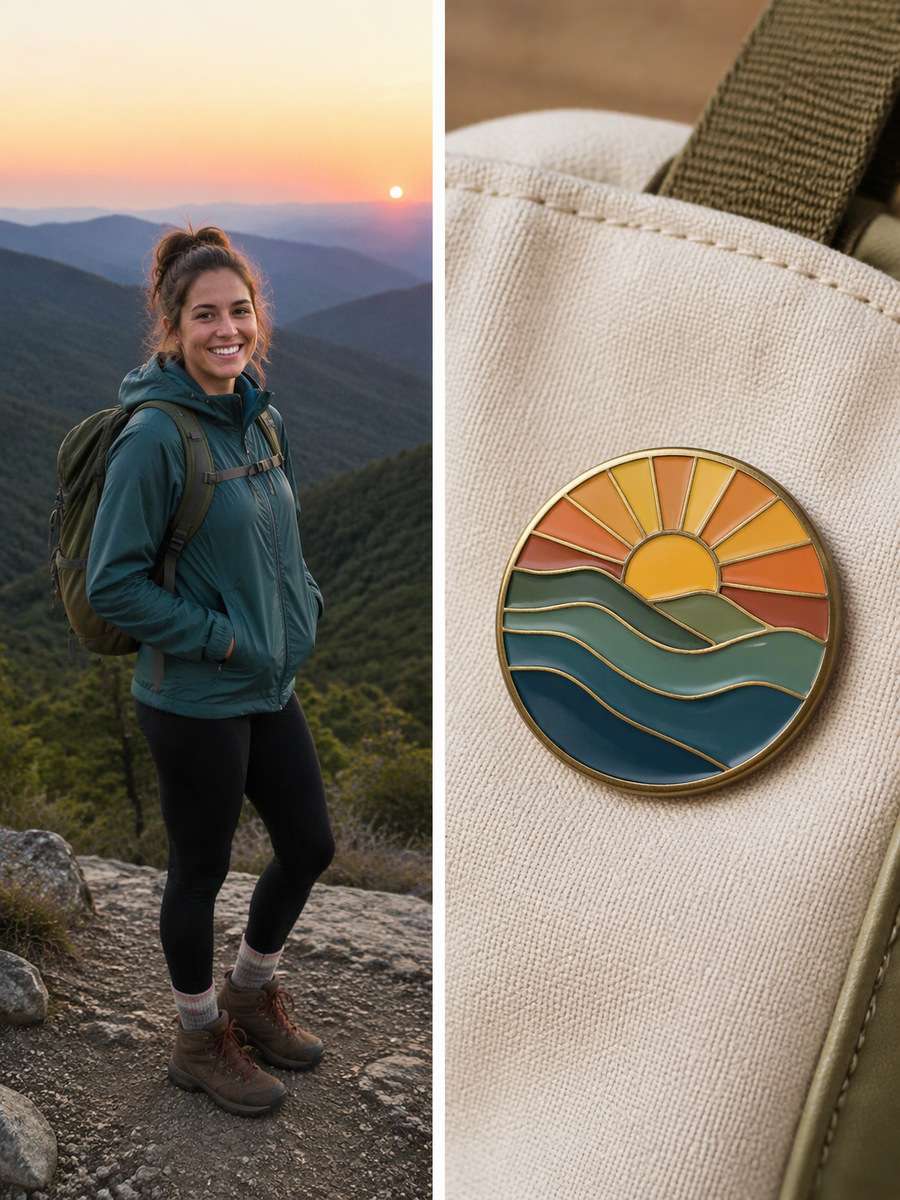
Mountain Vacation Pin
Inspect the supplied photo carefully. Suitable input: one mountain landscape photo. Create a round sunrise-over-ridges pin with stepped colored enamel bands and antique brass edge on a canvas bag. Retain recognizable ridge direction but use no photographic clouds or tiny trees. Use five to seven solid enamel colors, a coherent die-cut metal edge and a visible small product scale. Retain identity through large readable shapes: hair silhouette, face proportions, animal markings or the original object's defining contour. Translate details into opaque enamel cells with substantial connected metal partitions; the final subject must look like a three-dimensional collectible pin, never a printed sticker. Avoid photorealistic skin pasted on metal, hairline metal walls, tiny illegible lettering and color fields escaping the outer edge.
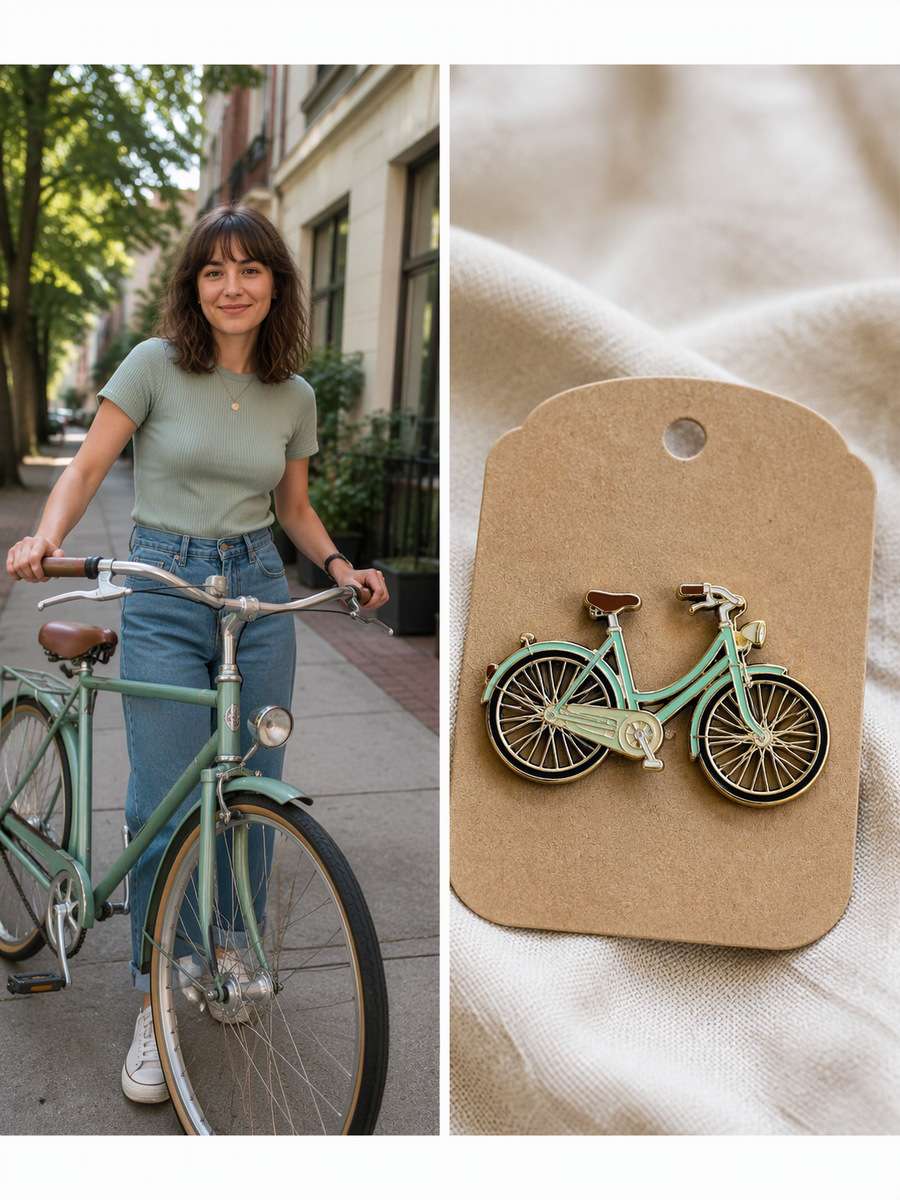
Vintage Bicycle Pin
Take the recognizable subject from my uploaded picture. A suitable source is a side photo of a bicycle. Create a retro bicycle emblem with simplified wheels, strong metal spokes and mint enamel frame on a backing card. Wheels should be circular and attached; avoid impossible thin dangling spokes. Use five to seven solid enamel colors, a coherent die-cut metal edge and a visible small product scale. Retain identity through large readable shapes: hair silhouette, face proportions, animal markings or the original object's defining contour. Translate details into opaque enamel cells with substantial connected metal partitions; the final subject must look like a three-dimensional collectible pin, never a printed sticker. Avoid photorealistic skin pasted on metal, hairline metal walls, tiny illegible lettering and color fields escaping the outer edge.
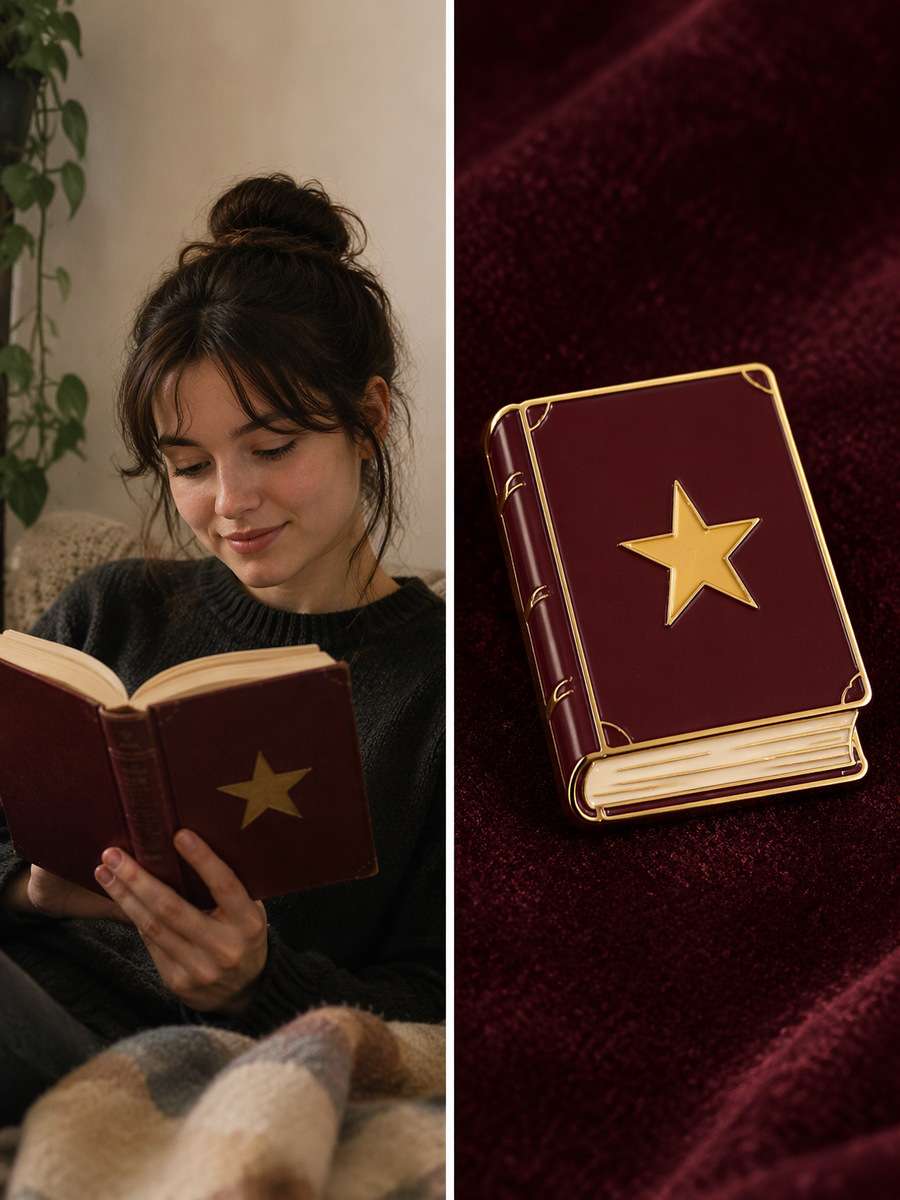
Favorite Book Pin
Begin with my original photo and reduce its identity cues into metalwork. Best input: a photo of a plain-cover book. Create a closed-book enamel badge with cream pages, burgundy cover and single large star icon on velvet. Match the book's outline; avoid invented author or title text. Show credible raised partitions and glossy recessed color on an actual dimensional pin object. Retain identity through large readable shapes: hair silhouette, face proportions, animal markings or the original object's defining contour. Translate details into opaque enamel cells with substantial connected metal partitions; the final subject must look like a three-dimensional collectible pin, never a printed sticker. Avoid photorealistic skin pasted on metal, hairline metal walls, tiny illegible lettering and color fields escaping the outer edge.
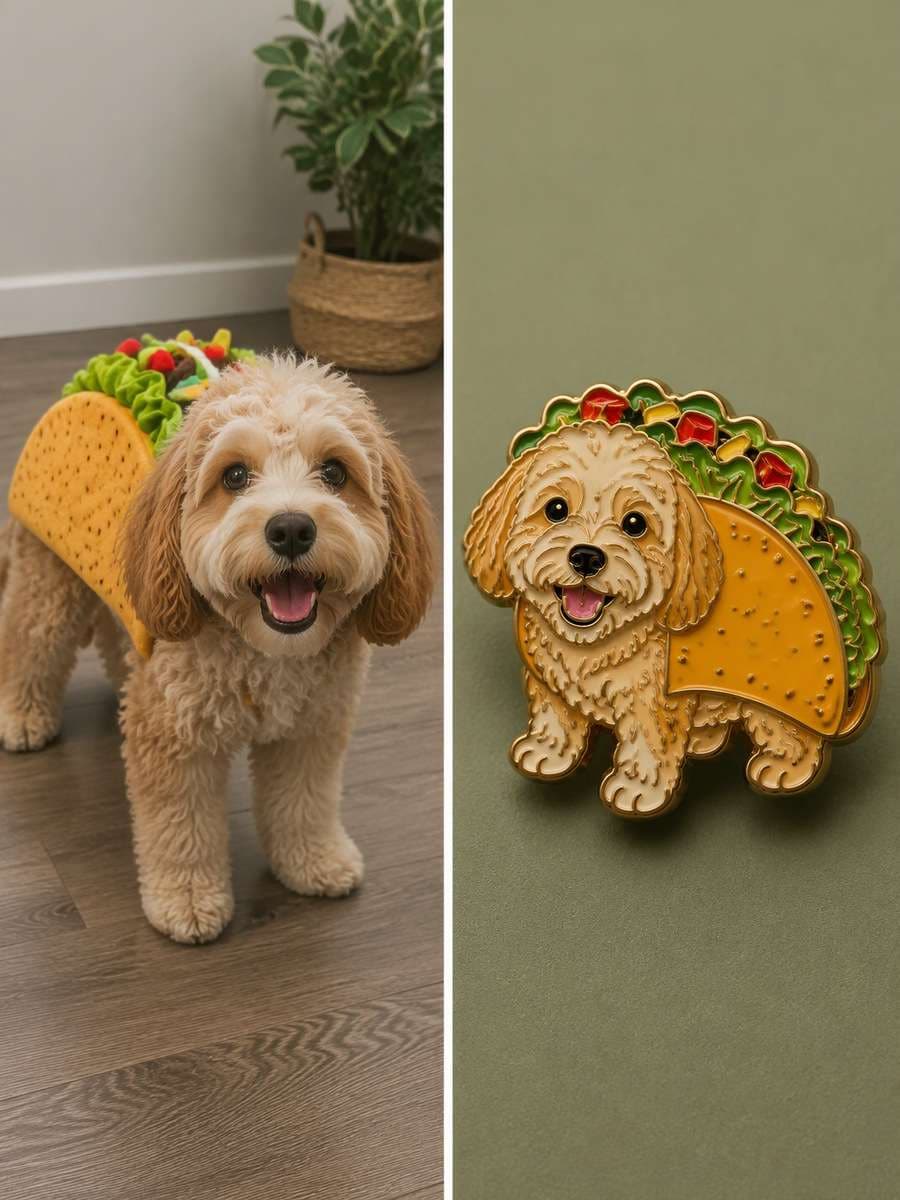
Food Truck Taco Pin
Design around the actual pictured subject. Choose an original taco food photo. Create a cheerful taco-shaped soft-enamel collector pin with orange shell, green and red fillings and bronze outlines. Keep fillings readable as solid cells; not a realistic greasy food photo. Use five to seven solid enamel colors, a coherent die-cut metal edge and a visible small product scale. Retain identity through large readable shapes: hair silhouette, face proportions, animal markings or the original object's defining contour. Translate details into opaque enamel cells with substantial connected metal partitions; the final subject must look like a three-dimensional collectible pin, never a printed sticker. Avoid photorealistic skin pasted on metal, hairline metal walls, tiny illegible lettering and color fields escaping the outer edge.
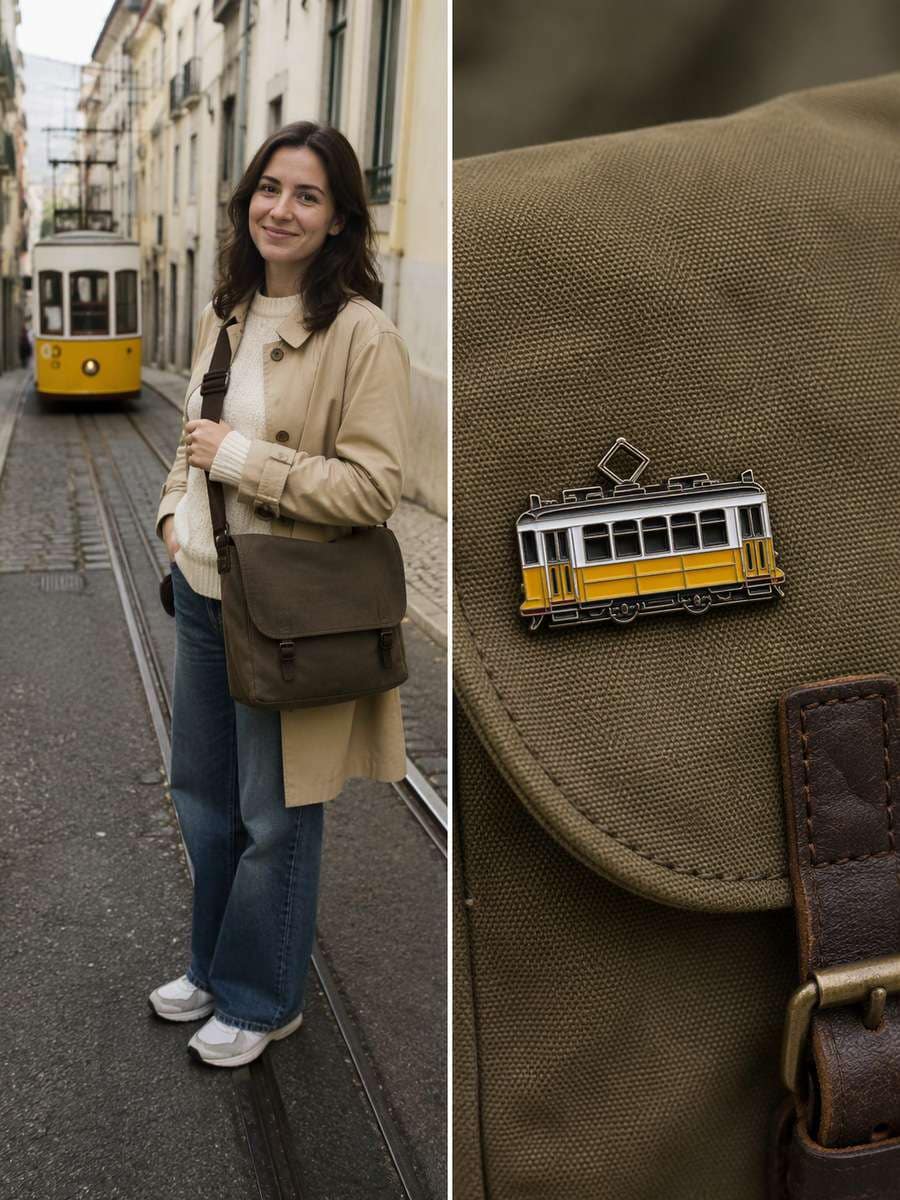
Tiny City Tram Pin
Transform the identifiable person, pet or object visible in my photo. Preferred reference: a clean reference photo of a small street tram. Create a rectangular die-cut tram enamel pin with geometric windows, dark silver trim and ochre base on a messenger bag. Preserve vehicle shape and wheel count; no made-up route labels. Use five to seven solid enamel colors, a coherent die-cut metal edge and a visible small product scale. Retain identity through large readable shapes: hair silhouette, face proportions, animal markings or the original object's defining contour. Translate details into opaque enamel cells with substantial connected metal partitions; the final subject must look like a three-dimensional collectible pin, never a printed sticker. Avoid photorealistic skin pasted on metal, hairline metal walls, tiny illegible lettering and color fields escaping the outer edge.
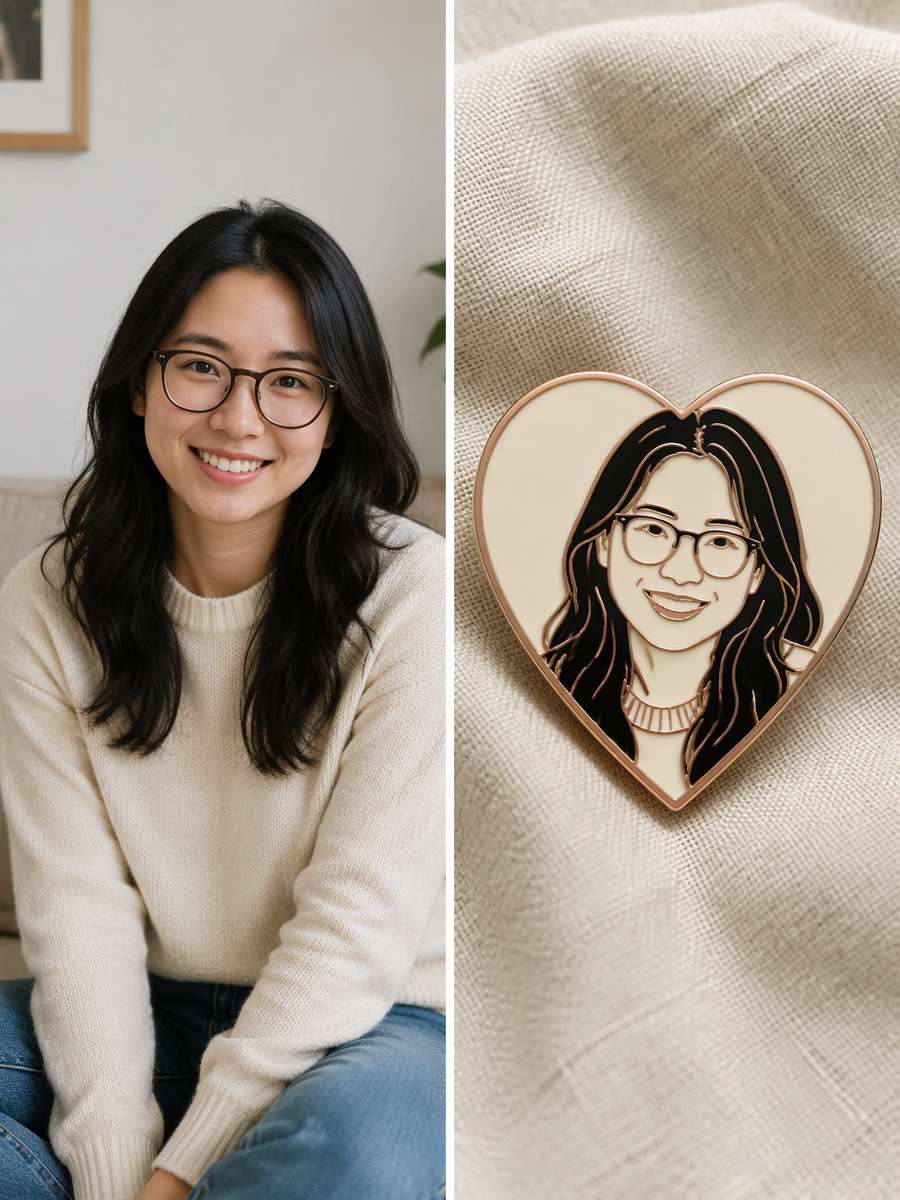
Two-Tone Heart Portrait
Inspect the supplied photo carefully. Suitable input: a close human selfie. Create a heart-framed minimal portrait with just two enamel colors and rose-gold hair/face separation on linen. Preserve hair shape and eyewear silhouette, not skin texture. Show credible raised partitions and glossy recessed color on an actual dimensional pin object. Retain identity through large readable shapes: hair silhouette, face proportions, animal markings or the original object's defining contour. Translate details into opaque enamel cells with substantial connected metal partitions; the final subject must look like a three-dimensional collectible pin, never a printed sticker. Avoid photorealistic skin pasted on metal, hairline metal walls, tiny illegible lettering and color fields escaping the outer edge.
Collector Three-Pin Set
Take the recognizable subject from my uploaded picture. A suitable source is a photo containing one person and two cherished objects. Create three distinct tiny enamel pins: a face cameo plus two simplified objects arranged on black felt. Make three complete separate metal-rimmed pins, never merge them into one sticker. Use five to seven solid enamel colors, a coherent die-cut metal edge and a visible small product scale. Retain identity through large readable shapes: hair silhouette, face proportions, animal markings or the original object's defining contour. Translate details into opaque enamel cells with substantial connected metal partitions; the final subject must look like a three-dimensional collectible pin, never a printed sticker. Avoid photorealistic skin pasted on metal, hairline metal walls, tiny illegible lettering and color fields escaping the outer edge.
Soft Enamel Patchwork Portrait
Begin with my original photo and reduce its identity cues into metalwork. Best input: a brightly clothed subject photo. Create a raised-metal soft-enamel bust with intentionally recessed jewel-color blocks and tactile macro side lighting. Show raised metal height and shallow color recesses; keep eyes and hair recognizable. Use five to seven solid enamel colors, a coherent die-cut metal edge and a visible small product scale. Retain identity through large readable shapes: hair silhouette, face proportions, animal markings or the original object's defining contour. Translate details into opaque enamel cells with substantial connected metal partitions; the final subject must look like a three-dimensional collectible pin, never a printed sticker. Avoid photorealistic skin pasted on metal, hairline metal walls, tiny illegible lettering and color fields escaping the outer edge.
Minimal Gold Line Pet Pin
Design around the actual pictured subject. Choose a side-view dog or cat portrait. Create a simple antique-gold pet silhouette with only three closed enamel fields on handmade cream paper. Preserve the actual outline; no extraneous decorative cartoon features. Show credible raised partitions and glossy recessed color on an actual dimensional pin object. Retain identity through large readable shapes: hair silhouette, face proportions, animal markings or the original object's defining contour. Translate details into opaque enamel cells with substantial connected metal partitions; the final subject must look like a three-dimensional collectible pin, never a printed sticker. Avoid photorealistic skin pasted on metal, hairline metal walls, tiny illegible lettering and color fields escaping the outer edge.
Market Display Pin Card
Transform the identifiable person, pet or object visible in my photo. Preferred reference: a portrait or original object photo. Create a single fully rendered enamel pin attached to a blank white retail backing card on a wooden display counter. Keep correct backing-card scale and thick metal rim; no imaginary brand text or manufactured claims. Use five to seven solid enamel colors, a coherent die-cut metal edge and a visible small product scale. Retain identity through large readable shapes: hair silhouette, face proportions, animal markings or the original object's defining contour. Translate details into opaque enamel cells with substantial connected metal partitions; the final subject must look like a three-dimensional collectible pin, never a printed sticker. Avoid photorealistic skin pasted on metal, hairline metal walls, tiny illegible lettering and color fields escaping the outer edge.
The appeal of a pin comes from reduction: recognizable features survive even after tiny details become bold enamel shapes. Strong ChatGPT enamel pin prompts describe the real object and how metal lines separate the colors, not simply a cartoon style.
Translate Photo Detail into Metal Cells
Ask for a clear, connected outer silhouette and enclosed color regions separated by metal; avoid floating color islands.
Limit gradients and hair-strand detail. Hard enamel should feel smooth and level; soft enamel should have raised metal divisions.
For people and pets, preserve a defining hair shape, glasses outline, coat markings or ear silhouette instead of drawing a photorealistic face on metal.
Choose How the Pin Is Displayed
Use cream product paper or felt for a clean mockup; denim, canvas or cork works for lifestyle previews.
Specify approximate pin scale and a single light source so glossy metal reflections look plausible.
Do not claim an AI mockup is a factory-ready vector, licensed design or physically manufactured item.
Ideas for Collecting and Sharing Custom Pin Concepts
Choose the final display around the reason you want the pin, whether it is a portrait keepsake or a small design to show a maker.
Personal Keepsake Pin
Reduce a familiar face into a warm enamel portrait that reads at badge size.
Pet Lover Gift
Capture the markings, ears and expression that make one animal recognizable.
Hobby and Club Merch
Turn original equipment or object photos into an emblem with disciplined color blocks.
Small Shop Mockup
Present an enamel concept on a backing card or garment before arranging professional artwork.
FAQs About ChatGPT Enamel Pin Photo Prompts
1. How do I turn a photo into an enamel pin with ChatGPT?
Upload one clear photo, copy a prompt that calls for closed flat color regions and metal outlines, and specify whether you want hard or soft enamel. Check that the subject remains recognizable.
2. What is the difference between hard and soft enamel prompts?
Hard enamel has a smooth polished surface level with the metal lines. Soft enamel has recessed color separated by raised metal, so the relief is more visible.
3. What should a pet enamel pin AI prompt include?
Keep the pet's original ear shape, coat markings, eyes and overall silhouette. Translate fur into a handful of enclosed enamel colors rather than thin printed hairs.
4. Can I send an AI enamel pin image directly to a factory?
Usually not without further preparation. The AI result is a concept mockup, while manufacturing may require editable artwork, minimum line widths and color specifications.
5. How do I stop my enamel pin from looking like a sticker?
Ask for a thick die-cut metal rim, visible raised separators, glossy opaque enamel, believable thickness and product-photo reflections. Avoid paper edges or printed gradients.
Recreate the viral No Scrubs dance with your own photo. Bring the iconic moves to life with AI.
Join the Dance Trend
Wassup in a Minute AI
Turn your photo into a streetwear anime character and sway to the beat in the viral white-background edit.
Create Your Anime Sway
AI Video Character Swap
What if someone else starred in your video? Swap any on-screen character with your favorite character using AI and bring a whole new twist to your scenes!