ChatGPT and Gemini AI Vintage Botanical Animal Art Prompts for Wildlife & Floral Studies
Pair a woodland animal with the plants around it, and the result can feel like a field study, an illustrated story or a decorative floral portrait. These AI vintage botanical animal art prompts offer 25 ways to explore that balance, from fine engraved lines and muted watercolor to bold woodblock shapes and flowing ornamental frames. Choose a fox, rabbit, bird or smaller creature, then adapt the botanical details or create companion artworks. The previews are original antique-inspired illustrations, not reproductions or scientifically verified field-guide plates.
Original AI-generated JPG illustration previews show different animal-and-botanical pairings and antique-inspired finishes; they are not historical or scientifically verified plates.
Try Media.io.
How to Create Vintage Botanical Animal Art with AI
Use these prompts in Media.io AI Text to Image in three simple steps.
1
Open Media.io AI Text to Image
Visit Media.io AI Text to Image. Choose your preferred image model from the available options, such as Nano Banana Pro or GPT Image 2 if listed.
2
Copy and Paste a Prompt
Choose a prompt and click Copy Prompt, then paste it into the generator. Or click Create Similar Image to open the tool with that prompt. Set your aspect ratio, resolution, and number of images.
3
Generate, Preview, and Download
Click Generate and wait for your images. Preview the results, then download the images you want to keep.
25 Vintage Botanical Animal Art Prompts to Copy & Try
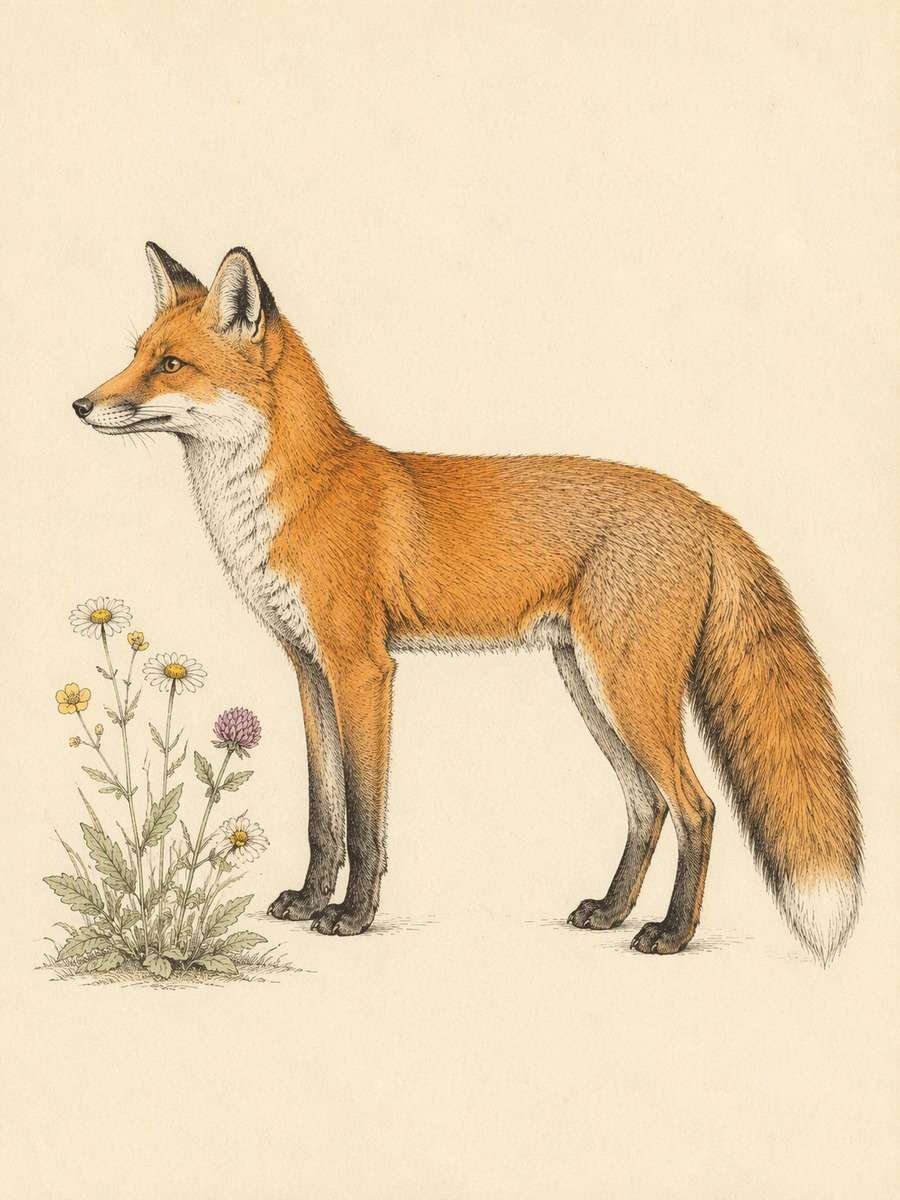
Fox and Meadow Wildflowers
Create an original antique-inspired natural-history illustration of a fox standing in clean side profile beside a small cluster of meadow wildflowers. Use precise pen contours for the muzzle, legs and bushy tail, then add restrained hand-colored orange to the coat and soft green to the stems. Place both subjects on an open cream ground with light paper grain. Keep the flowers below the fox's shoulder and the paws fully visible. No lettering, species label, frame or photographic elements. --ar 3:4
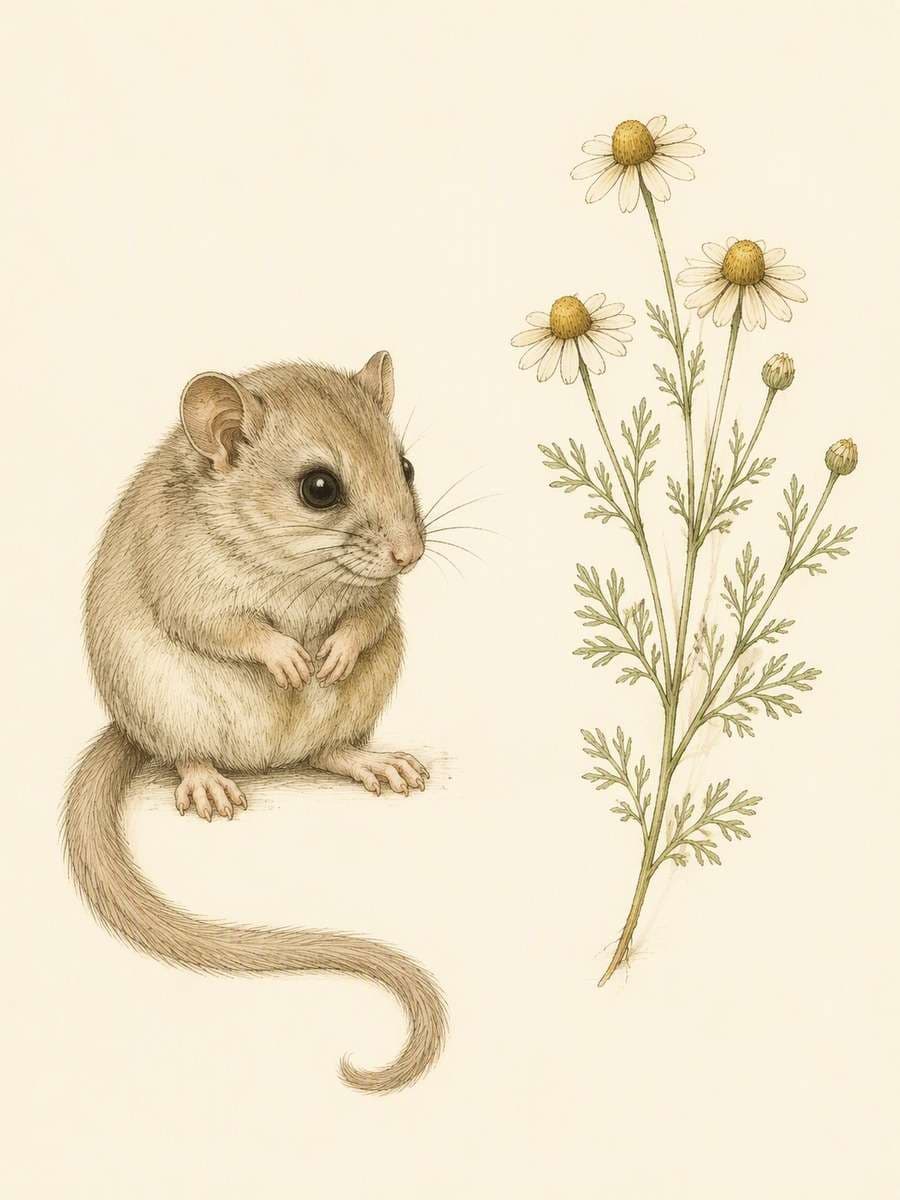
Dormouse and Chamomile Study
Create an original antique-inspired field-study illustration of a small dormouse seated beside one chamomile sprig. Show its rounded ears, a calm dark eye, four clearly arranged paws and a long softly curling tail. Draw precise sepia pen contours with gentle warm-gray fur shading, pale green foliage and tiny cream petals around muted golden flower centers. Keep the animal and sprig separate enough to read independently on a clean cream ground. Include no labels, numbers, signature, clothing or photographic scenery. --ar 3:4
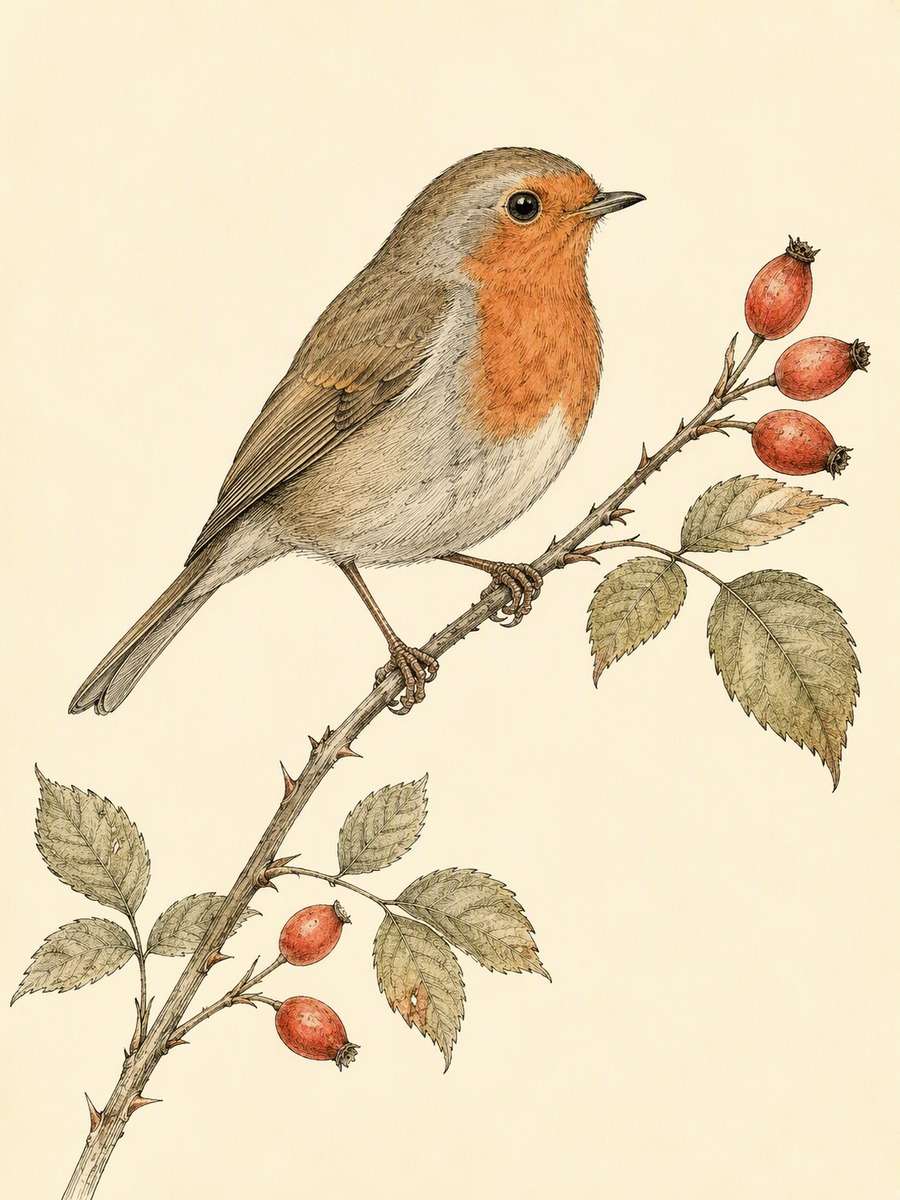
Robin and Rosehip Branch
Make an original natural-history drawing of a robin seen from the side, perched on a slender rosehip branch. Show both feet wrapped around the same twig, a balanced body and an alert eye. Build the plumage with fine ink contours and sparse feather marks, reserving muted red for the breast and rosehips. Let a few leaves and berries extend diagonally across a pale cream ground without crowding the head. Render it as illustration, not a bird photograph; omit cages, labels and text. --ar 3:4
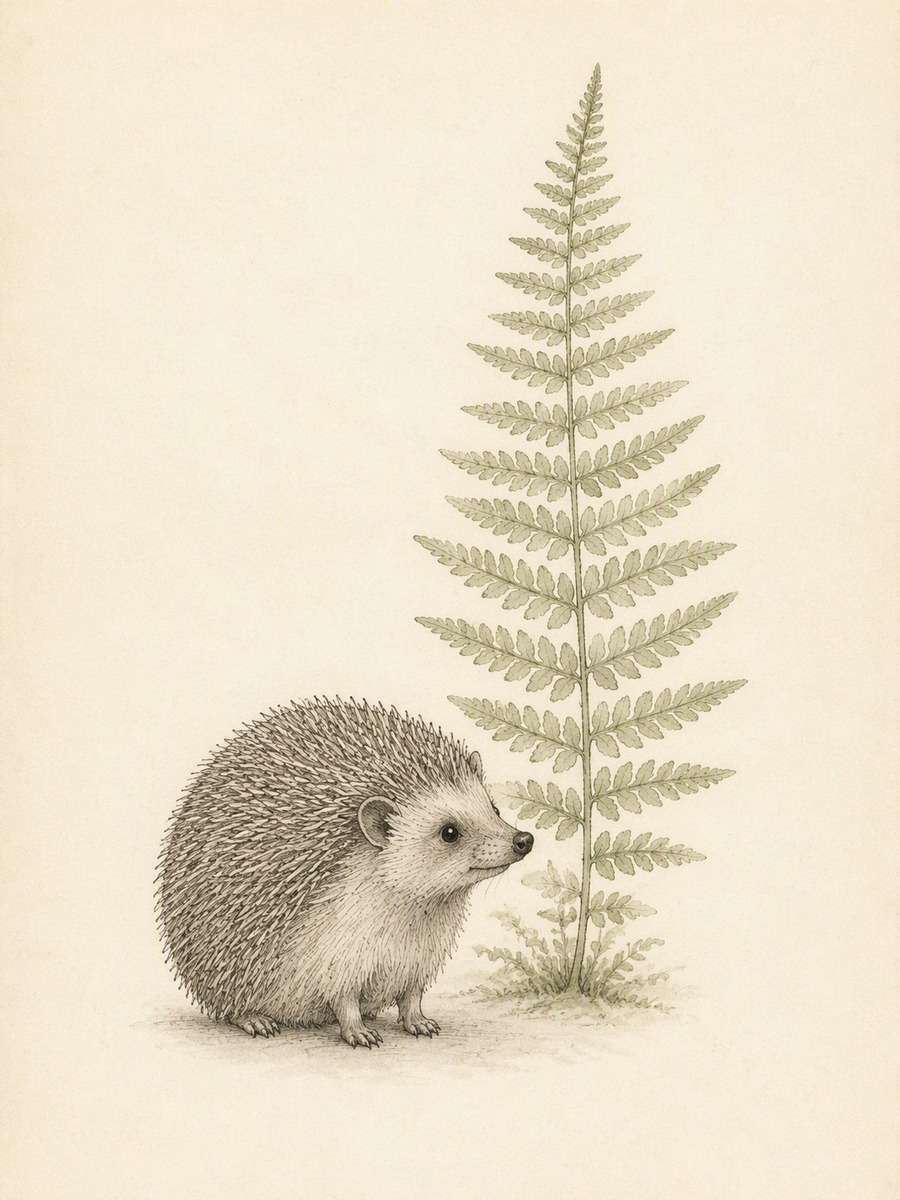
Hedgehog and Fern Frond
Draw an original hedgehog standing beside one tall fern frond in the manner of a restrained antique field study. Define the rounded body with a delicate ink outline and individually suggested quills, keeping the small face, nose and feet clear. Apply a pale green wash to the fern and faint warm gray to the animal. Set the frond behind, not across, the hedgehog's face on a spacious ivory page. Use subtle paper texture; include no scientific caption, labels or decorative border. --ar 3:4
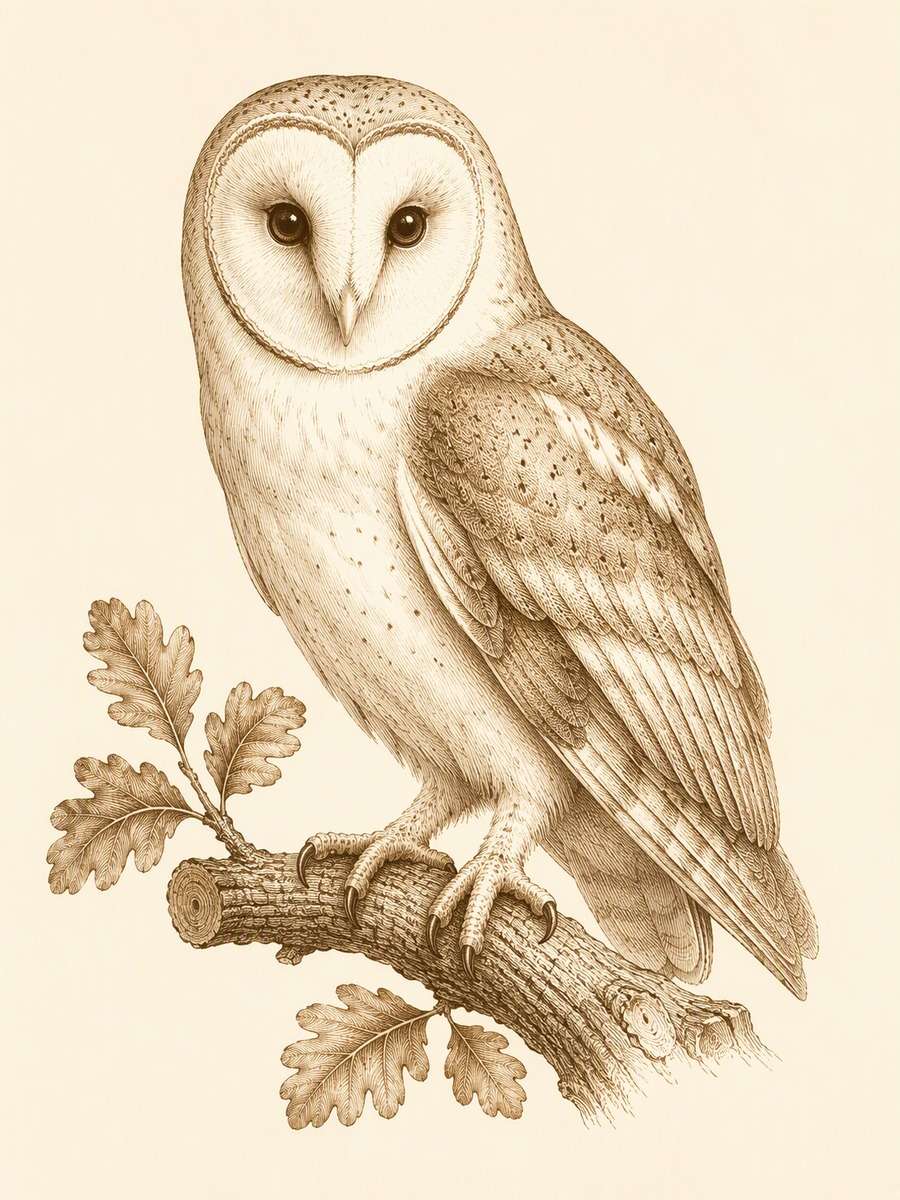
Engraved Barn Owl
Create an original copperplate-inspired illustration of a full-bodied barn owl standing on a short oak branch. Make the heart-shaped face and both gripping feet immediately legible. Build feather volume with selective directional engraving marks in warm sepia, leaving clear gaps around the eyes and breast instead of filling every surface with hatching. Place a few airy oak leaves near the perch on an unlettered cream ground. Keep the branch sturdy but compact; avoid photographic realism, a decorative crest and copied historical artwork. --ar 3:4
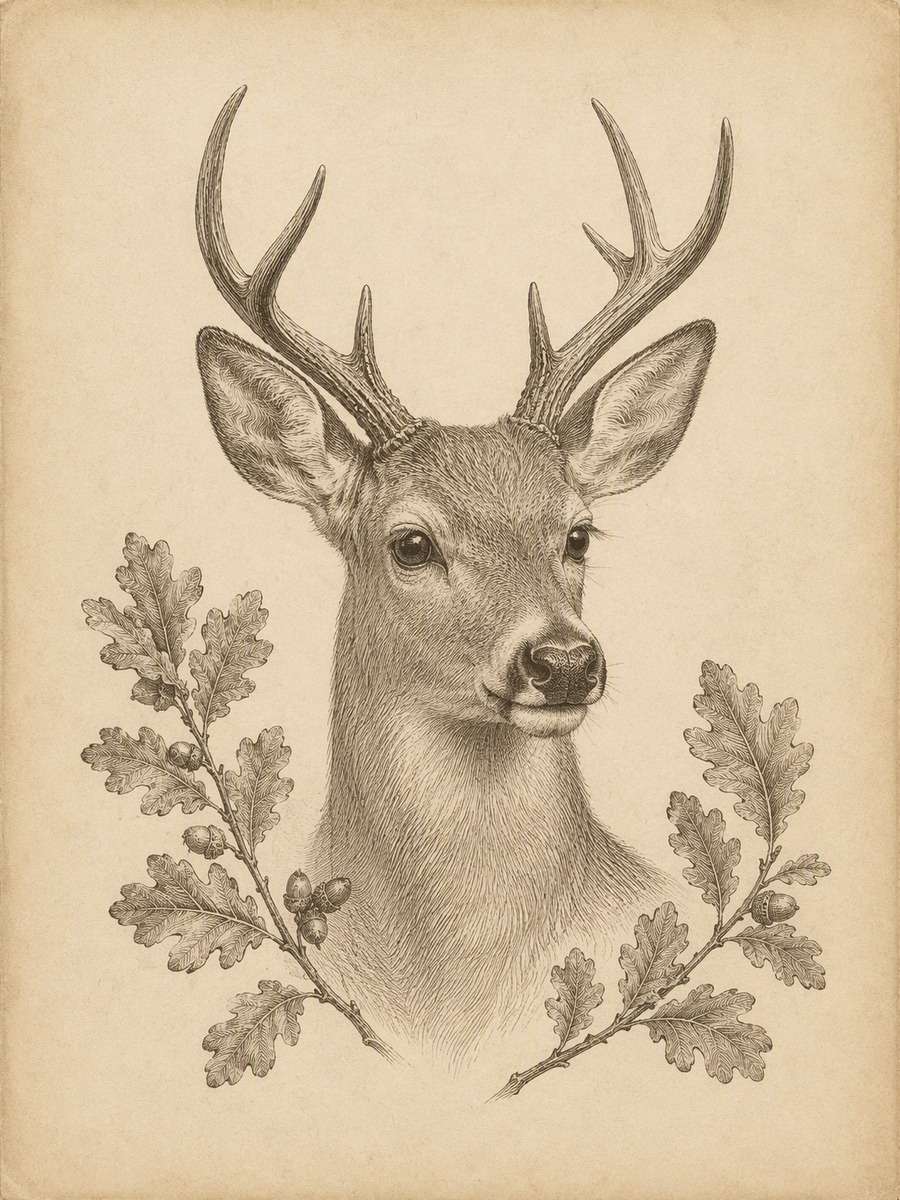
Deer and Oak Leaves
Compose an original antique-inspired engraved portrait of a deer from the head to upper neck, positioned between two loose oak sprigs. Use fine gray-brown copperplate-like marks that follow the cheeks and neck, with sparing crosshatching beneath the jaw. Keep the eyes, muzzle, ear placement and natural head structure believable. Give the oak leaves irregular edges and different angles rather than a symmetrical emblem. Finish on lightly toned paper with a plain margin; no lettering, heraldic crest, clothes or photographic background. --ar 3:4
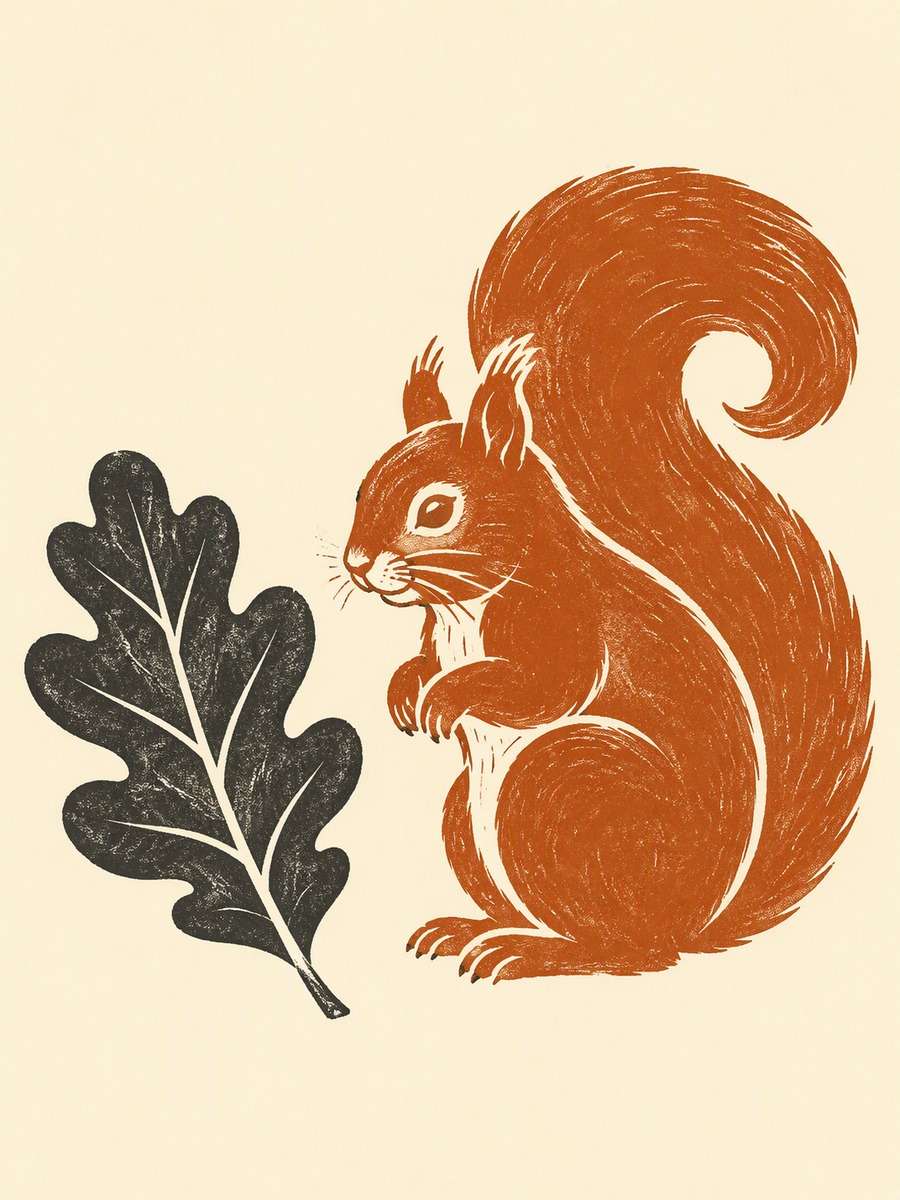
Woodcut Squirrel and Oak
Design an original two-tone printmaking-style illustration of a squirrel with a high curled tail beside one broad oak leaf. Use warm rust and charcoal shapes with deliberately carved-looking cream cuts defining the eye, muzzle, paws and tail curve. Simplify the leaf into bold lobes and a few clear vein cuts. Keep the silhouette complete and give both subjects generous cream margins. The artwork should look intentionally graphic rather than photographic, with no lettering, logos, historical artist attribution or framed-wall mockup. --ar 3:4
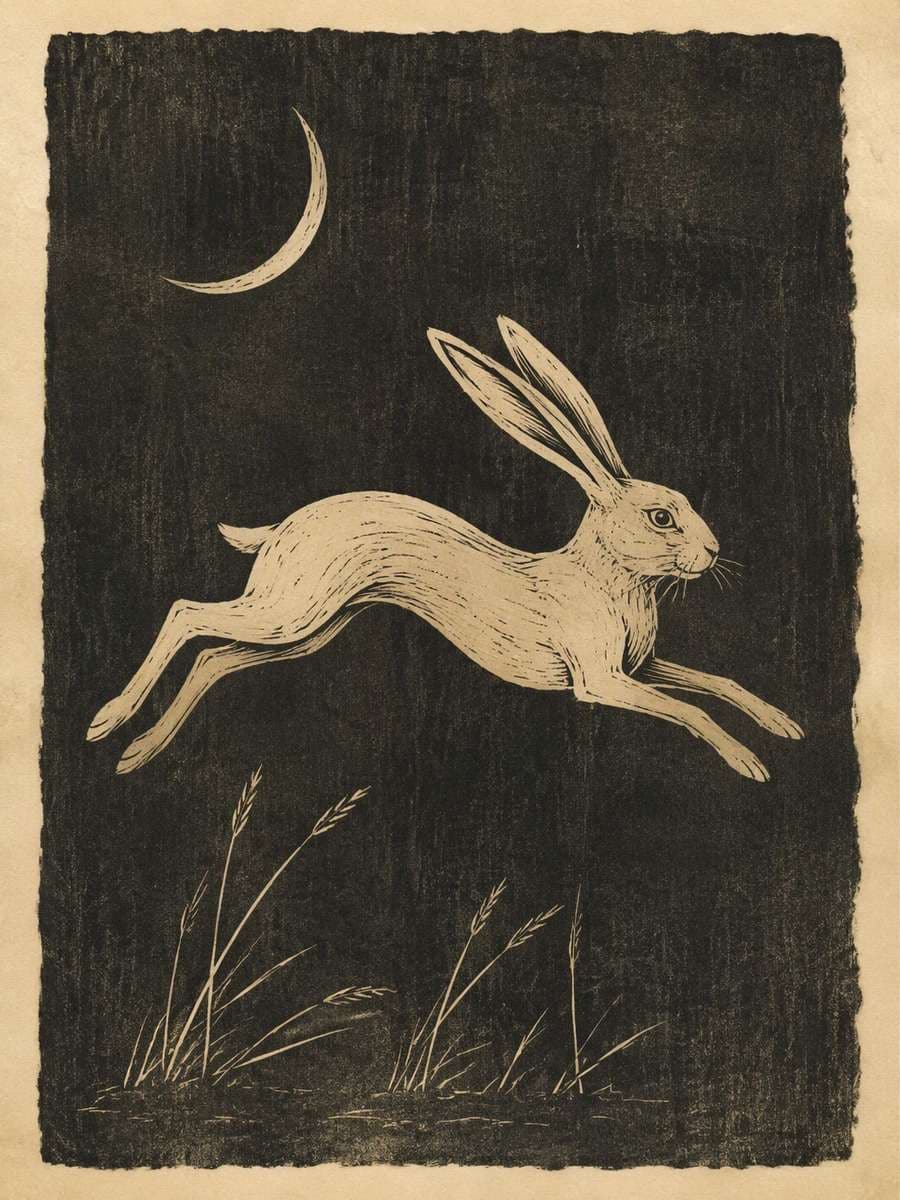
Woodblock Hare Moon
Make an original charcoal-and-cream woodblock-style image of a hare leaping beneath a slender crescent moon. Give the hare long ears, a clear arched back and distinct extended legs, simplifying the body into confident carved shapes. Use only a few dry grass stems below to establish ground and leave an understated antique-style outer margin. Introduce irregular ink edges and measured woodgrain-like cuts without obscuring the silhouette. Keep the moon separate from the ears; include no copied print motifs, captions, stars or frames. --ar 3:4
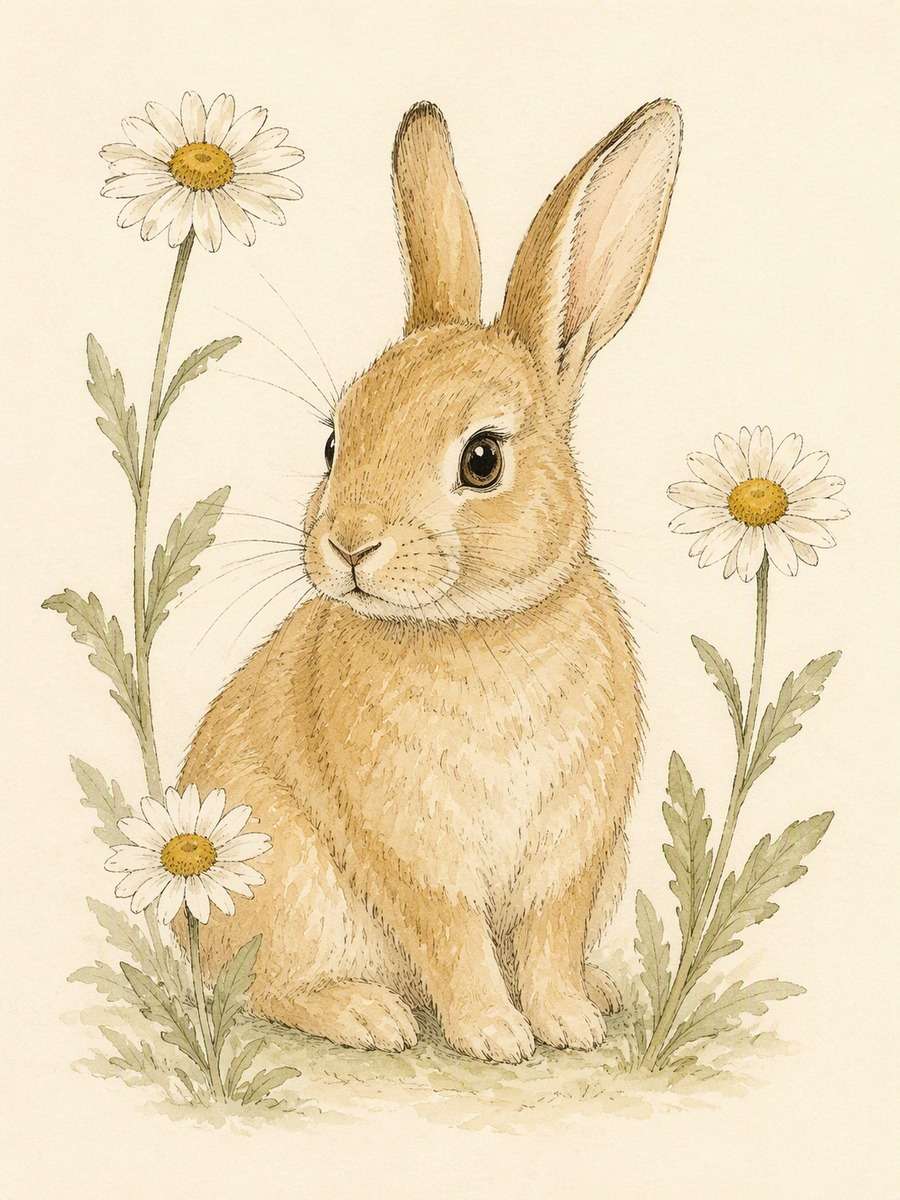
Watercolor Rabbit and Daisies
Paint an original vintage-inspired watercolor of a rabbit sitting among exactly three daisies. Use transparent ochre for the fur, soft sage for leaves and stems, and lightly warmed ivory for the background. Preserve crisp pencil-and-ink definition around the eyes, nose, whisker roots and ears while allowing gentle pigment variation across the body. Space the daisies at different heights around, not in front of, the face. Keep the study airy and illustrative, with no paint splashes over facial details, text or photographic scenery. --ar 3:4
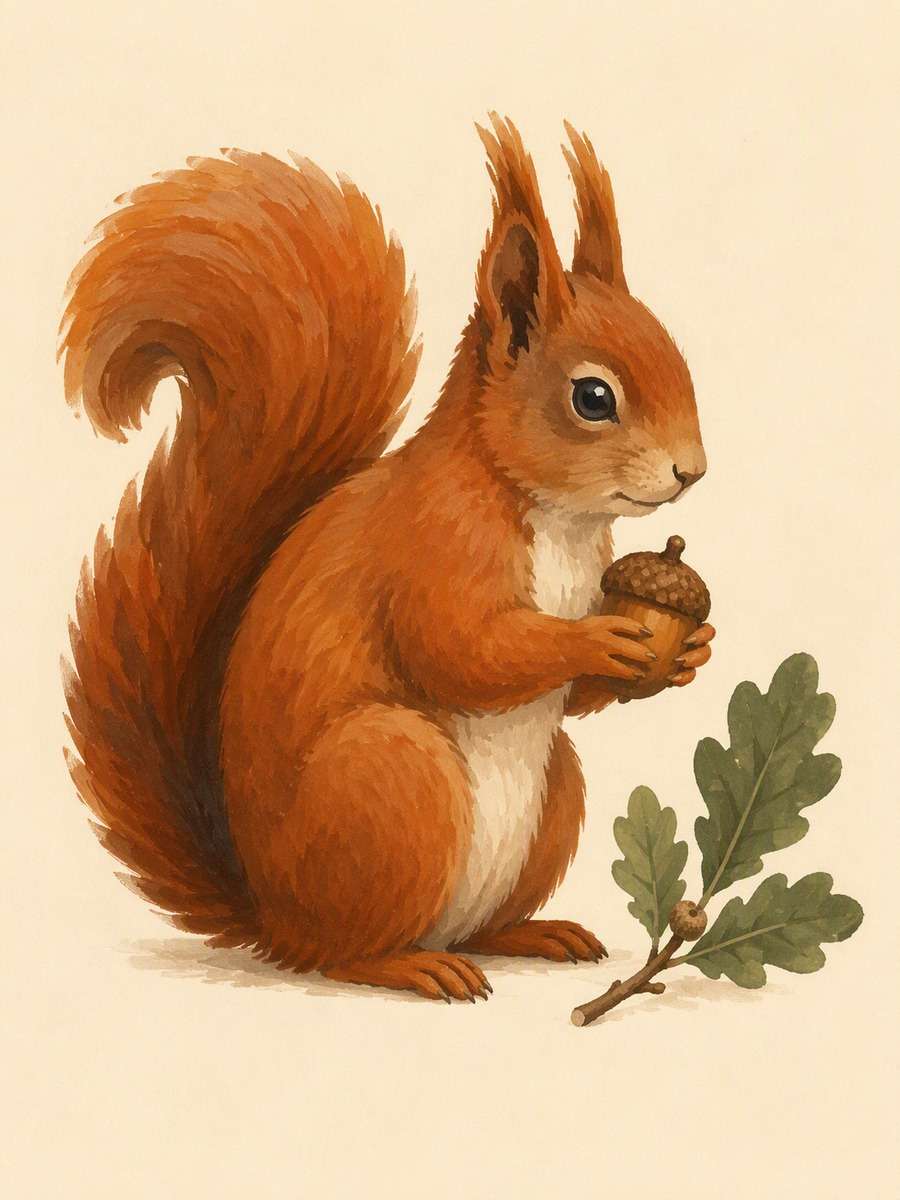
Gouache Red Squirrel
Create an original matte gouache illustration of a red squirrel holding one acorn beside a small oak sprig. Shape the russet body and curled tail with layered opaque color planes, adding restrained cream highlights and deep brown accents around the eye. Make both forepaws naturally meet the acorn and ground the rear feet. Paint the oak leaves in muted green with simple, readable lobes. Use an uncluttered cream ground and subtle brush edges; avoid text, clothing, a busy woodland scene or photographic fur. --ar 3:4
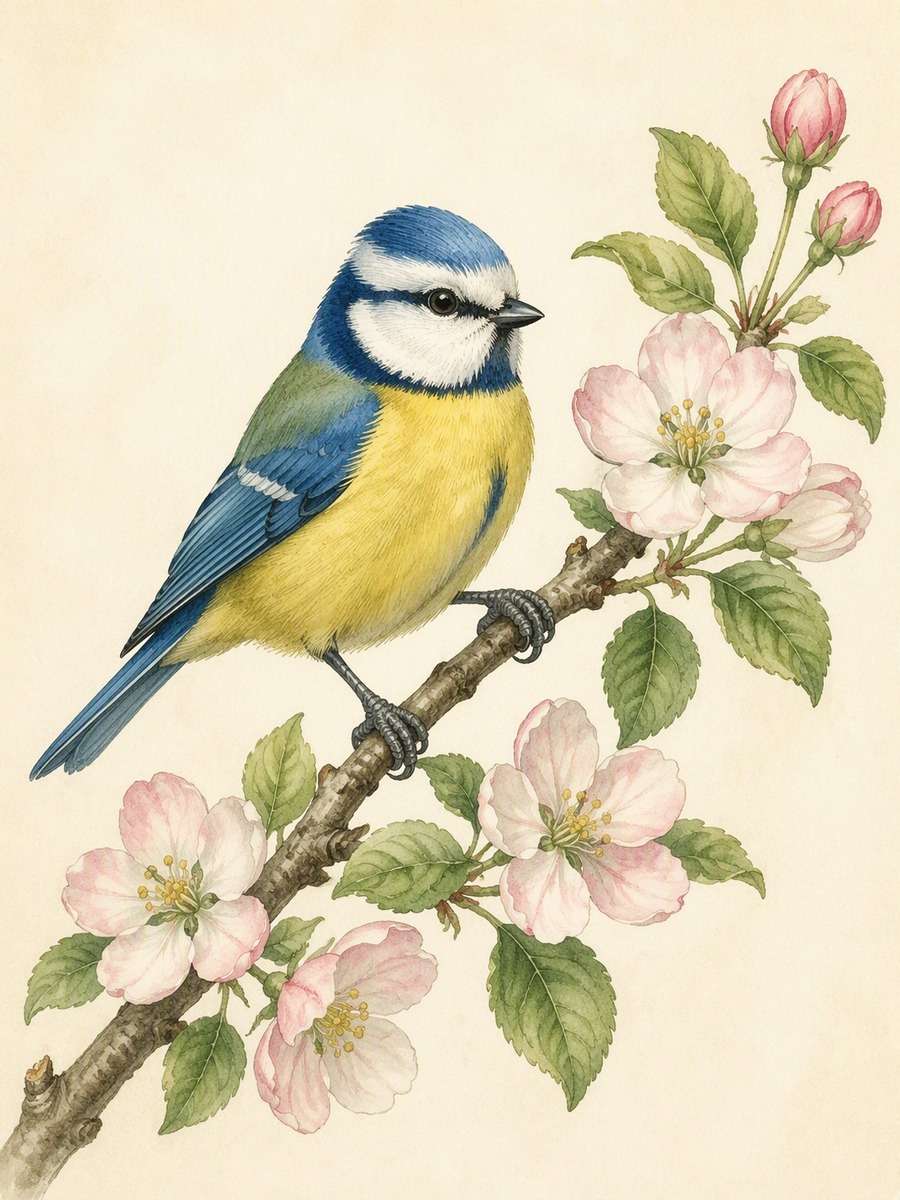
Blue Tit and Apple Blossom
Illustrate a little blue tit perched on a diagonal apple blossom branch in controlled, antique-inspired watercolor. Define its blue crown, yellow underside and small pointed beak with clean contours rather than blended photographic feathers. Show every visible toe curling around the twig where the bird's weight rests. Add several pale pink blossoms and two unopened buds, using delicate green leaves to balance the branch. Keep petals away from the eye and retain a soft ivory ground. No birdcage, species label, lettering or frame. --ar 3:4
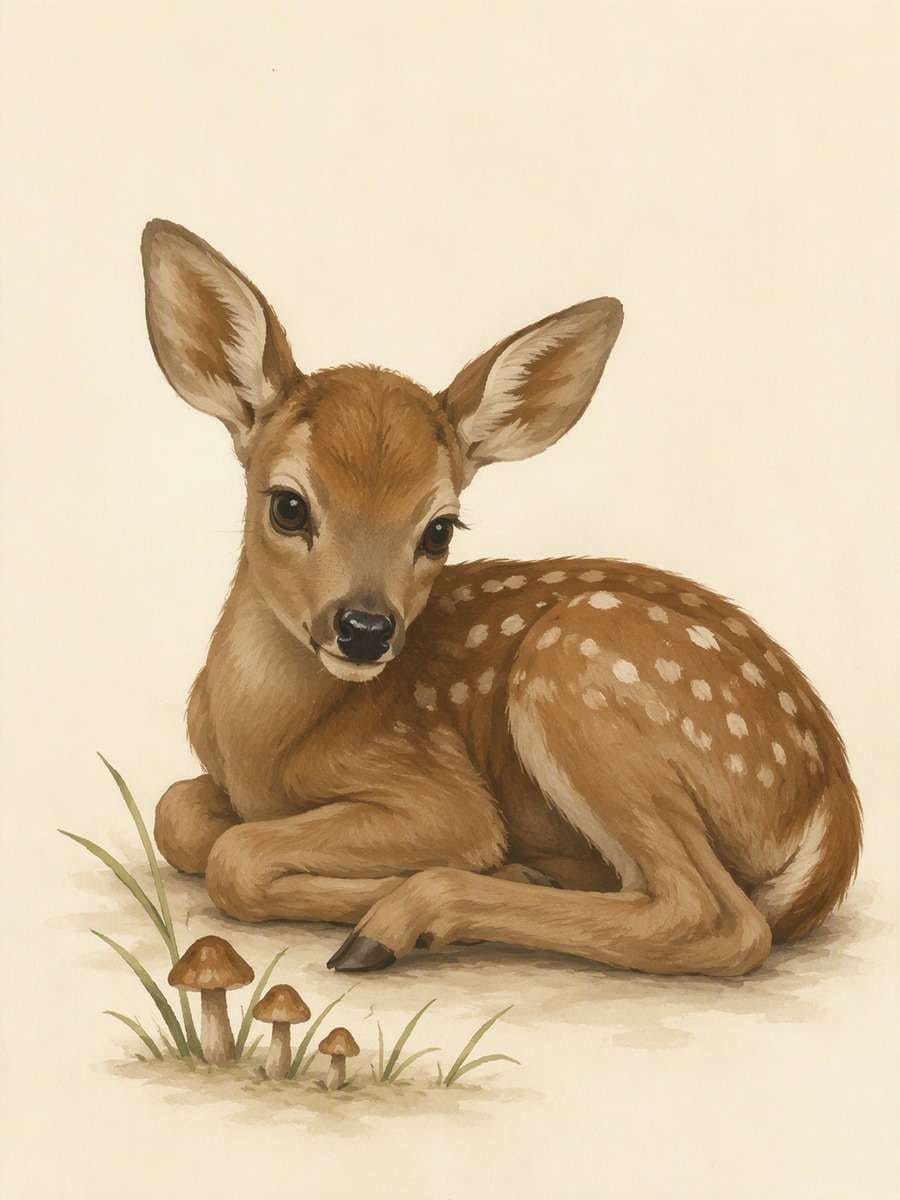
Fawn and Woodland Mushrooms
Paint an original resting fawn beside exactly three small woodland mushrooms and a few blades of grass. Use matte earth-tone gouache, soft-edged brown planes and delicate pale spots along its back. Show a coherent folded-leg resting pose, alert ears and a clearly drawn muzzle. Set the mushrooms near the foreground without making them oversized or hiding the legs. Let an ivory ground replace a detailed forest, with only a faint ground shadow. No other animals, lettering, fantasy accessories or photographic lighting. --ar 3:4
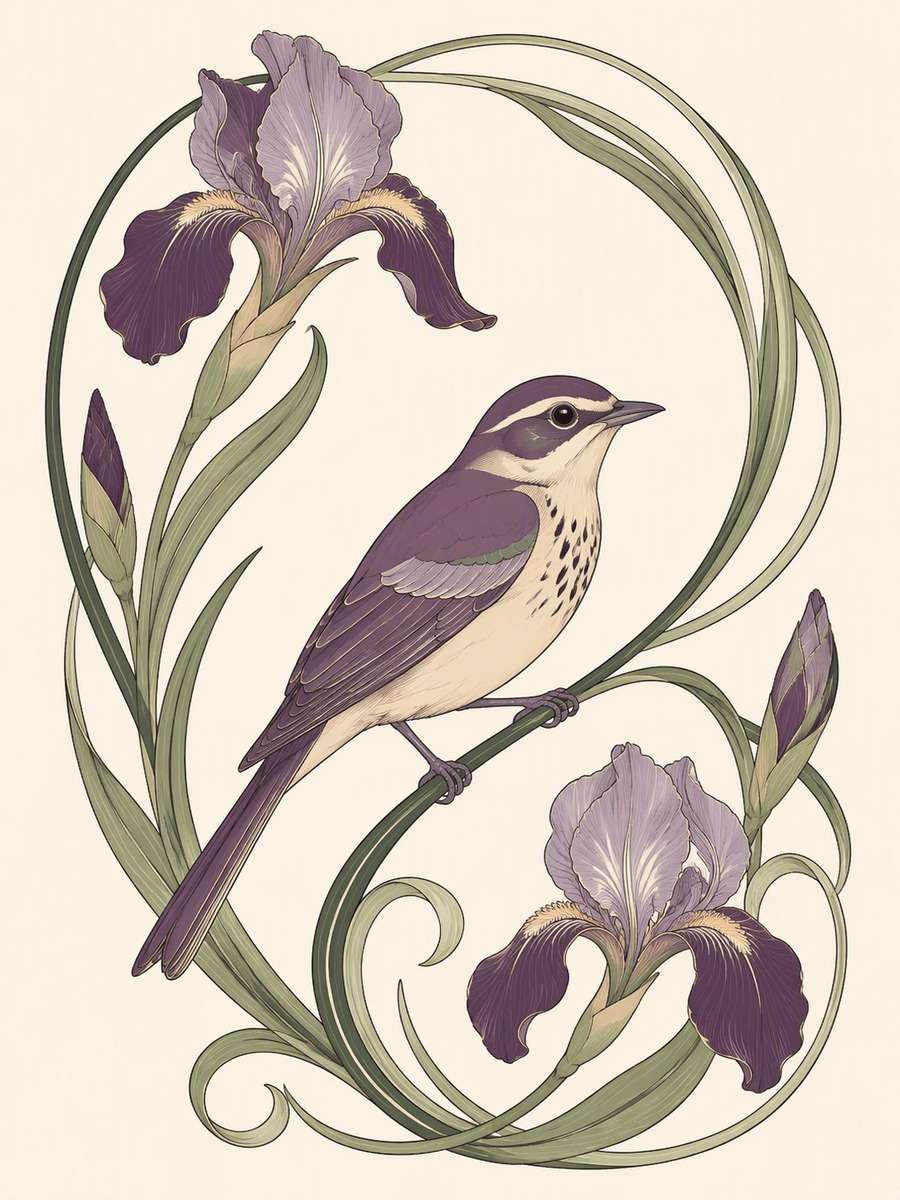
Art Nouveau Songbird and Iris
Illustrate an original songbird perched within a flowing oval arrangement of iris stems. Give the bird a clear side profile, folded wing, complete tail and two small feet visibly touching one curved stem. Shape the botanical frame with long Art Nouveau-inspired curves, alternating a bold outer contour and fine interior petal lines. Use muted plum, sage green and pale cream accents rather than photographic shading. Leave open space around the bird on a light ground, without lettering, signatures or copied historical artwork. --ar 3:4
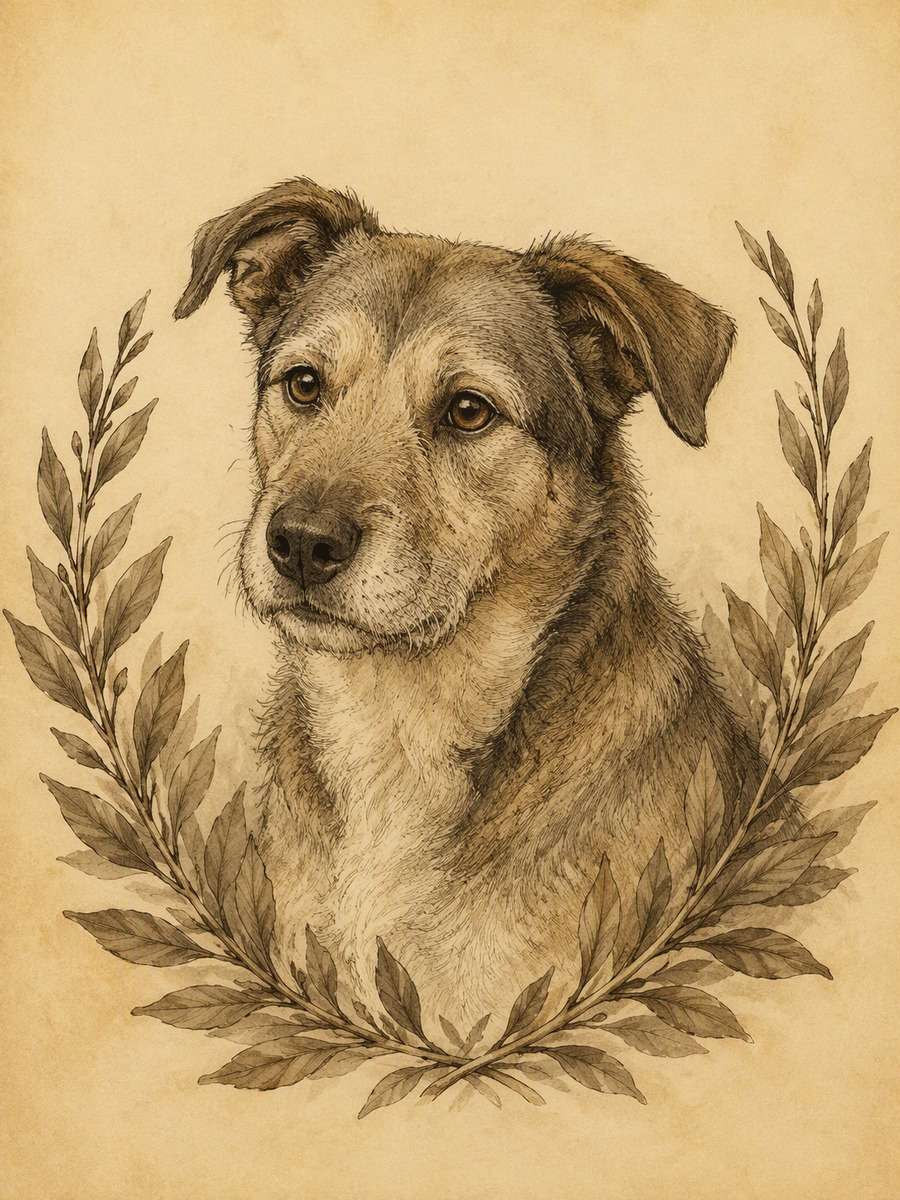
Dog Portrait and Laurel
Create an original antique-inspired pen portrait of an invented mixed-breed dog, showing its head and shoulders within an open arrangement of laurel branches. Draw a calm expression, believable muzzle and naturally positioned ears with sepia contours and light hand-colored brown-gray wash. Keep a gap at the top of the laurel so the branches feel informal rather than ceremonial. Use a warm paper ground and allow leaves to sit behind the shoulders. No uploaded-pet likeness, clothes, collars, text or photographic effects. --ar 3:4
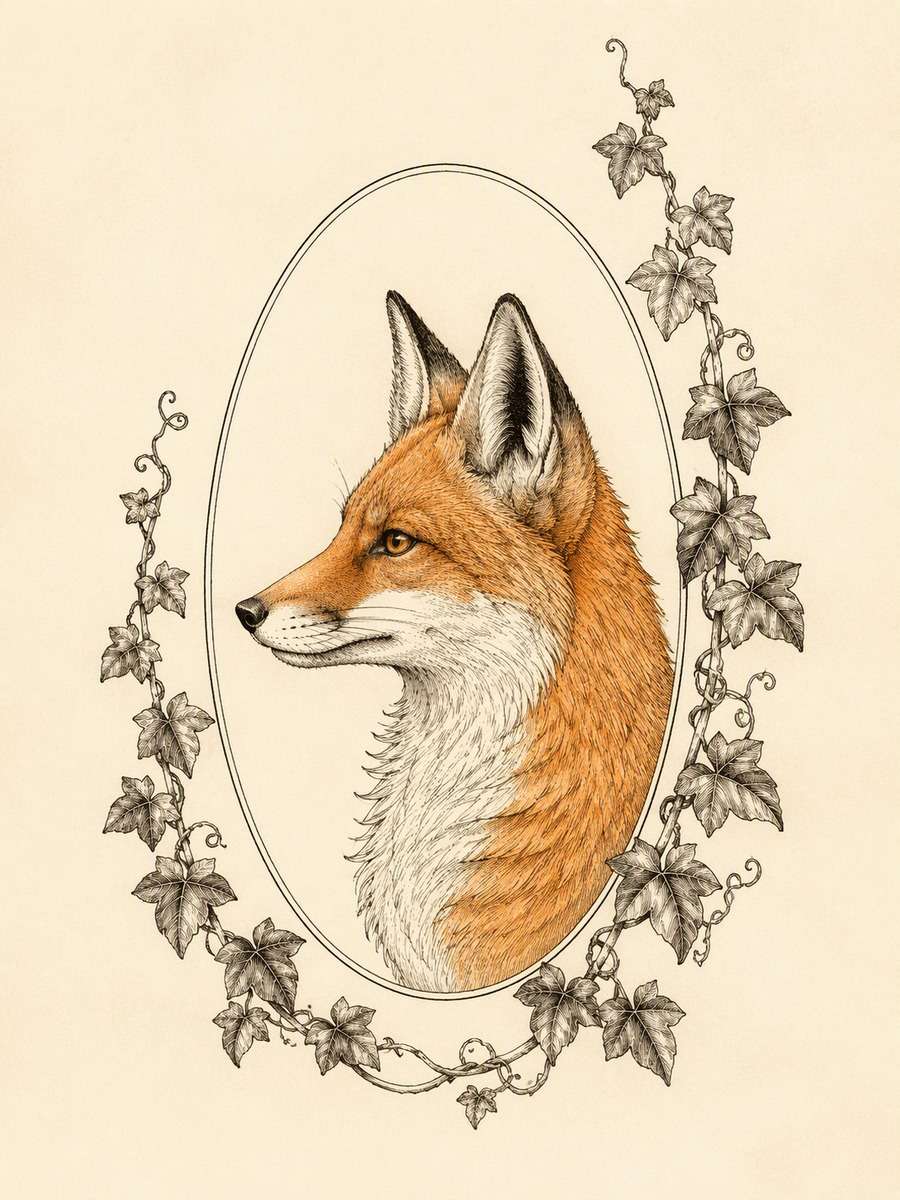
Fox Cameo and Ivy
Illustrate an original fox-profile cameo in an upright oval, bordered by two irregular ivy strands. Show the pointed nose, alert ear, neck ruff and eye with precise ornamental pen lines and a restrained warm orange tint. Let one ivy strand climb higher than the other, with distinct leaf shapes and a few visible vine turns. Keep the oval edge thin and leave a plain, unlettered outer margin on softly toned paper. This is a flat illustration concept, not jewelry photography or a copied antique print. --ar 3:4
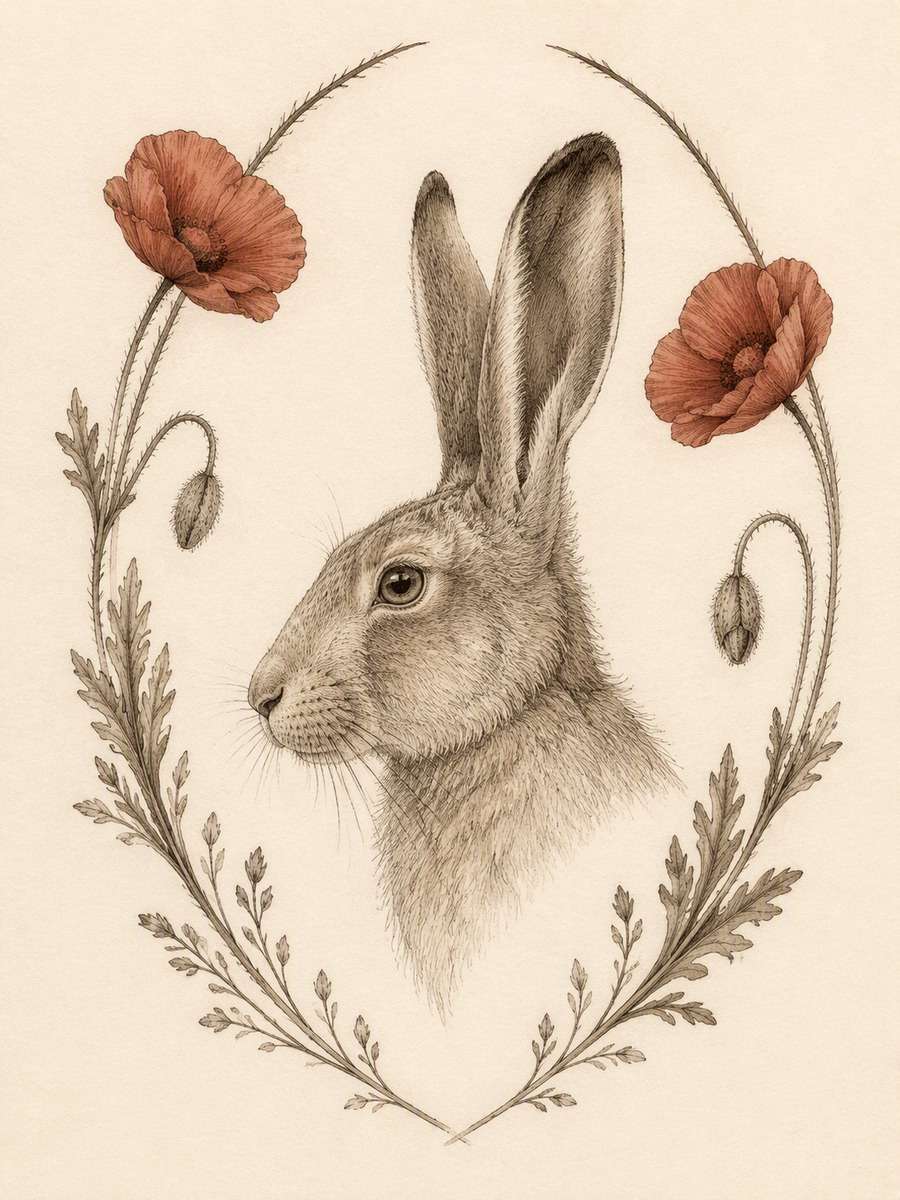
Hare and Poppy Cameo
Draw an original antique-inspired cameo of a hare head in clean side profile, framed by a flowing oval arrangement of two poppy stems and small leaves. Give the hare two distinct long ears, a calm dark eye, a fine muzzle and soft fur contours. Use delicate sepia pen marks with restrained warm-gray hand coloring, then add muted rust-red petals as small accents. Leave light space between the portrait and stems on cream paper. Include no lettering, signature, clothing or photographed frame. --ar 3:4
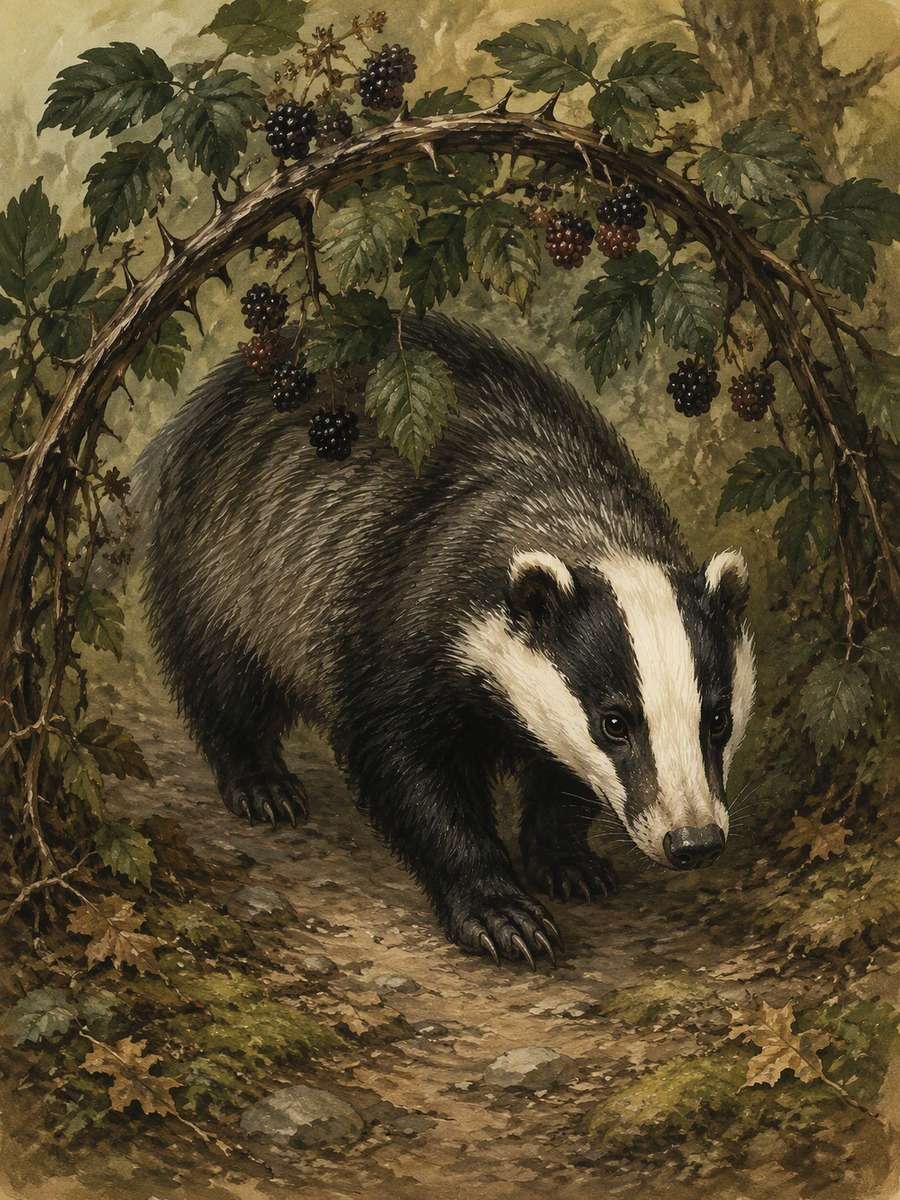
Badger Under Bramble
Illustrate an original woodland story scene of one badger walking beneath a low arch of bramble. Shape the animal with antique storybook brushwork, a clear striped face, sturdy short legs and a dark rounded body. Let a few bramble leaves and berries hang above its back while the thorny stem establishes the path overhead. Use muted forest green, brown and cream with a compact ground plane and softly painted shadows. Keep the face visible; add no other animals, clothes, buildings, lettering or photographic scenery. --ar 3:4
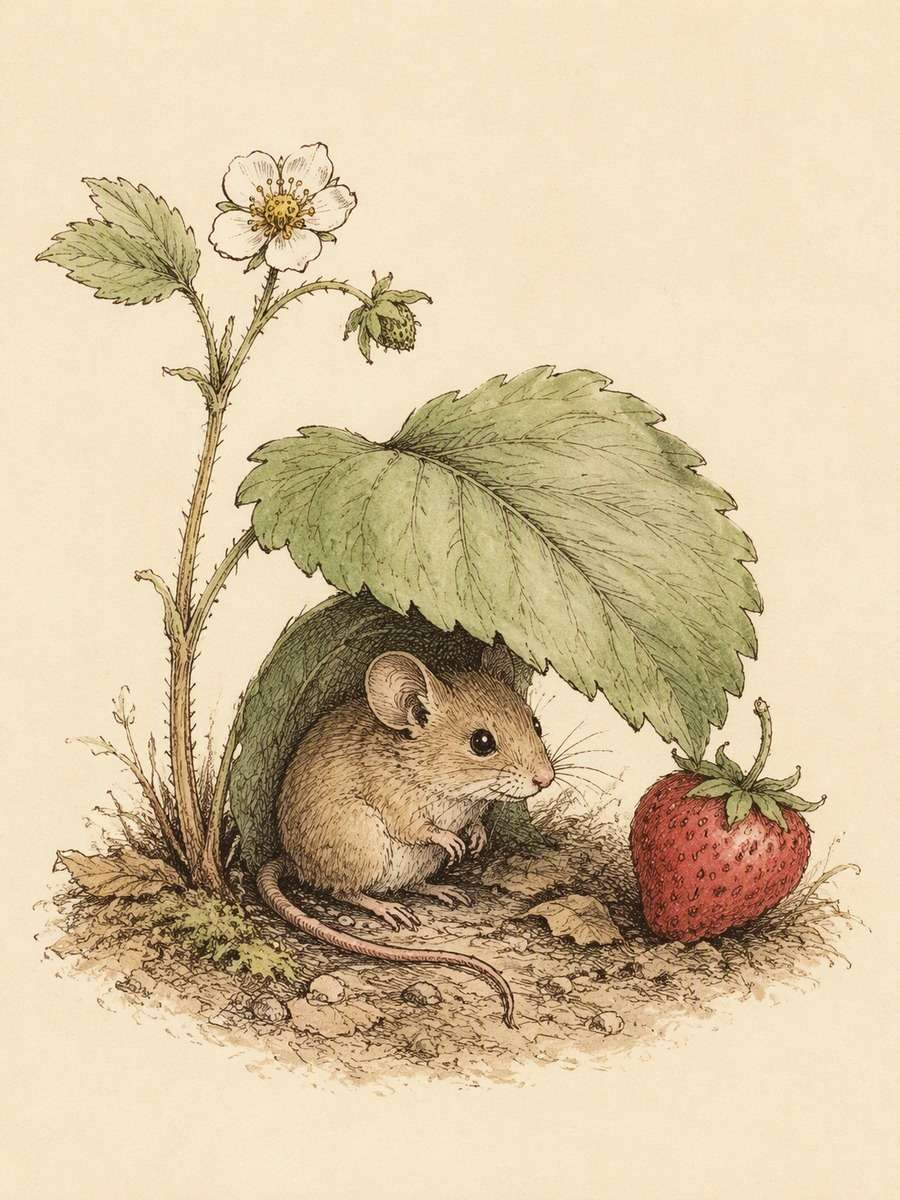
Mouse and Strawberry Leaf
Create an original vintage pen-and-wash story illustration of a tiny mouse sheltering beneath one broad strawberry leaf, with a single ripe berry beside it. Keep the scale believable: the leaf is large relative to the mouse but still attached to a delicate plant stem. Define the mouse's ears, whiskers, paws and slender tail with fine brown ink, then add soft green and muted strawberry red washes. Use a small patch of ground on a cream page. No clothes, human props, captions or photographic fur. --ar 3:4
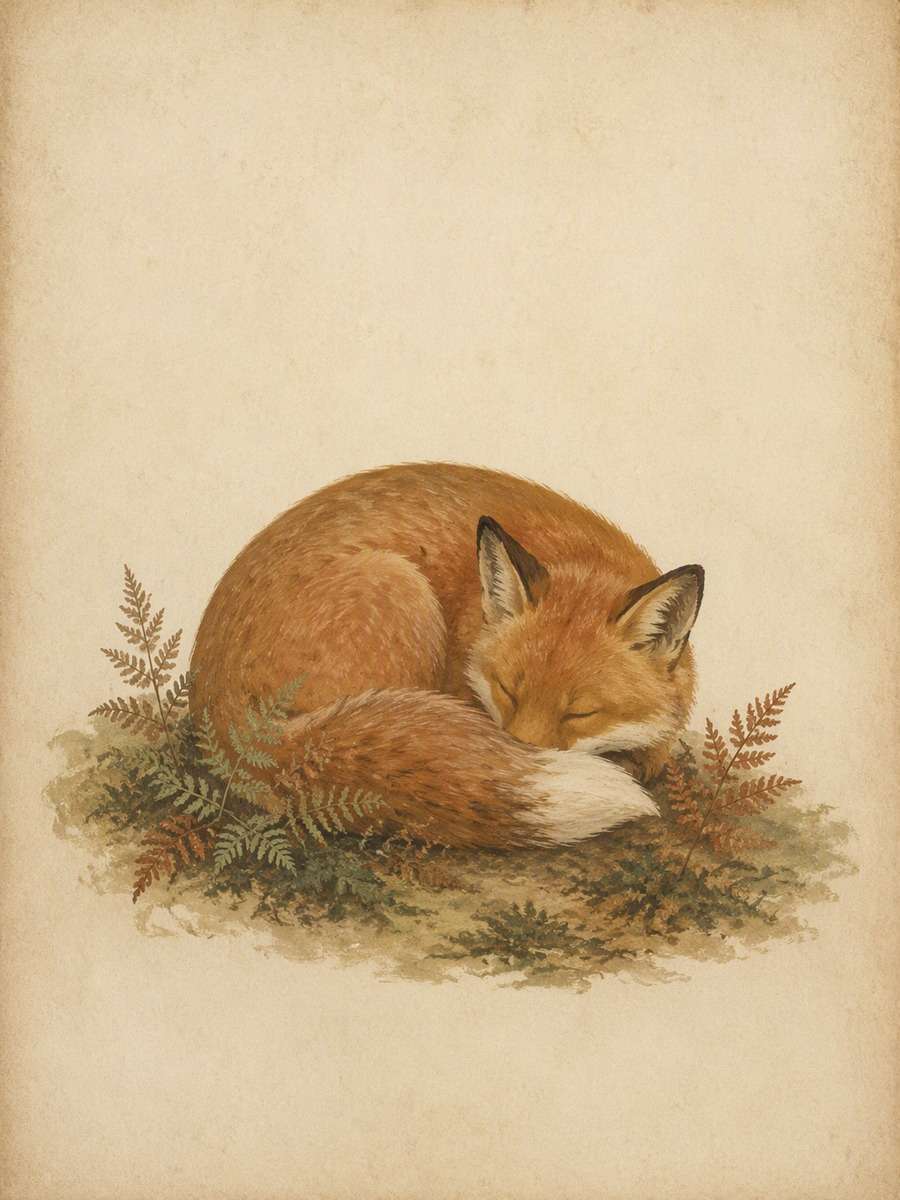
Sleeping Fox and Ferns
Paint an original antique-inspired gouache scene of a fox curled asleep on a small patch of woodland ground. Tuck its muzzle near its tail, with both ears and the curve of its body still recognizable. Place a few sparse fern fronds around the tail, using muted russet, moss green and cream in soft matte layers. Keep the plant shapes low and the outer page margins generous for a quiet composition. Avoid photographic pet features, heavy forest detail, decorative wreaths, lettering and extra animals. --ar 3:4
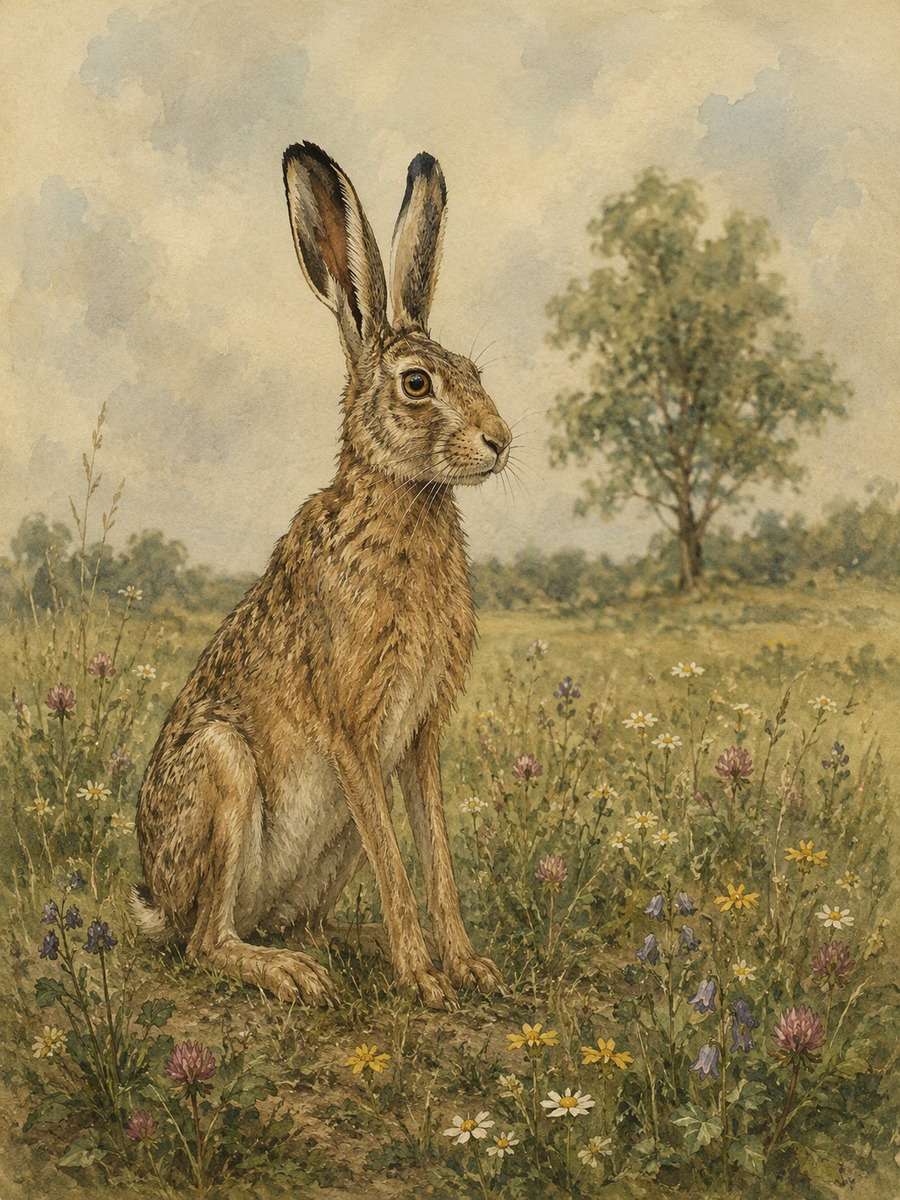
Hare in a Wildflower Clearing
Illustrate an alert hare seated in a modest wildflower clearing, with one simplified distant tree suggesting the wider woodland. Give the hare long upright ears, distinct front and rear legs, a natural muzzle and a focused eye. Use vintage-style brushwork in desaturated greens, warm brown and small touches of faded flower color. Place most blossoms around the ground rather than against the hare's face, and soften the distant tree so it does not become the subject. No additional animals, labels or photographic depth effects. --ar 3:4
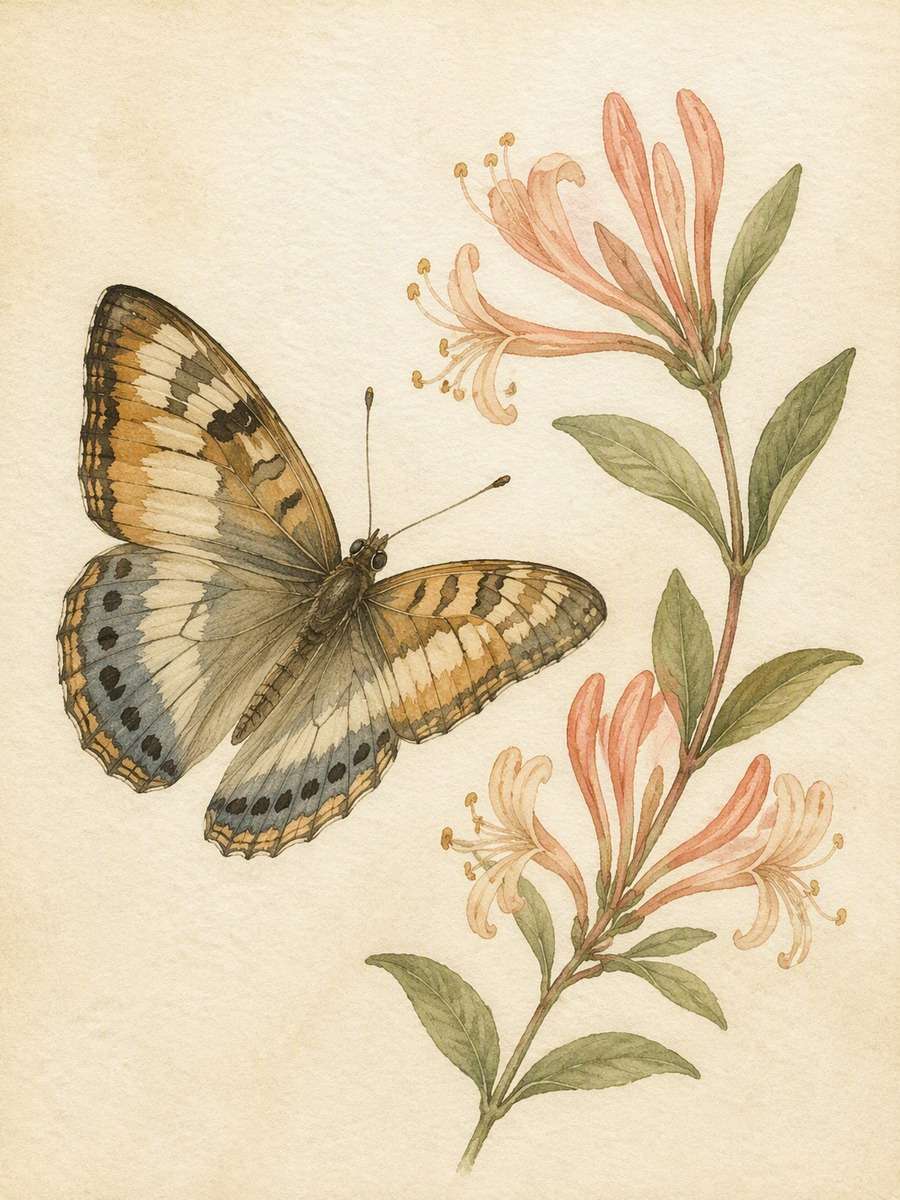
Butterfly and Honeysuckle Study
Make an original antique-inspired watercolor study of a butterfly in three-quarter view beside a flowering honeysuckle sprig. Draw a coherent pair of visible wings with precise outer contours, measured markings and a slender body, then add transparent ochre and muted blue-gray washes. Render the honeysuckle's curved blooms and narrow leaves in pale coral and green without crossing the wing edges. Place the subjects on lightly textured ivory paper with no habitat scene. Omit species claims, scientific labels, signatures and photographic insect effects. --ar 3:4
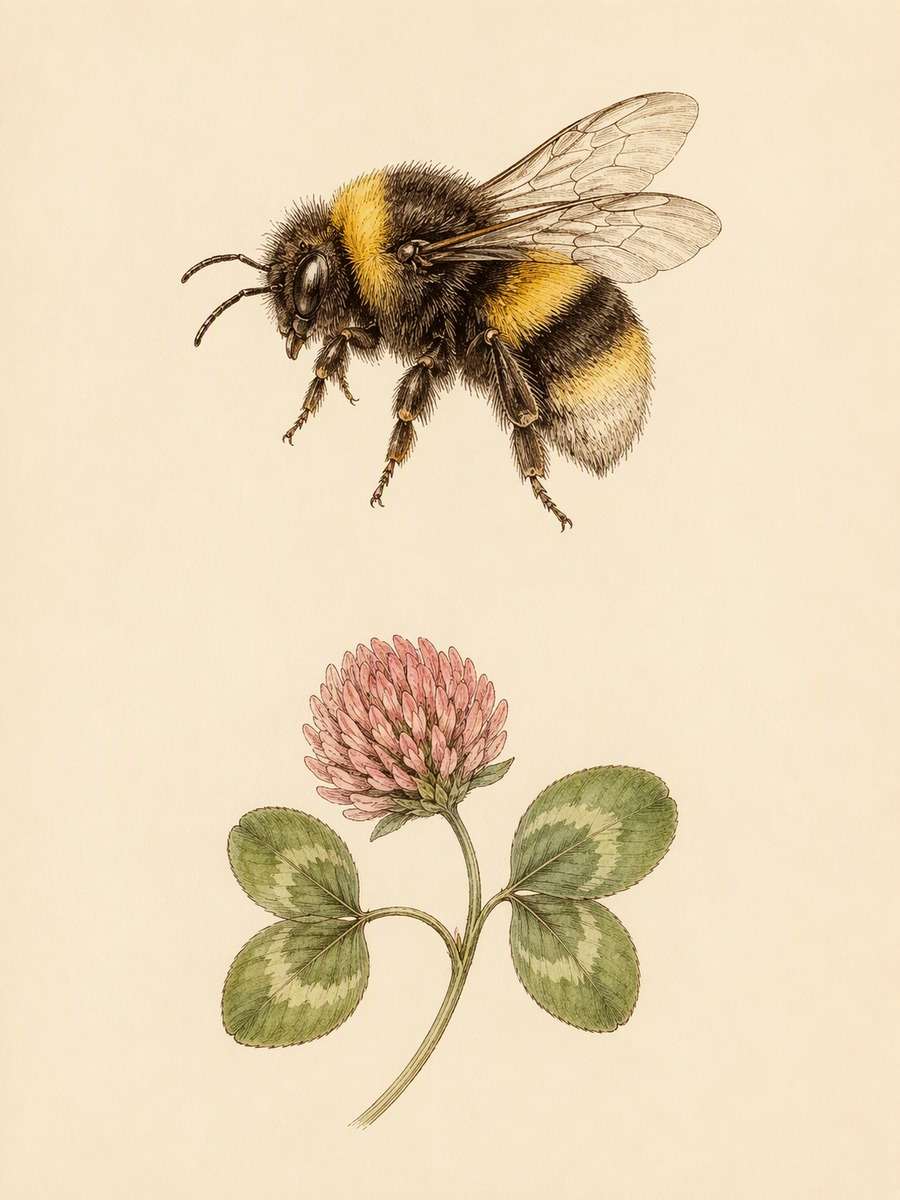
Bumblebee and Clover Pair
Arrange two separate, original specimen-like illustrations on one cream page: a single bumblebee in the upper area and one clover sprig below it. Keep a visible gap between them rather than merging the subjects into a collage. Use delicate brown pen shading for the bee's segmented body and legs, with restrained golden wash for its bands and soft pink-green color for the clover. Make the wing shapes and three-part leaflets distinct. Leave the page unlabeled, without diagrams, text, extra insects or scientific claims. --ar 3:4
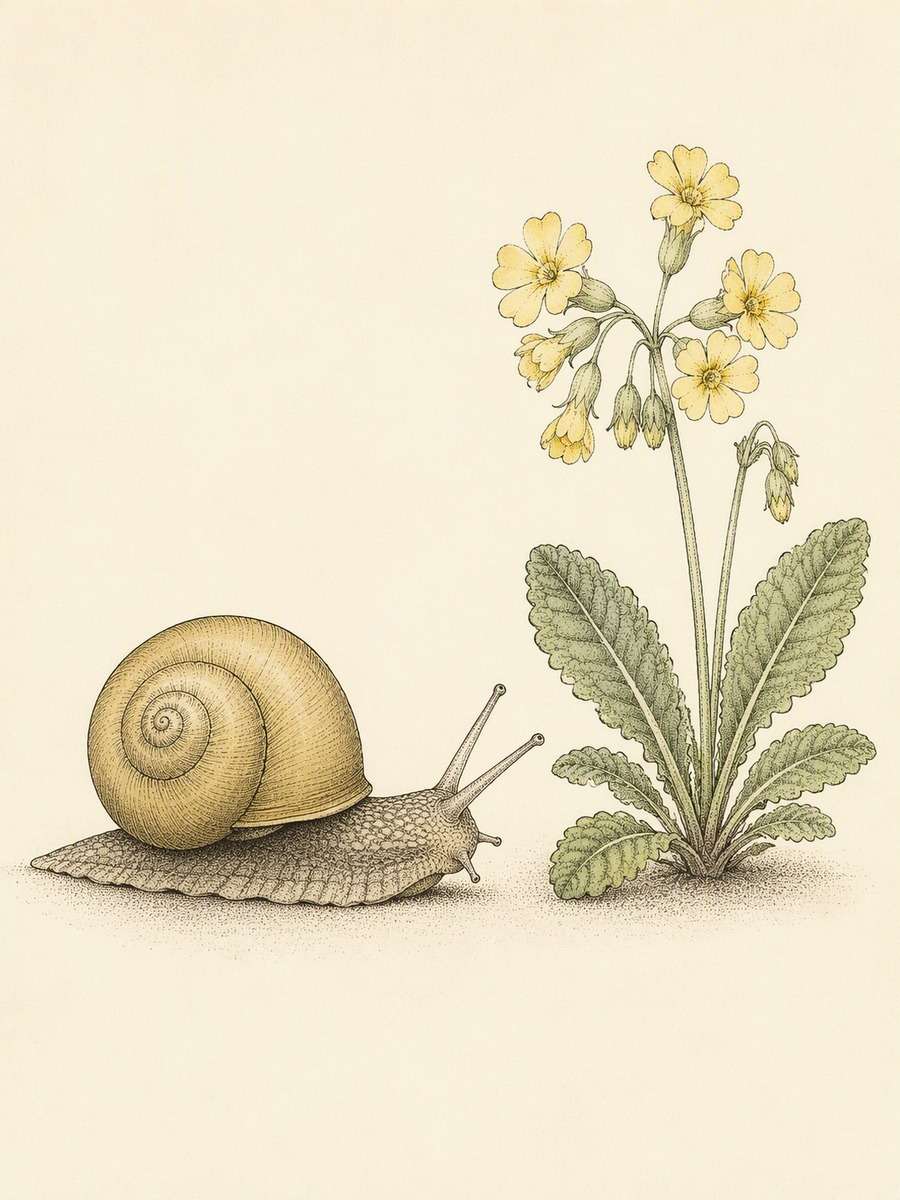
Snail and Primrose Sprig
Draw an original, spacious vintage-style study of a snail beside a small primrose sprig. Give its shell one clear continuous spiral, a believable body and visible tentacles, using fine ink lines and measured stippling under the shell. Tint the shell pale ochre and the primrose leaves soft green, with quiet yellow flowers that do not overlap the snail. Set both subjects on an unlabeled ivory page with only a faint ground shadow. Avoid fantasy faces, oversized flowers, decorative lettering and photographic wet surfaces. --ar 3:4
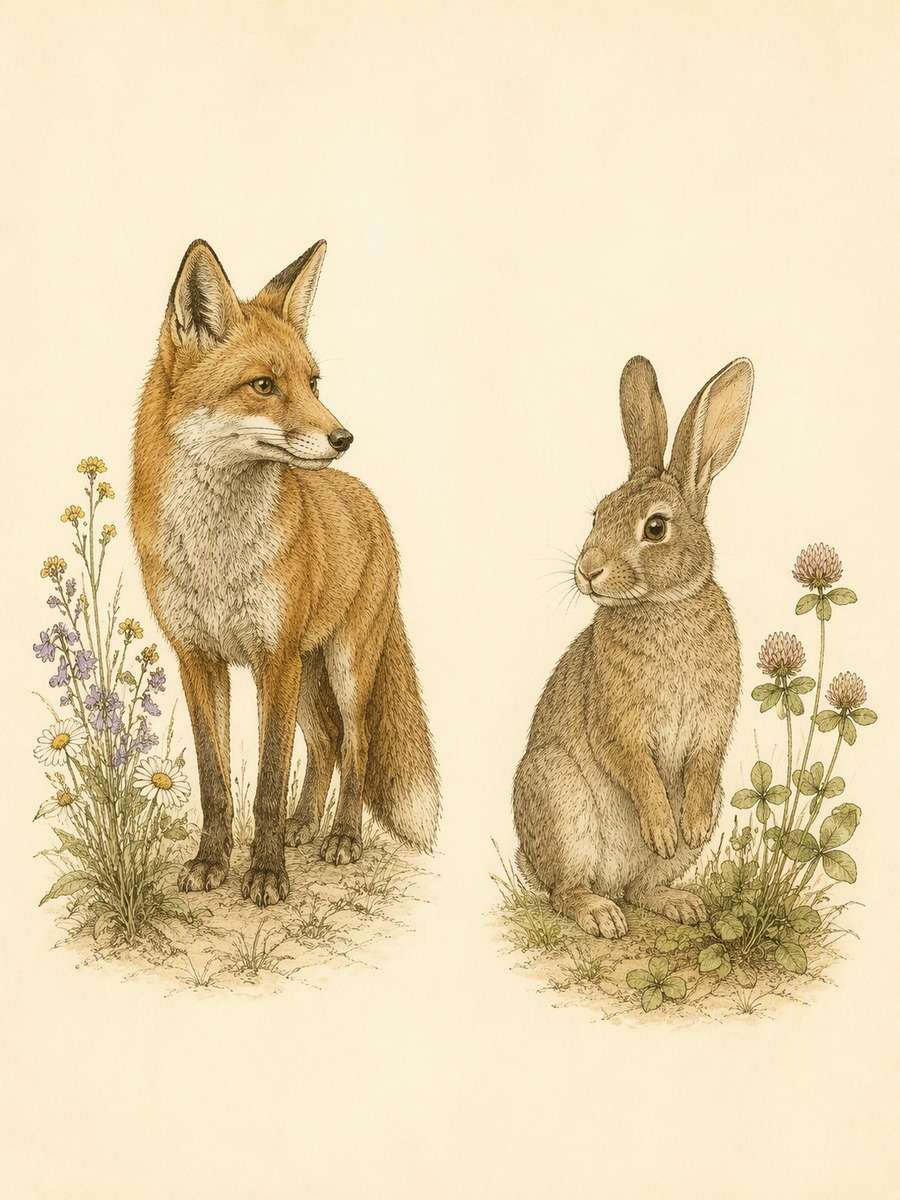
Fox-and-Rabbit Companion Prints
Create two independent antique-inspired natural-history illustrations side by side on one portrait-oriented cream page. On the left, draw a standing fox with a small wildflower cluster; on the right, draw a seated rabbit with clover. Give both studies the same fine brown pen contours, restrained hand-colored washes, comparable animal scale and similarly open grounds. Leave a clear gap between the compositions so each could be viewed alone. Keep faces and feet legible. No frames, captions, dividing line, pseudo-Latin or copied plates. --ar 3:4
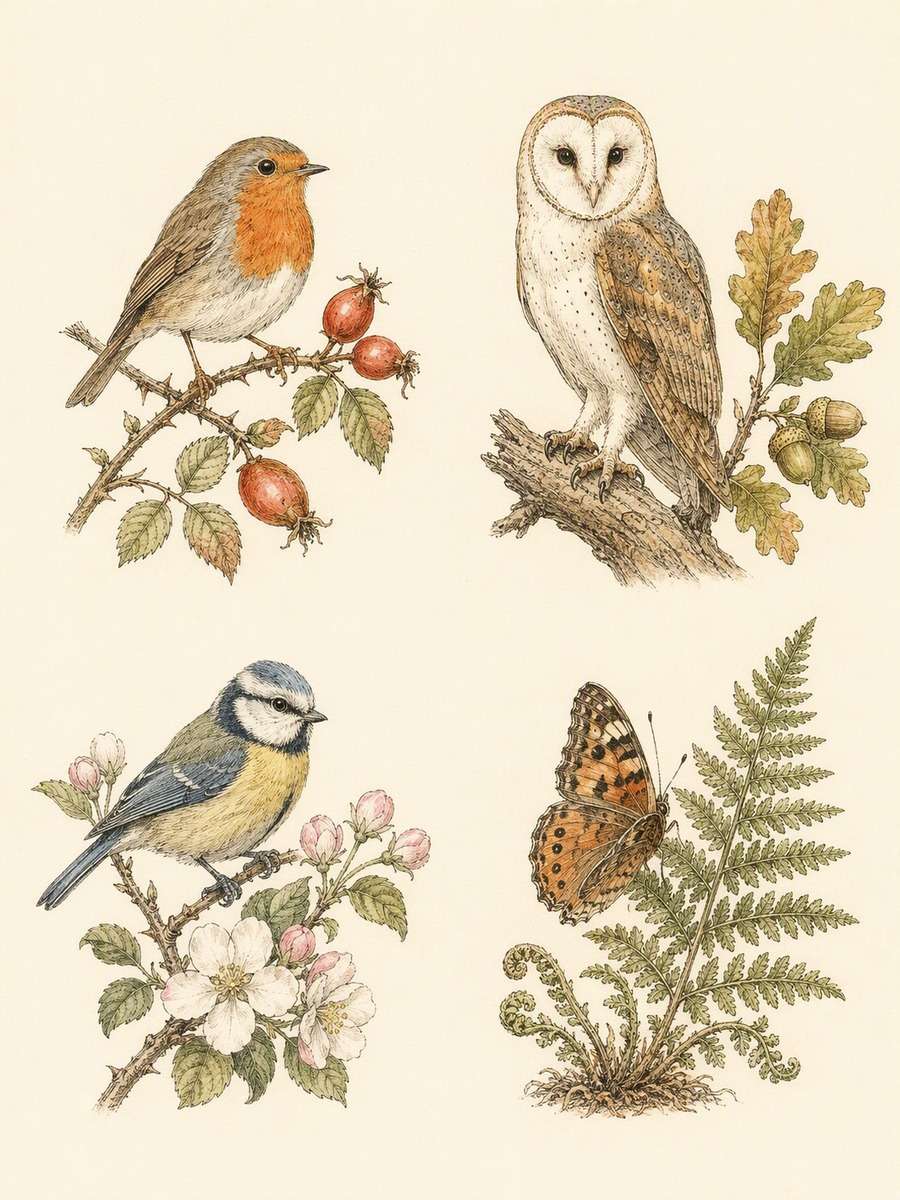
Bird-and-Botanical Quartet
Arrange four separate miniature antique-inspired studies in a balanced two-by-two grid on one cream page: robin with rosehip, barn owl with oak, blue tit with apple blossom, and butterfly beside a fern. Use consistent fine brown pen contours and restrained watercolor washes across all four, with roomy margins and visible gaps between studies. Make each creature's defining face, wings or feet readable at its small scale, and keep each plant attached to its own study. No grid lines, frames, labels, text or copied historical plates. --ar 3:4
The strongest antique-inspired images make deliberate choices about animal pose, plant role and mark-making rather than relying on a general vintage filter.
Field-study pen and wash: Fine contours and restrained color give an animal-and-plant pairing an observational feel. Compare A rabbit beside clover with visible ears, hind feet and separate leaf shapes.
Directional engraving: Short, controlled marks build form while retaining the look of an antique-inspired print. Compare An owl on an oak branch, with engraving concentrated around its face and feathers.
Two-tone woodcut: Broad shapes and carved-looking edges make the silhouette more prominent than fine detail. Compare A fox set between simplified fern shapes in forest green and cream.
Transparent watercolor: Soft layers bring gentle color to petals and fur without losing key contours. Compare A rabbit with three daisies and crisp detail around its eyes.
Ornamental floral portrait: Curving stems organize a decorative composition around a readable animal face. Compare A cat bust surrounded by asymmetrical iris stems.
Refine the Result
If feet or wings look unclear, describe their contact with a twig or ground rather than simply asking for more detail.
If engraved marks muddy the face, limit hatching to shadows and use simpler contours around the eyes.
If a series feels inconsistent, reuse the same wash colors and line weight while changing the animal and plant pairing.
Use the prompts as starting points for original illustrated concepts, then revise the subject and technique to fit your project.
Build an Observational Study
Start with a field-study card when animal anatomy and plant shapes should be the focus rather than a full setting.
Shape a Decorative Portrait
Choose a cameo or floral frame to give a cat, dog, fox or owl a more ornamental composition.
Tell a Small Woodland Story
Use a leaf, branch or clearing to imply a place and moment without adding a crowded cast.
Plan a Coordinated Group
Compare the companion and quartet prompts to keep technique consistent across separate illustrated subjects.
FAQs About Vintage Botanical Animal Art Prompts
1. Can I turn a pet photo into a vintage botanical illustration with these prompts?
This gallery is for text-to-image generation, so its prompts create original illustrated animals rather than edit an uploaded pet photo. For a recognizable pet, use a workflow that accepts a reference image and explicitly asks it to preserve the pet's distinctive features; check the result carefully.
2. How do I get an antique feel without copying an existing illustration?
Describe general techniques such as pen-and-wash contours, directional engraving, restrained hand coloring or matte gouache. Pair them with your own pose, plants and composition rather than naming a specific historical plate or artist to reproduce.
3. Why do these prompts ask for illustrations instead of animal photos?
The collection focuses on drawn and painted botanical animal art. Specifying contours, wash, carved shapes or brushwork helps distinguish those results from photographic wildlife scenes.
4. Are the plants and animals scientifically accurate?
Not necessarily. These AI-generated images are antique-inspired artwork, not professionally verified natural-history plates. Check anatomy, plant forms and any species-specific details against reliable references if accuracy matters.
5. How can I make several animal illustrations look like one series?
Keep the primary technique, color range, paper tone and approximate subject scale consistent. Change the animal and plant pairing for each image, then review the set for mismatched line weights or crowded compositions.
Botanical Animal Art Feedback and reviews
Alex M.
Photographer
Drawn detail, not a sepia photo. The fox and wildflowers were much closer to what I meant by vintage nature art than a sepia-toned animal photo. I liked the fine drawn detail and quiet paper background. It felt like a starting point for the kind of woodland print I wanted.
Maya J.
Designer
Flowers that do not take over. I liked the songbird and iris because the flowers shaped the picture without taking over. That was exactly the balance I was struggling to describe. The cameo prompts also gave me another way to frame an animal portrait.
Jordan P.
Creator
Two subjects with a shared look. I was looking for artwork that could work as a pair, rather than two copies of the same picture. The companion concepts helped me think about keeping the colors and technique consistent while changing the animal. I would still check anatomy and print sizing before finishing the files.
More Animal, Botanical & Antique-Inspired Art Resources