25 Dark Academia Tattoo Prompts for Gothic & Literary Designs
Looking for a tattoo design that captures your love of old books, Gothic architecture, and mysterious academia aesthetics? Explore 25 dark academia tattoo prompts to create AI tattoo concepts featuring ravens, antique keys, celestial symbols, botanical illustrations, and vintage literary motifs. From minimalist fine-line tattoos to detailed blackwork and engraving-inspired designs, find inspiration that reflects your personal style and bring your favorite ideas to life with AI.
AI-generated design references, grouped by visual approach. Each card includes a ready-to-copy prompt and a distinct way to adapt it.
Try Media.io.
How to Create Dark Academia Tattoo Designs with AI
Use these prompts in Media.io AI Text to Image in three simple steps.
1
Open Media.io AI Text to Image
Visit Media.io AI Text to Image. Choose your preferred image model from the available options, such as Nano Banana Pro or GPT Image 2 if listed.
2
Copy and Paste a Prompt
Choose a prompt and click Copy Prompt, then paste it into the generator. Or click Create Similar Image to open the tool with that prompt. Set your aspect ratio, resolution, and number of images.
3
Generate, Preview, and Download
Click Generate and wait for your images. Preview the results, then download the images you want to keep.
25 Dark Academia Tattoo Prompts for Gemini and ChatGPT to Copy & Try
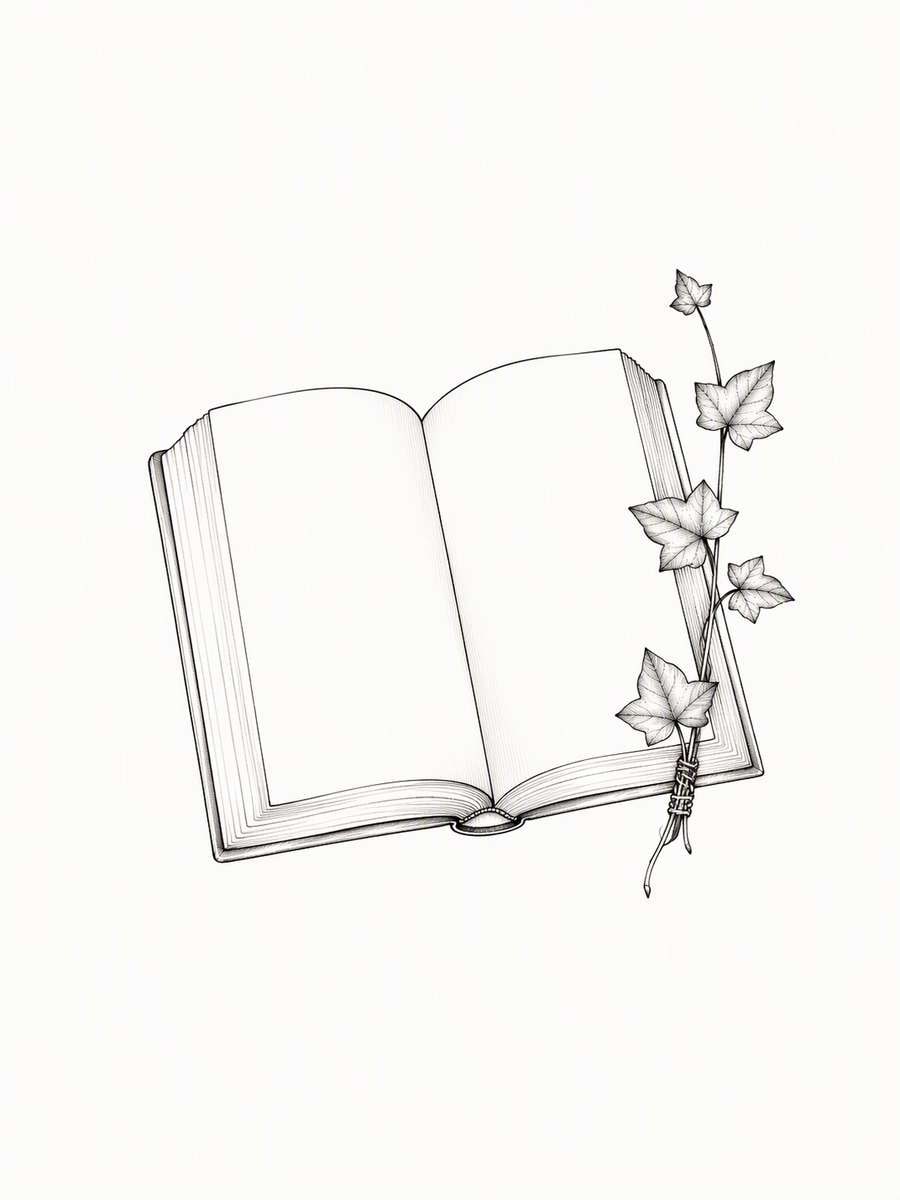
Open Book and Ivy
Create a standalone black-ink tattoo-concept illustration of one open book with a single restrained ivy sprig beside its pages. Sparse fine-line contours, unmarked pages, generous negative space, centered on clean warm-white paper. No lettering, skin, mockup or background objects. --ar 3:4
Book and Quill Emblem
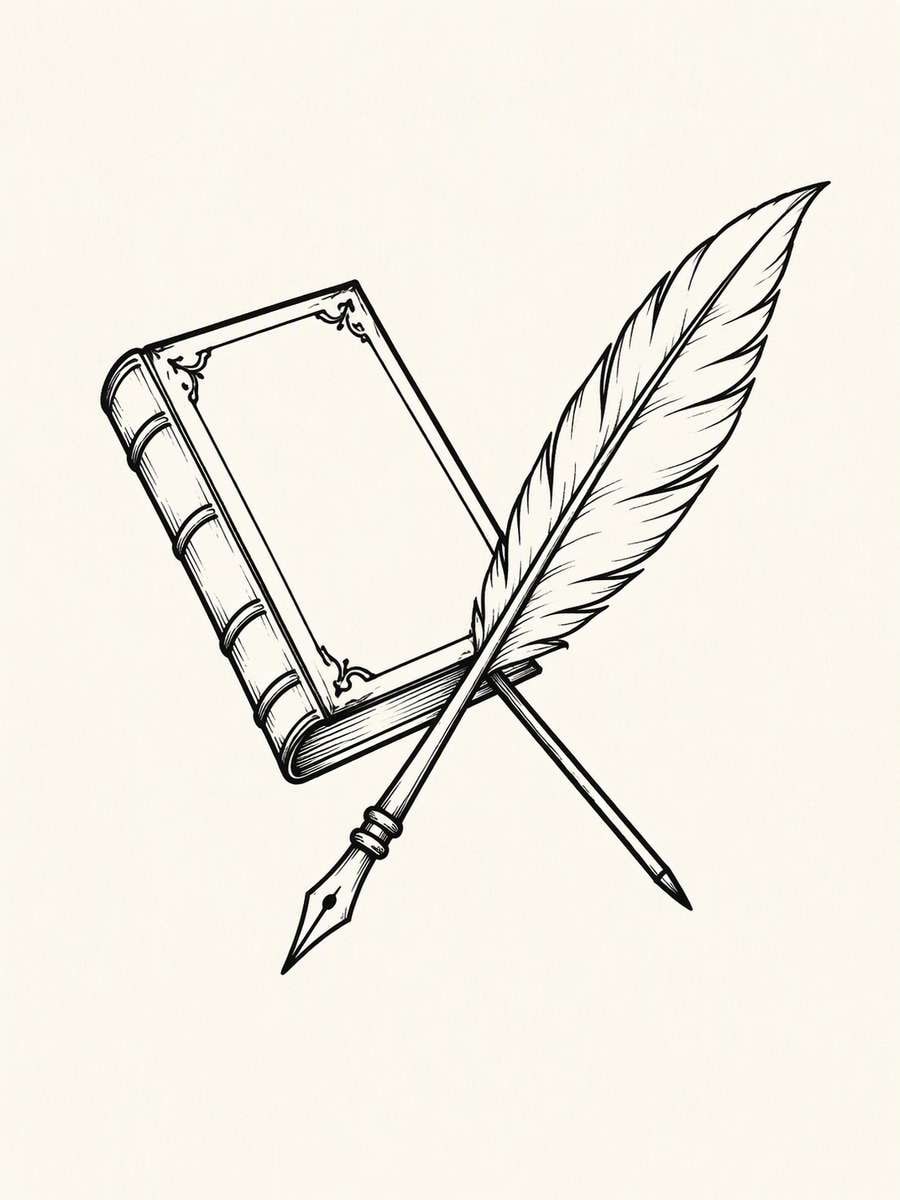
Draw a standalone black-ink tattoo concept: one closed book and one quill crossing at a clear angle to make a compact emblem. Use decisive outlines, minimal hatching and open space around the crossing point on clean ivory paper. No text, skin or mockup. --ar 3:4
Continuous-Line Book and Quill
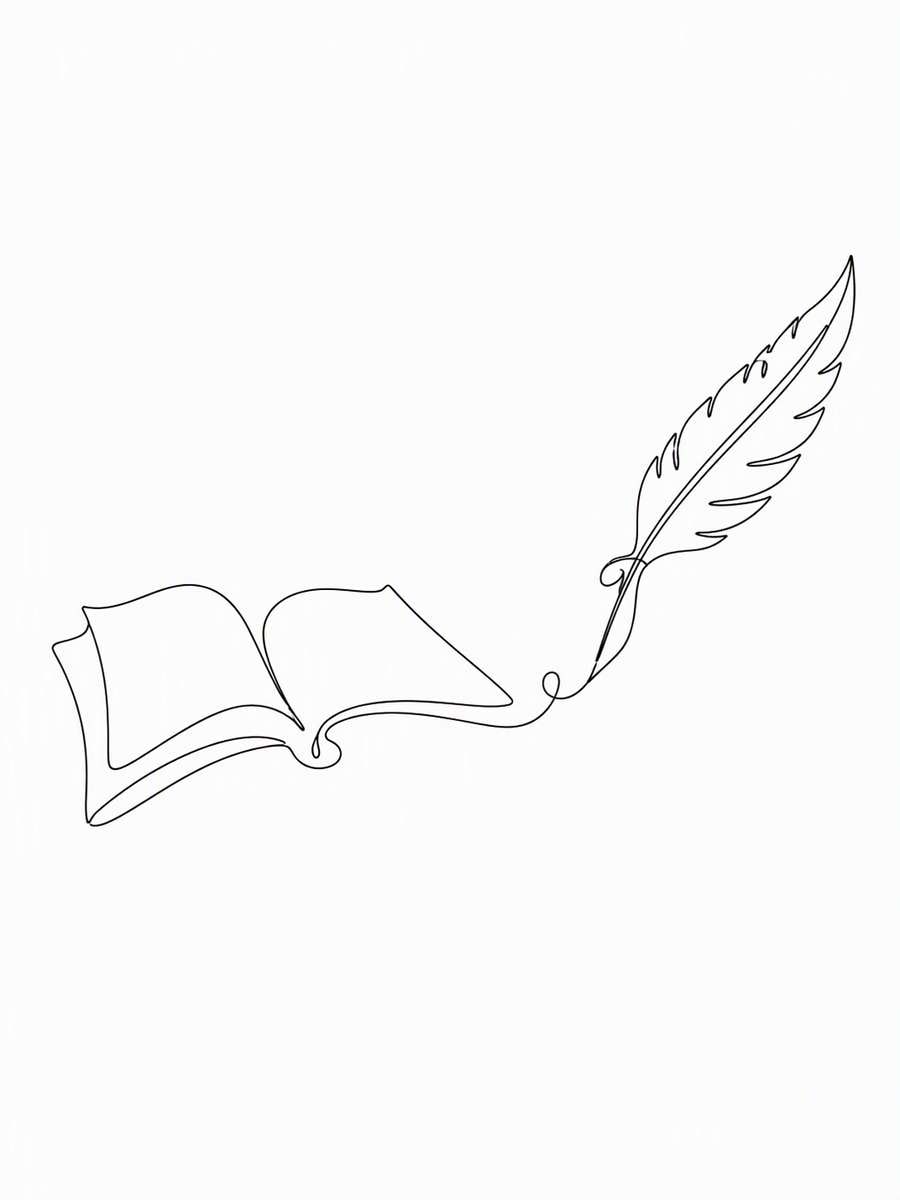
Draw an original dark academia tattoo concept in a continuous-line illustration style: an open book flows into the contour of a quill in one graceful looping stroke. Use very thin near-black lines, no filled areas and no page-by-page rendering. Form an asymmetric horizontal emblem inside a portrait canvas on bright white. The book and feather should remain recognizable despite the abstract connections. No skin, photography, signatures or lettering. --ar 3:4
Raven on a Book Spine
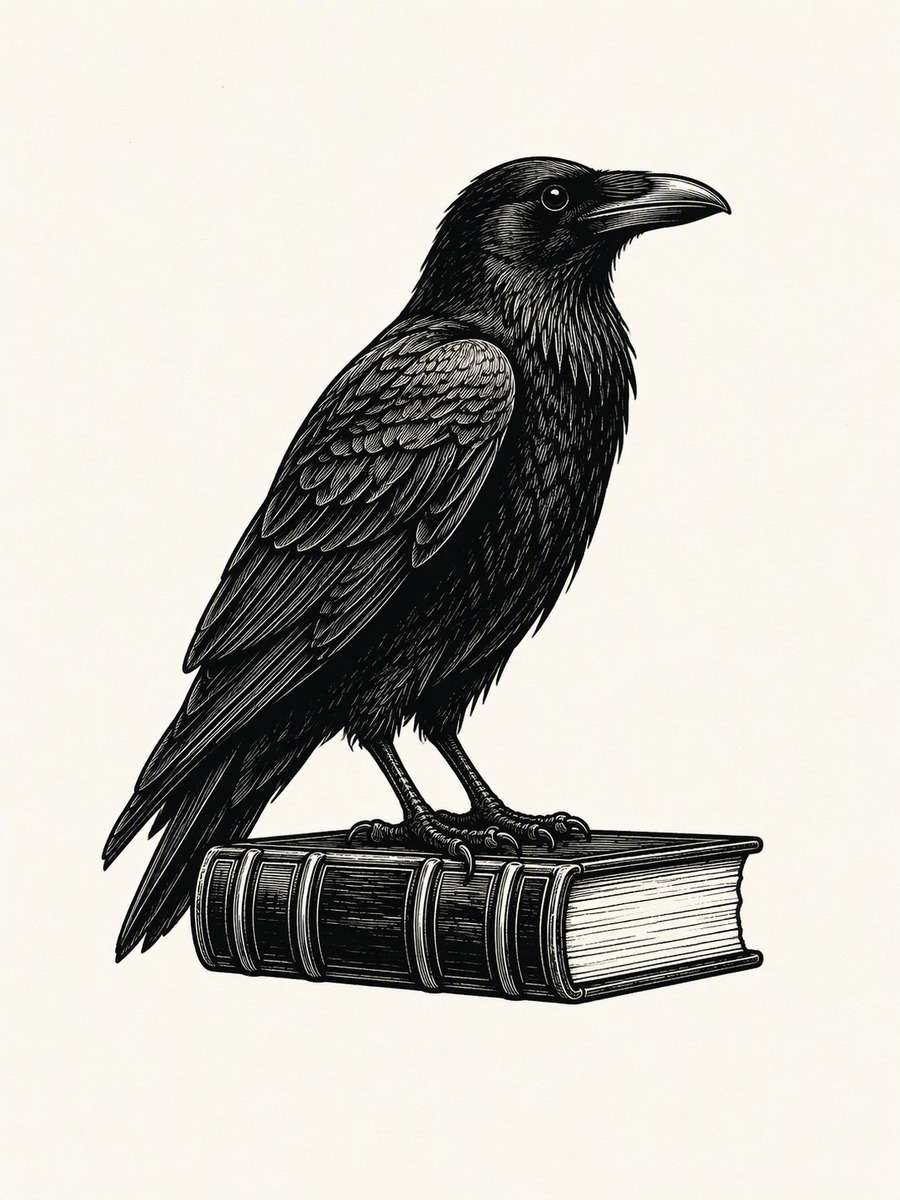
Create a standalone blackwork tattoo-concept illustration of one raven perched on the spine of a closed book. Prioritize the bird's distinct profile and a clean shared silhouette, with restrained feather hatching and wide negative space on warm-white paper. No lettering, skin or scene. --ar 3:4
Labyrinth and Olive Sprig
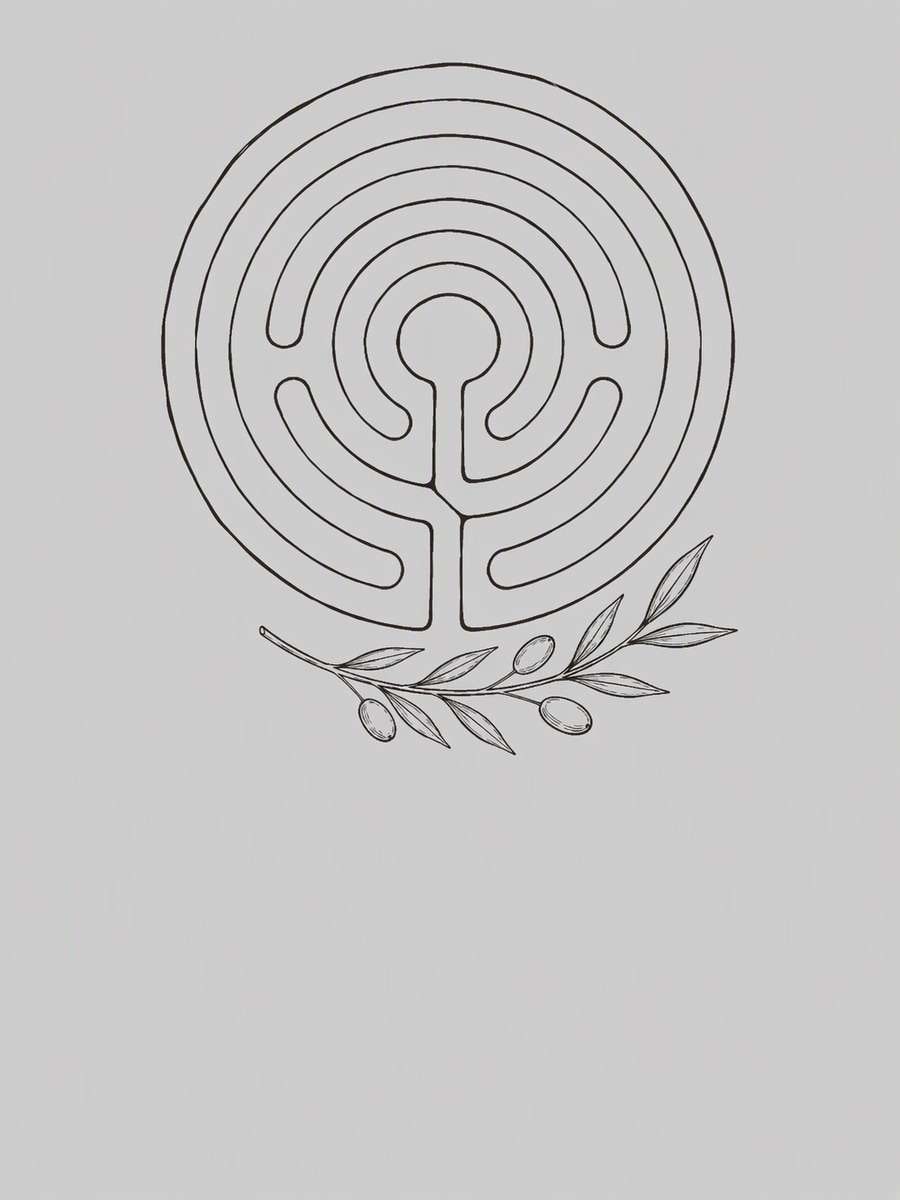
Create a minimalist dark academia tattoo concept built around a circular labyrinth with one entrance and one winding route toward its center, paired with a small olive sprig outside the lower edge. Use precise thin dark contours with no fills. Give the maze an uneven hand-drawn character rather than a digital logo. Place the wide round motif high on a pale cool-gray portrait canvas. No text, human skin, gradients or decorative borders. --ar 3:4
Candle Above Two Books
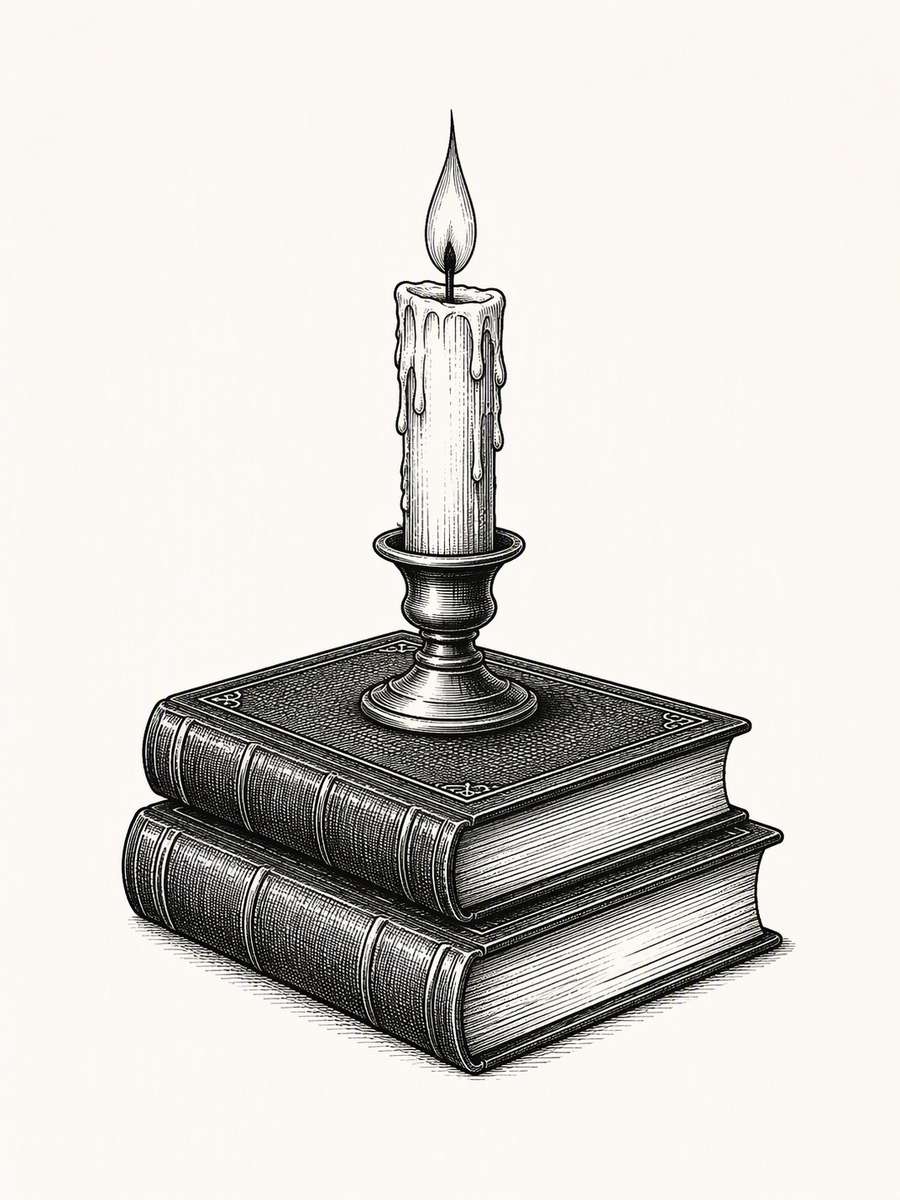
Illustrate one candle above a neat stack of two closed books as standalone black-ink tattoo-concept art. Use restrained antique-engraving hatching, decisive book edges and clear gaps around the flame on warm-white paper. No text, room setting, skin or mockup. --ar 3:4
Moth and Crescent
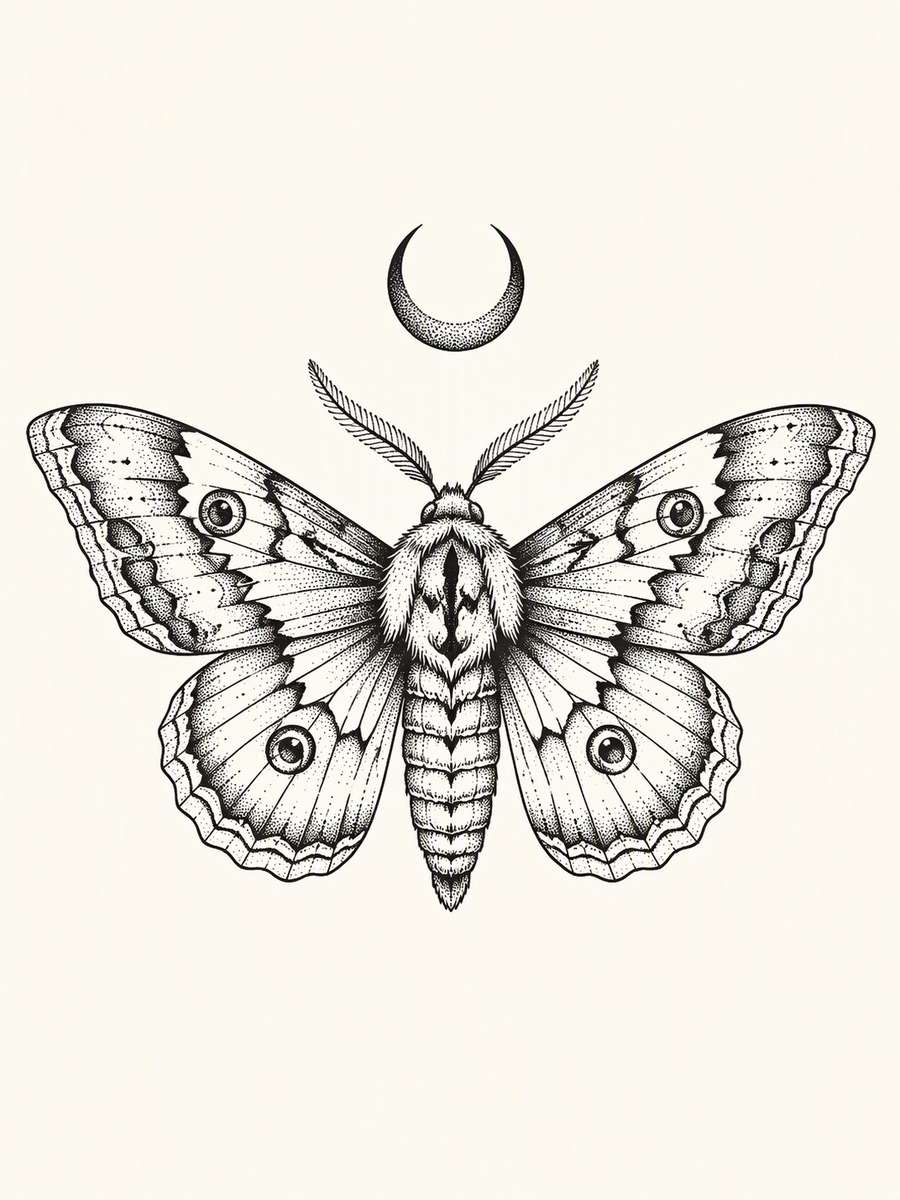
Create a standalone symmetrical moth tattoo-concept illustration in black ink, with one small crescent centered above it. Define the wings with controlled stippling and crisp outer contours, leaving open areas between marks on clean ivory paper. No stars, text, skin or mockup. --ar 3:4
Geometric Moth and Lunar Arc
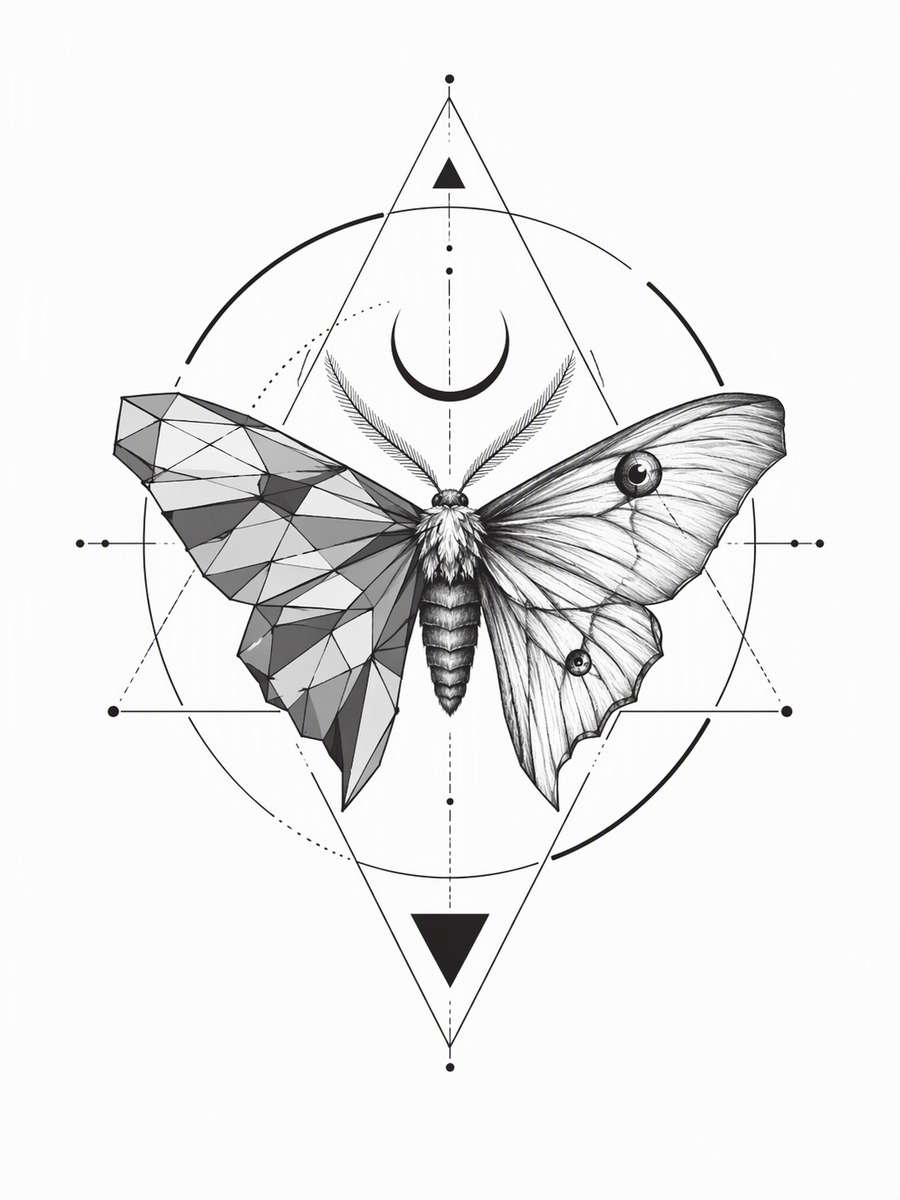
Design a geometric dark academia tattoo concept with a moth positioned inside an incomplete circle intersected by two slender triangles. Render the left wing in crisp polygonal facets and the right wing with curved anatomical contours, creating intentional asymmetry. Use solid charcoal triangles, delicate construction lines and a small lunar arc above the antennae. Display the design on a plain white field with no paper texture, writing, people or skin. --ar 3:4
Watercolor Fern and Raven Feather
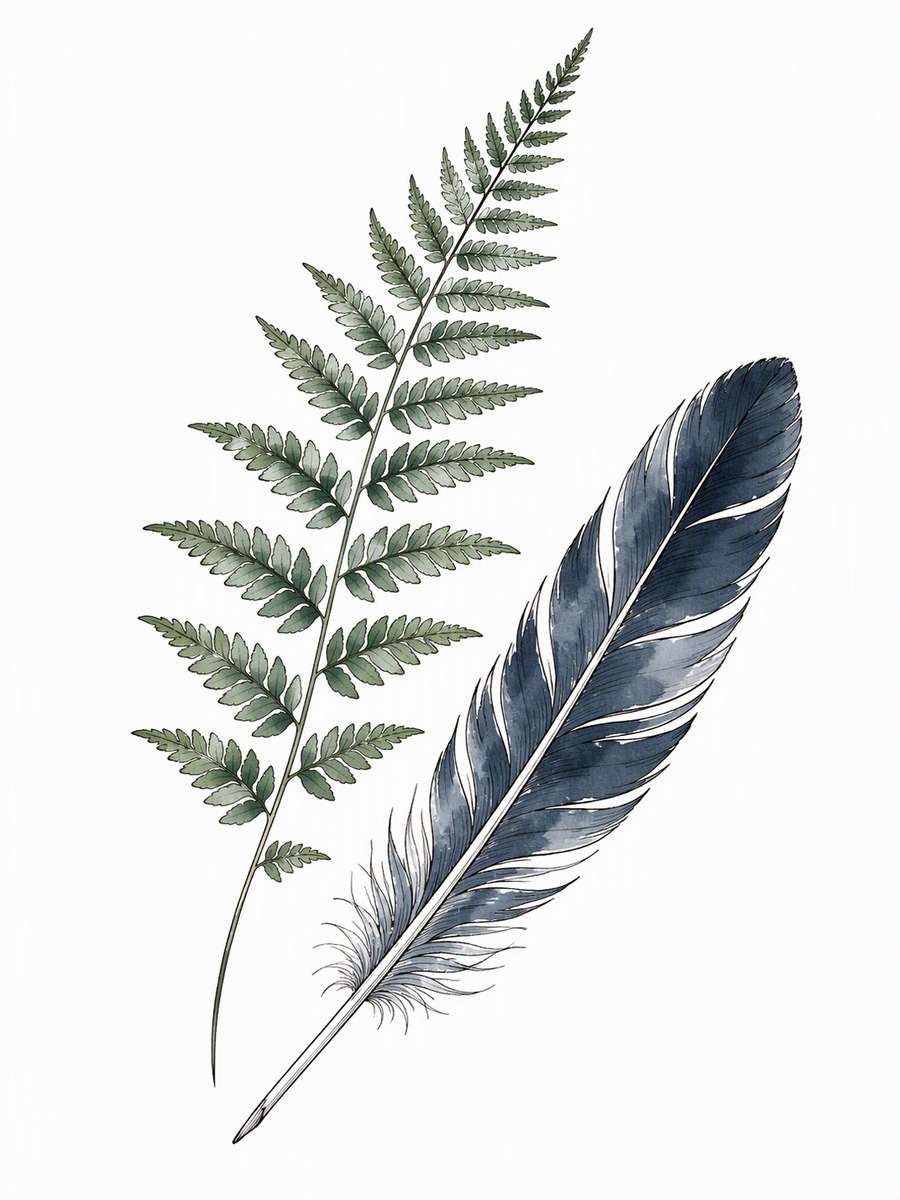
Create an original dark academia tattoo concept pairing a tall fern frond and a diagonal raven feather. Outline the recognizable forms with slim charcoal lines, then add controlled forest-green watercolor washes inside the fern and muted indigo washes inside the feather. Leave several pale unpainted gaps to distinguish the stems and barbs. Use a clean white background and an airy diagonal layout. No random paint splashes, text, skin or photographed materials. --ar 3:4
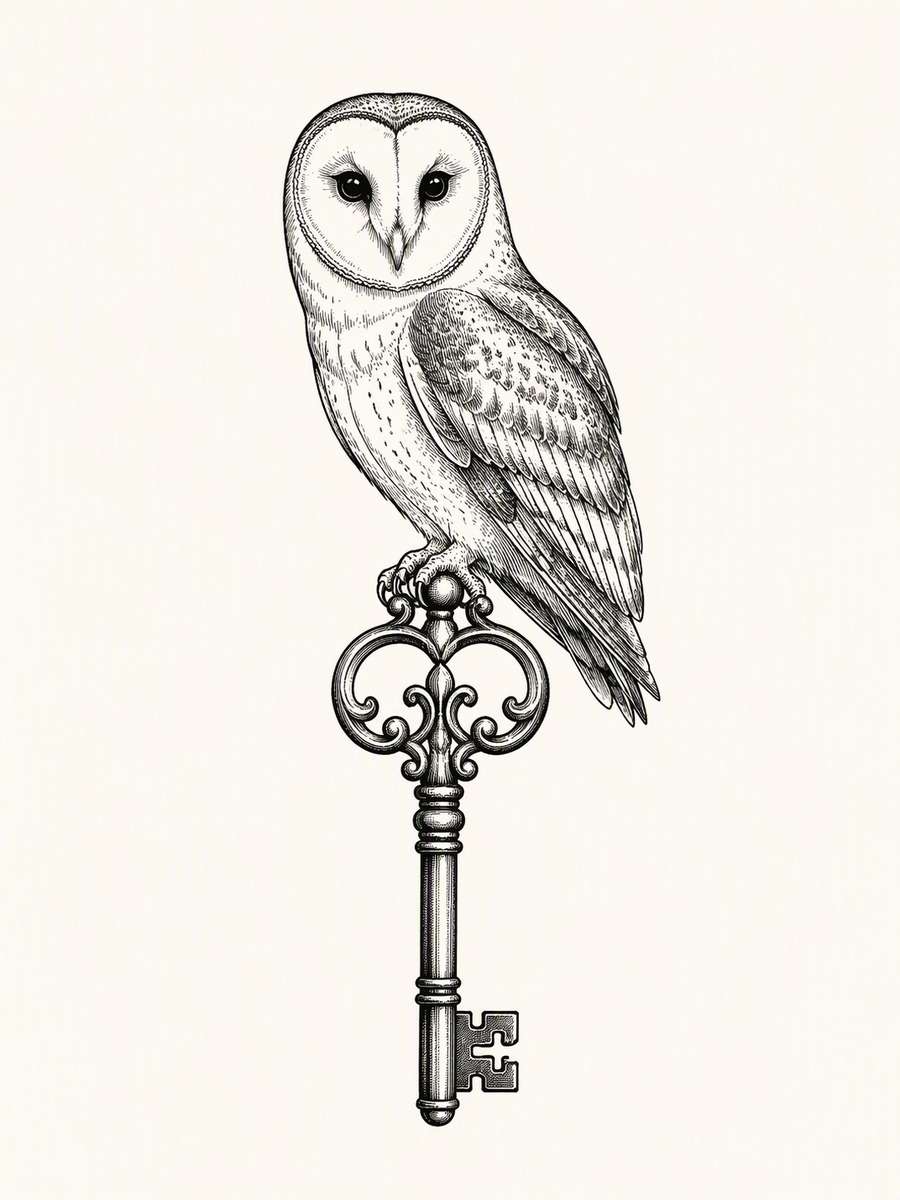
Owl on an Antique Key
Create a standalone black-ink tattoo concept of a barn owl perched on an antique key. Shape the owl with restrained engraved feather marks while keeping the key's shaft and bow legible. Center on clean warm-white paper with ample negative space. No text, skin or mockup. --ar 3:4
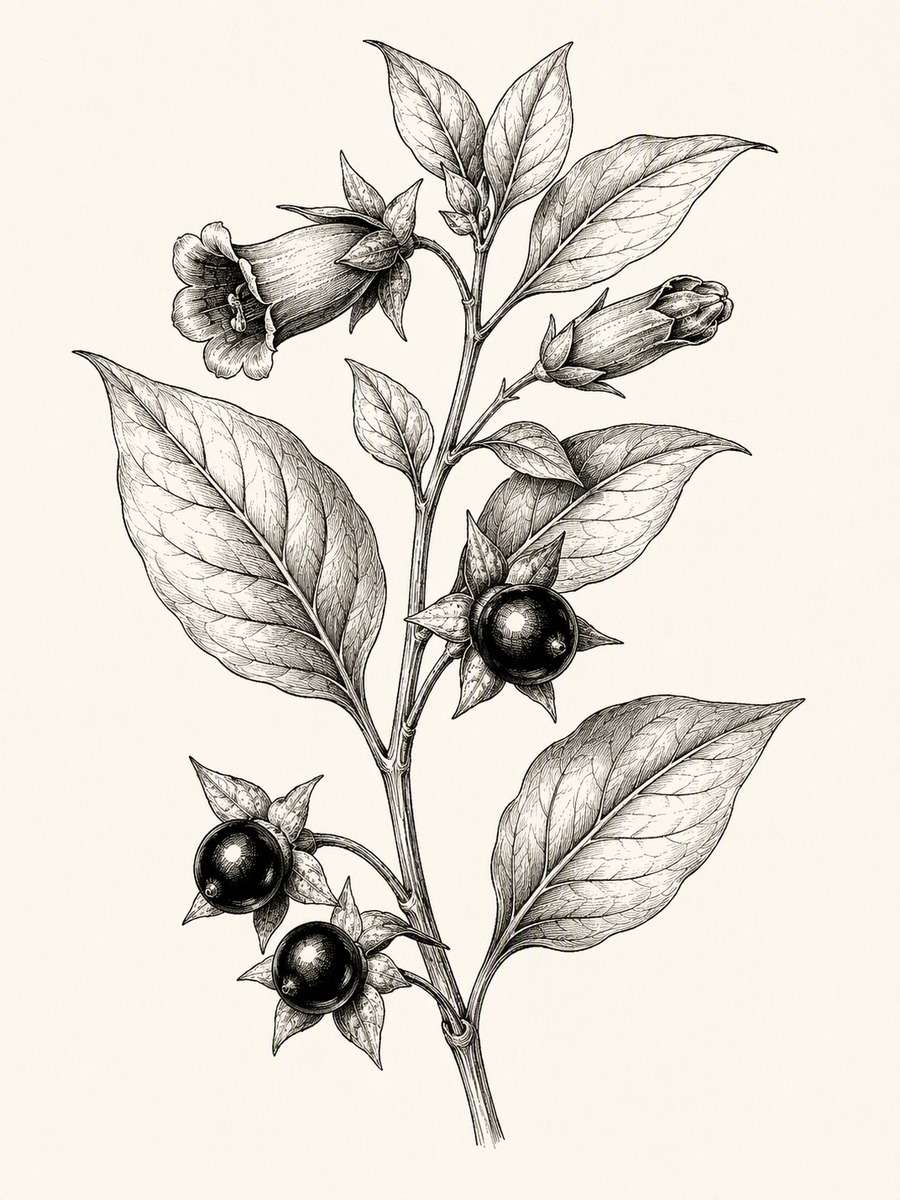
Belladonna Specimen
Draw a botanical belladonna sprig as standalone specimen-style black-ink tattoo-concept art. Show a clear stem, leaves, small flowers and berries through precise contours and restrained engraving marks on clean ivory paper. No specimen label, text, skin, setting or mockup. --ar 3:4
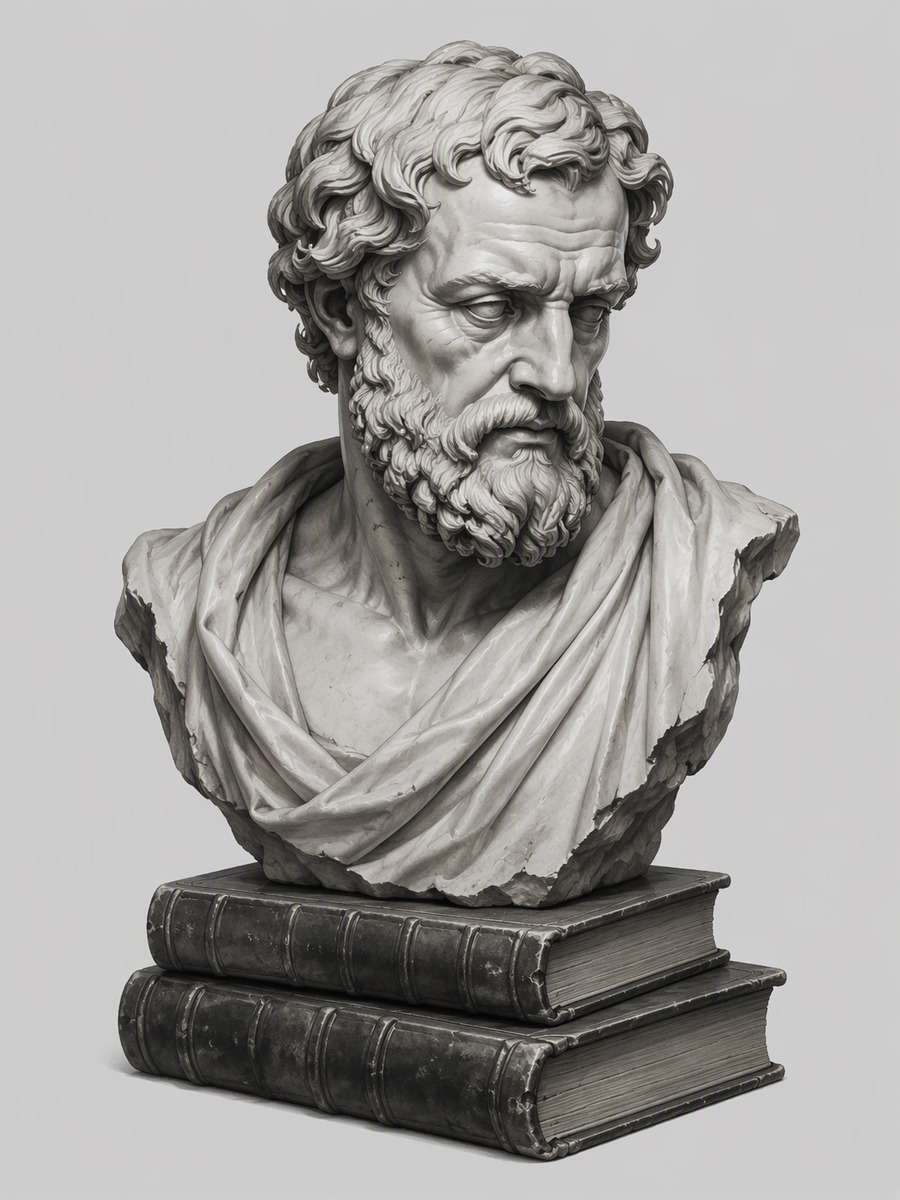
Classical Bust on a Book Pedestal
Illustrate an original classical-art dark academia tattoo concept: an invented marble philosopher bust, cropped at the shoulders, rests above two closed books that form a low pedestal. Use smooth graphite-gray illustrative shading, bright carved-looking highlights and a few deep dark accents, not hairline engraving. Give the face a contemplative expression and the sculpture subtle chips at its edges. Present on a pale-gray field with no photographed statue, skin, museum scene or inscription. --ar 3:4
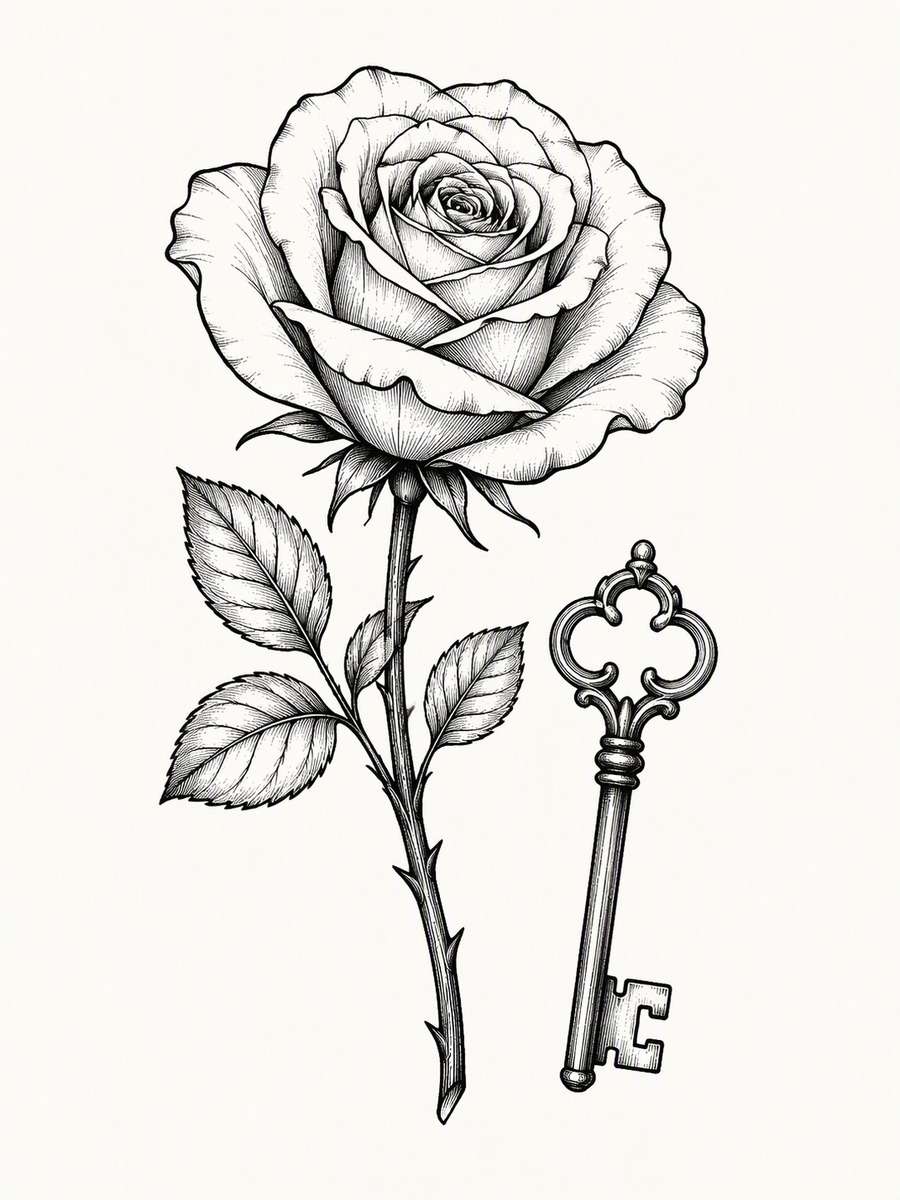
Rose and Antique Key
Create standalone black-ink tattoo-concept art pairing one rose with an antique key. Make the rose the clear focal motif and position the simpler key beside its stem; use crisp contours and minimal hatching on warm-white paper. No lettering, skin or mockup. --ar 3:4
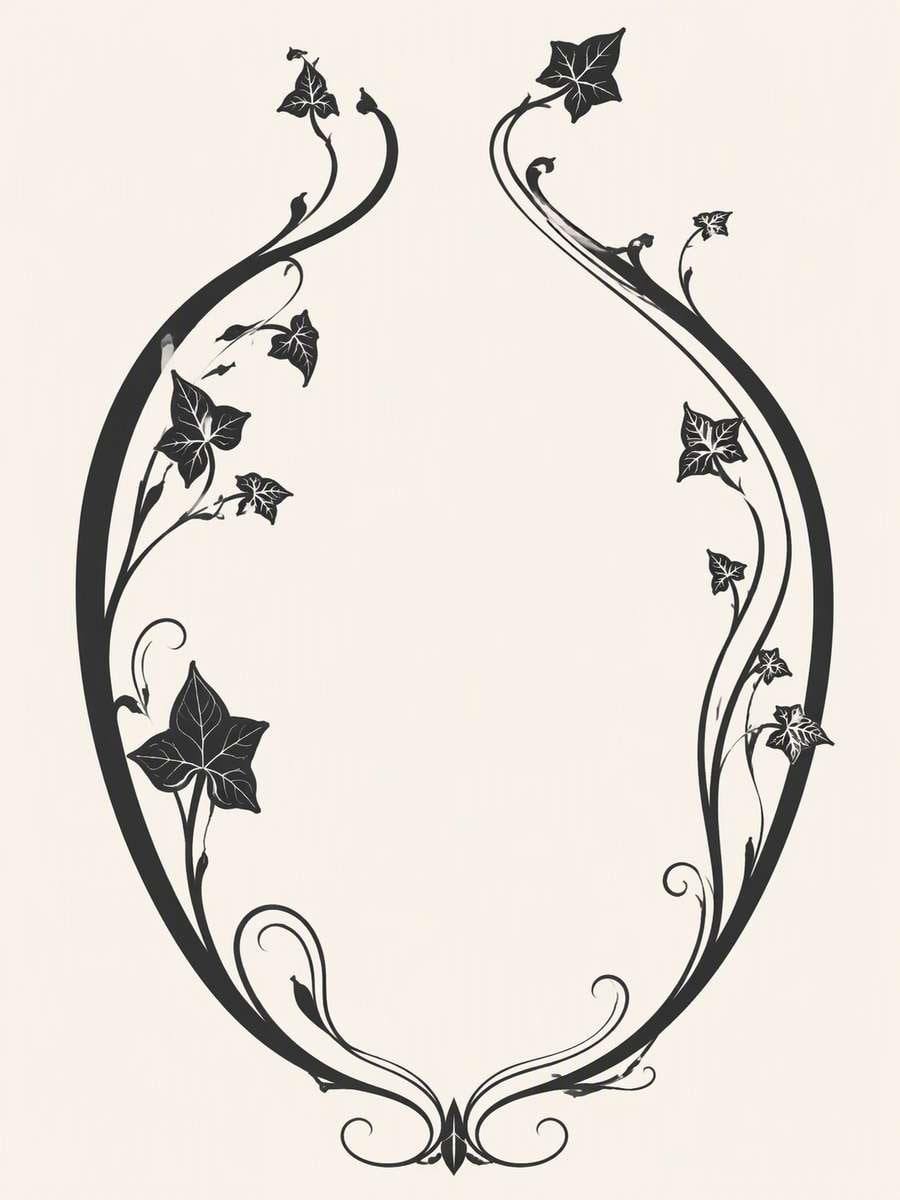
Art Nouveau Ivy Bookplate
Design an original ornamental dark academia tattoo concept inspired by flowing Art Nouveau curves. A tall oval frame opens at the top and bends into two stylized ivy stems with elongated leaves. Alternate thick outer curves and delicate interior leaf lines to create a graceful, asymmetric silhouette. Keep the center empty and the artwork entirely dark charcoal on pale cream, without engraving texture. No initials, quotation, artist signature, skin or lifestyle mockup. --ar 3:4
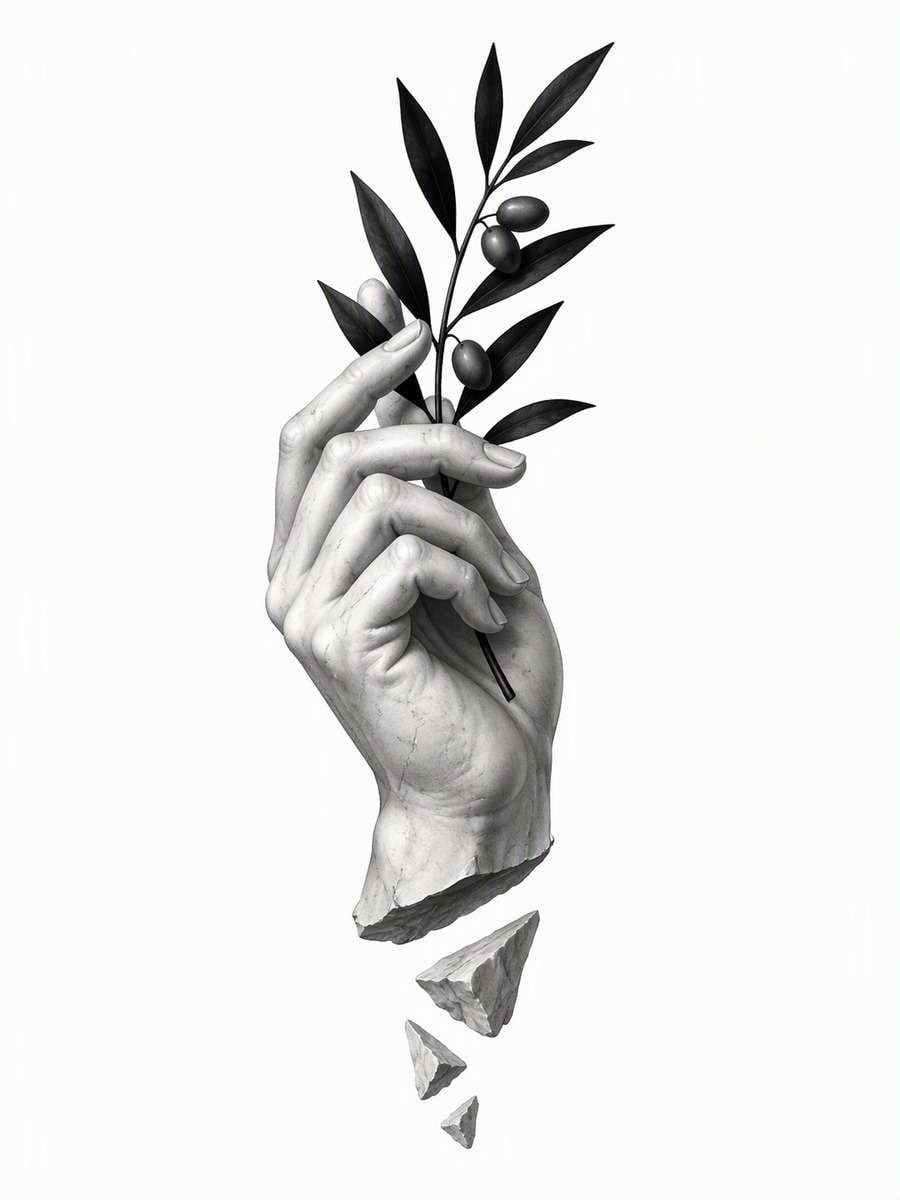
Sculptural Hand and Olive Branch
Create an illustrative dark academia tattoo concept showing an invented fragment of a classical marble hand gently holding an olive branch. Crop the sculpture at a clean diagonal break across the wrist, with the full five-finger anatomy clear and the fingers naturally arranged around one stem. Combine soft grayscale stone modeling with bold leaf silhouettes and three small angular fragments below the wrist. Use a plain white field. No living skin, blood, named artwork, letters or museum setting. --ar 3:4
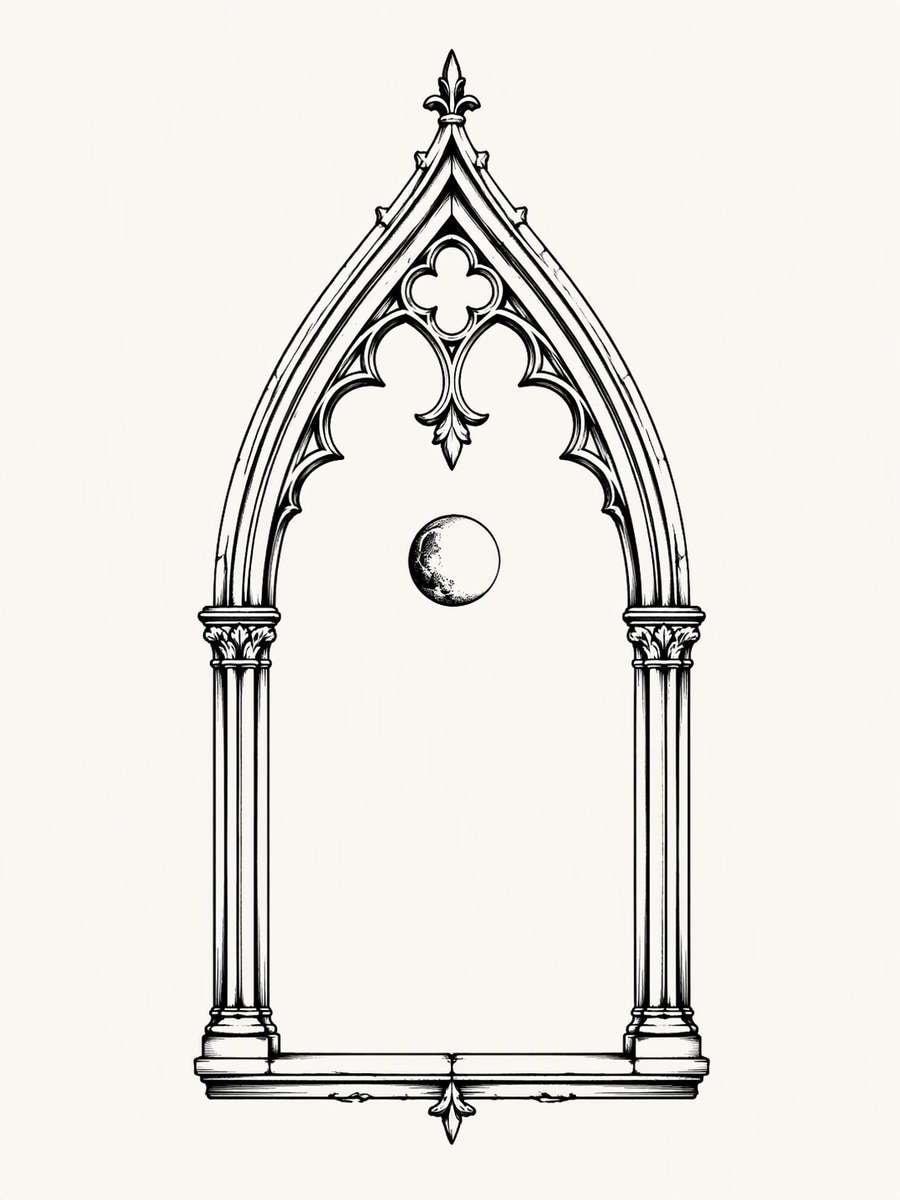
Gothic Arch and Moon
Create a standalone black-ink tattoo concept of a Gothic window arch containing a small plain moon. Emphasize the pointed architectural silhouette, use limited stone-detail lines and leave open ivory space inside the arch. No glass scene, text, skin or mockup. --ar 3:4
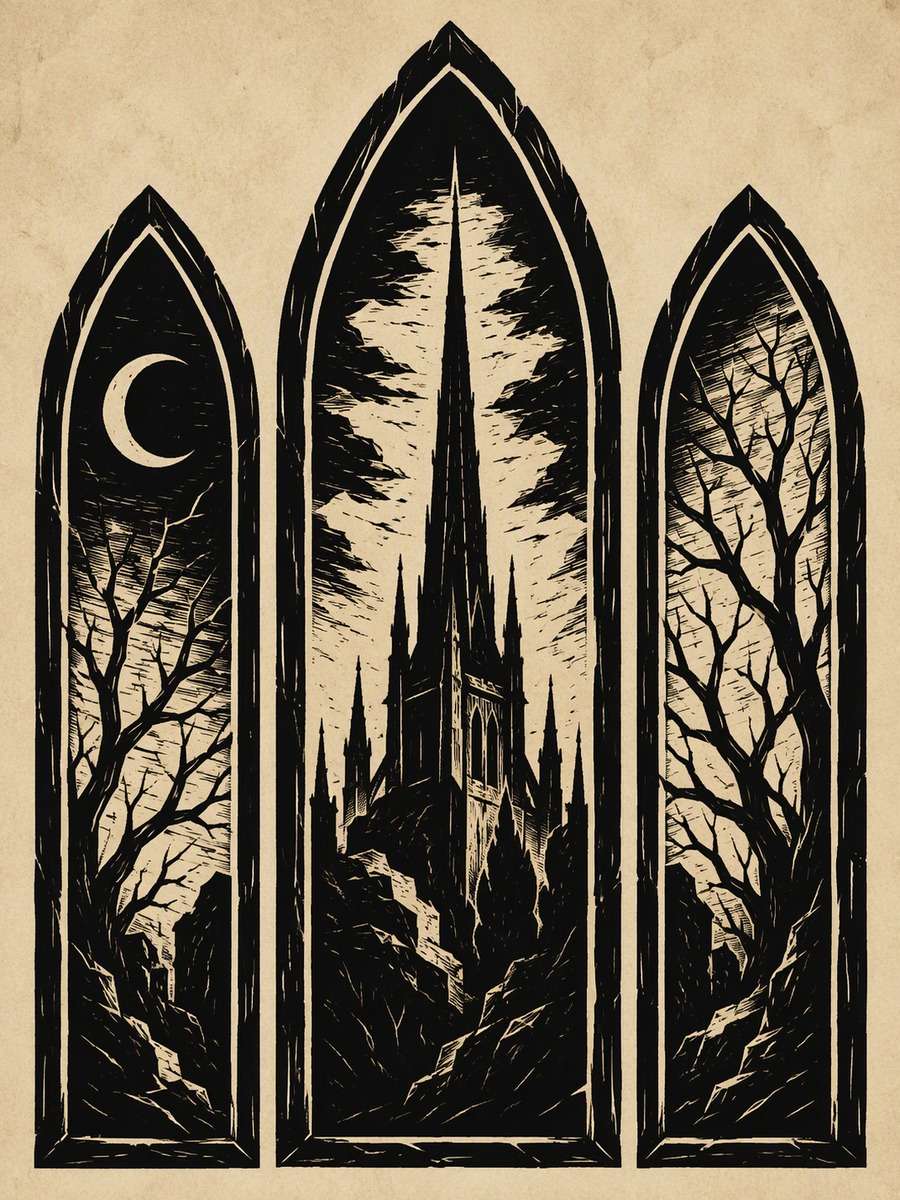
Cathedral Woodcut Triptych
Create a dark academia tattoo design arranged as a compact triptych of three pointed Gothic arches. The tall central arch contains a distant cathedral spire; the two narrow side arches contain bare branches and a crescent moon. Render the scene as a bold woodcut with broad dark masses, angular white cuts and irregular carved-edge marks. Keep each panel visibly separated on a pale parchment-colored background. No tiny masonry rendering, text, people, skin or photographic architecture. --ar 3:4
Jewel-Tone Gothic Window
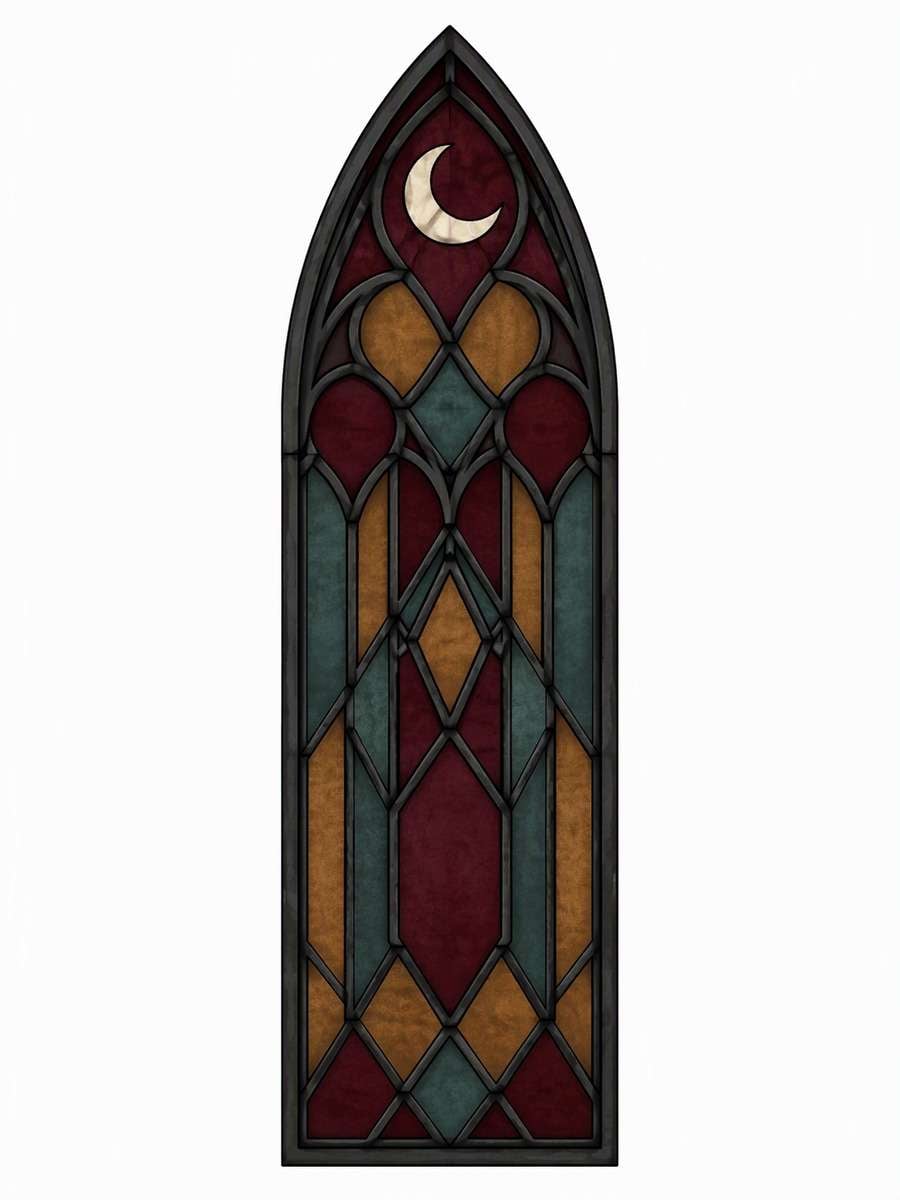
Design an original dark academia tattoo concept of a narrow pointed Gothic window in a stained-glass illustration style. Use dark lead-like outlines around large burgundy, smoky amber and muted teal geometric panes, with a small cream crescent in the upper arch. Keep the window symmetrical and graphic, with no realistic glass reflections and no cathedral surroundings. Place the complete framed shape on plain white, without skin, people, letters or photographed objects. --ar 3:4
Hourglass and Laurel Arc
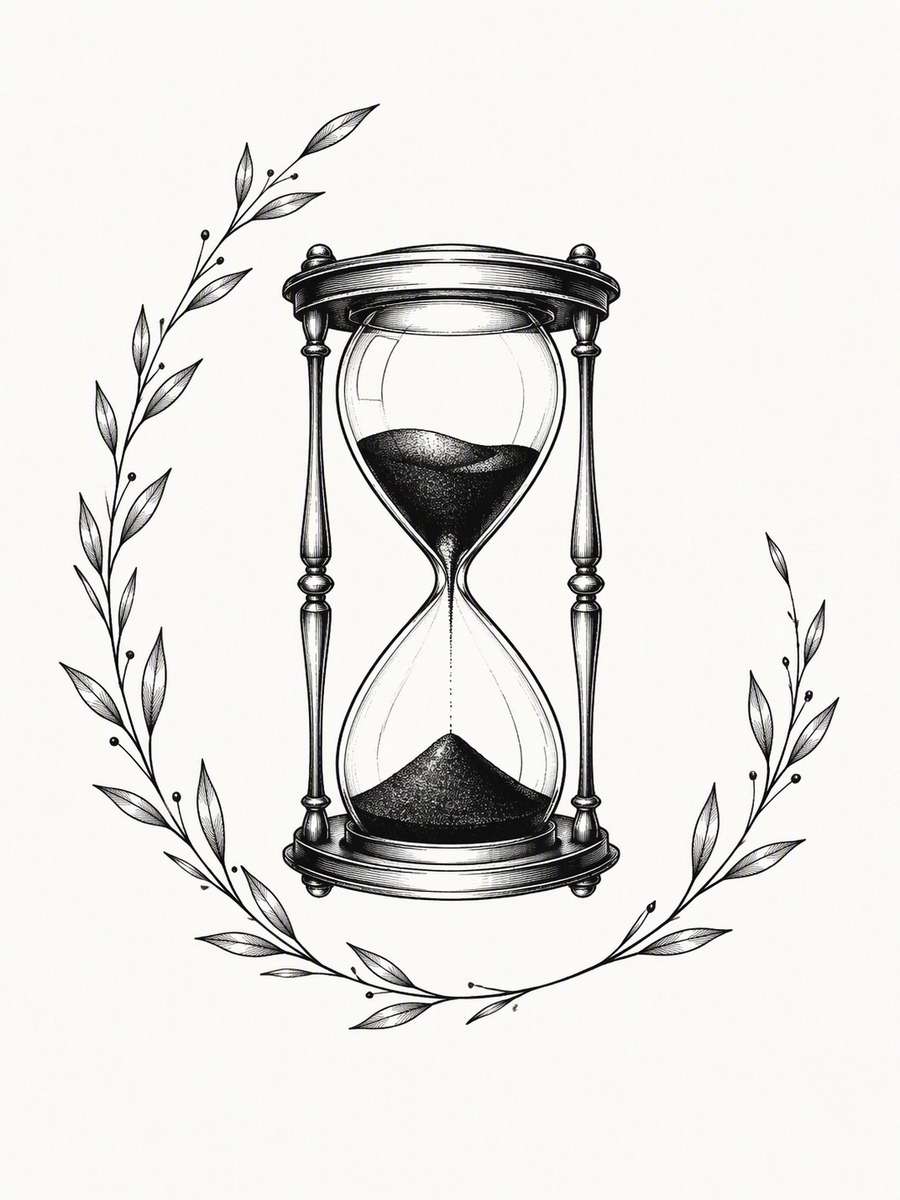
Create a standalone black-ink tattoo-concept illustration of one hourglass within a light, incomplete laurel arc. Contrast dark sand shapes with crisp glass outlines and leave the arc airy on clean warm-white paper. No lettering, skin, room setting or mockup. --ar 3:4
Icarus Wings and Falling Feathers
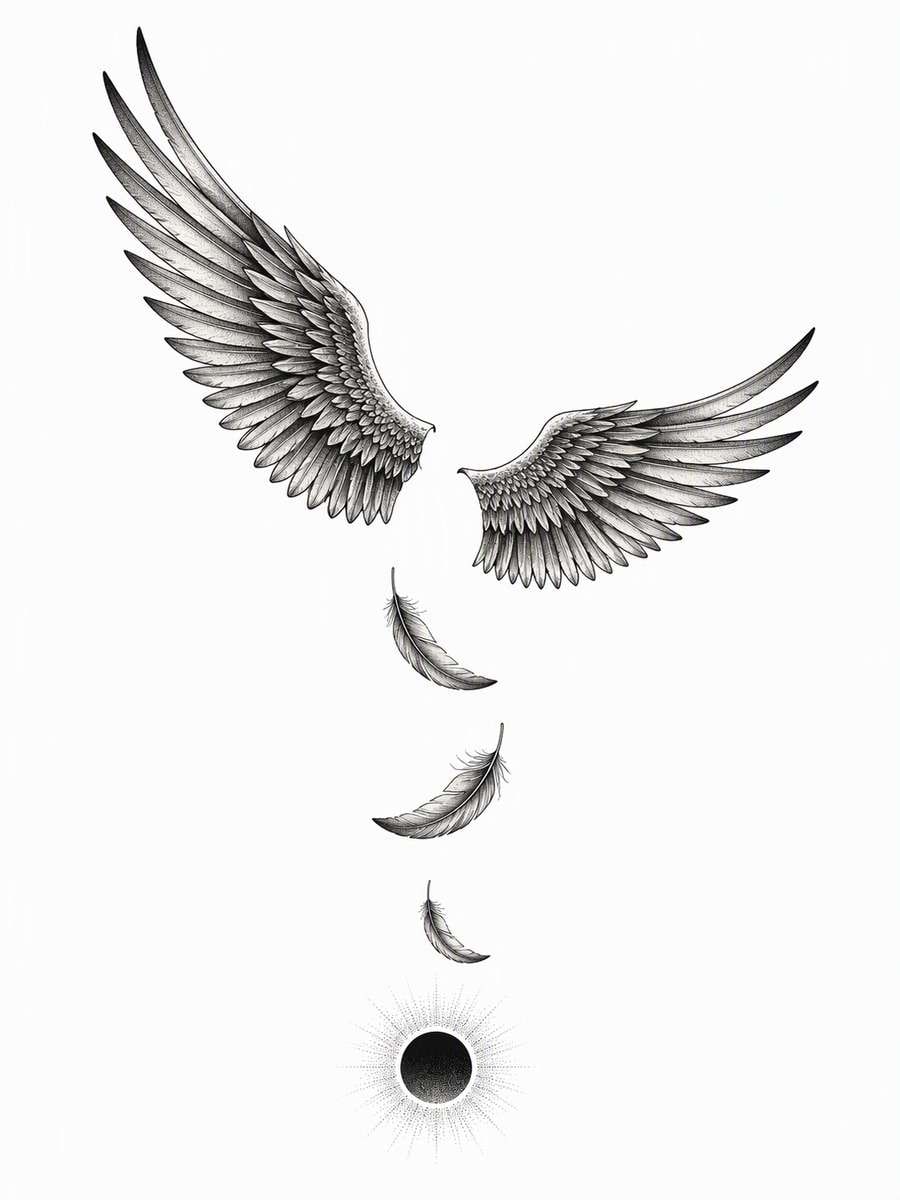
Create a mythology-inspired dark academia tattoo concept showing an empty pair of outstretched wings above three falling feathers and a small dark sun disk. No human body or face. Use fine directional feather contours and gradual stipple shading, with the left wing rising slightly higher to form a descending diagonal composition. Keep open gaps between the wing tips, feathers and sun. Draw on a clean white field without lettering, skin, smoky atmosphere or photographic textures. --ar 3:4
Celestial Globe
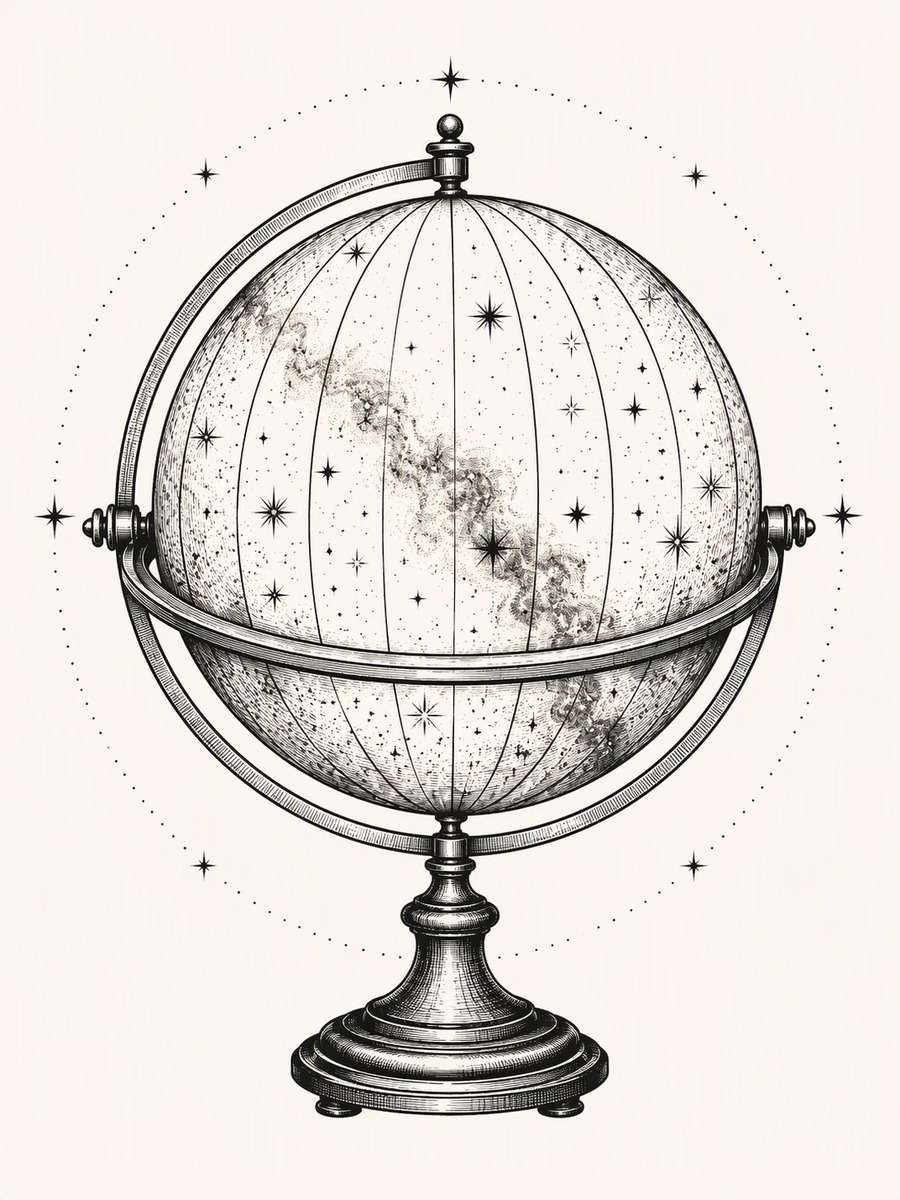
Illustrate an antique celestial globe as standalone black-ink tattoo-concept art, with plain meridian lines and a few small stars around the sphere. Use a clean circular silhouette, selective engraved shading and ivory negative space. No map names, letters, skin or mockup. --ar 3:4
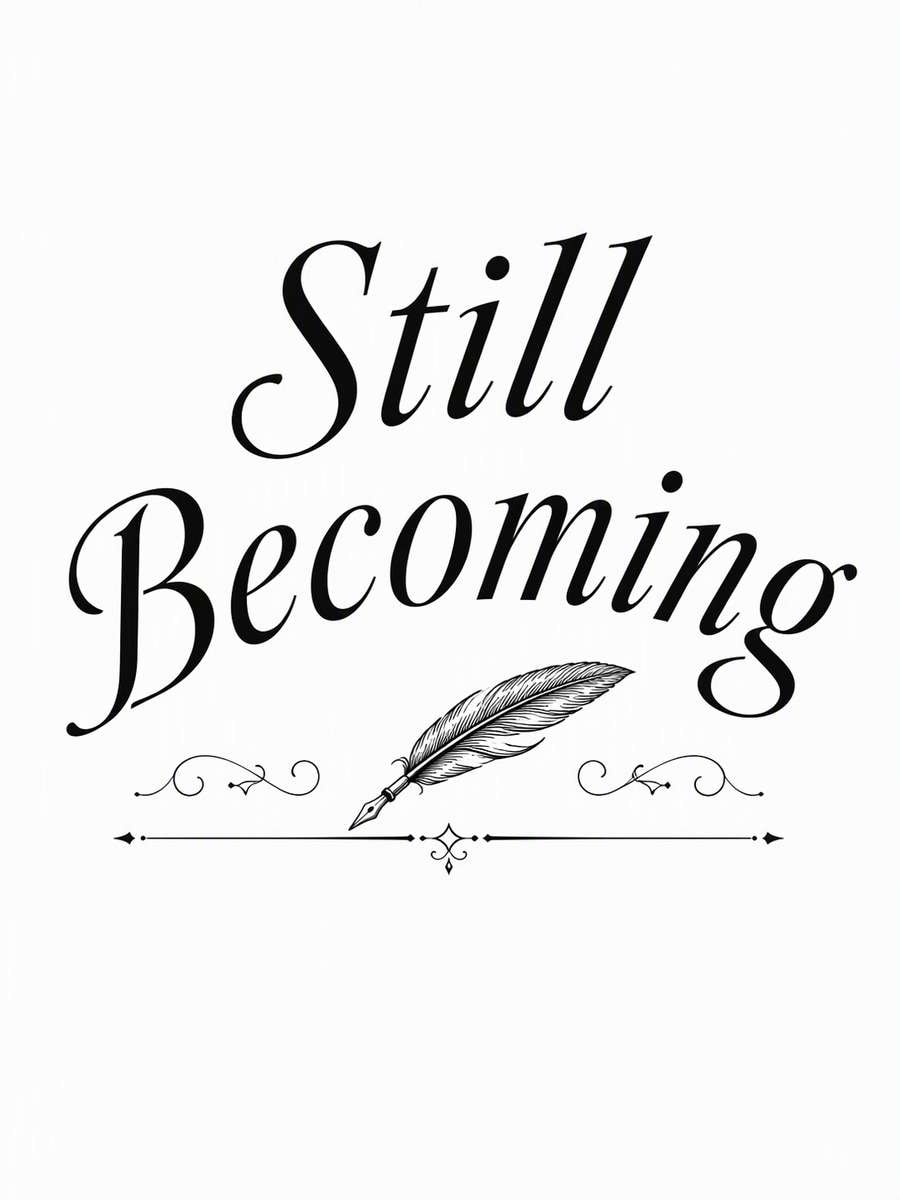
Still Becoming Literary Lettering
Create an original dark academia tattoo lettering concept containing exactly the words "Still Becoming" in carefully spaced, readable italic serif lettering, not elaborate blackletter. Set the two words on separate slightly curved lines above a small feather pen and a thin horizontal rule. Use strong dark letterforms and quiet fine-line ornament on bright white. Prioritize correct spelling, complete letter shapes and clear spacing. No additional text, attribution, signature, skin or distressed paper texture. --ar 3:4
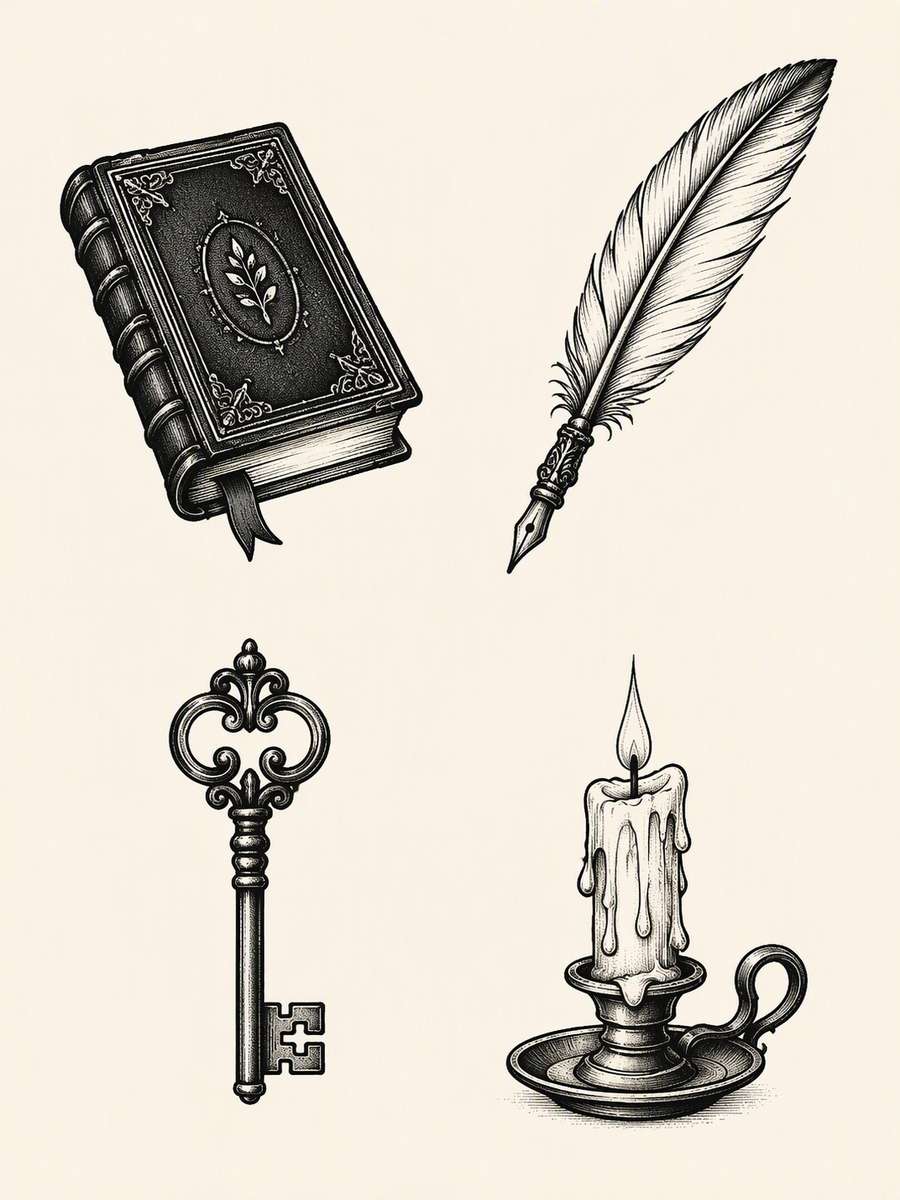
Literary Flash Quartet
Design an original sheet of four separate black-ink literary tattoo-flash concepts: one book, one quill, one antique key and one candle. Give each a decisive contour, restrained shading and generous separation on clean ivory paper. No frames, labels, numbers, skin or mockup. --ar 3:4
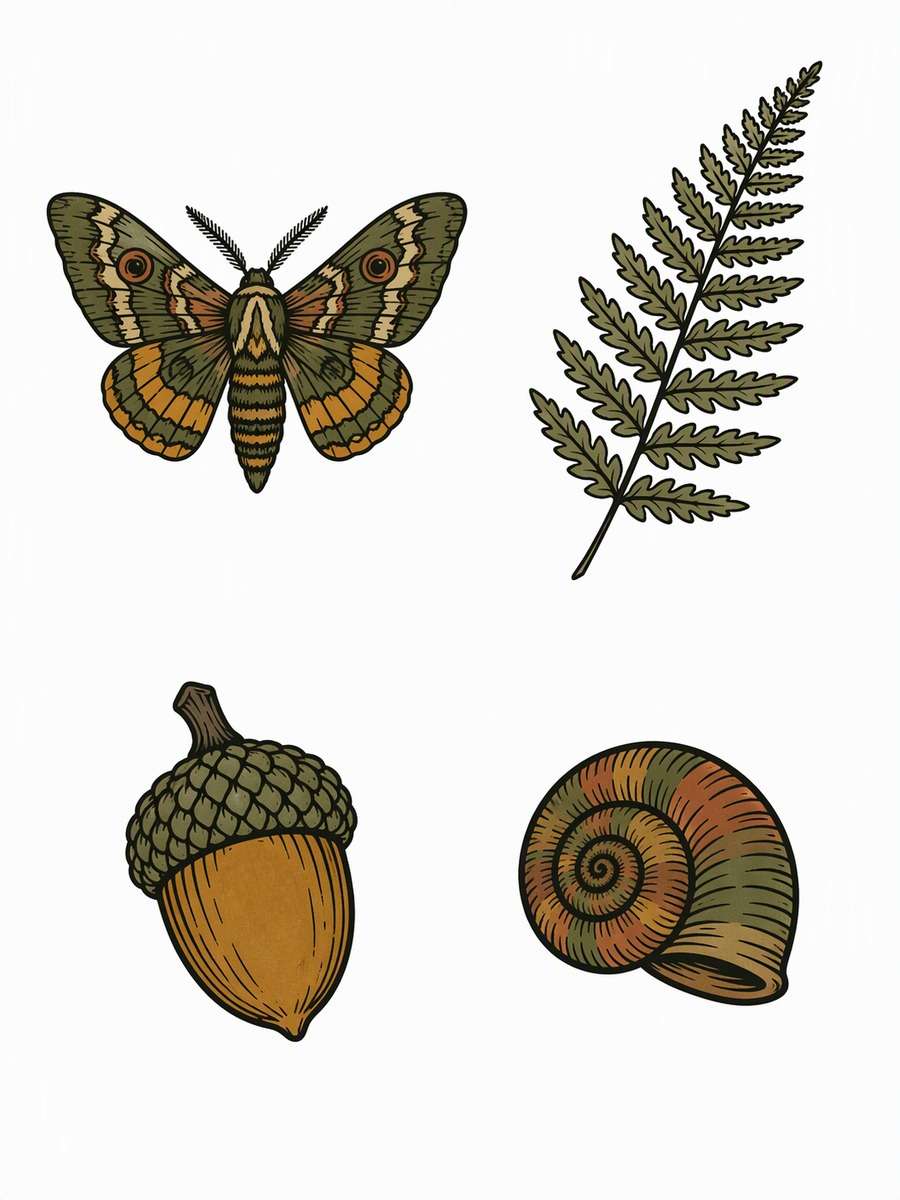
Earth-Tone Natural-History Flash
Design a dark academia tattoo flash sheet with four independent natural-history motifs in a spacious two-by-two arrangement: a moth, a fern frond, an acorn and a small snail shell. Use consistent bold dark outlines and flat restrained fills of moss green, ochre and muted rust, with no watercolor texture. Give each icon its own clear silhouette and leave wide blank gutters between designs on white. No decorative sheet border, labels, lettering, skin or photographed paper. --ar 3:4
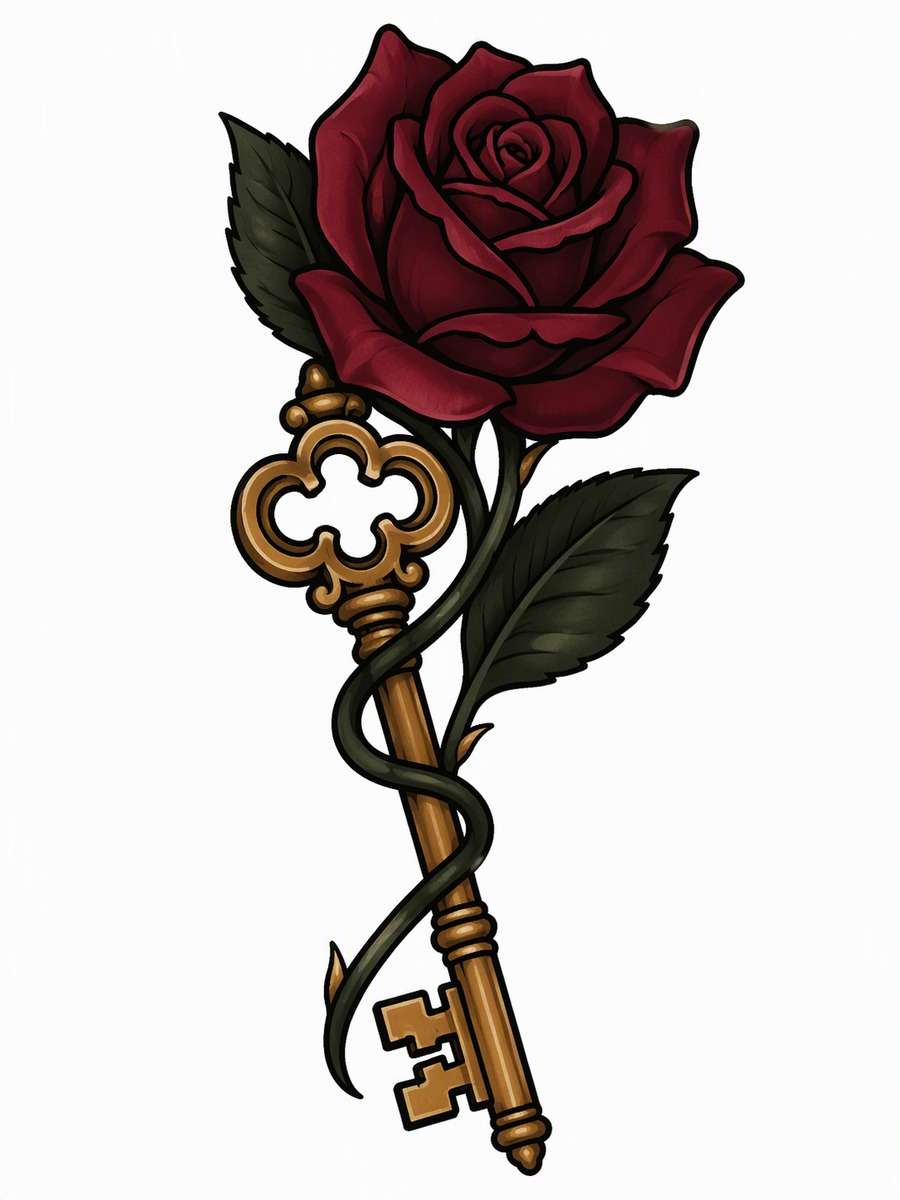
Neo-Traditional Rose and Antique Key
Create an original neo-traditional-inspired dark academia tattoo concept featuring one deep burgundy rose wrapped around a long antique key. Use a bold near-black outer contour, simplified layered petals, muted golden key accents and two deep green leaves. Balance the rose at the top with the diagonal key extending below it, forming a dynamic elongated emblem. Add no book, ribbon, background scene or tiny hatching. Show on plain white without lettering, human skin or photography. --ar 3:4
Fine-Line vs. Blackwork and Other Dark Academia Tattoo Styles
Fine-line dark academia tattoos emphasize delicate contours; blackwork concepts use larger dark shapes. Engraving, geometry and limited color offer other ways to interpret the same subjects. These are visual comparisons, not predictions about how a tattoo will age.
Compare the Visual Treatments
Fine-line and continuous line: Sparse outlines with little or no filled shading; the book-and-quill loop is more abstract than the separate book emblem. Compare 1, 2, 3 and 5
Blackwork, engraving and woodcut: The raven uses dark feather masses, the candle uses finer engraved marks, and the triptych uses broad carved-looking cuts. Compare 4, 6, 10, 17 and 19
Dotwork and geometry: Stippled wings create tonal texture; circles and triangles produce a graphic framework rather than extra organic ornament. Compare 7, 8, 20 and 21
Classical sculptural illustration: Modeled gray tones suggest carved stone. A bust and a sculpture fragment make classical art the main subject. Compare 12 and 15
Limited color: Controlled washes, stained-glass panes and bold flat fills give three visibly different treatments, not one shared color filter. Compare 9, 18, 24 and 25
Lettering and flash sheets: A short readable phrase centers personal wording; flash sheets show several independent motifs for comparison. Compare 22, 23 and 24
Customize the Design Prompt
Replace one named object, such as the book, plant or antique key, with a symbol that has personal meaning.
Keep the visual-technique wording when changing a subject in the same style; replace it when testing fine-line, engraving, dotwork or limited color.
The --ar 3:4 suffix describes the gallery canvas, not a recommended tattoo size or placement. If your generator does not recognize this syntax, choose a portrait ratio in its settings.
Dark Academia Tattoo Ideas: Make the Symbols Your Own
Explore literary, Gothic, celestial and classical influences, then compare the design style that fits your own idea.
Literary Symbols
Explore books, quills and short lettering concepts to express a reading interest without relying on a long quotation.
Gothic and Celestial Motifs
Compare arches, stained-glass-inspired windows, moths and an antique celestial globe for architectural or night-sky inspiration.
Classical Art and Philosophy
Use a sculptural bust, hand fragment, labyrinth or Icarus-inspired wings to explore a personal connection to art, study or mythology.
Different Tattoo Design Styles
Compare fine-line, blackwork, dotwork, ornamental and limited-color concepts before choosing a visual direction to discuss with your tattoo artist.
FAQs About Dark Academia Tattoo Prompts
1. How do I use these dark academia tattoo prompts?
Open Media.io AI Text to Image and choose an available model. Paste a card prompt, or click Create Similar Image to bring it into the tool. Set your output options, generate a concept, then preview and download the result.
2. Are all the designs minimalist or blackwork?
No. The collection also includes woodcut, geometric, classical sculptural, lettering, ornamental and limited-color concepts. Compare the styles rather than assuming that every dark academia design needs the same treatment.
3. Can I add a literary quotation?
Yes, you can replace the short phrase in prompt 22 with wording you have chosen. Verify the quotation and attribution separately, inspect every generated letter, and check any relevant usage rights before publishing or using it commercially.
4. Can these AI designs be used directly as tattoo stencils?
These JPGs are concept references, not finished stencils or guaranteed tattoo-ready artwork. Ask a tattoo artist to review the design and determine any technical changes, placement or scale.
5. Why do the prompts use a 3:4 aspect ratio?
It keeps the gallery previews consistent while accommodating vertical emblems and flash sheets. It does not prescribe tattoo dimensions. Choose another canvas ratio if your design needs more horizontal space.
Dark Academia Tattoo Feedback
Alex M.
Photographer
A direction beyond book tattoos. I had saved plenty of book tattoos, but none felt quite right. The Gothic arch and celestial ideas reminded me that dark academia could go beyond books. I finally had a few more specific directions to take to my tattoo artist.
Maya J.
Designer
An easier way to explain the style. I was torn between something delicate and a much darker design. Seeing fine-line and engraving-inspired ideas side by side made that choice easier to explain. I could point to the details I liked instead of handing over a vague mood board.
Jordan P.
Creator
A reference, not a final tattoo. The antique key and botanical motifs gave me a starting point without feeling like a finished tattoo I had to accept as-is. I would use the images to discuss the symbols and atmosphere, then let my artist work out the placement, line weight and final drawing.