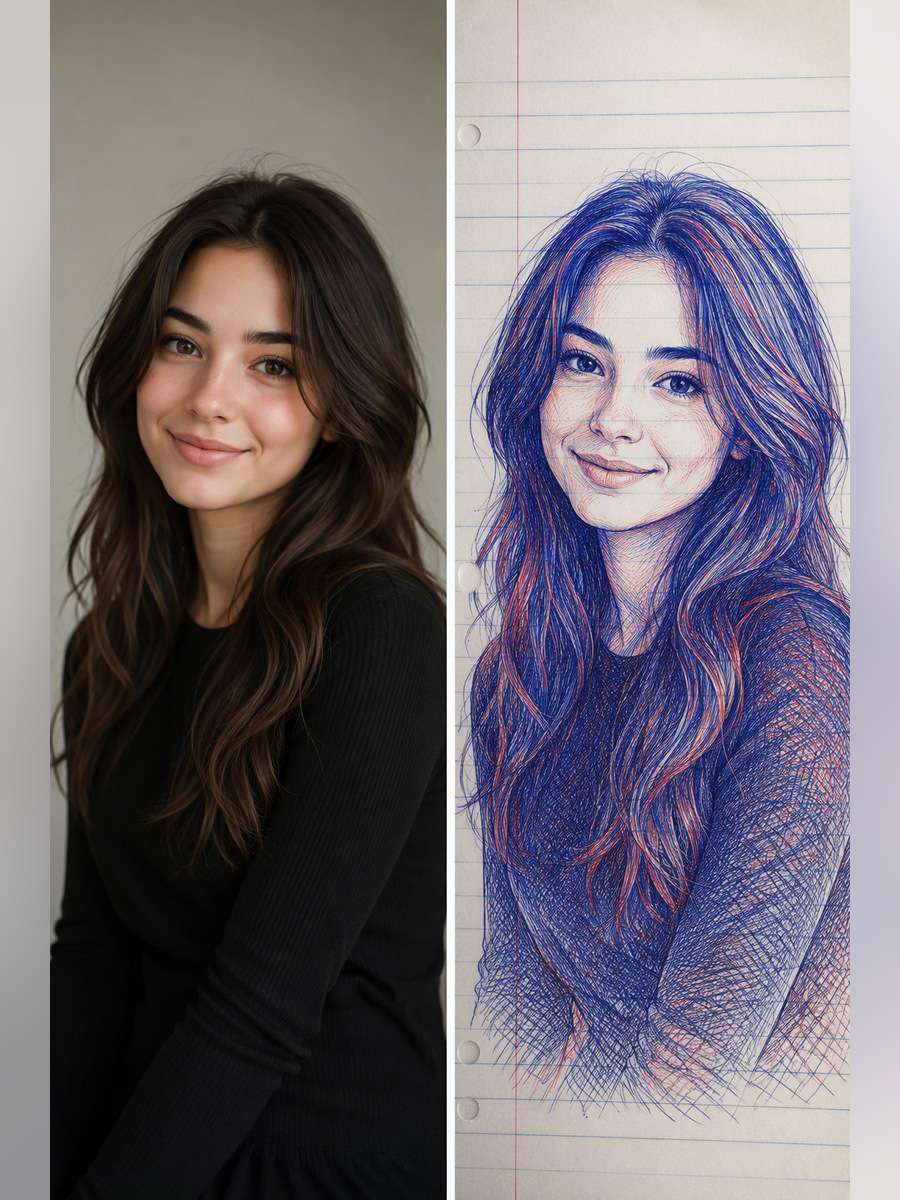
Two-Color Notebook Portrait
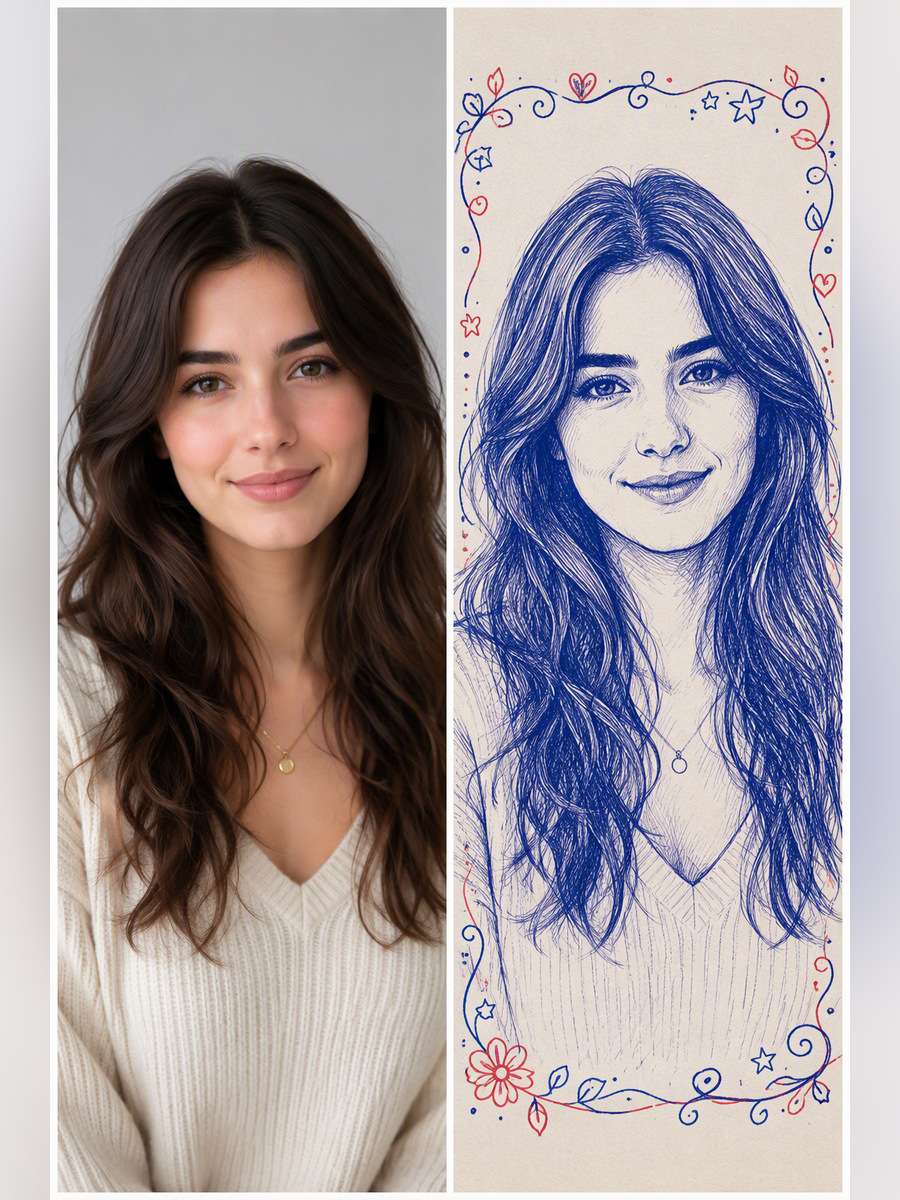
Turn the uploaded portrait into a hand-drawn portrait on notebook paper using blue pen as the structural line and red pen as accent detail. Keep the subject recognizable and the sketch believable as real pen work.
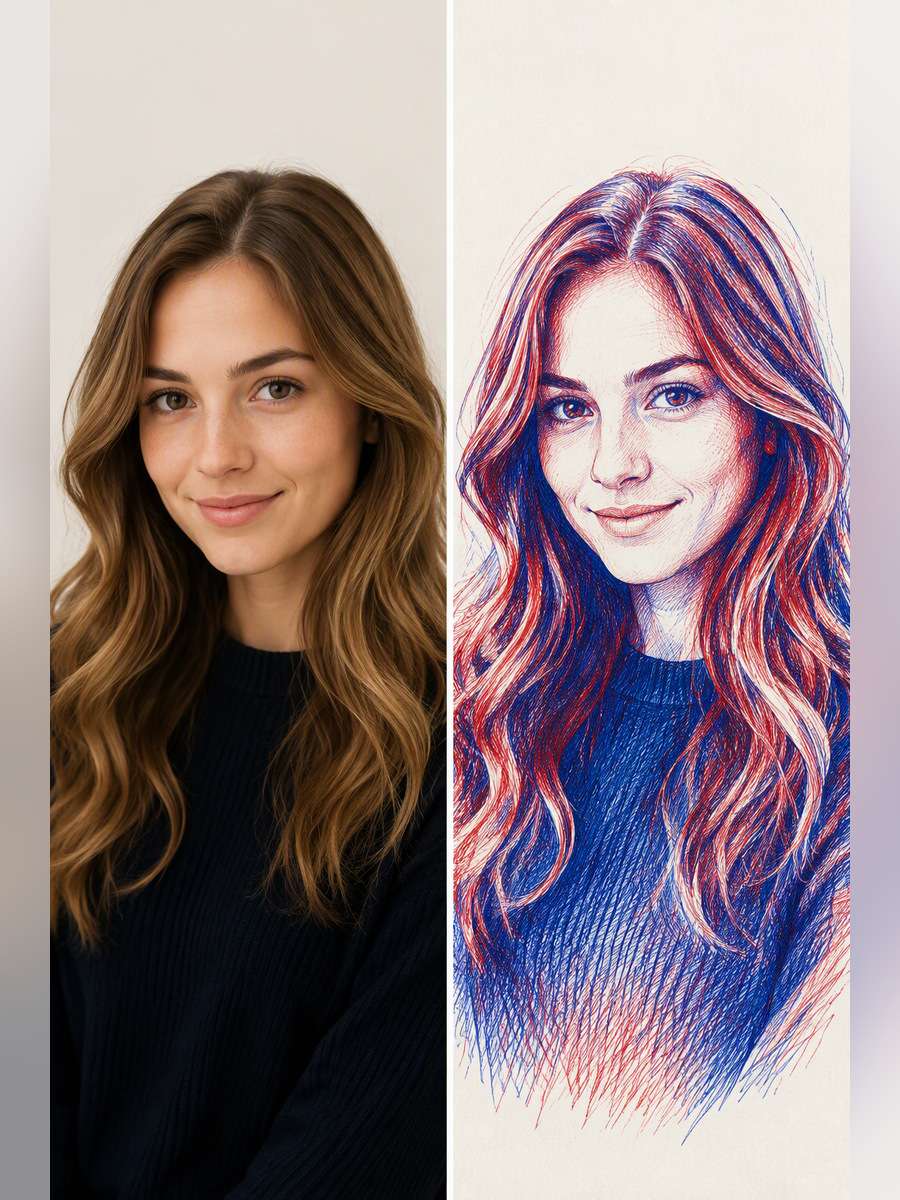
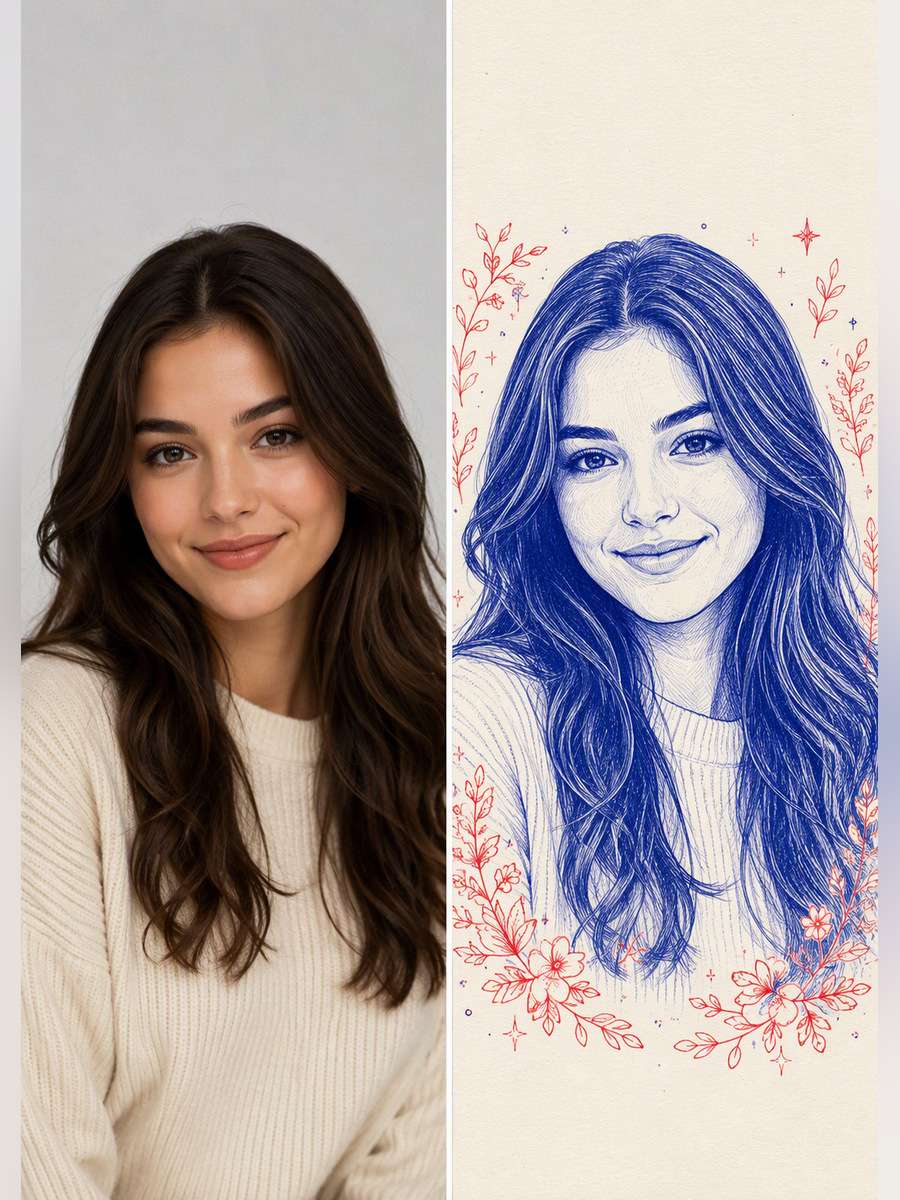
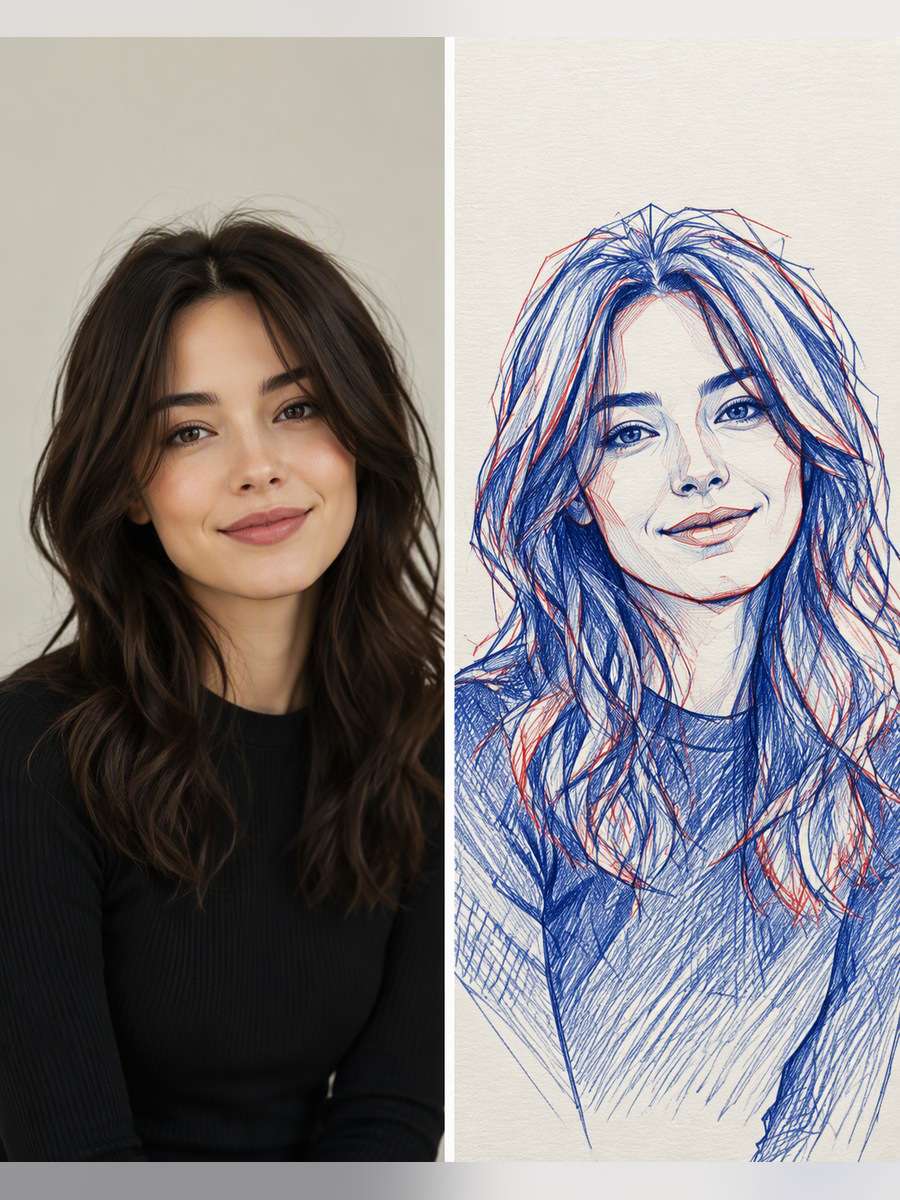
Two-color red-and-blue pen drawings are trending because they look playful, hand-made and slightly experimental. These ChatGPT Red and Blue Pen Drawing Prompts help transform a photo into a portrait built from blue outlines, red accents and layered doodle energy. They are useful for stylized profile art, notebook aesthetics, back-to-school visuals and gift-style sketches.
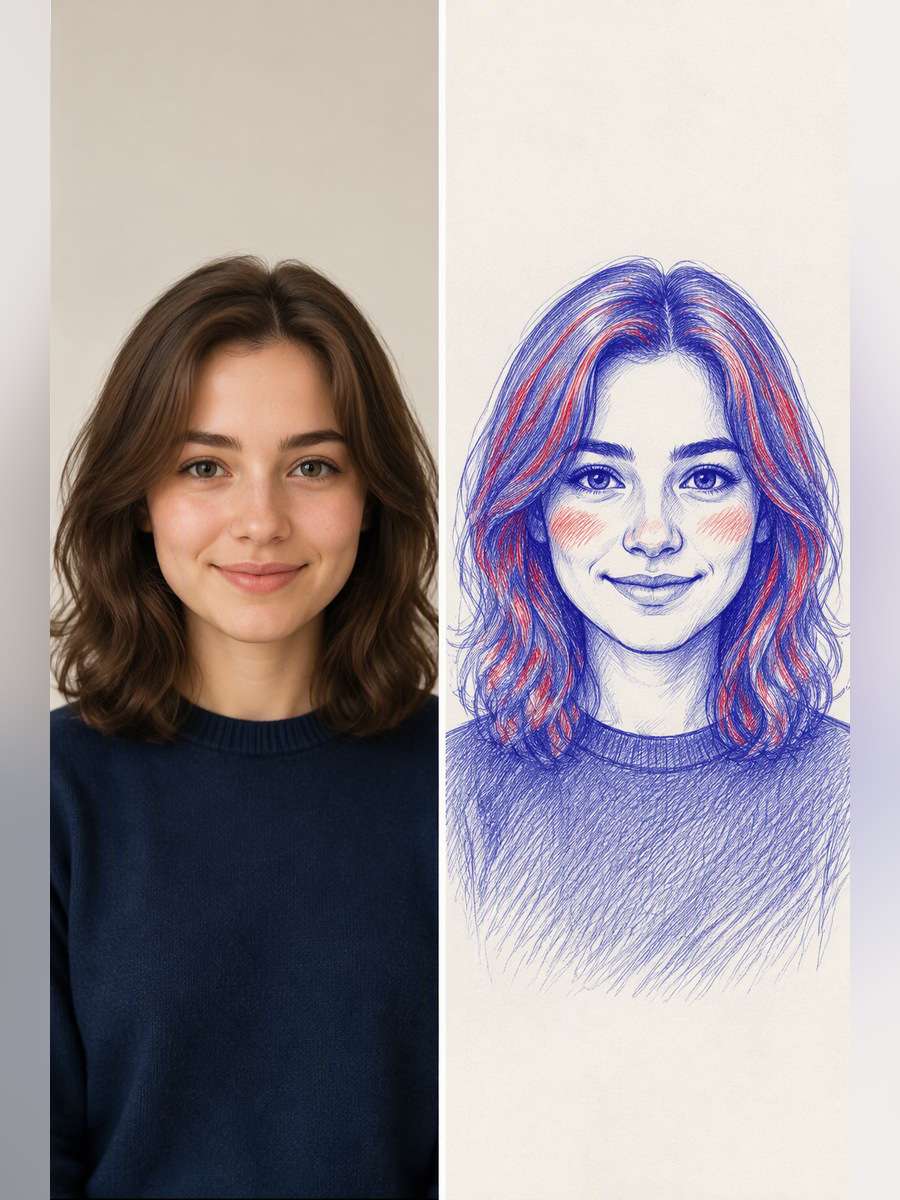
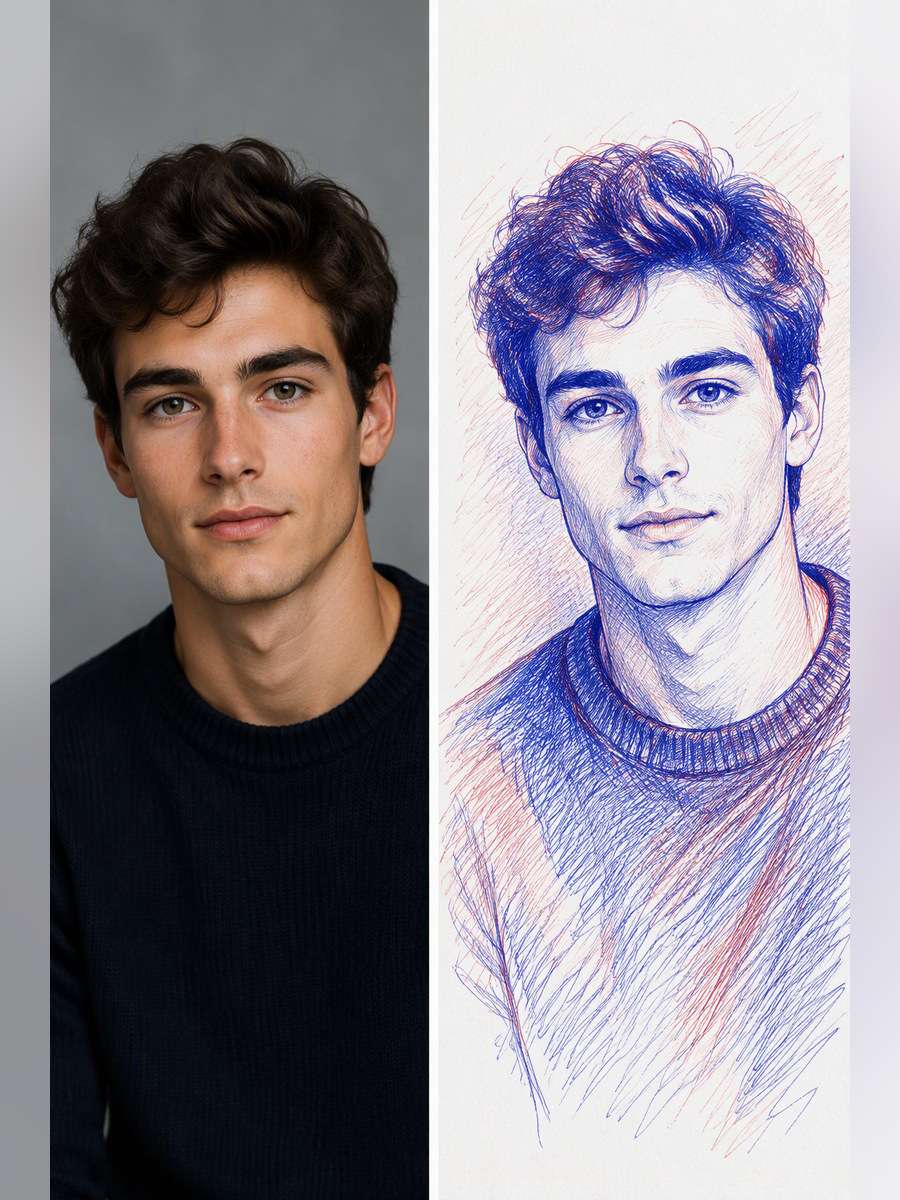
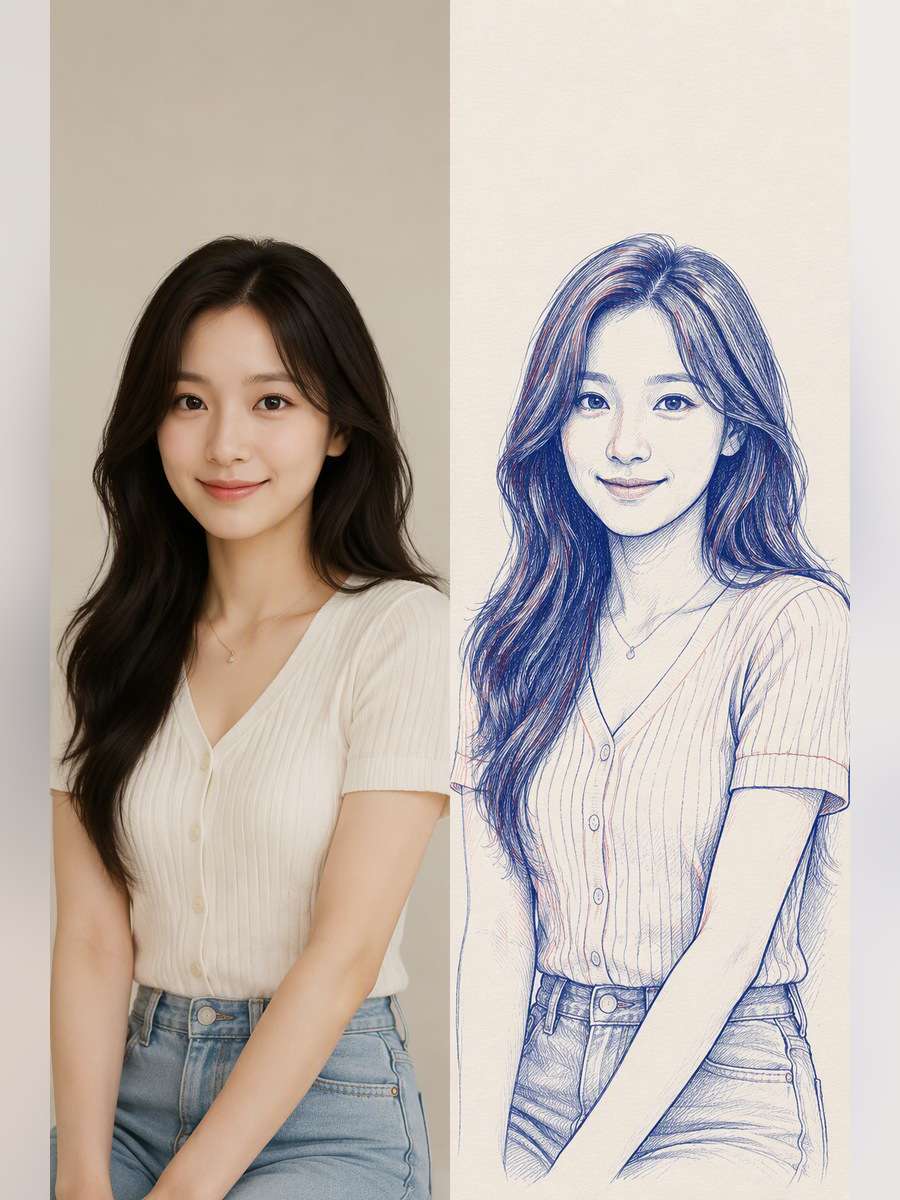
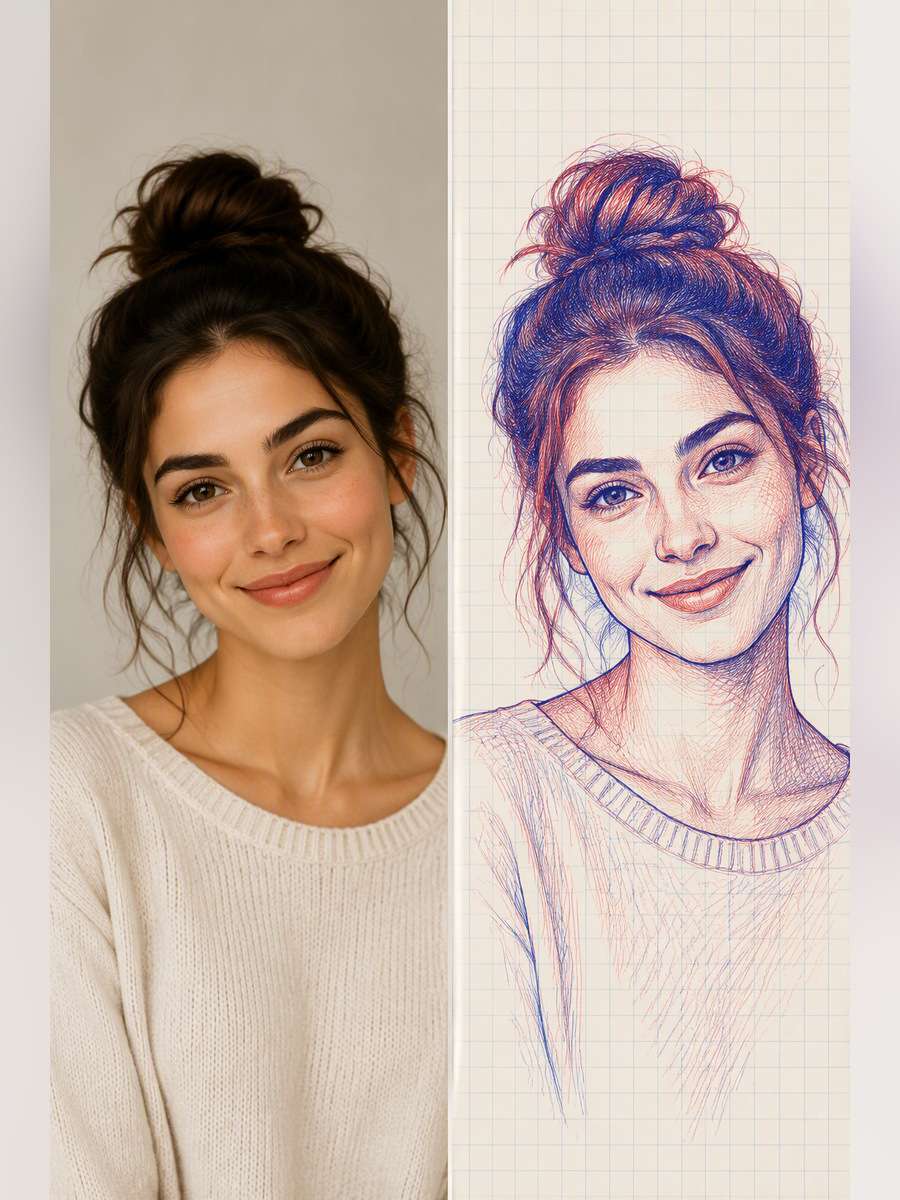
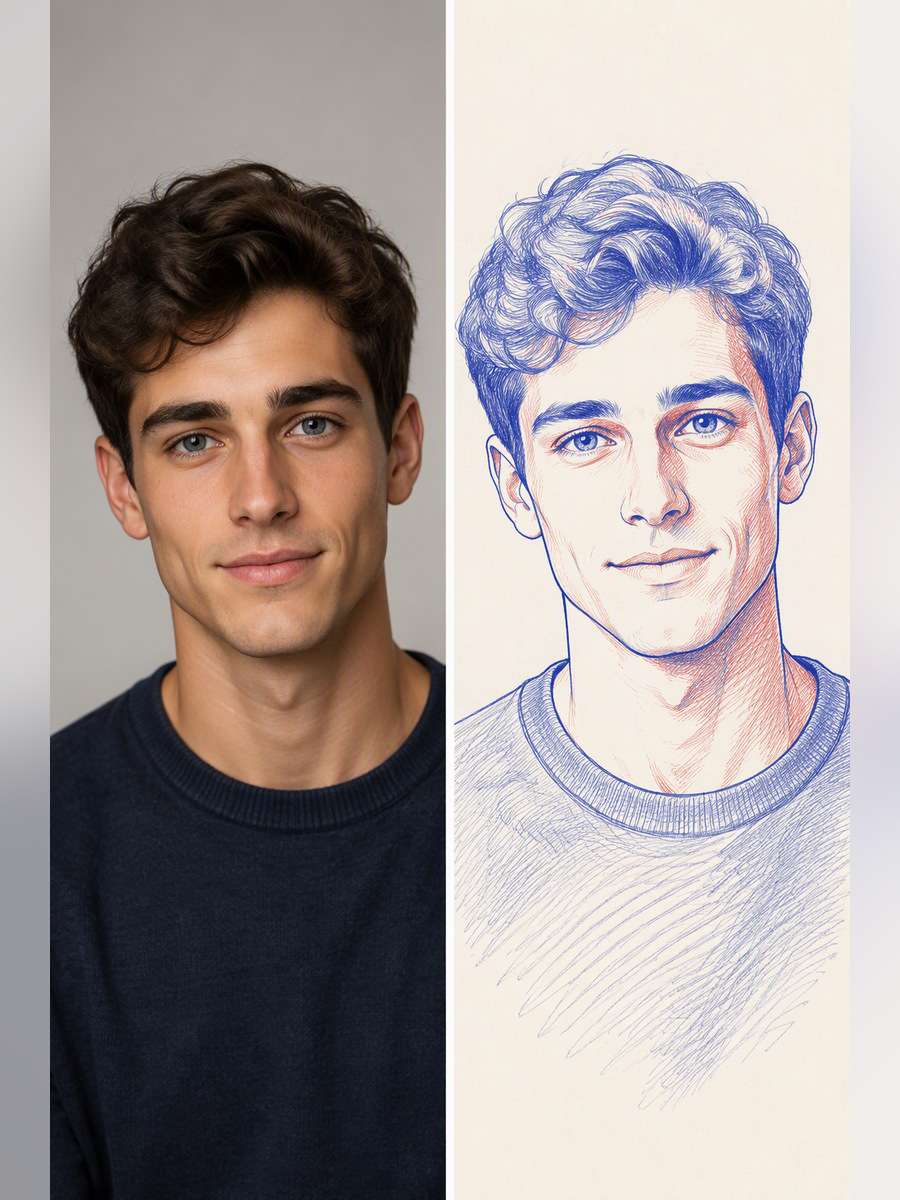
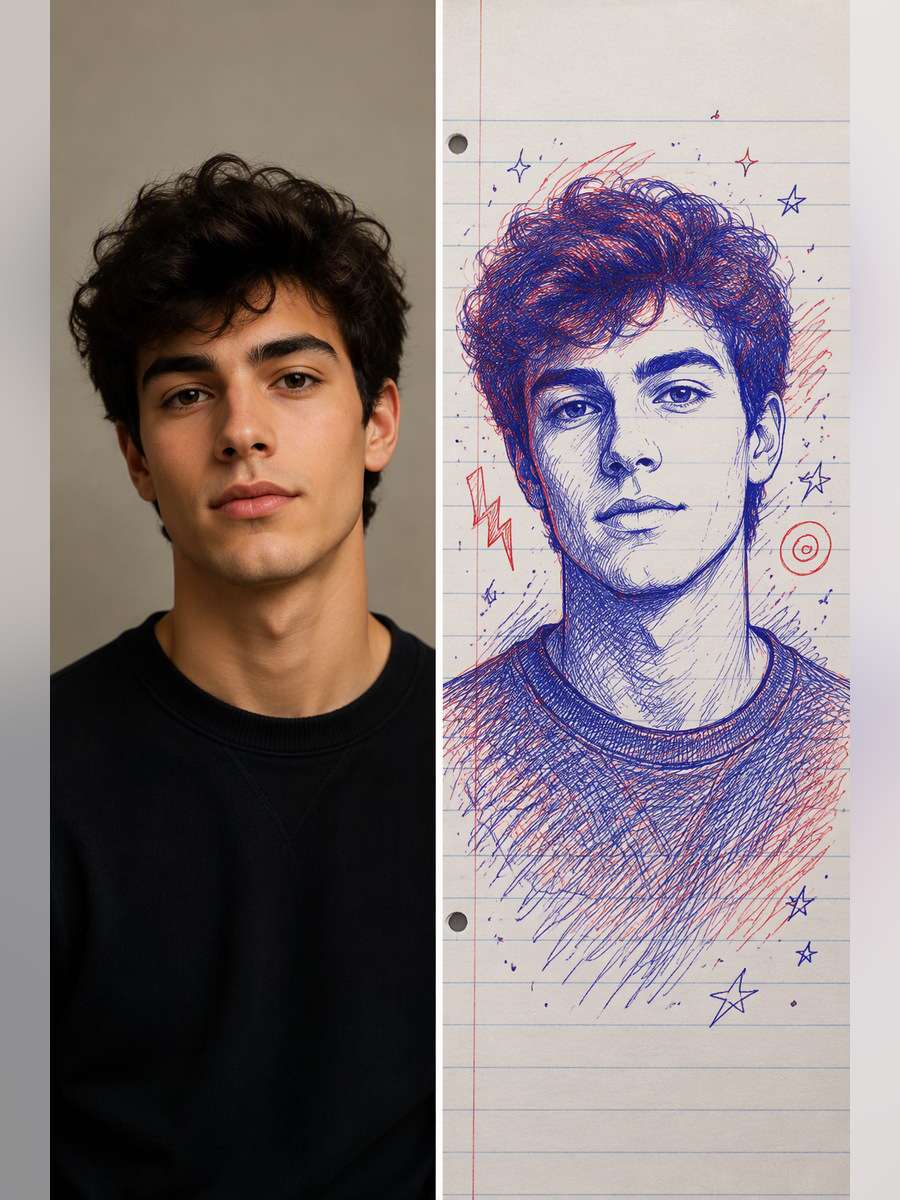
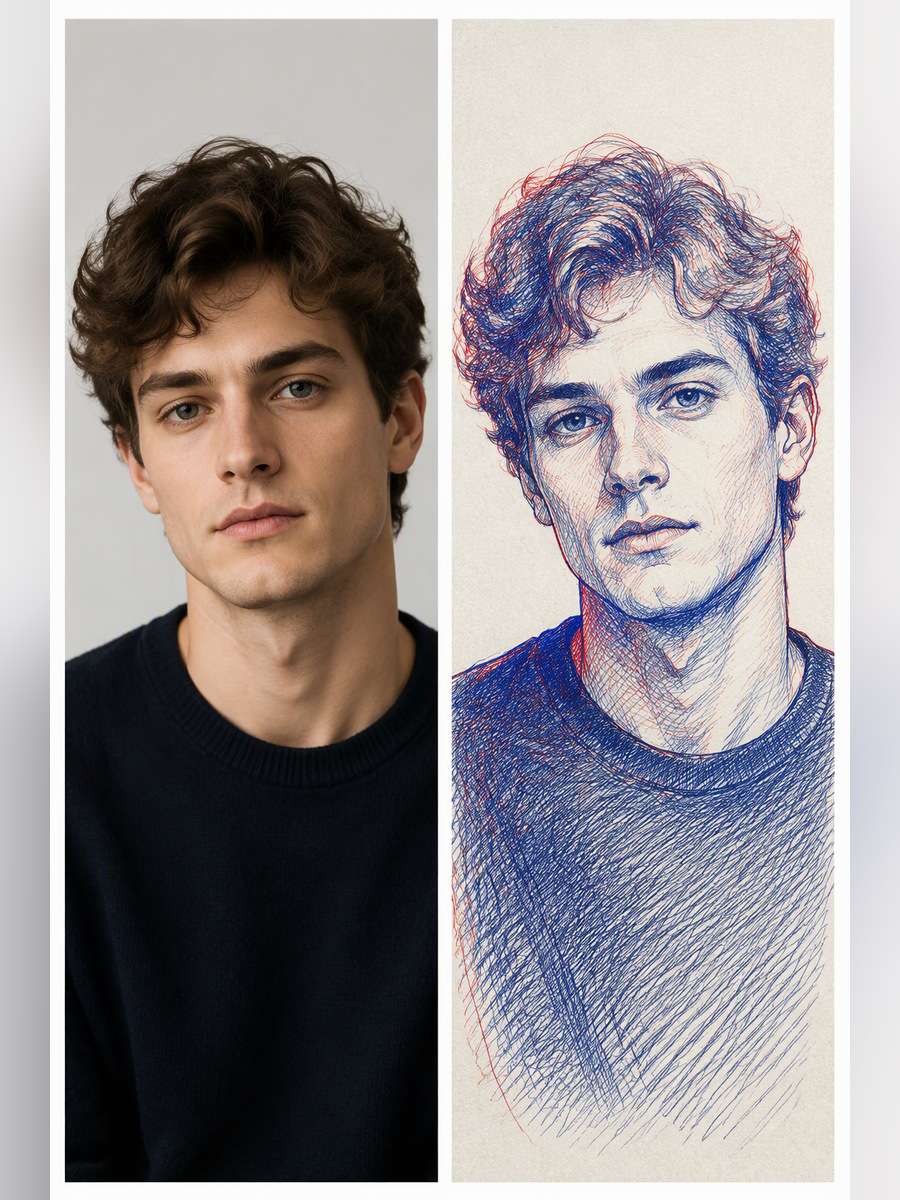
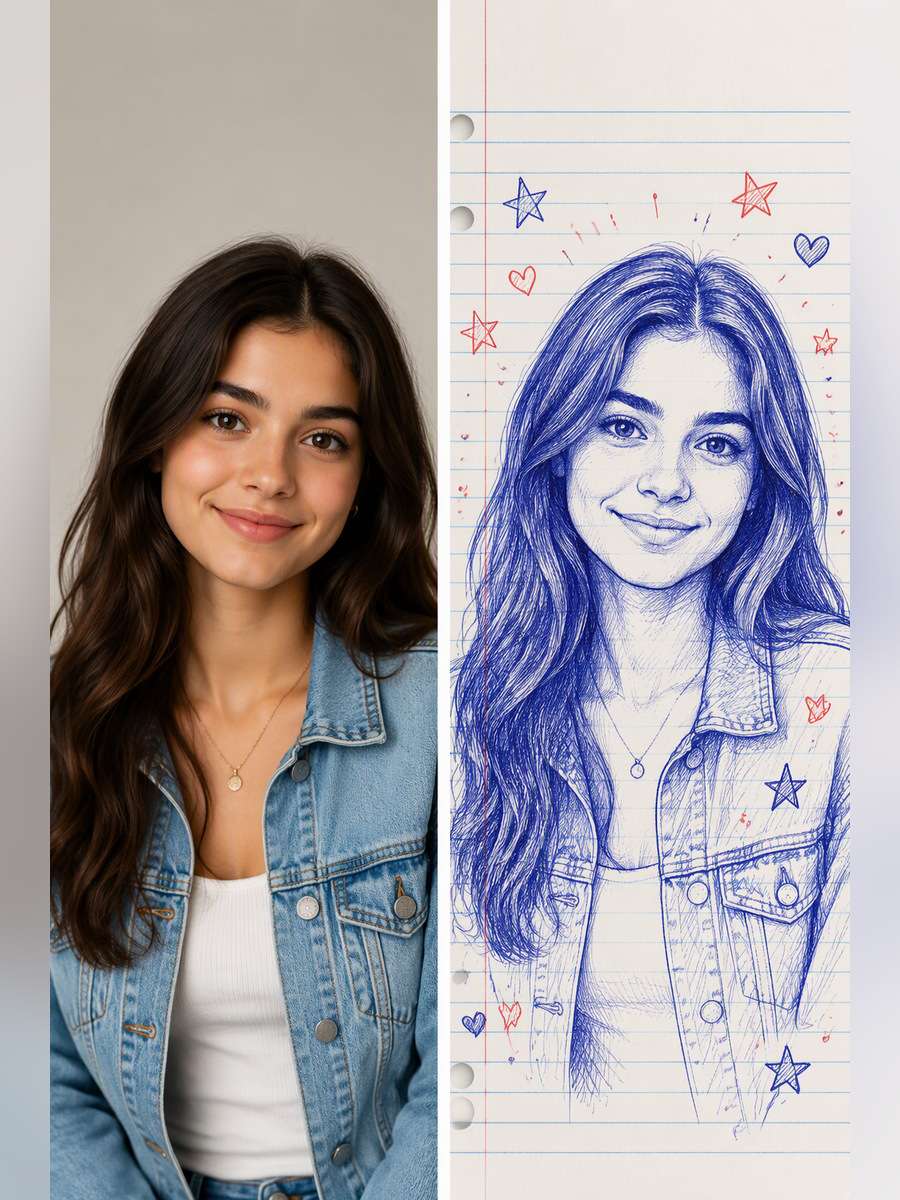
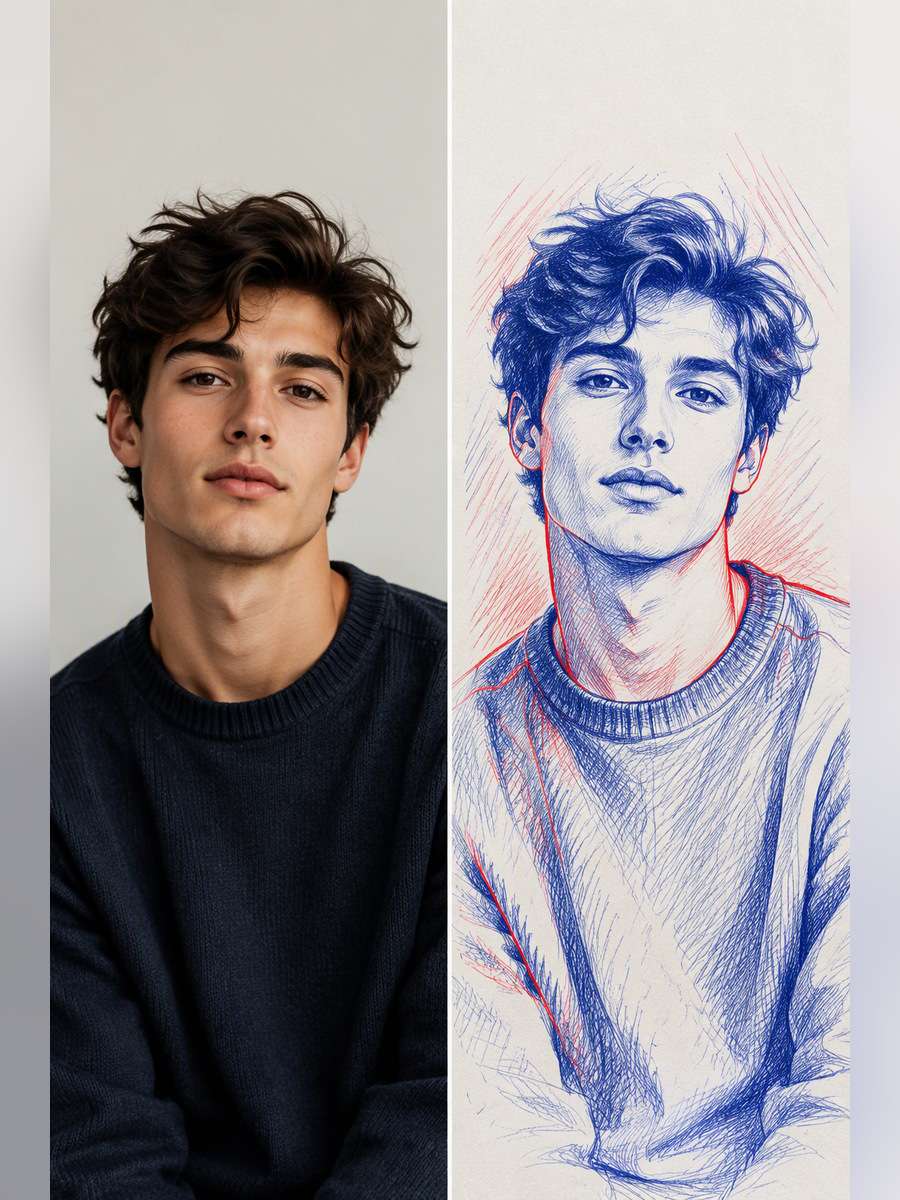
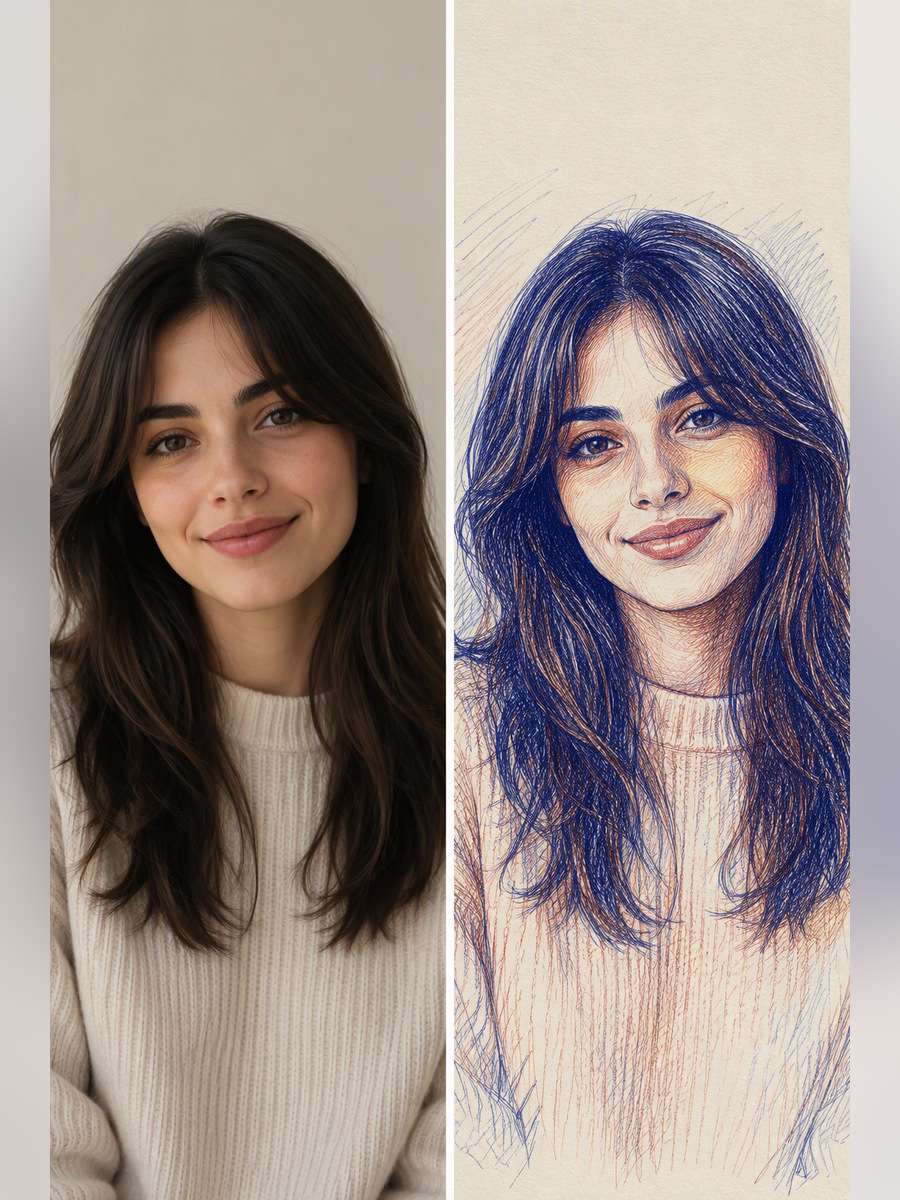
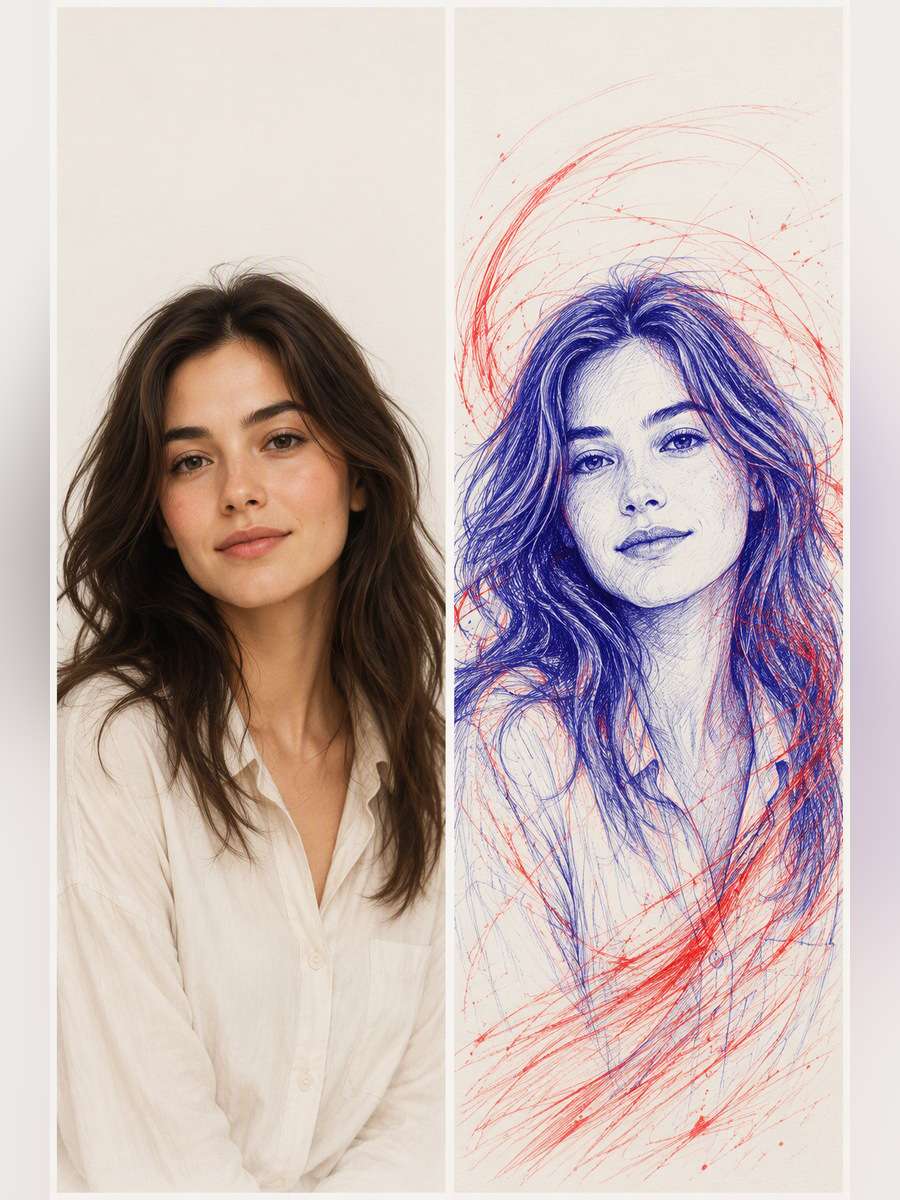
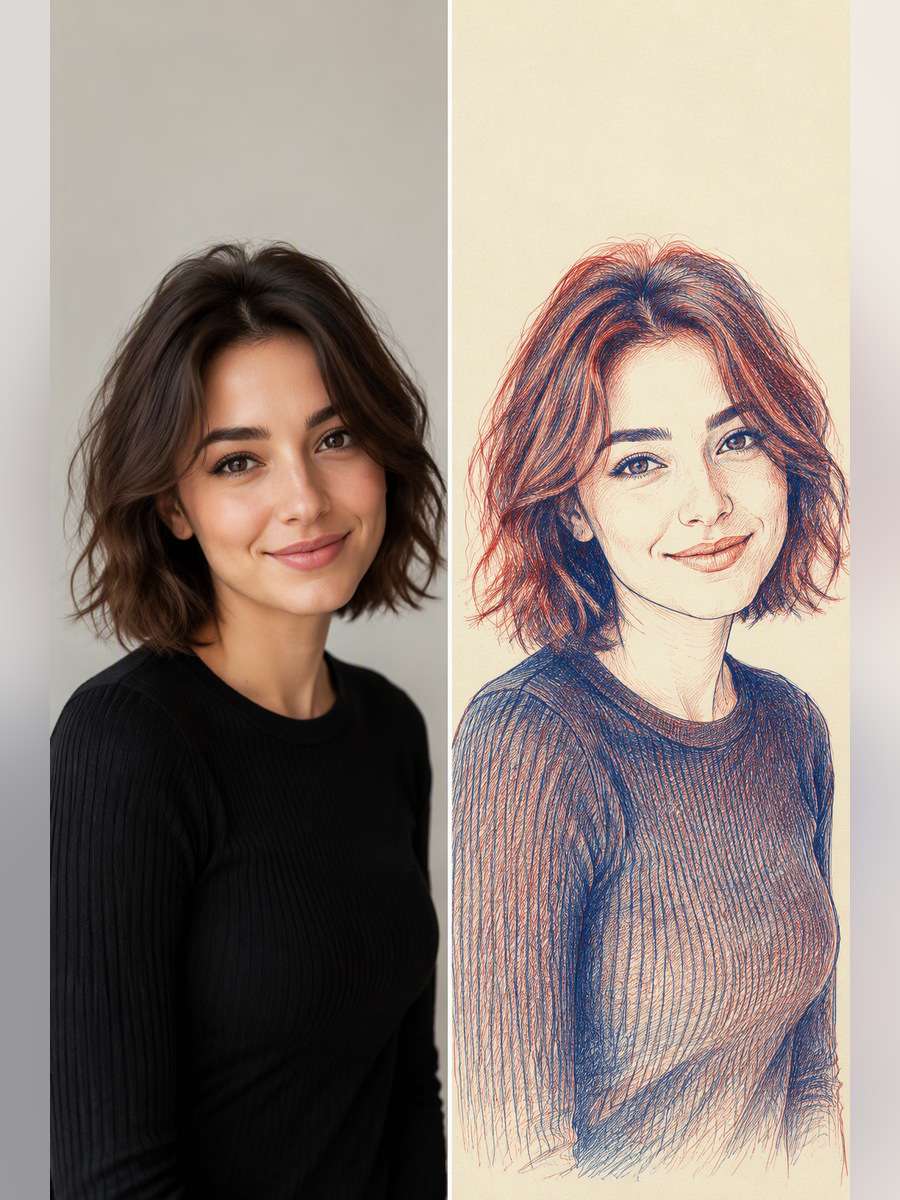
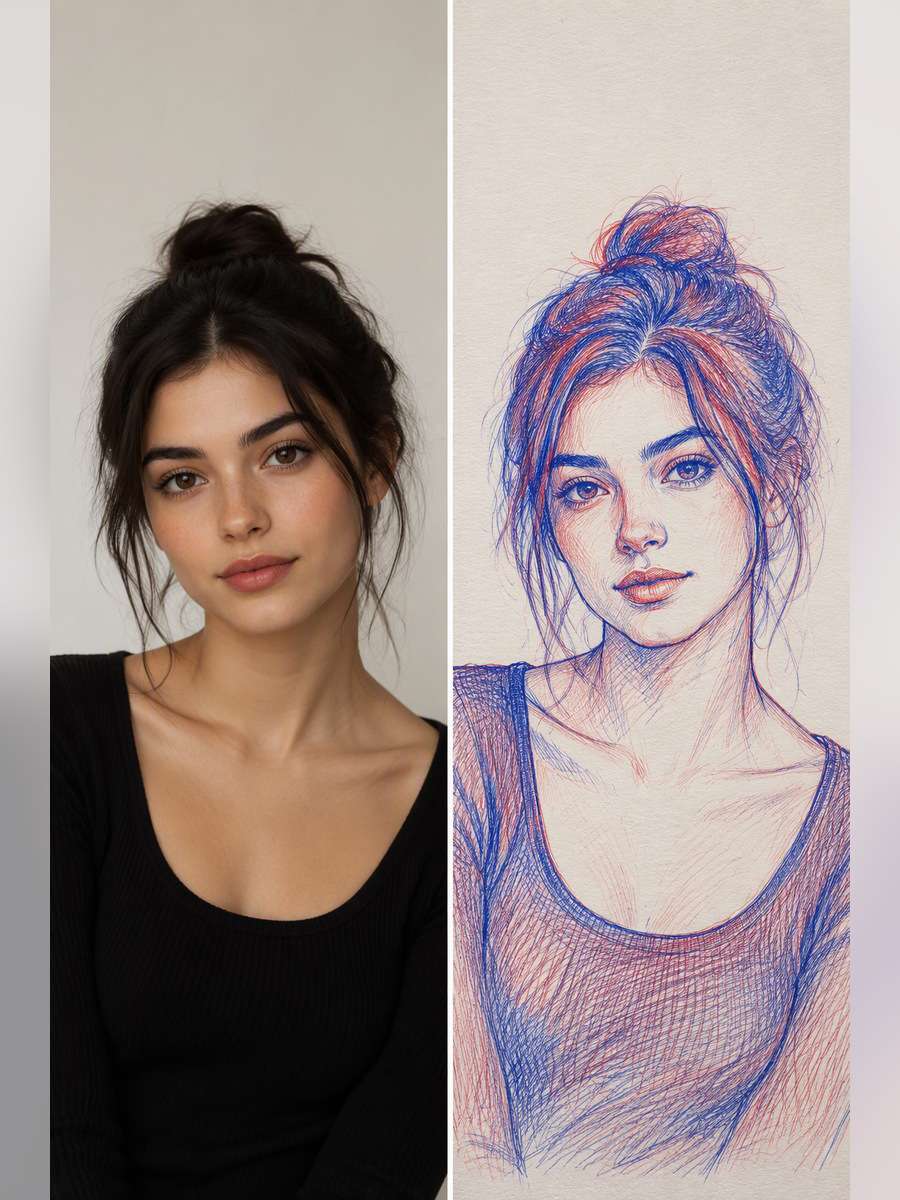
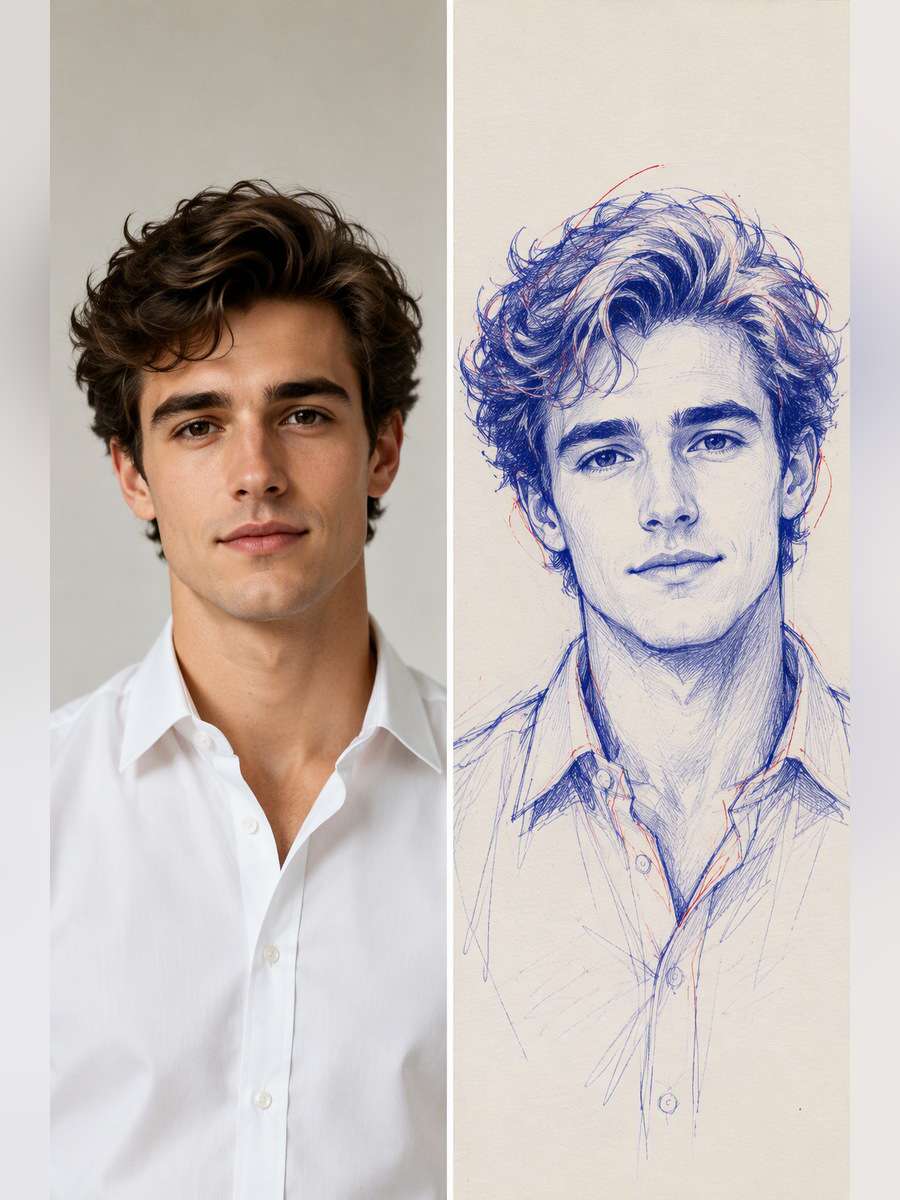
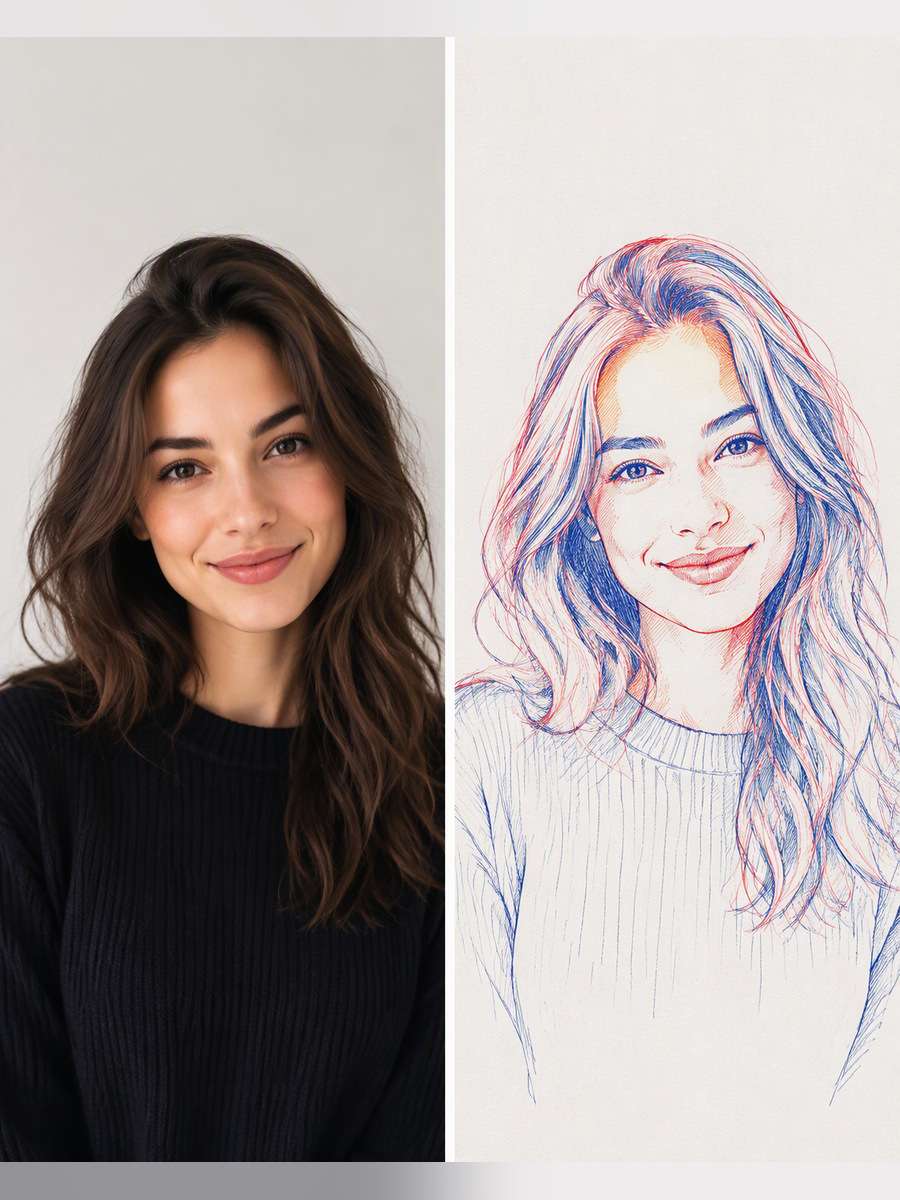
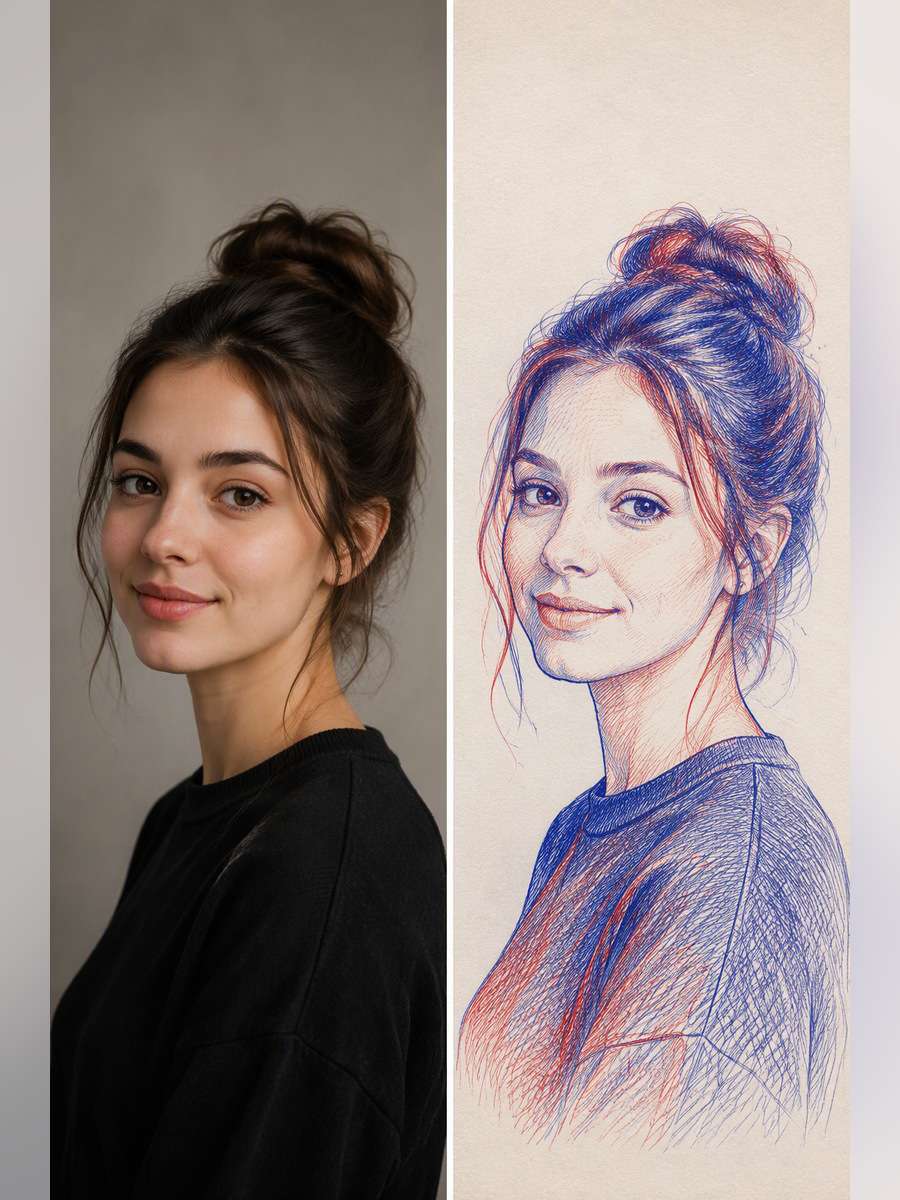
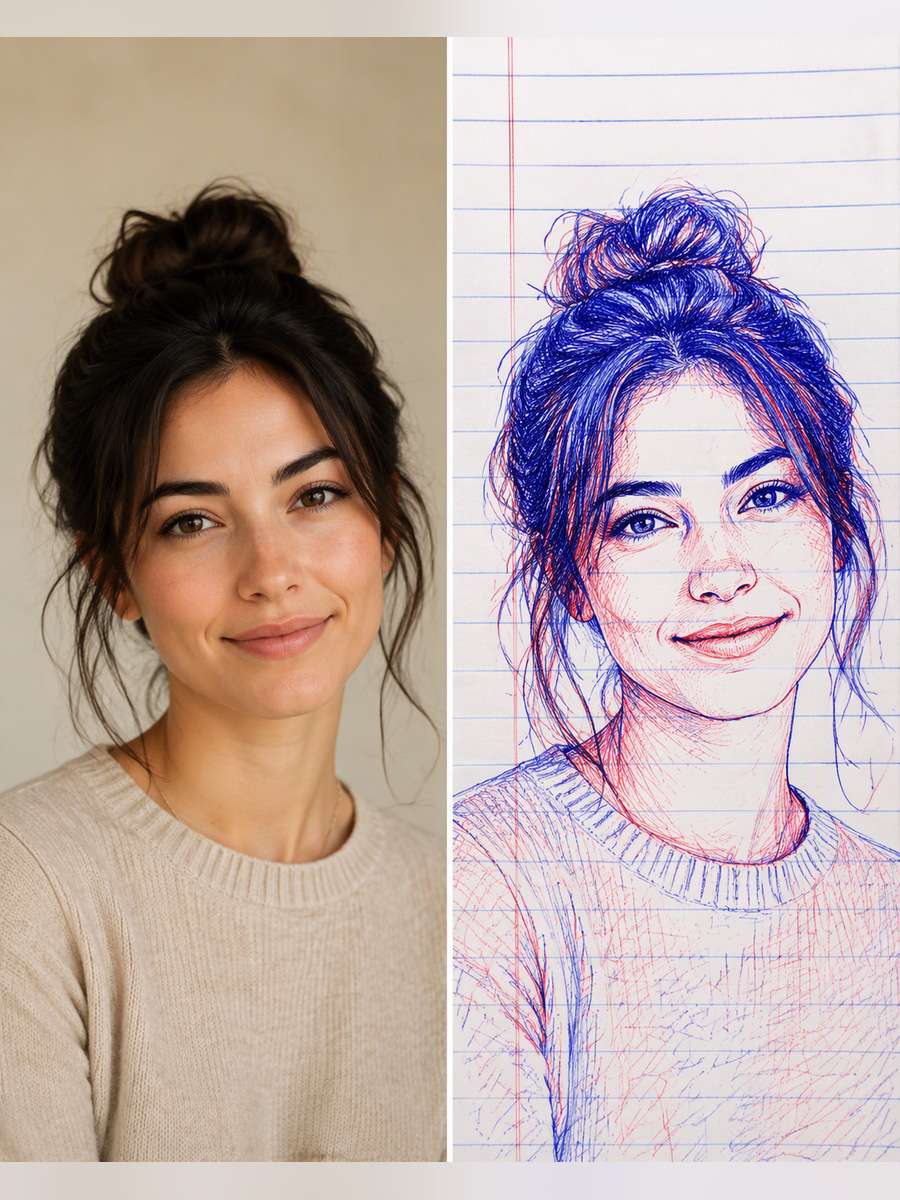
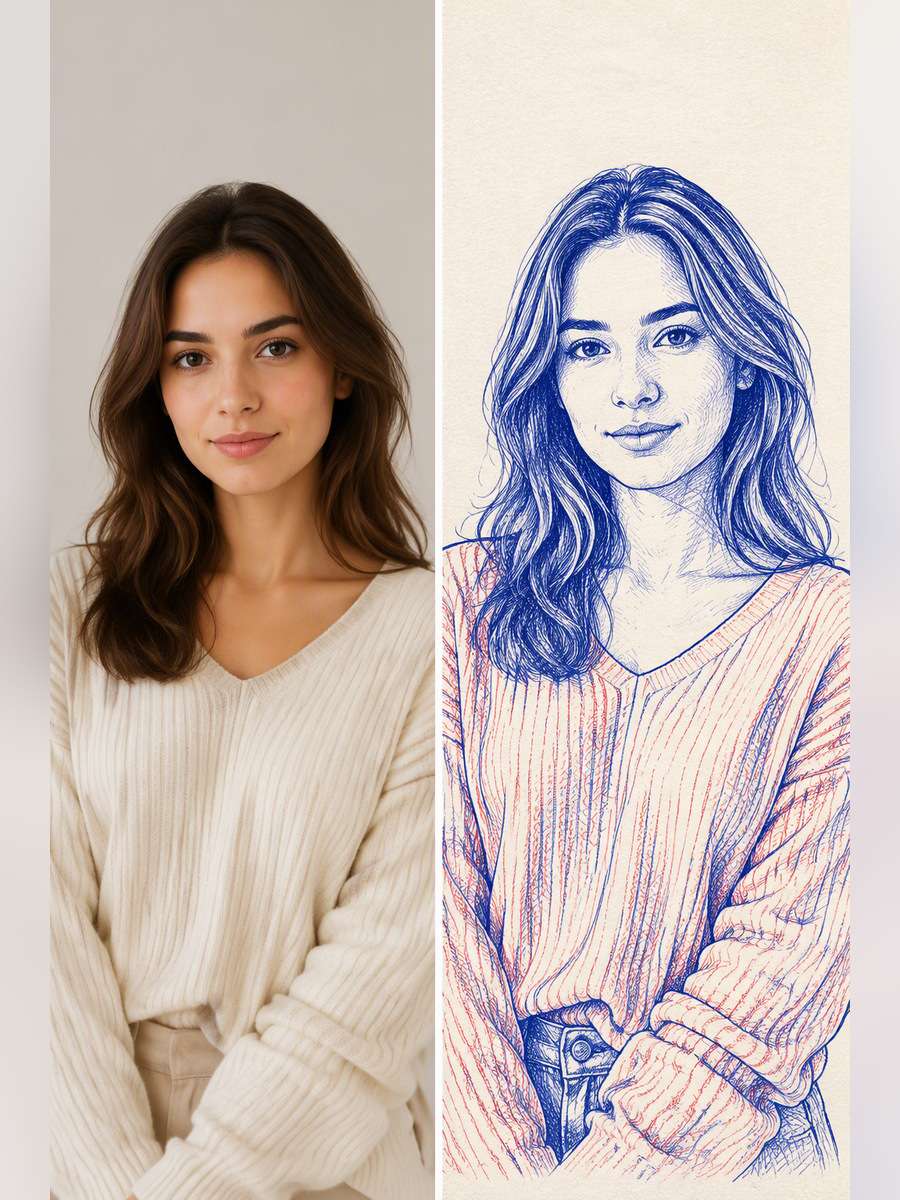
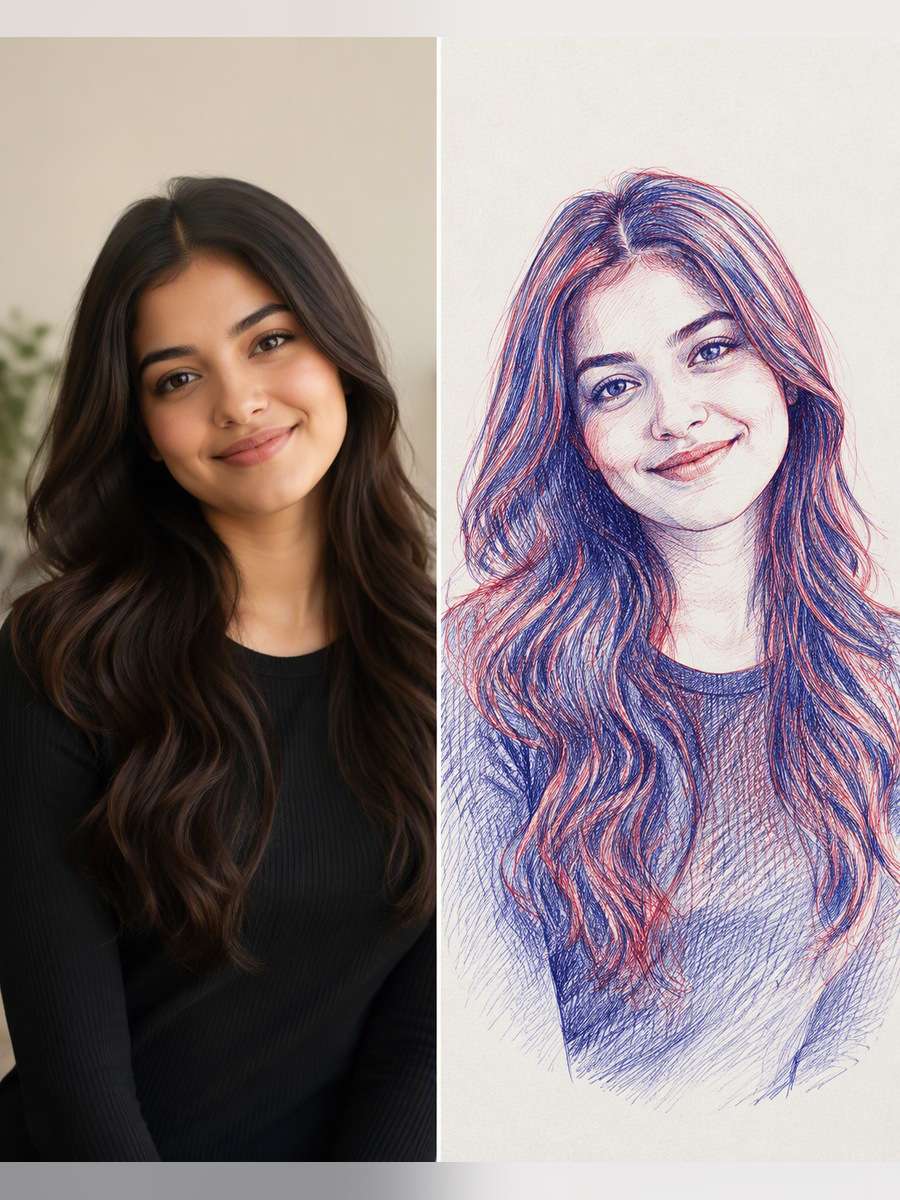
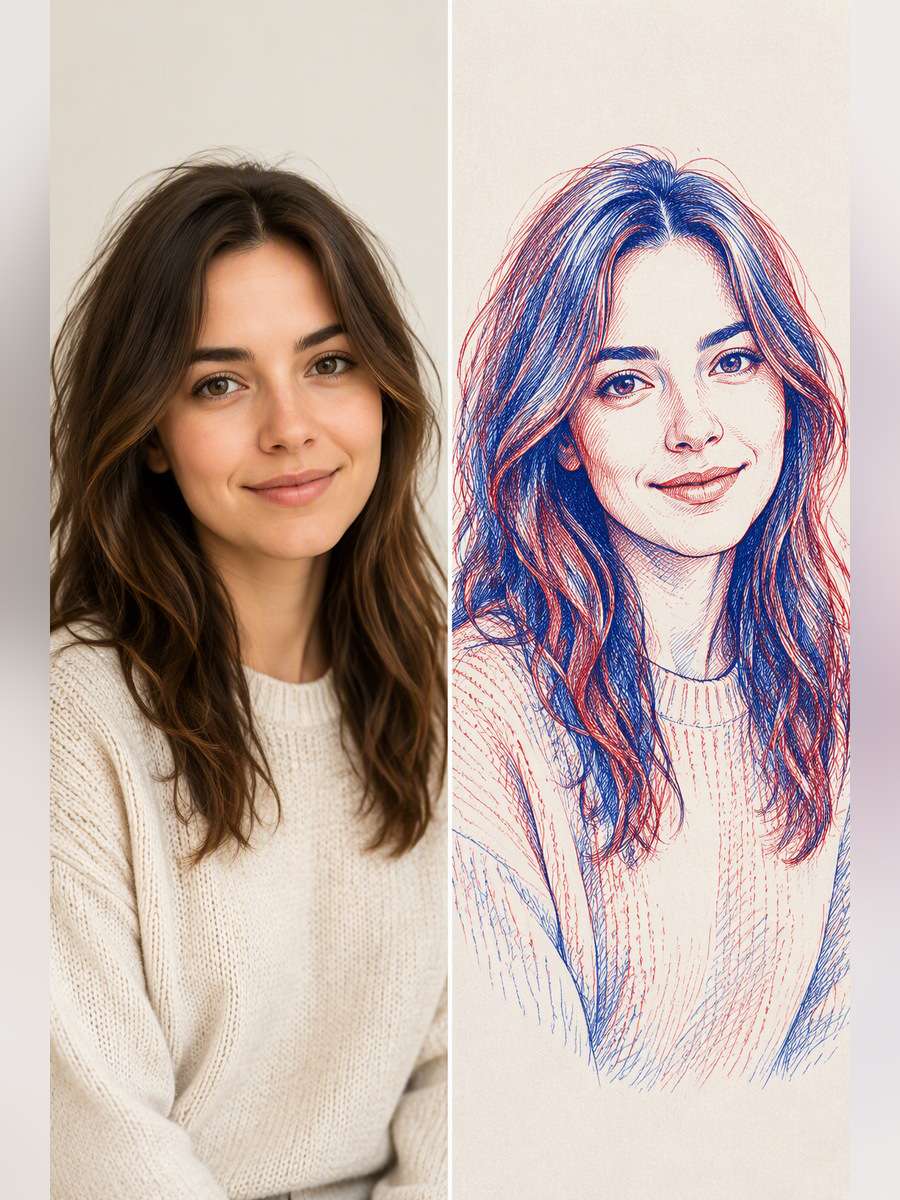
For this effect, a photo with a clear face and simple silhouette usually works best.
Use a portrait where the face, hairline and shoulders are easy to read so the pen lines can stay recognizable.
Copy a prompt for clean two-color line art, scribbly notebook doodles, crosshatched studies or playful sketchbook pages.
Check whether the blue structure and red accents are distinct, balanced and still flattering to the subject.
Turn the uploaded portrait into a hand-drawn portrait on notebook paper using blue pen as the structural line and red pen as accent detail. Keep the subject recognizable and the sketch believable as real pen work.
Create a red-and-blue pen portrait where the face and hair are mainly outlined in blue while selected accents use red. Preserve the original expression and a handmade sketch aesthetic.
Restyle the photo into a sketchbook study rendered with energetic blue and red pen strokes on white paper. Keep the facial likeness strong and the lines expressive rather than messy.
Generate a two-color pen drawing that includes the upper body and clothing folds, with blue line structure and subtle red highlights. Maintain realistic anatomy and the same person's identity.
Create a red-and-blue pen portrait on light grid paper, balancing neat contours with loose hand-drawn texture. Keep the result charming and readable.
Turn the image into a cleaner headshot-style drawing with precise blue contour lines and tasteful red shadow accents. Preserve the subject's likeness and avoid comic exaggeration.
Generate a notebook-margin portrait drawn with red and blue pens, suggesting a casual but talented doodle. Keep the person recognizable and the page texture subtle.
Create a detailed portrait using blue crosshatching for volume and red lines for emphasis around selected features. Keep the drawing tactile and handcrafted.
Transform the photo into a playful school-notebook drawing with two-color line work and a youthful doodle quality. Preserve the face and hair shape clearly.
Restyle the subject into a mainly blue pen sketch with red highlight lines around the jaw, clothing or background. Maintain a polished artistic feel.
Create a two-color pen portrait that looks like it belongs on a sketchbook spread, with paper texture and layered strokes. Keep the likeness intact.
Generate a drawing where blue pen defines the portrait and red adds motion-like marks and energy. Keep the image expressive but still elegant.
Turn the portrait into a red-and-blue pen drawing on cream paper for a warmer analog feel. Preserve the original face while enhancing the handmade effect.
Create a two-color observational portrait as if drawn in an art class with red and blue pens. Keep the proportions realistic and the linework intentional.
Generate a portrait focusing on hair texture and shirt collar rendered through blue linework and red accent marks. Keep the same person recognizable.
Create a more minimal red-and-blue portrait using sparse but controlled lines. Keep the subject legible and the style refined.
Restyle the image into a two-color pen portrait with a subtle doodle border around the paper, without adding readable text. Keep the face central and flattering.
Generate a bolder red-and-blue pen illustration with strong composition and visible line rhythm. Preserve anatomy and realistic features.
Turn the photo into a journal-card style two-color portrait with blue structure, red embellishment and a compact composition. Keep the likeness clean.
Create a drawing with slightly angular blue linework and selective red emphasis for a more stylized art-school feel. Preserve identity and avoid distortion.
Generate a profile or three-quarter portrait built from blue and red pen lines on paper. Keep the final image subtle, artistic and believable.
Transform the source into a small-notebook red-and-blue doodle portrait with lively but controlled pen marks. Maintain the original expression.
Create a two-color portrait that includes visible clothing folds, rendered with blue structure lines and red texture accents. Keep the proportions natural.
Generate a thoughtful red-and-blue pen portrait suitable for a handmade gift. Keep the paper clean, the linework warm and the face easy to recognize.
Create a polished illustration using balanced red and blue inks, preserving the source identity while giving the portrait a stylish handcrafted finish.
A two color pen drawing AI prompt creates more personality than a single sketch filter because the colors can separate structure from accent.
This style combines sketchbook charm with graphic interest, making it suitable for a range of playful uses.

Two-color linework adds personality while staying lighter than a full painting effect.

Notebook-based portrait styles feel especially relevant for student, journaling or study-themed content.

A handmade-looking red-and-blue portrait can feel more personal than a generic filter.

The unusual color split helps these images stand out in feeds and story-style content.


This style uses two inks: blue for structure and red for accent or secondary linework, creating a more graphic and layered effect.
Yes. Ask the model to preserve your facial features, expression and overall proportions while only changing the rendering style.
Notebook paper, grid paper and cream sketch paper are all effective because they reinforce the analog drawing feel.
Usually subtle accents work best. Too much red can overpower the likeness and make the portrait harder to read.
You can, but head-and-shoulder or half-body portraits usually preserve identity more reliably in line-based styles.


