Home>AI Prompts>25 Character Reference Sheet Prompts for ChatGPT
25 Character Reference Sheet Prompts for ChatGPT
An appealing character design is not a useful reference if the outfit changes every time it turns. These ChatGPT Character Reference Sheet Prompts help build structured front, side and back views, facial expression grids and accessory callouts from an uploaded character drawing or permitted portrait. The priority is production continuity: one character, one set of visual rules and clear panels that a collaborator can actually study.
Explore clean multi-view character sheets, expression grids and production model boards with Media.io - powered by ChatGPT.
How to Create a Character Reference Sheet from an Image
A stable identity anchor and explicit panel instructions matter more than decorative backgrounds.
1
Upload One Character Reference
Provide an original character drawing or permitted portrait with visible hairstyle, clothes and distinguishing features.
2
Define the Sheet Views
Specify front, strict side, true back, expression studies or gear details. Ask for equal scale and identical costume features.
3
Inspect Continuity and Angles
Check left/right accessory placement, hair length, face shape and shoe design. Regenerate a panel if the side view is merely a mirrored front.
25 ChatGPT Character Reference Sheet Prompts Ideas to Copy and Try
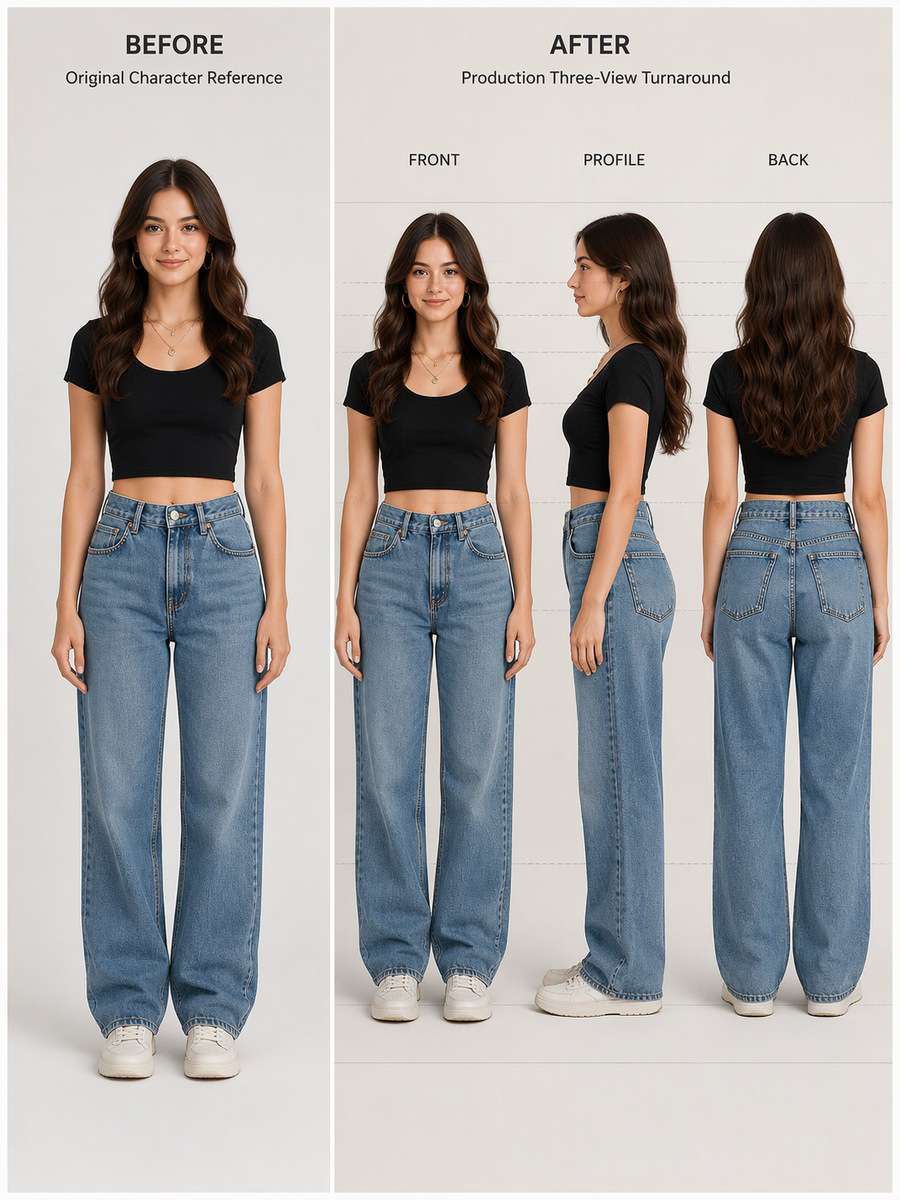
Production Three-View Turnaround
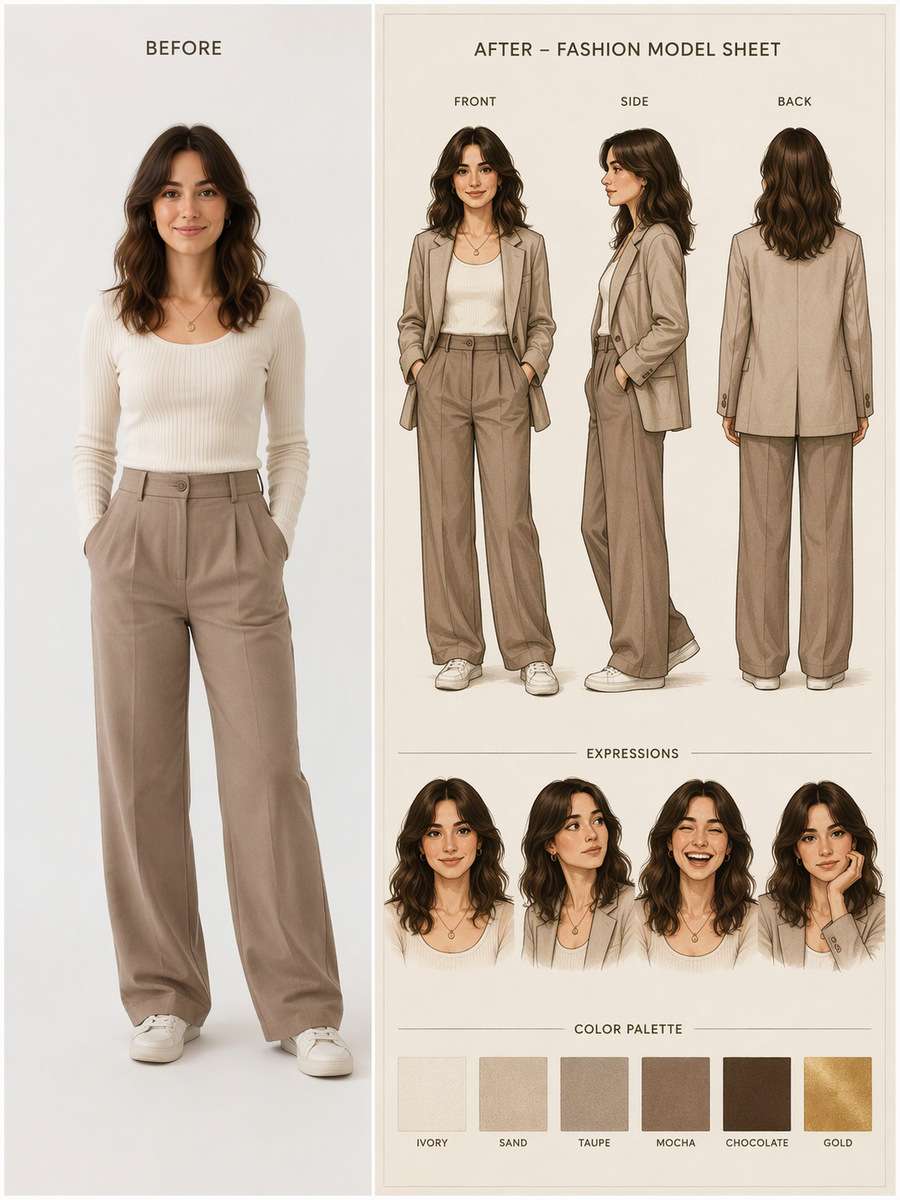
Use the uploaded original character drawing or portrait as the identity reference. From the uploaded original character image, draw one clean production sheet with equal-height front, strict profile and true back views, all in a neutral standing pose. Keep outfit seams, hair part, accessories and anatomical left/right placements consistent across all views. Maintain one original character identity, stable facial landmarks, build, hairstyle, clothing colors and anatomically correct left/right accessory placement across every view. Use clearly separated clean panels and equal-scale views. Leave label boxes blank rather than introducing misspelled technical terms or copied franchise icons.
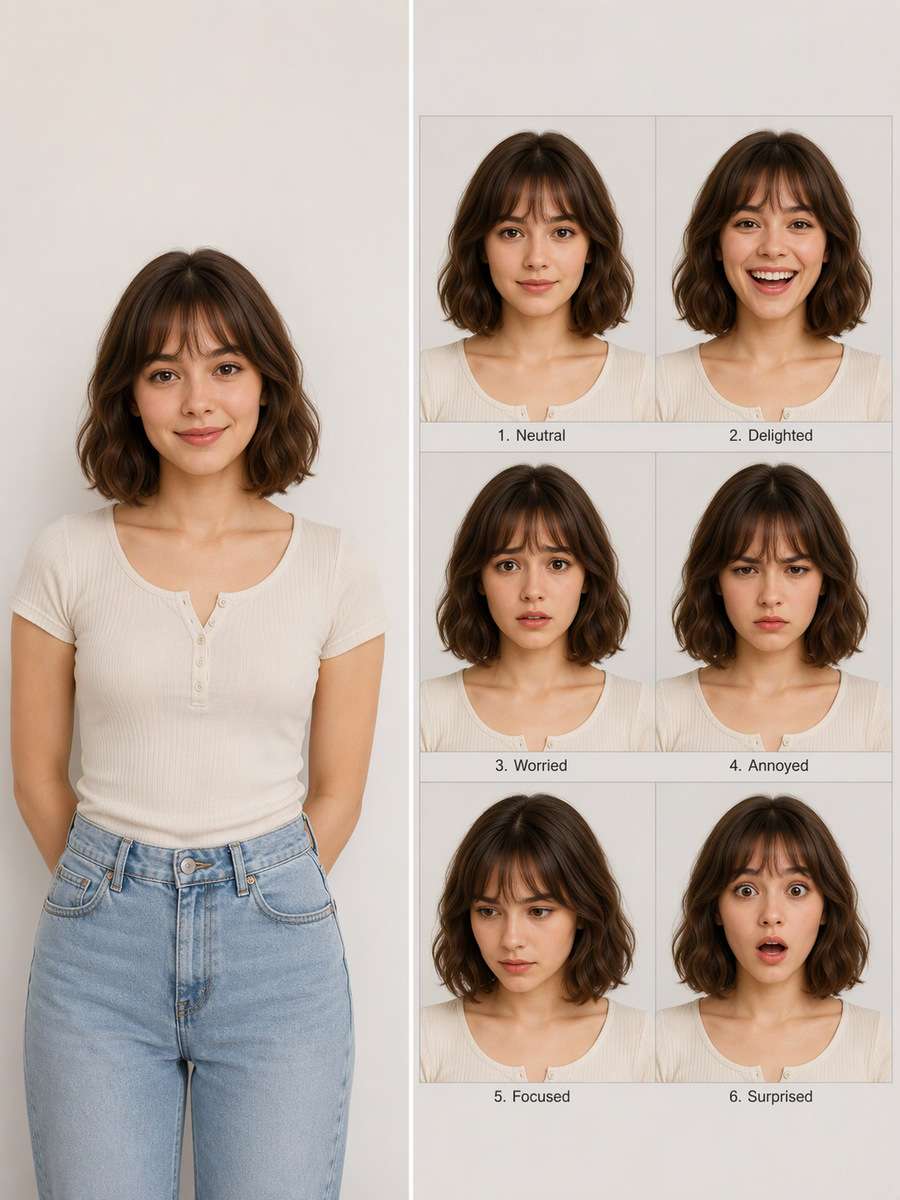
Six-Expression Face Grid
Edit the uploaded original character drawing or portrait rather than inventing a new person or pet. Create a six-cell head reference grid of the same character showing neutral, delighted, worried, annoyed, focused and surprised expressions. Preserve facial proportions, eye shape and hairstyle while changing only brows, mouth and facial muscles. Maintain one original character identity, stable facial landmarks, build, hairstyle, clothing colors and anatomically correct left/right accessory placement across every view. Use clearly separated clean panels and equal-scale views. Leave label boxes blank rather than introducing misspelled technical terms or copied franchise icons.
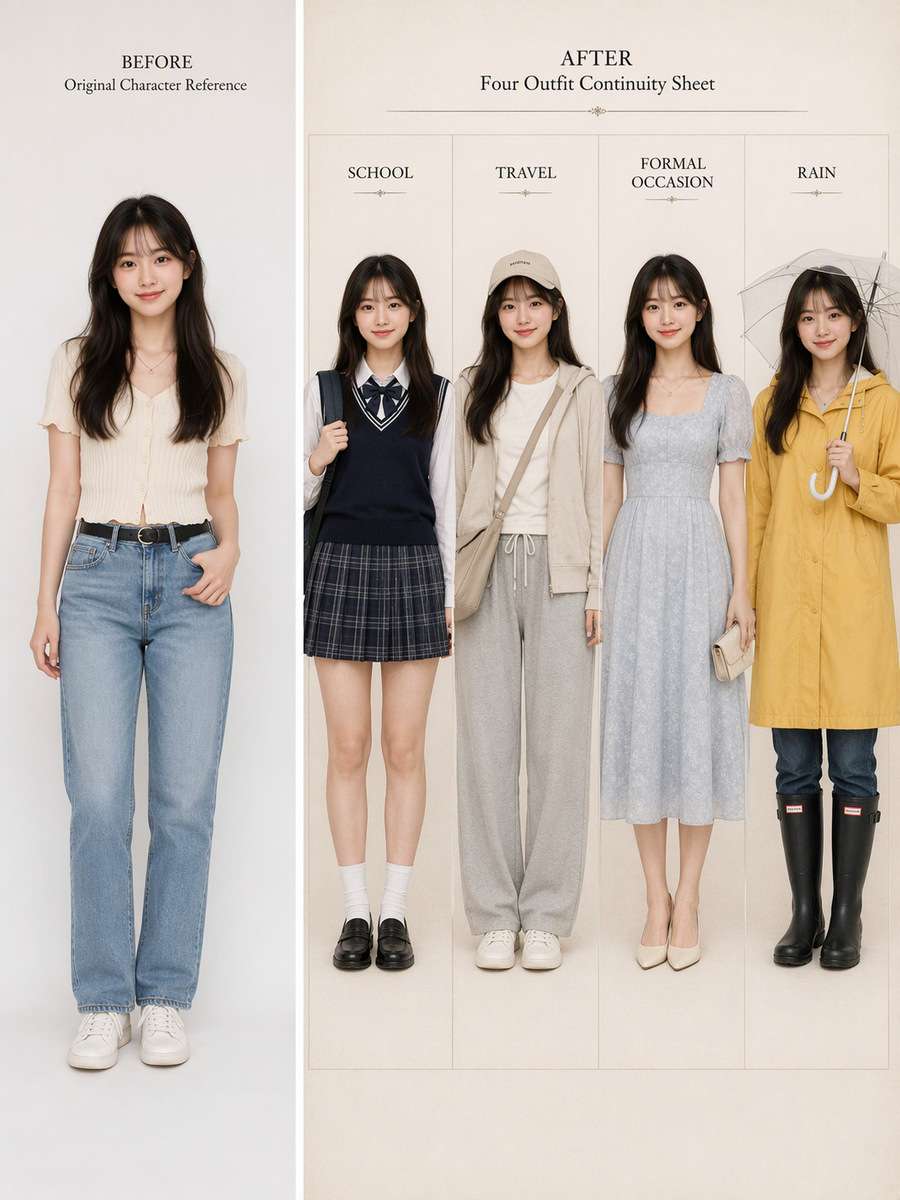
Four Outfit Continuity Sheet
Start with the uploaded original character drawing or portrait; build the finished image around this actual reference. Show one unchanged character in four practical outfit variants for school, travel, formal occasion and rain, each standing straight at comparable scale. Use the same body build and face; separate wardrobe changes clearly from identity. Maintain one original character identity, stable facial landmarks, build, hairstyle, clothing colors and anatomically correct left/right accessory placement across every view. Use clearly separated clean panels and equal-scale views. Leave label boxes blank rather than introducing misspelled technical terms or copied franchise icons.
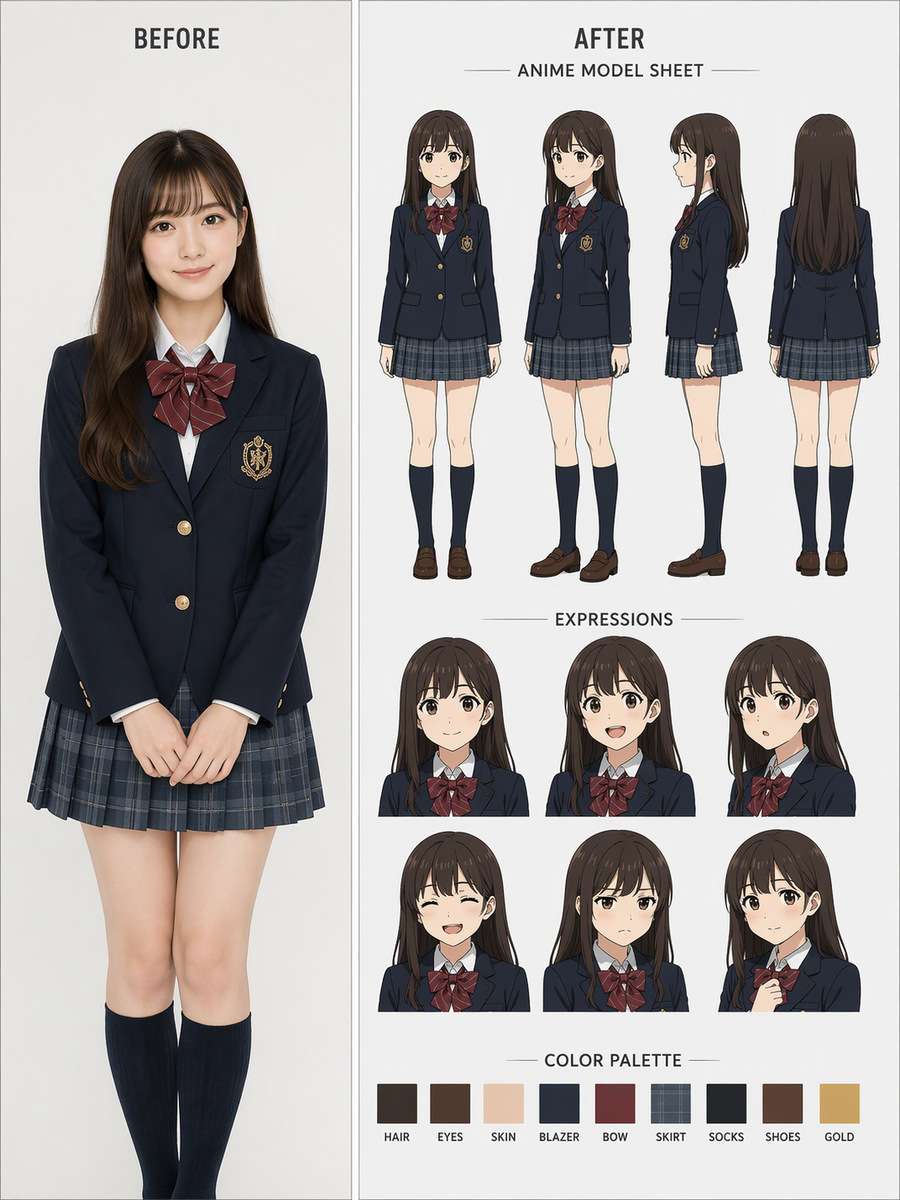
Anime Model Sheet
Keep the recognizable subject from the uploaded original character drawing or portrait. Transform the supplied character into clean anime production artwork, with front, three-quarter, side and back views and consistent flat color swatches. Keep the hair silhouette and distinctive costume details recognizable without inventing additional characters. Maintain one original character identity, stable facial landmarks, build, hairstyle, clothing colors and anatomically correct left/right accessory placement across every view. Use clearly separated clean panels and equal-scale views. Leave label boxes blank rather than introducing misspelled technical terms or copied franchise icons.
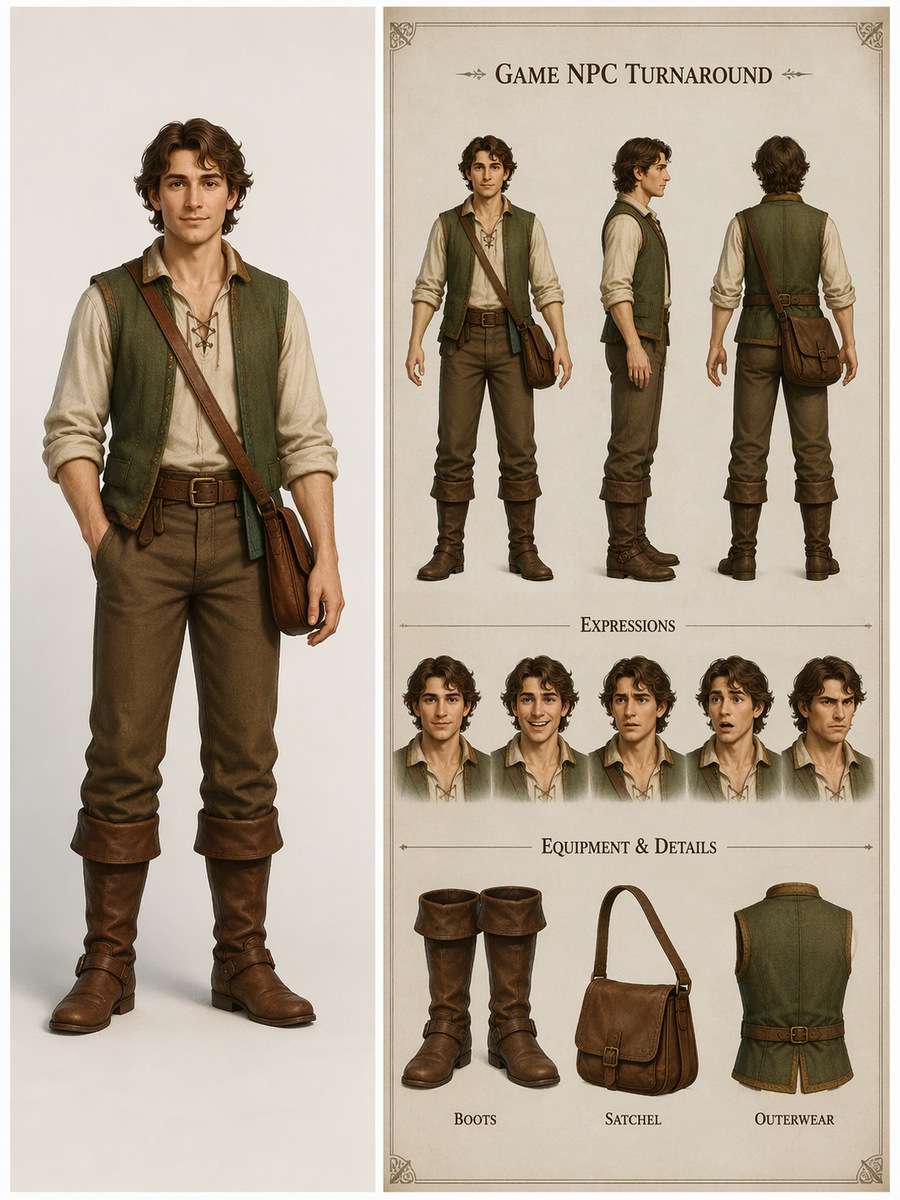
Game NPC Turnaround
Using the uploaded original character drawing or portrait, create the following specific photo edit. Make a stylized game NPC reference page with a neutral full-body three-view rotation and small equipment callouts for boots, satchel and outerwear. Show consistent rig-friendly proportions and believable attachment points. Maintain one original character identity, stable facial landmarks, build, hairstyle, clothing colors and anatomically correct left/right accessory placement across every view. Use clearly separated clean panels and equal-scale views. Leave label boxes blank rather than introducing misspelled technical terms or copied franchise icons.
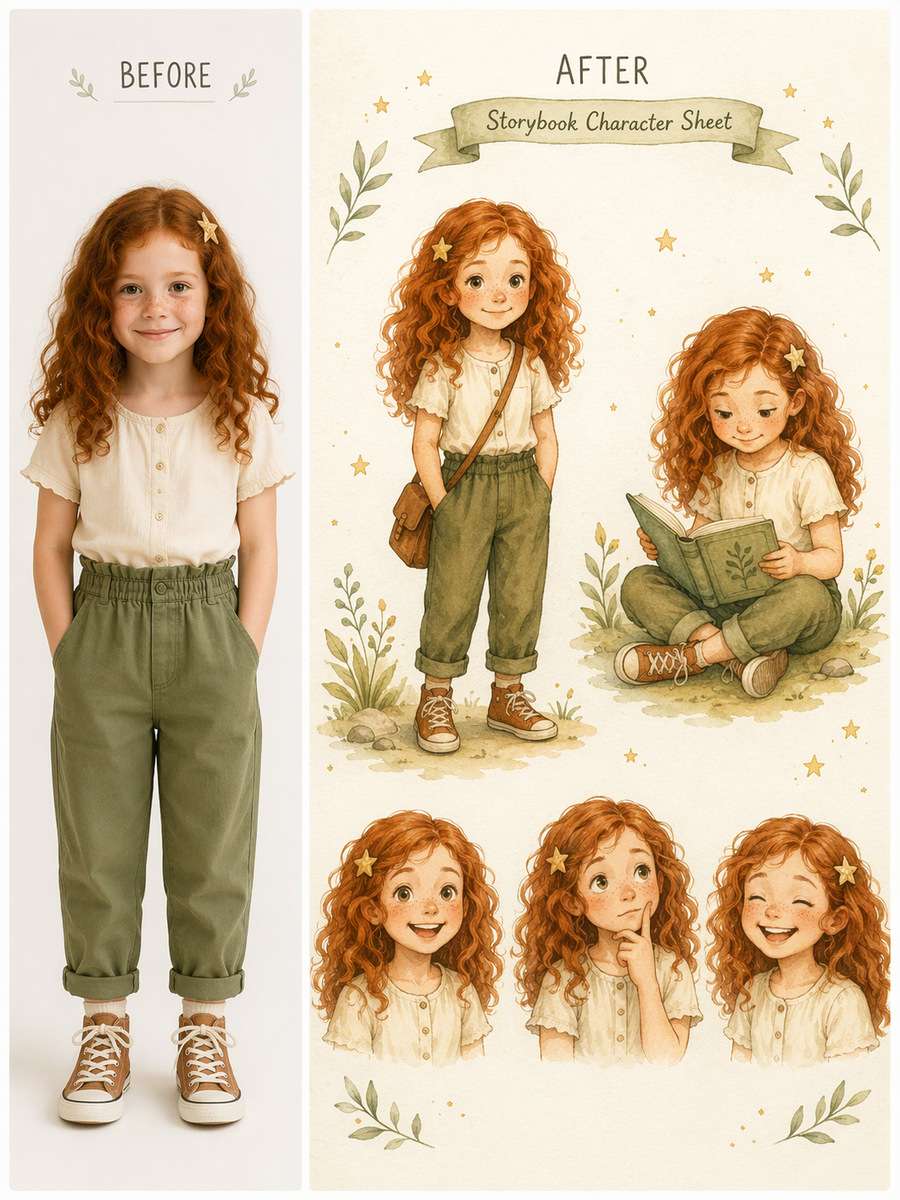
Storybook Character Sheet
Use the uploaded original character drawing or portrait as the identity reference. Restyle the person or original character as a soft watercolor children's-book protagonist, with a full-body hero view, a seated pose and three close-up expressions. Keep recognizable freckles, hairstyle and favorite accessory across all panels. Maintain one original character identity, stable facial landmarks, build, hairstyle, clothing colors and anatomically correct left/right accessory placement across every view. Use clearly separated clean panels and equal-scale views. Leave label boxes blank rather than introducing misspelled technical terms or copied franchise icons.
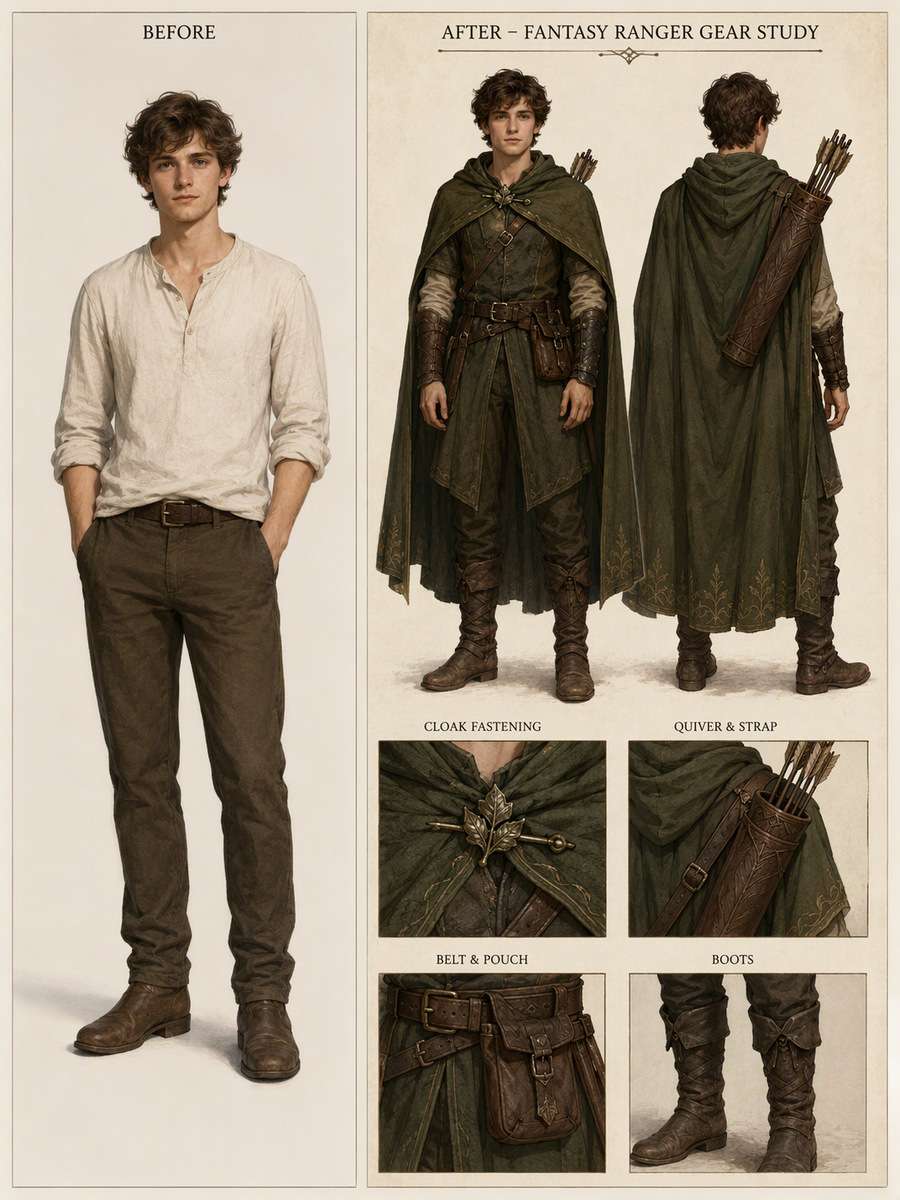
Fantasy Ranger Gear Study
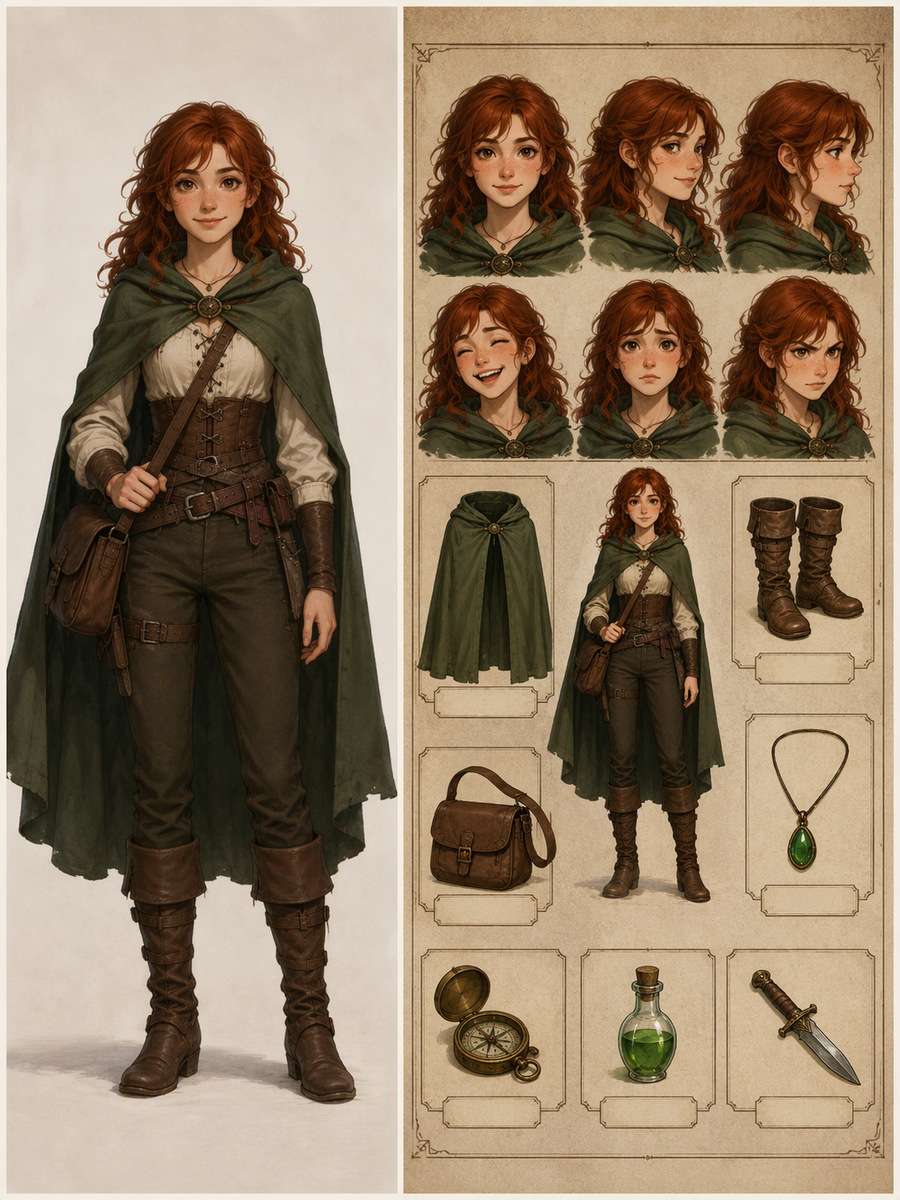
Edit the uploaded original character drawing or portrait rather than inventing a new person or pet. Generate a fantasy ranger character sheet with front/back poses and close-up callouts of cloak fastening, boots, quiver and belt. Retain the source character's face and build; no duplicated weapons or reversed gear straps. Maintain one original character identity, stable facial landmarks, build, hairstyle, clothing colors and anatomically correct left/right accessory placement across every view. Use clearly separated clean panels and equal-scale views. Leave label boxes blank rather than introducing misspelled technical terms or copied franchise icons.
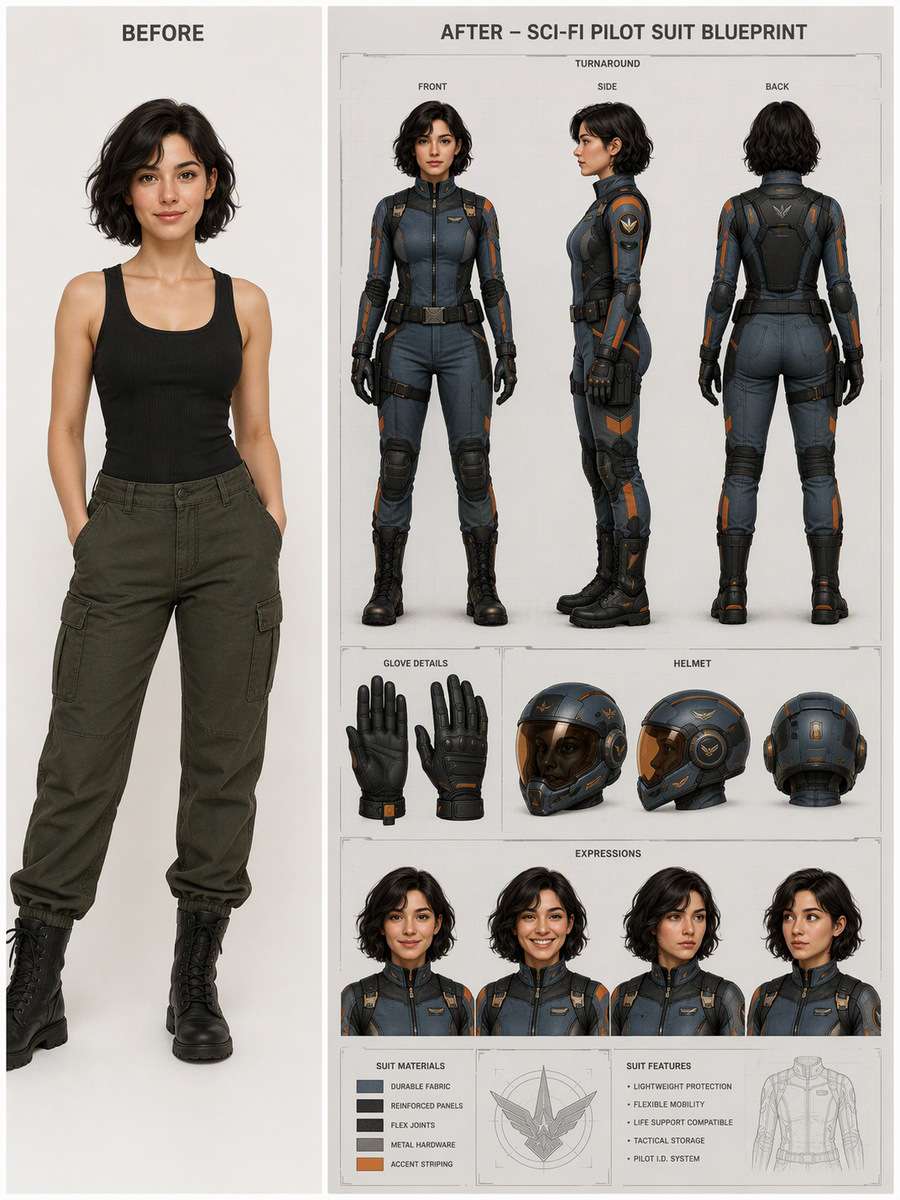
Sci-Fi Pilot Suit Blueprint
Start with the uploaded original character drawing or portrait; build the finished image around this actual reference. Create a science-fiction pilot sheet with front, side and back uniform studies, glove details and a distinct helmet accessory separate from the uncovered facial reference. Preserve all colors and material seams across perspectives. Maintain one original character identity, stable facial landmarks, build, hairstyle, clothing colors and anatomically correct left/right accessory placement across every view. Use clearly separated clean panels and equal-scale views. Leave label boxes blank rather than introducing misspelled technical terms or copied franchise icons.
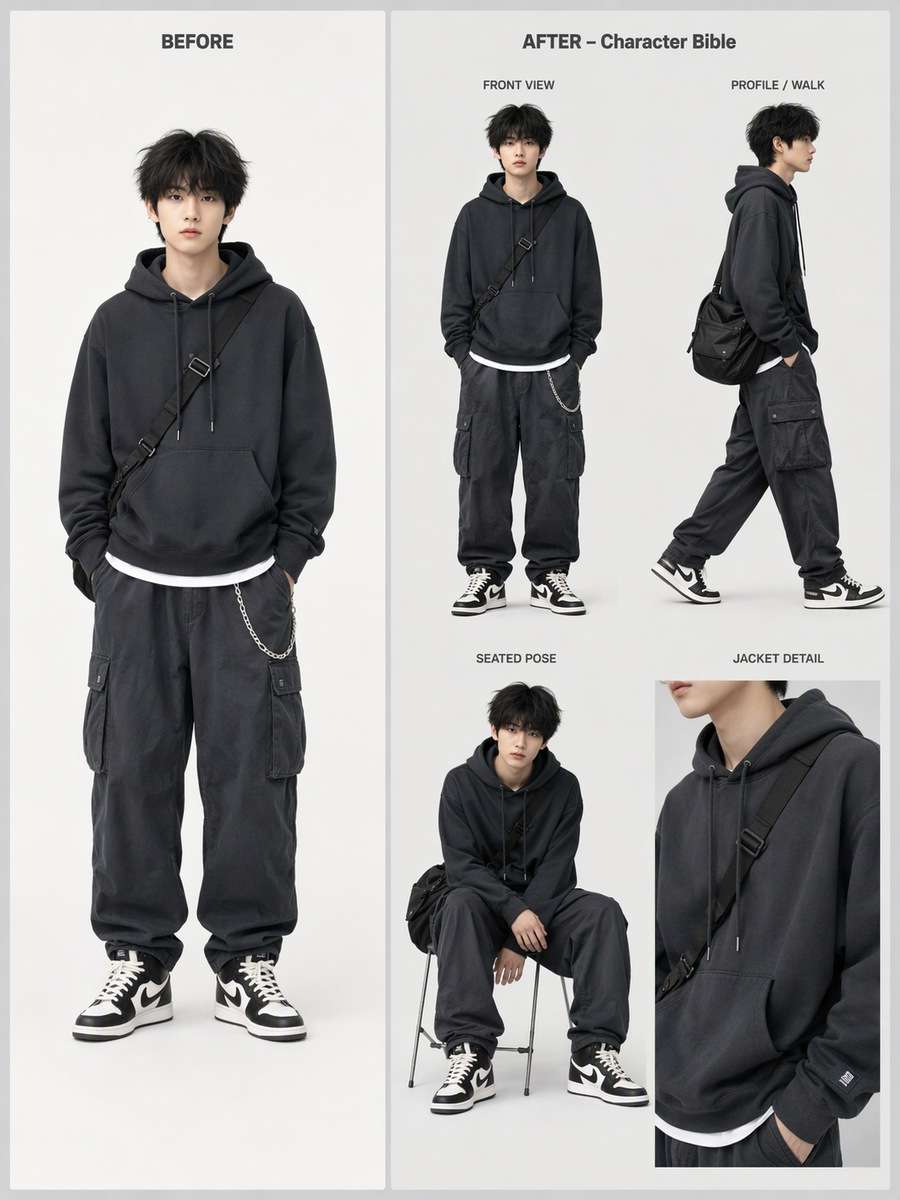
Modern Streetwear Character Bible
Keep the recognizable subject from the uploaded original character drawing or portrait. Arrange a contemporary original character into a front view, walking profile, seated pose and jacket detail close-up, on a clean pale-gray board. Keep sneaker design, bag placement and haircut exactly consistent. Maintain one original character identity, stable facial landmarks, build, hairstyle, clothing colors and anatomically correct left/right accessory placement across every view. Use clearly separated clean panels and equal-scale views. Leave label boxes blank rather than introducing misspelled technical terms or copied franchise icons.
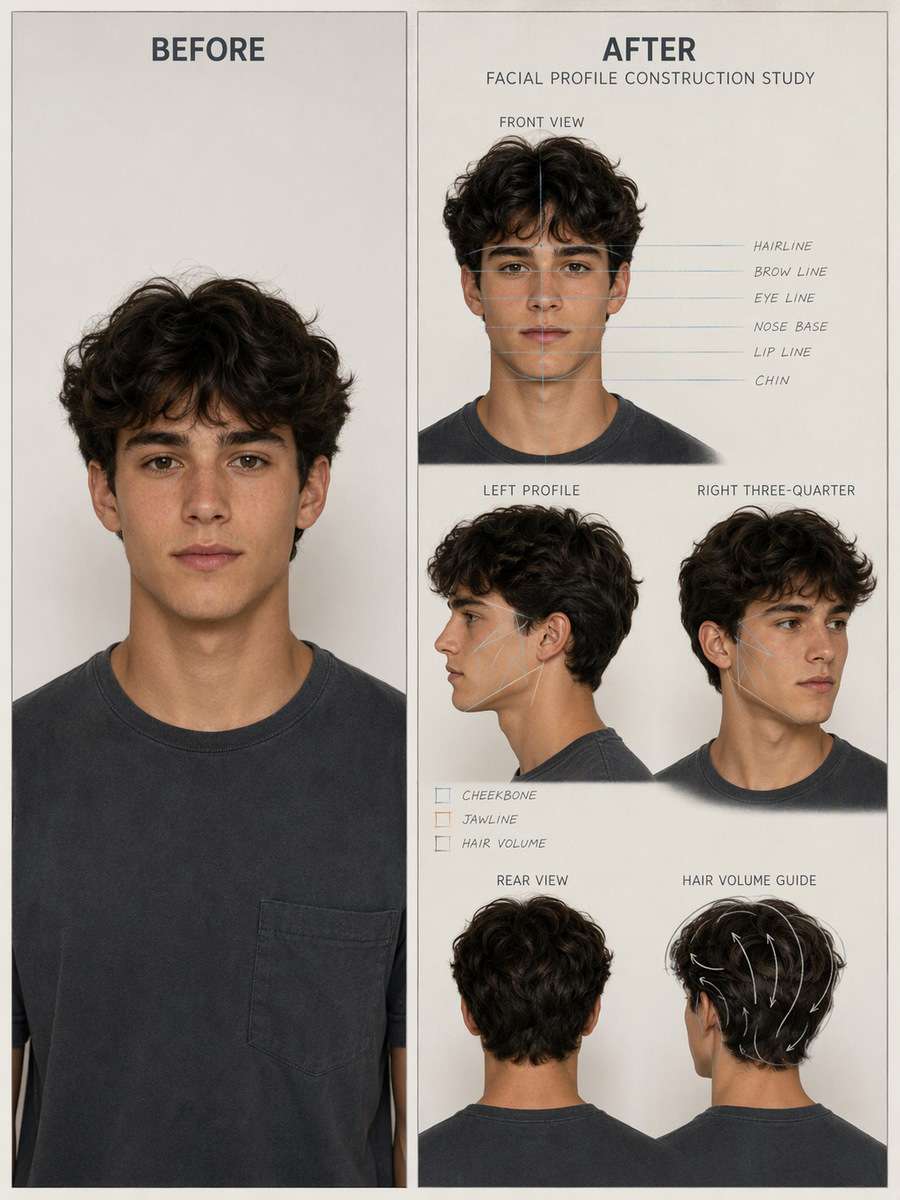
Facial Profile Construction Study
Using the uploaded original character drawing or portrait, create the following specific photo edit. Build a neutral head reference showing front, left profile, right three-quarter and rear hair views, with guides for cheekbones, jawline and hair volume. Rotate the same head rather than duplicating one photo with mirror flips. Maintain one original character identity, stable facial landmarks, build, hairstyle, clothing colors and anatomically correct left/right accessory placement across every view. Use clearly separated clean panels and equal-scale views. Leave label boxes blank rather than introducing misspelled technical terms or copied franchise icons.
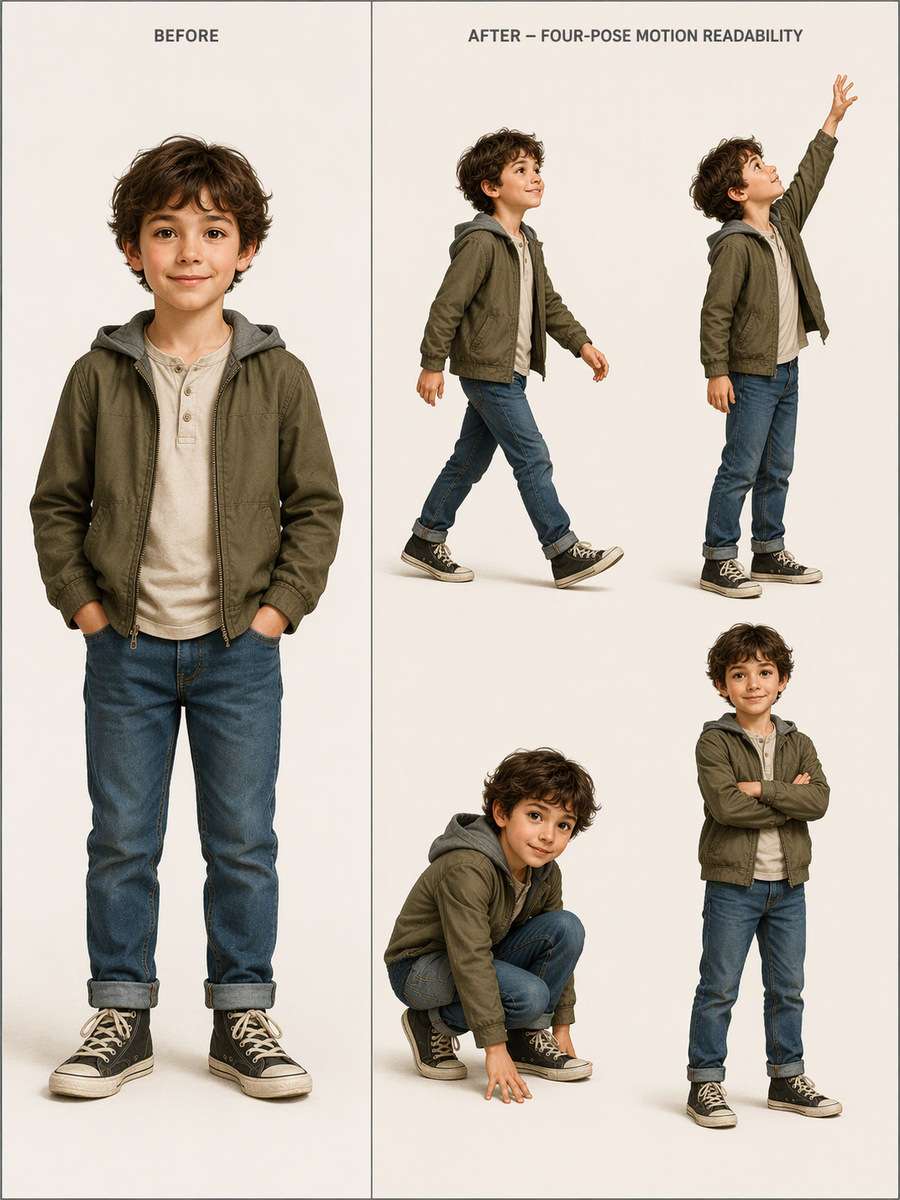
Four-Pose Motion Readability
Use the uploaded original character drawing or portrait as the identity reference. Make one full-body character shown walking, reaching up, crouching and standing, with each silhouette clean and feet grounded. Keep clothing fit consistent while naturally bending joints; do not change limb length between poses. Maintain one original character identity, stable facial landmarks, build, hairstyle, clothing colors and anatomically correct left/right accessory placement across every view. Use clearly separated clean panels and equal-scale views. Leave label boxes blank rather than introducing misspelled technical terms or copied franchise icons.
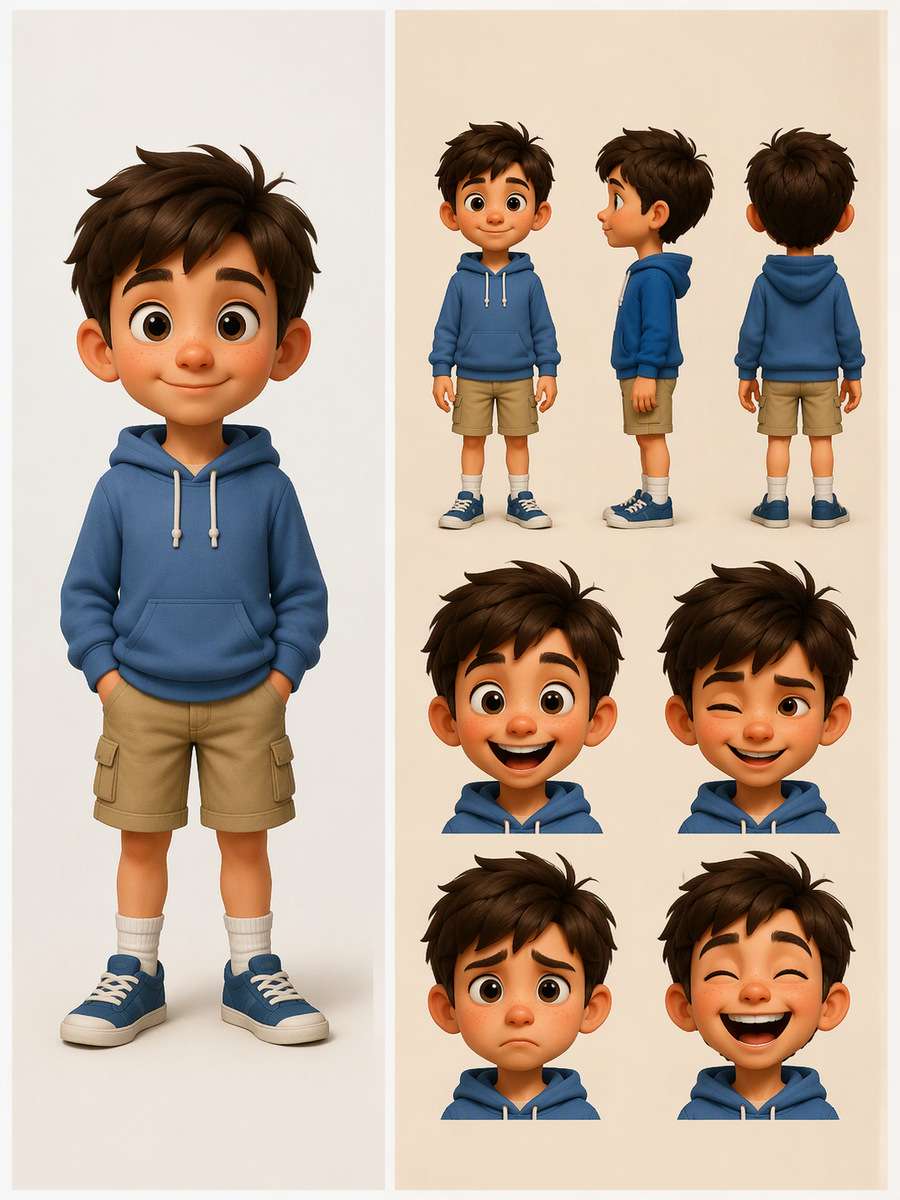
Children's Animation Character
Edit the uploaded original character drawing or portrait rather than inventing a new person or pet. Use a family-friendly round-shape cartoon style for the same character, with neutral front, profile, rear and two playful facial expressions. Show consistent clothing and non-distorted fingers; avoid using existing franchise designs. Maintain one original character identity, stable facial landmarks, build, hairstyle, clothing colors and anatomically correct left/right accessory placement across every view. Use clearly separated clean panels and equal-scale views. Leave label boxes blank rather than introducing misspelled technical terms or copied franchise icons.
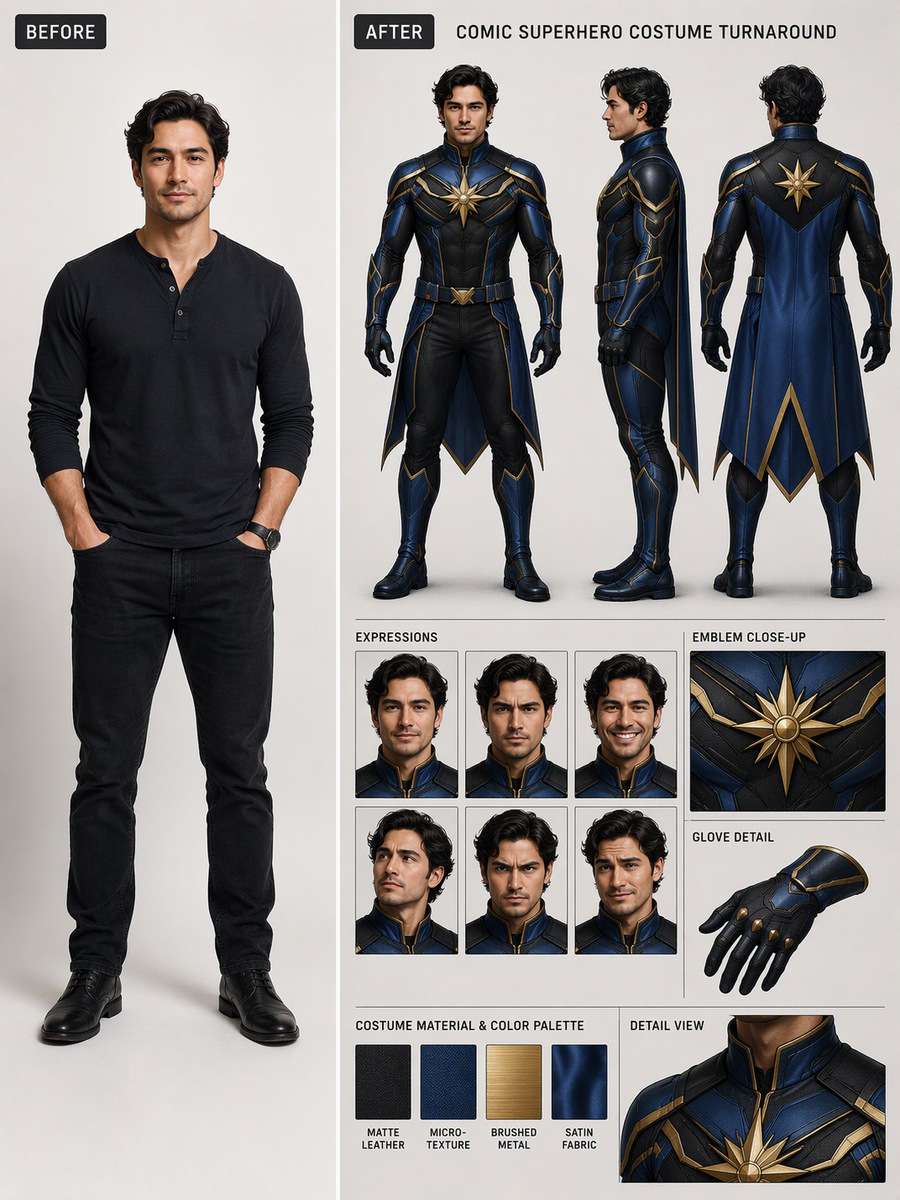
Comic Superhero Costume Turnaround
Start with the uploaded original character drawing or portrait; build the finished image around this actual reference. Turn the original adult character into an original comic hero model sheet, with one three-view costume lineup and close-ups of a unique emblem and glove. Maintain identity and avoid recognizable trademarked superhero uniforms. Maintain one original character identity, stable facial landmarks, build, hairstyle, clothing colors and anatomically correct left/right accessory placement across every view. Use clearly separated clean panels and equal-scale views. Leave label boxes blank rather than introducing misspelled technical terms or copied franchise icons.
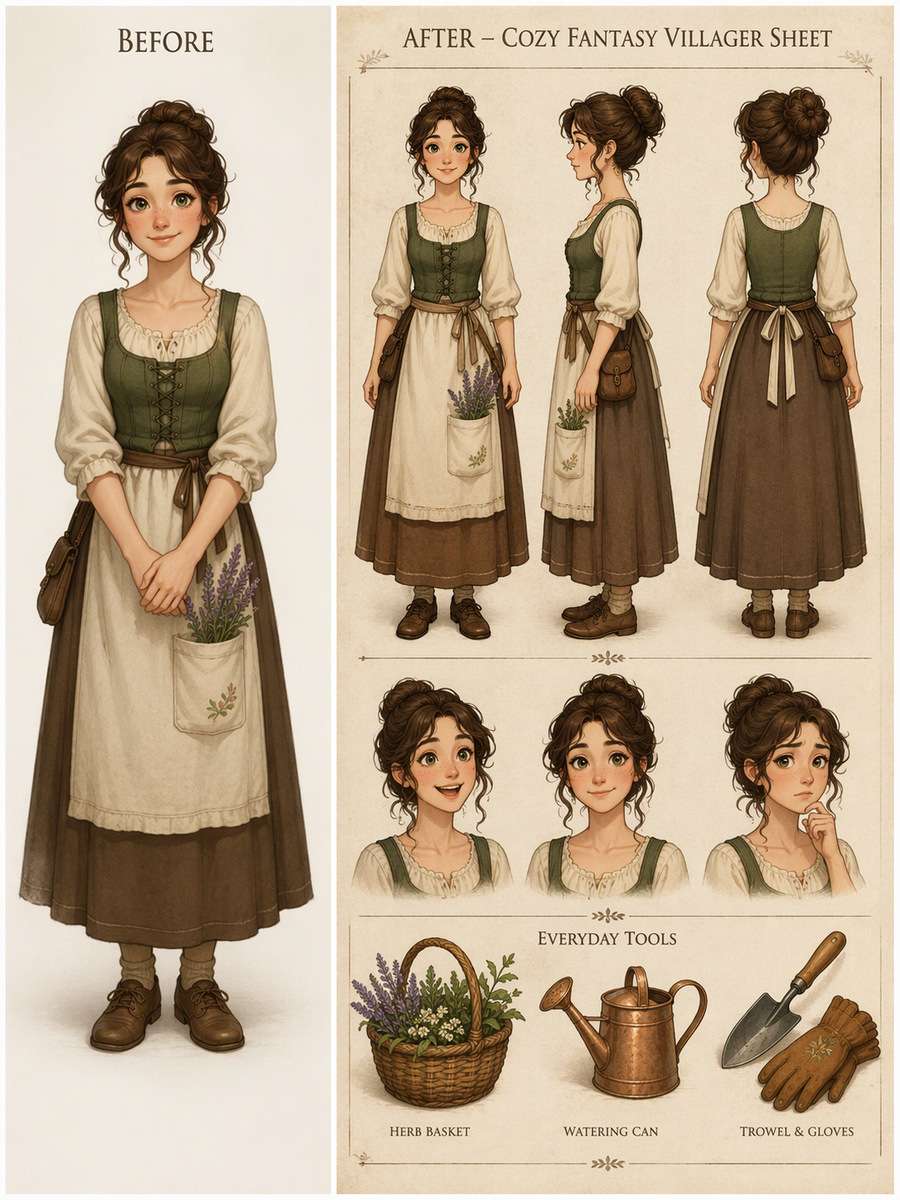
Cozy Fantasy Villager
Keep the recognizable subject from the uploaded original character drawing or portrait. Create an illustrated fantasy village resident sheet with full-length working apron, side profile, back view and three hand-tool detail sketches. Keep fabric layers and pocket placements stable through the rotation. Maintain one original character identity, stable facial landmarks, build, hairstyle, clothing colors and anatomically correct left/right accessory placement across every view. Use clearly separated clean panels and equal-scale views. Leave label boxes blank rather than introducing misspelled technical terms or copied franchise icons.
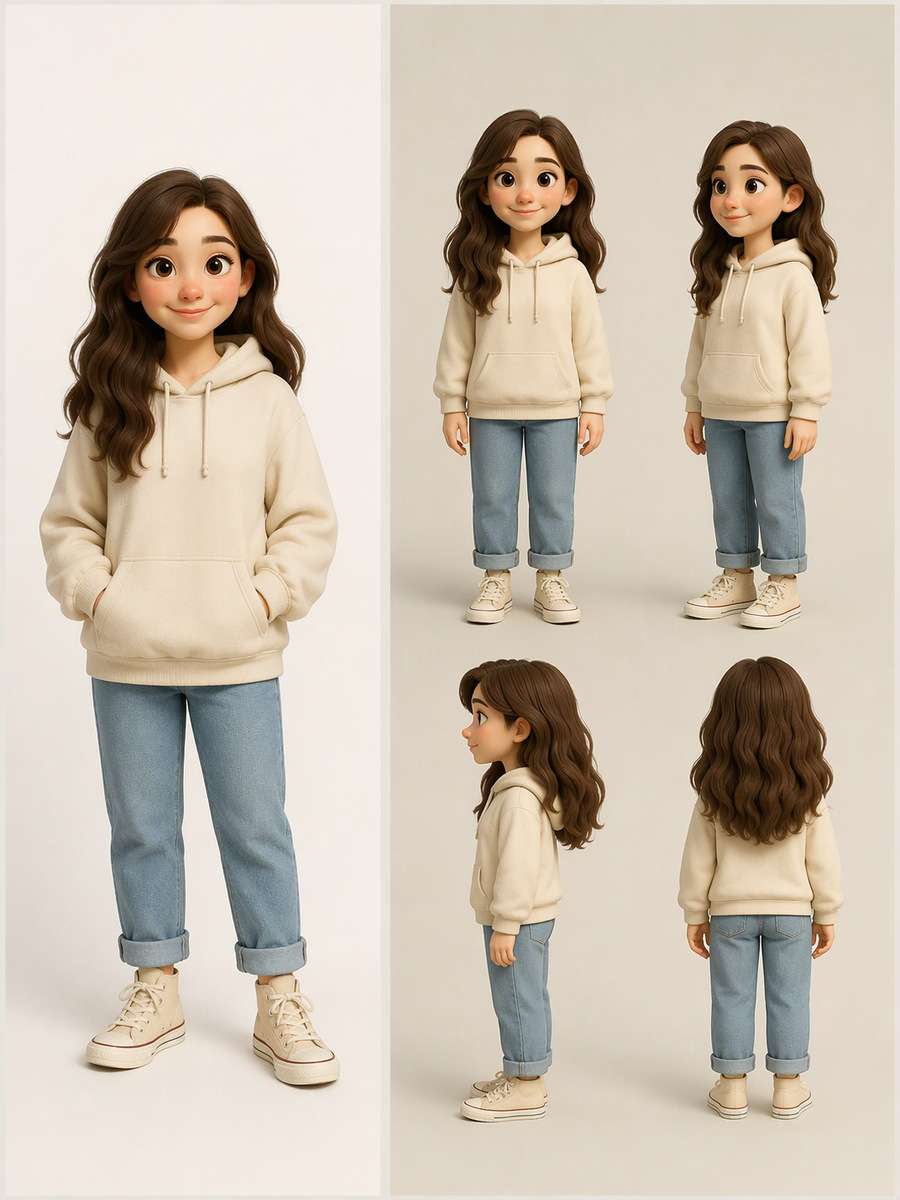
Minimal 3D Clay Character
Using the uploaded original character drawing or portrait, create the following specific photo edit. Render a soft 3D clay-style original character from one reference in front, three-quarter, profile and back views under neutral light. Keep clay thickness, hair shape and proportions unchanged across angles. Maintain one original character identity, stable facial landmarks, build, hairstyle, clothing colors and anatomically correct left/right accessory placement across every view. Use clearly separated clean panels and equal-scale views. Leave label boxes blank rather than introducing misspelled technical terms or copied franchise icons.
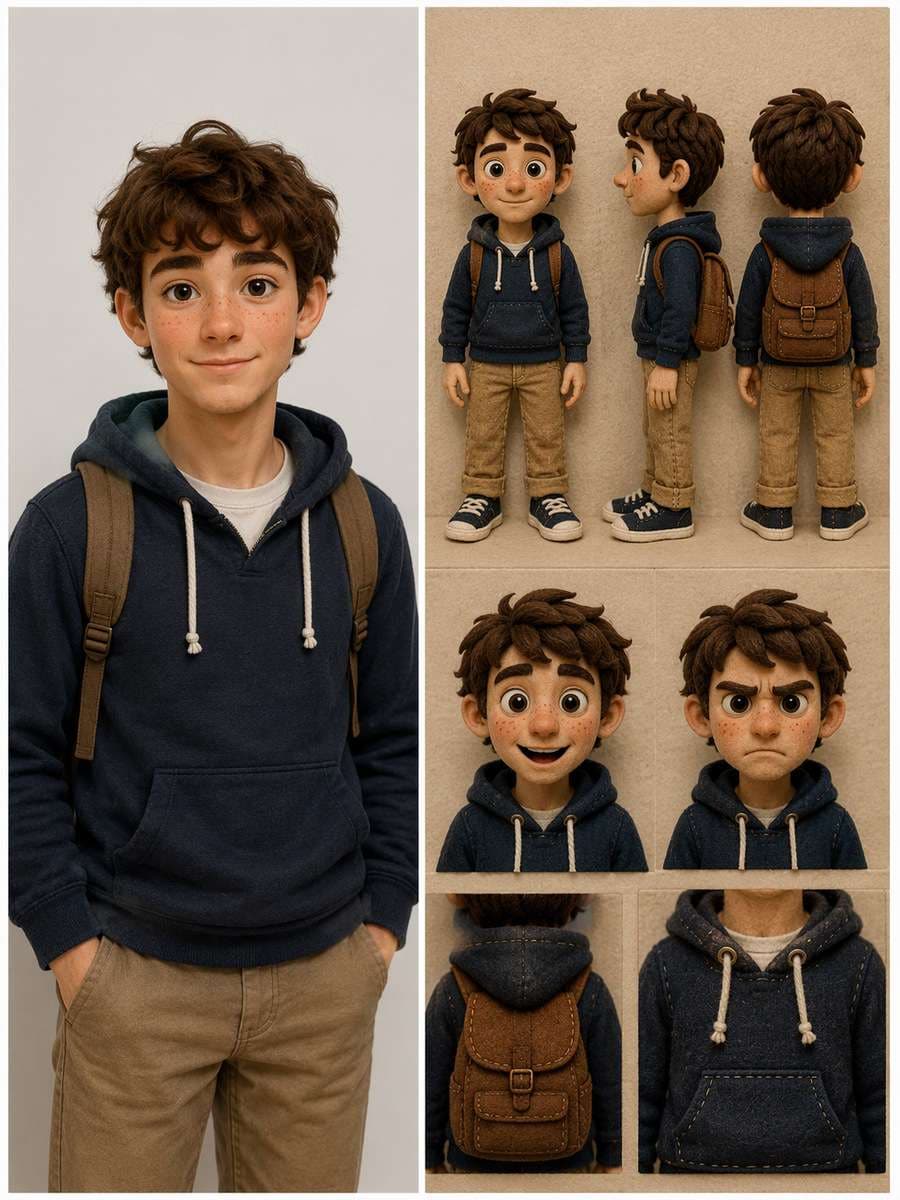
Stop-Motion Puppet Sheet
Use the uploaded original character drawing or portrait as the identity reference. Translate the supplied source into a felt-and-fabric stop-motion puppet reference, with front and back stitching details and two expressions. Preserve signature colors and the character's face silhouette even though materials change. Maintain one original character identity, stable facial landmarks, build, hairstyle, clothing colors and anatomically correct left/right accessory placement across every view. Use clearly separated clean panels and equal-scale views. Leave label boxes blank rather than introducing misspelled technical terms or copied franchise icons.
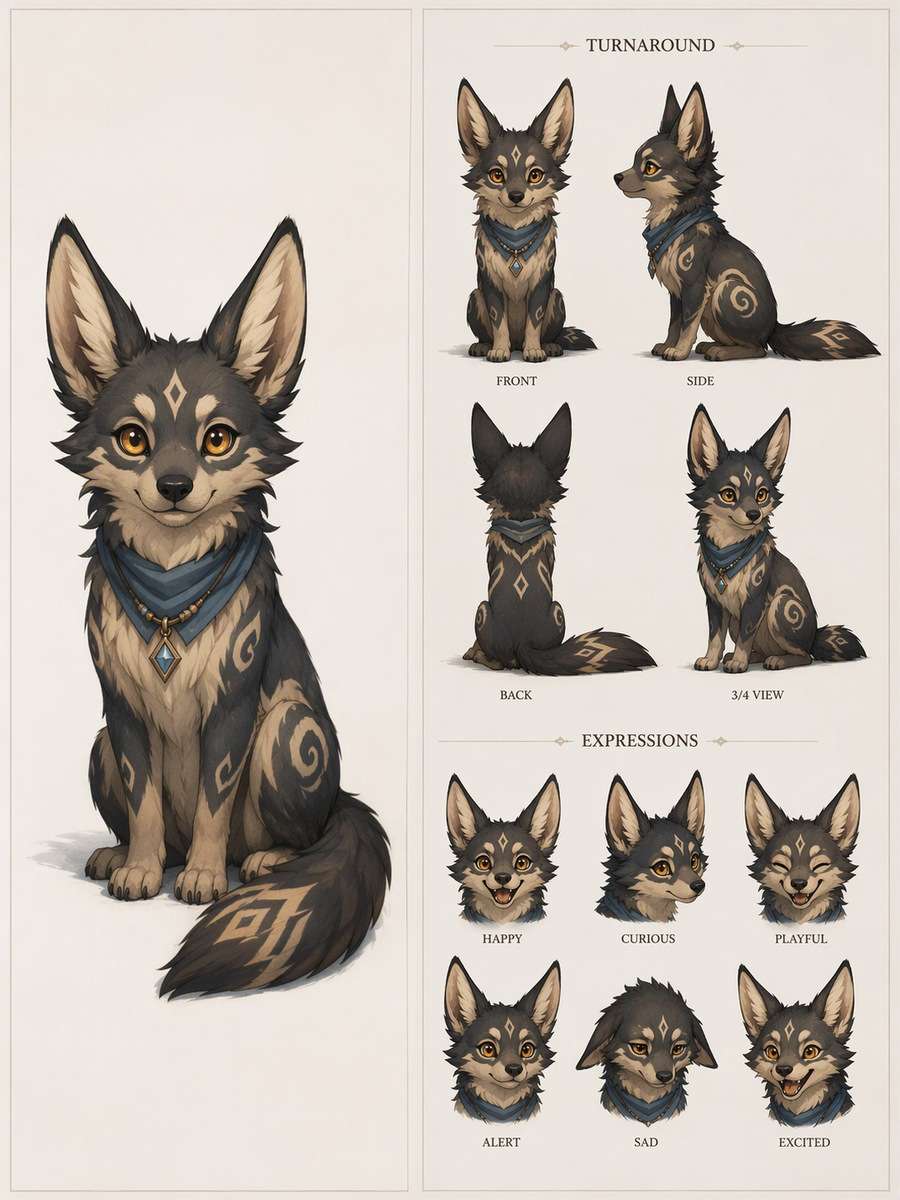
Adventure Companion Creature
Edit the uploaded original character drawing or portrait rather than inventing a new person or pet. Use an uploaded drawing of an original animal companion to make consistent front, side, back and expression views. Maintain species features, fur or scale marking placement and tail length; do not give the creature human anatomy. Maintain one original character identity, stable facial landmarks, build, hairstyle, clothing colors and anatomically correct left/right accessory placement across every view. Use clearly separated clean panels and equal-scale views. Leave label boxes blank rather than introducing misspelled technical terms or copied franchise icons.
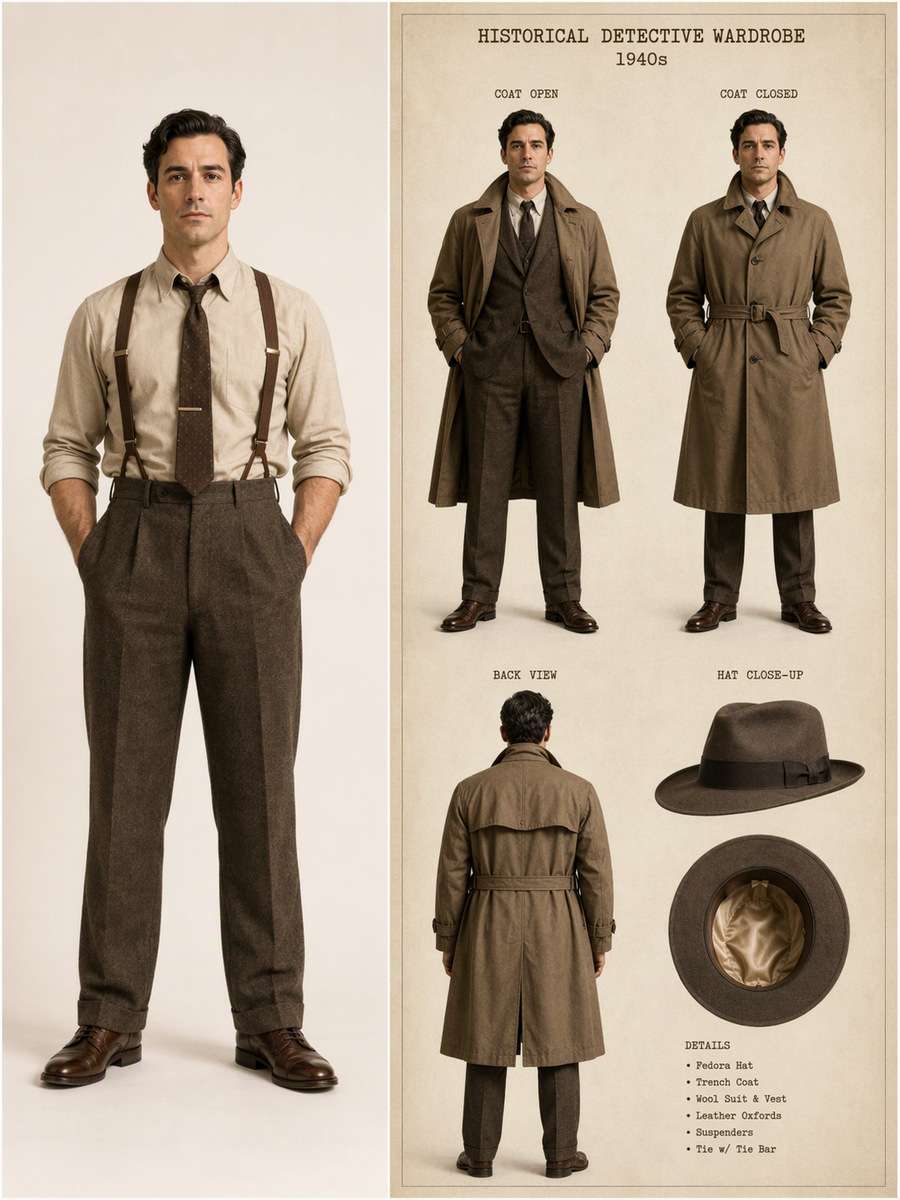
Historical Detective Wardrobe
Start with the uploaded original character drawing or portrait; build the finished image around this actual reference. Build a 1940s detective character wardrobe sheet, using the reference adult face and neutral body frame, showing coat open, coat closed, back view and hat close-up. Keep era details authentic and forbid an extra person. Maintain one original character identity, stable facial landmarks, build, hairstyle, clothing colors and anatomically correct left/right accessory placement across every view. Use clearly separated clean panels and equal-scale views. Leave label boxes blank rather than introducing misspelled technical terms or copied franchise icons.
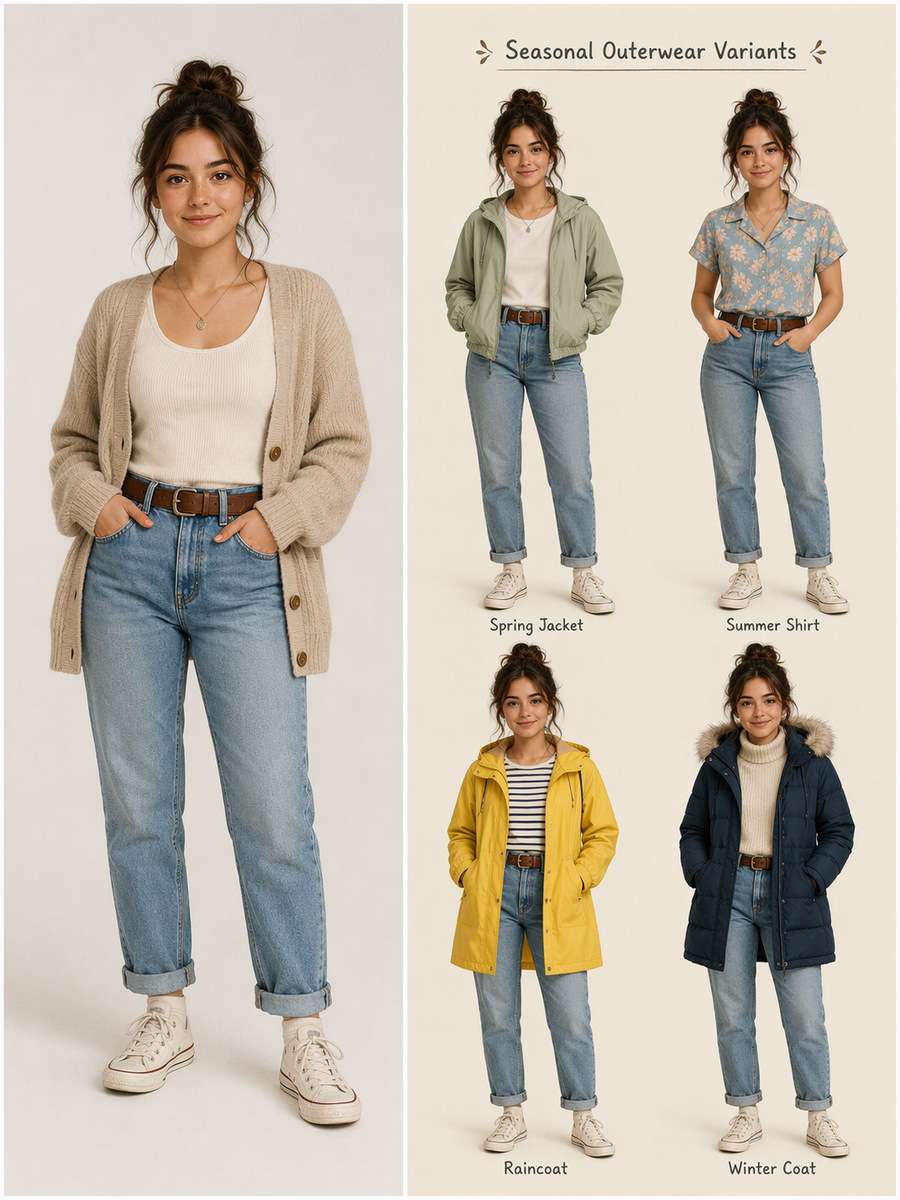
Seasonal Outerwear Variants
Keep the recognizable subject from the uploaded original character drawing or portrait. Arrange the same character in lightweight spring jacket, summer shirt, raincoat and winter coat versions, each at identical body scale. Keep identity fixed and make garment layering physically plausible. Maintain one original character identity, stable facial landmarks, build, hairstyle, clothing colors and anatomically correct left/right accessory placement across every view. Use clearly separated clean panels and equal-scale views. Leave label boxes blank rather than introducing misspelled technical terms or copied franchise icons.
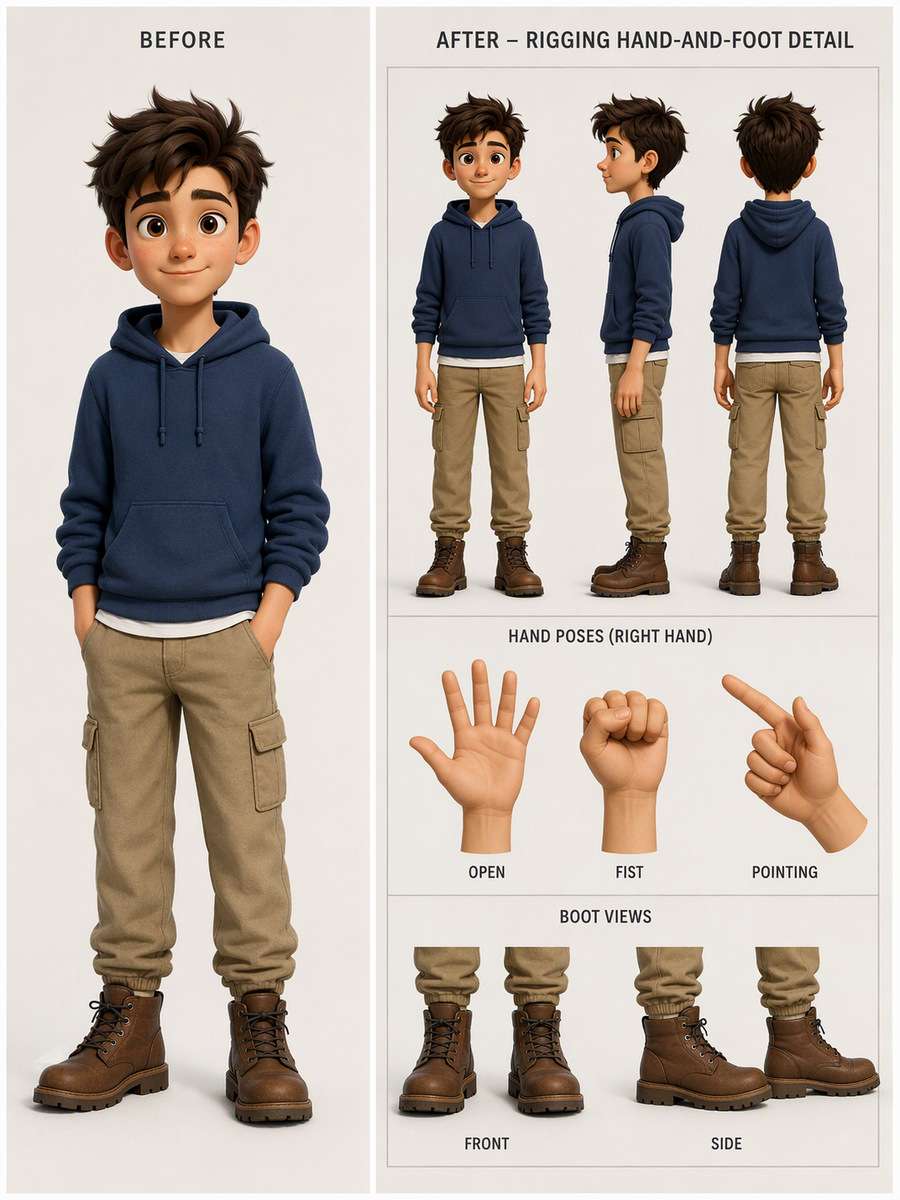
Rigging Hand-and-Foot Detail
Using the uploaded original character drawing or portrait, create the following specific photo edit. Make a clean technical sheet with one full-body character reference and magnified hands in open, fist and pointing poses plus front/side boot views. Avoid detached fingers or different skin shades across crops. Maintain one original character identity, stable facial landmarks, build, hairstyle, clothing colors and anatomically correct left/right accessory placement across every view. Use clearly separated clean panels and equal-scale views. Leave label boxes blank rather than introducing misspelled technical terms or copied franchise icons.
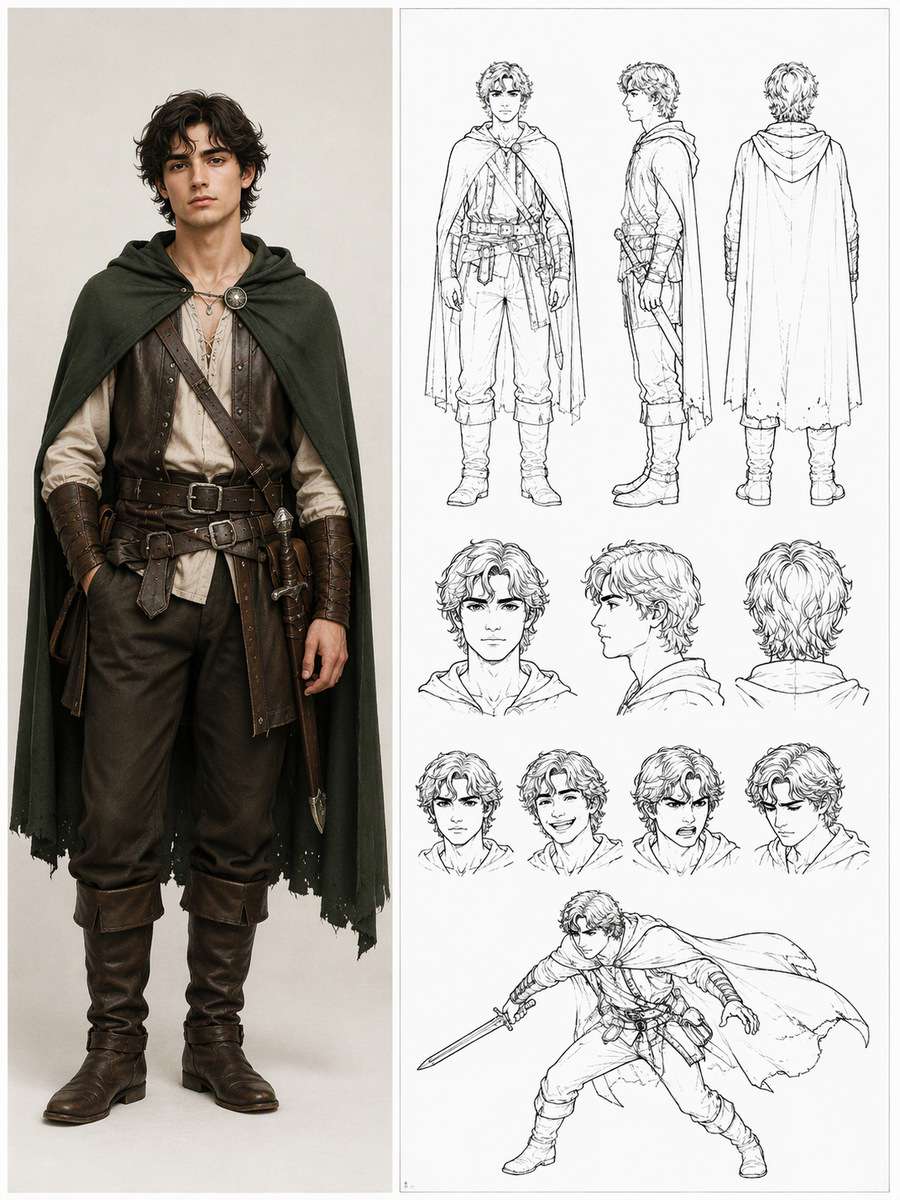
Monochrome Ink Character Sheet
Use the uploaded original character drawing or portrait as the identity reference. Turn the character into crisp black ink line art with consistent face in front, profile, back and action pose. Use varied line weight and ample white space; no grayscale shading that hides costume seams. Maintain one original character identity, stable facial landmarks, build, hairstyle, clothing colors and anatomically correct left/right accessory placement across every view. Use clearly separated clean panels and equal-scale views. Leave label boxes blank rather than introducing misspelled technical terms or copied franchise icons.
Stylized Fashion Character
Edit the uploaded original character drawing or portrait rather than inventing a new person or pet. Create a fashion-illustration model sheet for an original adult with a flat front, side and rear clothing view and a swatch row of fabric colors. Keep the person's actual proportions rather than exaggerated runway anatomy. Maintain one original character identity, stable facial landmarks, build, hairstyle, clothing colors and anatomically correct left/right accessory placement across every view. Use clearly separated clean panels and equal-scale views. Leave label boxes blank rather than introducing misspelled technical terms or copied franchise icons.
RPG Character Inventory Board
Start with the uploaded original character drawing or portrait; build the finished image around this actual reference. Build a tabletop-role-playing reference page showing one original character, their cloak, boots, bag, and three accessories arranged as labeled blank callout slots. Keep the body in one consistent pose and leave text labels empty. Maintain one original character identity, stable facial landmarks, build, hairstyle, clothing colors and anatomically correct left/right accessory placement across every view. Use clearly separated clean panels and equal-scale views. Leave label boxes blank rather than introducing misspelled technical terms or copied franchise icons.
Face and Hairstyle Continuity
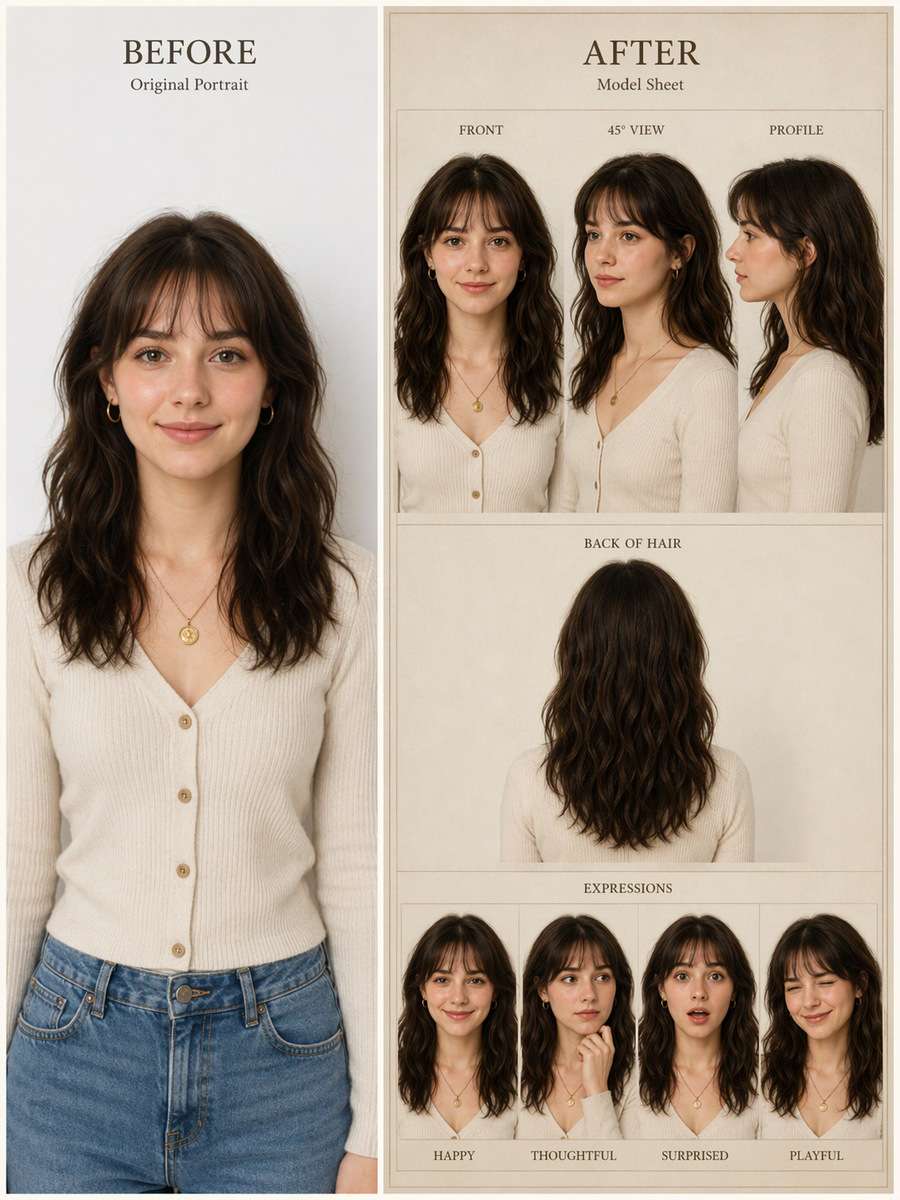
Keep the recognizable subject from the uploaded original character drawing or portrait. Create a portrait-heavy sheet with the same person under frontal, 45-degree, profile and back-of-hair angles, plus a small expression row. Maintain exact hairline, ear shapes and facial proportions despite rotation. Maintain one original character identity, stable facial landmarks, build, hairstyle, clothing colors and anatomically correct left/right accessory placement across every view. Use clearly separated clean panels and equal-scale views. Leave label boxes blank rather than introducing misspelled technical terms or copied franchise icons.
Final Production Model Board
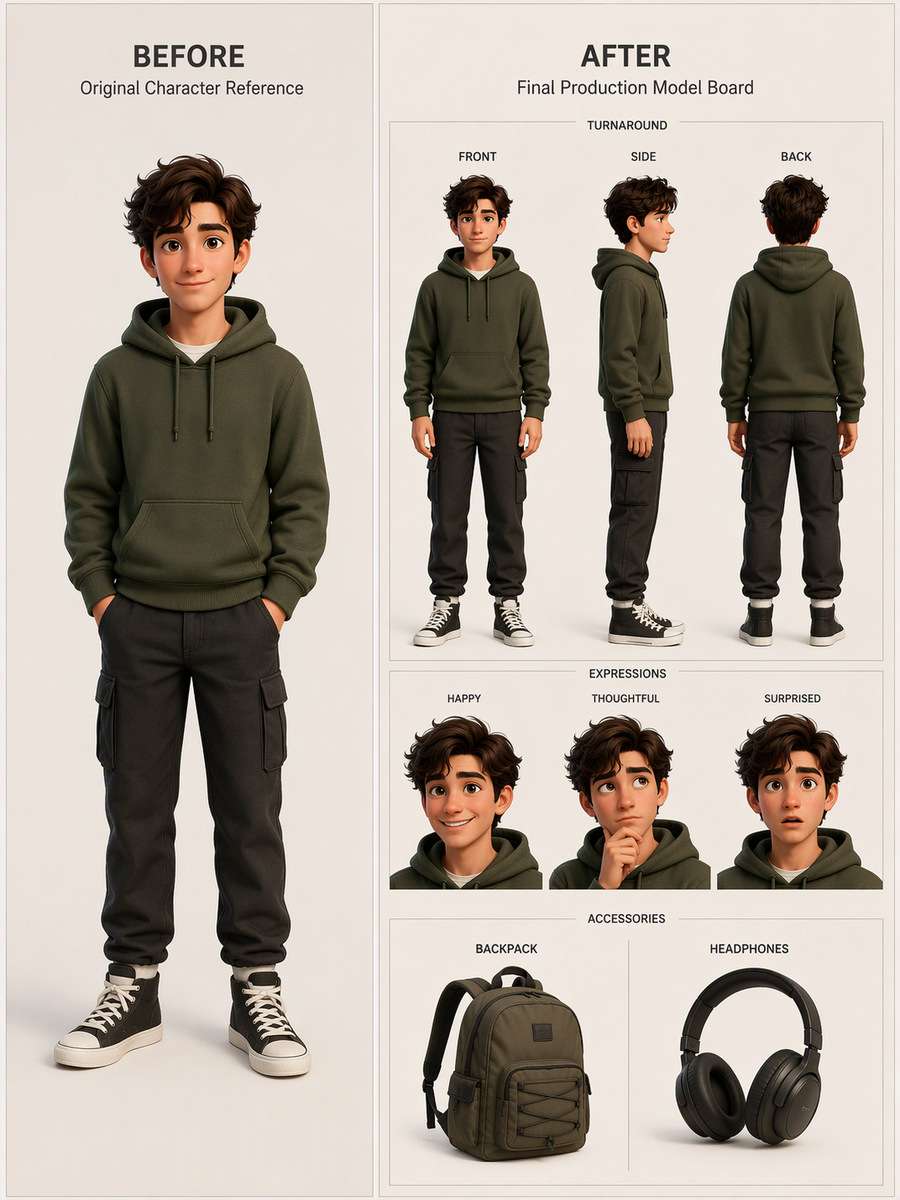
Using the uploaded original character drawing or portrait, create the following specific photo edit. Make a production-ready model sheet combining full-body front/side/back views, three expressions and two accessory close-ups. Use a tidy neutral grid, consistent visual scale and limited color palette; keep all panel edges clean. Maintain one original character identity, stable facial landmarks, build, hairstyle, clothing colors and anatomically correct left/right accessory placement across every view. Use clearly separated clean panels and equal-scale views. Leave label boxes blank rather than introducing misspelled technical terms or copied franchise icons.
Character Sheet Consistency: Views, Scale and Small Details
A reference sheet is a production document. Small viewpoint or costume errors become expensive continuity mistakes later.
Lock the Identity Before Changing Poses
Describe a single stable face, hair silhouette, body build and signature accessory.
For a three-view turnaround, ask for the same full-body scale on one baseline.
Specify actual side and back views; an angled front is not a substitute for a profile.
Use neutral light and simple empty backgrounds to make colors and seams inspectable.
Fix the Typical Character-Sheet Artifacts
Confirm anatomically correct left and right sides of belts, bags, pockets and straps.
Keep expression grids at matching head scale and only change eyebrows, mouth and eyelids.
Leave technical labels blank if the model cannot spell them correctly.
Use a second pass to correct one view or garment seam rather than inventing a fresh character design.
Who Needs Consistent AI Character Reference Sheets?
Turn one original design into clearer production reference material before drawing, animating or presenting it.
Comic and Webtoon Creators
Keep the same haircut and outfit consistent through a run of comic scenes.
Indie Game Teams
Draft practical front/back models and clean accessory callouts for an original character.
Illustration Students
Study silhouettes, expression changes and believable turnarounds from a known reference.
Animation Story Artists
Use expression and pose sheets to establish the visual rules for later storyboards.
Frequently Asked Questions About ChatGPT Character Reference Sheet Prompts
1. How do I prompt a front, side and back character reference sheet?
Name the exact views, request equal character height on a single baseline, and repeat fixed features such as hairstyle, jacket seams and which hip holds a bag.
2. Can ChatGPT keep the same character in every panel?
Reference images and specific constraints help reduce drift, but visual consistency is not guaranteed. Compare face and costume details across every view.
3. What is the difference between a character sheet and a comic storyboard?
A character sheet documents what a character looks like from different angles. A storyboard documents changing actions and shots in a sequence.
4. Should an expression sheet use the same head size?
Yes. Matching head scale makes differences in eyebrows, eyes and mouth easier to compare without confusing angle changes for expression changes.
5. Can a photo become an original character model sheet?
You can use a permitted portrait as an identity reference, then specify an original illustration style. Review the resulting back and side views, which the model must interpret from limited source information.
What if someone else starred in your video? Swap any on-screen character with your favorite character using AI and bring a whole new twist to your scenes!
Swap Characters Now
Bikini Looks, Made with AI
Upload a photo and let AI transform the outfits. No editing skills needed!
Create Now
Today's Hottest AI Trends
All the hottest AI video trends in one place. Find your favorite and make it yours.