初回サブスクリプションは最大で50%オフ!
今すぐ購入

ショルダーフリップ AI動画ジェネレーター&プロンプト | Media.io

カップル写真をショルダーキャリーフリップAI動画に変換しましょう。すぐに使えるプロンプトを確認し、ポーズや動き、タイミングをガイドするための参考画像を活用してください。

Shoulder Carry Flip AI Video Generator: Give Your Couple Photos a New Twist

Give your couple photos a playful new twist with a Shoulder Carry Flip AI video. Cast yourself and your partner in the shoulder carry trend, with clear roles and a recognizable pair throughout the clip. Explore copy-ready prompts, then use a matching template or reference video in a compatible mode to guide the carry pose, pose change and timing. For a simpler first take, animate a prepared shoulder-carry image with subtle movement.

Create My Shoulder Carry Video Explore Toy Car Trend

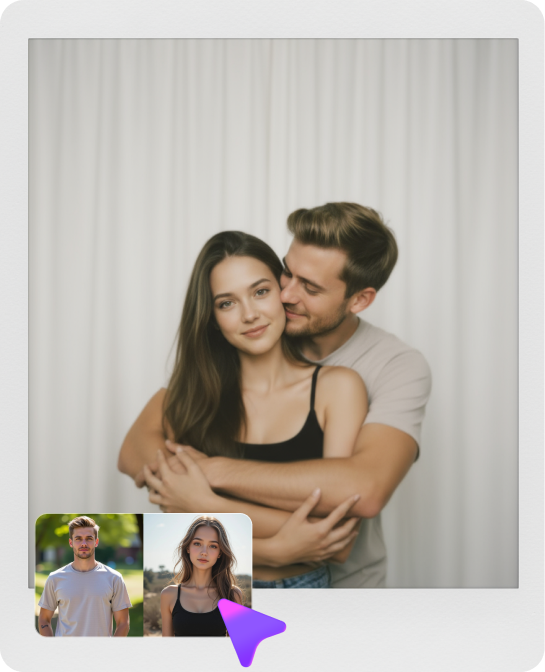
Start with a clear two-person photo or a prepared shoulder-carry image. For separate portraits, combine both people into one starting frame or choose a mode that supports multiple identity references. Reference-video input, role controls, audio and 9:16 output depend on the selected mode.

Your Photos. Your Partner. Your Shoulder Carry Moment.

Make the Couple Trend Yours

Put a familiar pair at the center of your Shoulder Carry Flip AI video. Use a clear couple photo or supported identity references to guide recognizable faces, hairstyles and proportions. Turn a shared photo into a playful interaction with your partner or a friend.

Give Each Person a Clear Role

Build your AI couple video around a clear pairing: one person carries, and the other is carried. Define the roles before generating and keep them consistent through the movement. If you start with separate photos, prepare a shared frame or use compatible multi-reference controls.

Let the Reference Guide the Twist

A matching reference helps define your shoulder carry trend remake, from the initial pose to the movement and ending. Use supported reference-video input for a closer interpretation. For a simpler variation, begin with a prepared carry pose and add a small turn or gentle body movement.

Give Your Couple Edit Its Moment

Prepare your shoulder carry photo-to-video edit for TikTok, Reels or Shorts. Choose 9:16 where supported and leave room for both bodies throughout the action. Review faces, hands and supporting contact, then add your chosen music and align the pose change in your editor or publishing app.

How to Make a Shoulder Carry Flip AI Video from Photos

01

Step 1: Prepare Your Two-Person Image

Choose a clear photo of both people, ideally with visible faces, arms and legs. A prepared shoulder-carry pose gives the model a clearer starting point. If you only have separate portraits, first combine them into a shared scene or select a mode that supports multiple identity references.

02

Step 2: Set the Carry Roles and Motion

Copy a Shoulder Carry Flip AI prompt below and identify who carries whom. For a trend remake, add a matching reference video in a supported mode to guide the pose change and timing. For image-to-video alone, start with a carry pose and request a short, simple movement.

03

Step 3: Generate, Check and Share

Generate your shoulder carry AI video and check both identities, limb positions and supporting contact. Simplify the movement or retry if bodies merge or roles switch. Download your preferred take, review any generated audio, and align your chosen music with the pose change before sharing.

Shoulder Carry Flip AI Video Prompts to Copy and Customize

Profile illustration for the reference-guided Shoulder Carry Flip AI prompt
Reference-Guided Couple Remix

Two identity references + a matching motion reference in a supported mode

Put yourself and your partner into the reference shoulder-carry sequence. Prompt: “Use Image 1 as the identity reference for the carrier and Image 2 as the identity reference for the carried partner. Assign both identities through the selected mode's role controls. Follow Video 1 for the shoulder-carry pose, pose change, timing and ending. Preserve each person's recognizable face, hairstyle, skin tone and body proportions. Keep the reference clothing, setting and framing. Maintain clear supporting contact and coherent body movement, with each identity attached to its assigned role throughout. Do not invent additional flips, throws or role reversals beyond the reference. Avoid merged bodies, extra limbs, floating hands, face blending and added text. Follow the reference duration and aspect ratio within the selected mode's supported settings.”

Profile illustration for the prepared shoulder-carry pose animation prompt
Bring a Carry Pose to Life

One prepared two-person shoulder-carry image + an image-to-video prompt

Start with a simpler shoulder-carry variation and keep the motion small. Prompt: “Animate the two people already arranged in the shoulder-carry pose in Image 1. Preserve both recognizable identities, hairstyles, outfits, body proportions and the existing support points. The carrier remains standing with feet grounded and makes a small, natural weight shift. The carried partner stays supported in the same pose, with subtle breathing, a relaxed expression and gentle hair movement. Keep the original setting and a steady camera view that includes both bodies. Maintain continuous contact without changing who carries whom. No new lift, flip, release, role swap or camera rotation. Avoid sliding feet, stretched torsos, duplicated limbs, flickering clothes and added text. Create a short pose animation inspired by the shoulder carry trend rather than an exact Flip remake.”

Profile illustration for the shoulder carry single-role replacement prompt
Replace One Partner

One identity photo + a shoulder-carry reference with supported role selection

Personalize one role while preserving the reference interaction. Prompt: “Use Image 1 as the identity reference for the carried partner selected through the role controls in Video 1. Replace only that person's identity and retain the other participant where supported. Preserve the uploaded person's recognizable facial features, hairstyle and skin tone during turns and partial occlusion. Follow the reference shoulder-carry movement, pose change, expressions and timing. Keep the reference clothing, supporting hand positions, setting and camera sequence. Maintain coherent contact between the two bodies, with the same person carrying throughout unless the reference explicitly shows otherwise. Do not transfer the uploaded face to the carrier or invent facial details in fully hidden views. Avoid duplicated faces, extra limbs, unintended costume changes and added text.”

Profile illustration for the custom shoulder carry couple video prompt
A Playful Shoulder Carry Turn

One prepared shoulder-carry image + a custom movement prompt

Give your shoulder-carry photo a small turn and a playful finish. Prompt: “Begin from the supported shoulder-carry pose shown in Image 1. Preserve both people's distinct faces, hairstyles, outfits and body proportions. The carrier takes one small, grounded step to turn slightly toward the camera while maintaining the existing hold. The carried partner moves with the carrier as one supported pair, keeping the same body orientation relative to the shoulders. Settle into a brief final pose with relaxed, playful expressions where faces are visible. Retain the source background and a static full-body camera view with enough room around both people. Use slow, continuous motion. No full spin, aerial flip, dropping, role reversal, body merging or added people. This is a custom shoulder-carry variation, not a frame-for-frame recreation of the trend.”

FAQs About the Shoulder Carry Flip AI Video Generator

1. What is the Shoulder Carry Flip trend, and how can AI recreate it?

The Shoulder Carry Flip trend is a couple-video format built around a shoulder-carry pose and a timed pose change. An AI remake uses your photos to personalize the participants, with a matching reference video guiding the movement in a compatible mode. Use the actual clip to define what “flip” means in your version; the name alone does not specify an aerial flip, a role reversal or a particular rotation.

2. How many photos do I need for a shoulder carry AI video?

One clear image containing both people can be used as an image-to-video starting frame. A prepared shoulder-carry pose reduces the amount of body positioning the model needs to invent. If your people are in separate photos, first create a shared frame or choose a workflow that supports multiple identity references. For a single-role replacement, one identity photo may be enough when the selected mode supports role selection.

3. Can a photo and a prompt recreate the exact Shoulder Carry Flip?

A photo and a prompt can guide a new shoulder-carry animation, but they do not fully define a specific performance. For a closer Shoulder Carry Flip remake, use a matching template or reference video in a compatible mode. If reference input is unavailable, begin with an image that already shows the carry and request a small movement. Label that result as a shoulder-carry variation rather than an exact recreation.

4. How can I reduce distorted hands, merged bodies and identity swaps?

Use sharp images with clear body positions and define the carrier and carried partner explicitly. Keep the first clip short, the camera steady and the movement simple. A well-prepared starting pose helps clarify supporting hands and body contact. Review frames during turns and overlapping movement; if the result breaks down, reduce the motion or improve the reference. Prompt instructions can guide consistency, but they cannot guarantee it.

5. Will my Shoulder Carry Flip AI video include the trend audio?

Audio generation and source-audio retention depend on the selected model or template. A Shoulder Carry Flip prompt does not automatically supply the trend's original recording or synchronize the movement to it. Preview the output, then add the appropriate audio through your editor or publishing app where available. Align the key pose change with the music cue and check that the framing works for your chosen platform.

Explore Media.io Online AI Tools
Media.io tools icon Create Images and Videos