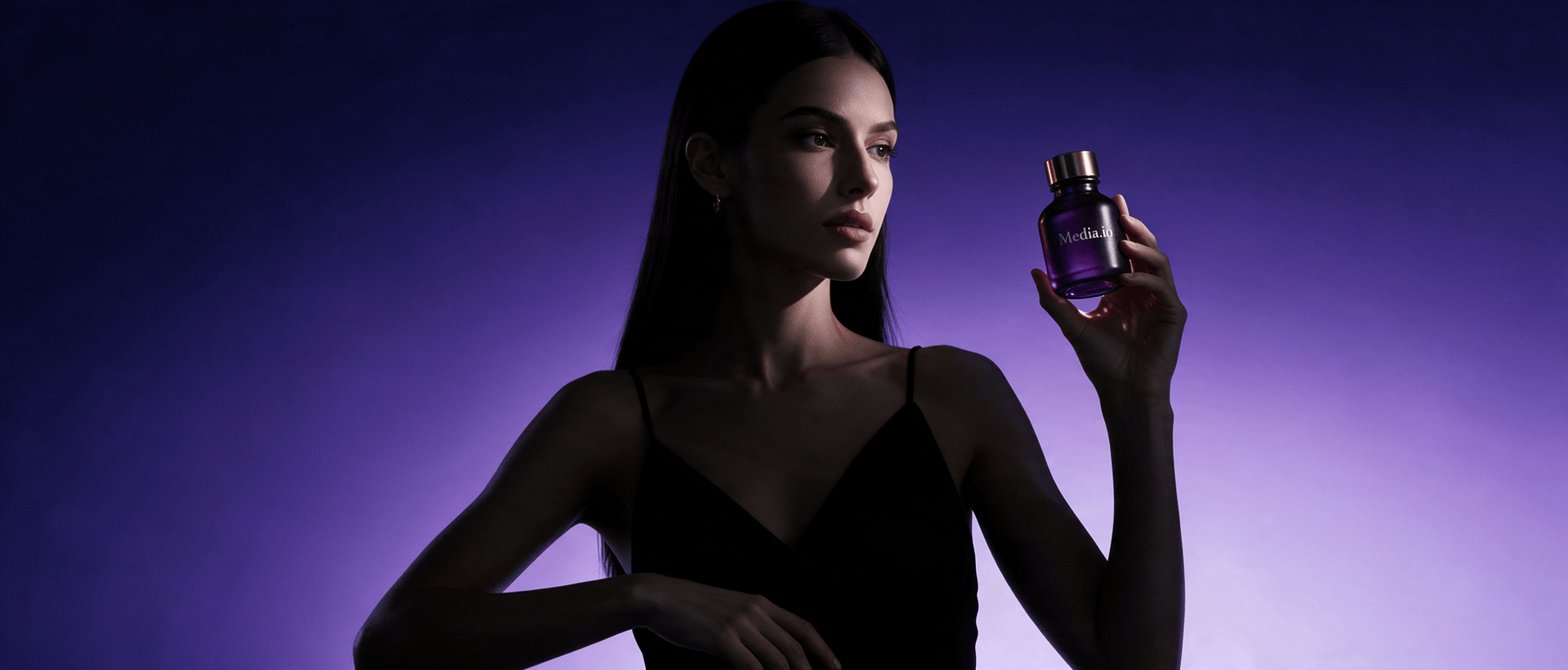
Photo to Video Ads
Turn a single product photo or a small set of images into short-form video ads with motion, product focus, campaign messaging, and social-ready pacing. Media.io helps ecommerce and performance teams reuse static catalog assets instead of waiting for fresh video footage.
Add your product assets, choose an ad direction, and generate a campaign-ready creative.
Create Photo To Video Ads for Faster Campaign Testing
Turn a single product photo or a small set of images into short-form video ads with motion, product focus, campaign messaging, and social-ready pacing. Media.io helps ecommerce and performance teams reuse static catalog assets instead of waiting for fresh video footage.
Why Create Photo to Video Ads with Media.io?
Build more campaign-ready creative from the assets you already have while keeping the product, audience, message, and offer at the center.
Animate Static Product Photos
Add motion and visual progression to catalog images, packshots, lifestyle photos, or promotional stills.
01Build a Clear Ad Story
Move from product reveal to benefit, use case, proof point, offer, and CTA so the video works as an ad rather than a slideshow.
02Create More from Existing Catalogs
Reuse images already available on product pages, marketplaces, and brand asset libraries to produce more short-form creatives.
03Adapt the Same Photo for More Angles
Reframe one image around different hooks, audiences, benefits, offers, or placements to expand testing without new photography.
04How to Create Photo to Video Ads in 3 Steps
Move from source assets to a review-ready ad concept without manually rebuilding every creative variation.
Upload a Product Photo
Add a clear product image, packshot, lifestyle photo, or small image set. Include accurate product details and the message you want the ad to communicate.
Choose the Video Ad Direction
Select the motion, hook, benefit, visual pacing, audience, and CTA direction for the photo to video ads.
Generate and Review the Video
Generate the video, confirm the product remains visually accurate, check messaging and offer details, then export the version you want to test.
Popular Photo to Video Ads Scenarios
Paid Social Testing
Create multiple hooks and visual concepts from the same product so teams can compare creative directions across paid social campaigns.
Ecommerce Promotion
Turn catalog assets and product benefits into concise promotional videos for launches, product pages, marketplaces, and social commerce.
Always-On Creative Refresh
Refresh ads around new angles, audiences, offers, or seasonal messages without organizing a new shoot for every iteration.
What Marketers Say
Faster Creative Testing. We can turn the same product inputs into several photo to video ads concepts, which makes it easier to test hooks and formats without restarting the creative process.
Clearer Campaign Angles. The workflow helps us keep the product and campaign objective visible while exploring different short-form directions for paid social.
Useful for Iteration. It is useful when we need fresh creative around the same offer, audience, or product but do not have time for another full production cycle.
Photo To Video Ads Ideas to Test
Build multiple ad directions from the same product assets instead of relying on one generic creative. These formats map to common search intent and practical paid-social workflows.
Motion Product Ad
Add a controlled push-in, orbit, light sweep, ingredient motion, or reveal while keeping the product visually stable.
Lifestyle Scene
Place the product in a context that helps shoppers understand where, when, or why it is used.
Feature Close-Up
Use detail shots and restrained camera movement to focus attention on packaging, texture, materials, or key design features.
Social Short
Build a vertical creative with an opening hook, fast product reveal, concise benefit, and CTA.
How to Make Photo To Video Ads More Credible
SERP competitors consistently emphasize starting from one clean product photo. Use uncropped, high-resolution images with the product fully visible and enough negative space for motion. Avoid busy collages and verify text, logos, proportions, and packaging after generation.
Photo To Video Ads Templates to Test
Start with One clean product photo and test one creative variable at a time. Current search results repeatedly surface concrete examples, templates, hooks, and ready-to-use workflows—not only generic feature descriptions.
Slow push-in
Use this as a distinct creative test rather than changing several variables at once.
Orbit / parallax
Use this as a distinct creative test rather than changing several variables at once.
Lifestyle reveal
Use this as a distinct creative test rather than changing several variables at once.
3 Photo To Video Ads Prompts
Use these prompt structures as starting points, then replace the product, audience, verified benefit, offer, and CTA with your campaign details.
Prompt 1
Create a 15-second 9:16 photo to video ads creative from one clean product photo. Use a strong first-scene hook, a clear product reveal, one specific benefit or use case, readable captions, and a direct CTA. Keep all product details and claims faithful to the source.
Prompt 2
Generate a second photo to video ads variation using the 'Orbit / parallax' angle. Make the product visible early, use natural pacing and platform-native framing, and change the hook while keeping the offer and factual product information consistent.
Prompt 3
Create a third photo to video ads ad for creative testing using the 'Lifestyle reveal' concept. Focus on one audience and one message, preserve product fidelity, avoid unsupported claims, and finish with a clean CTA end frame.
Prepare Photo To Video Ads for Different Placements
Recommended creative variants
- Prepare source framing for target placement
- Keep labels readable
- Use restrained motion
Quality check: Shape, color, packaging, label placement. Review the generated video on the target device and confirm that captions, product details, offer terms, and CTA remain readable and accurate.
How to Test Photo To Video Ads Without Guessing
1. Change the Hook
Keep the product, offer, and body of the ad stable. Test problem-led, benefit-led, curiosity, demo, or creator-style openings.
2. Change the Angle
Take the strongest hook and compare a demo, story, proof, comparison, routine, or offer angle that fits the product.
3. Adapt the Winner
Turn the stronger concept into placement-specific versions instead of assuming one crop and pacing will work everywhere.
FAQs About Photo to Video Ads
What are photo to video ads?
Photo to Video Ads helps marketers create promotional video concepts around a specific product, offer, audience, or campaign objective. With Media.io, you can reuse existing assets and generate new ad variations for social and ecommerce workflows.
What can I use to create photo to video ads?
You can start with product images, existing videos, campaign copy, brand assets, or supported product links. The strongest results come from clear source materials and accurate product information.
Can I create UGC-style photo to video ads?
Yes. When a concept benefits from a creator-led presentation, you can build UGC-style recommendations, demonstrations, reactions, testimonials, or lifestyle concepts while keeping the product and message central.
Can I create multiple versions of the same ad?
Yes. You can vary the hook, visual framing, audience, benefit, offer, CTA, or creator-style direction to explore multiple campaign concepts from the same source assets.
What should I review before publishing photo to video ads?
Check product appearance, brand details, factual claims, pricing, discounts, availability, audience suitability, platform requirements, and CTA language before publishing or spending media budget.