Transcription en temps réel
L'ASR à faible latence rend la conversion parole-texte plus utile pour les réunions, les conversations en direct, les interviews et les flux de travail interactifs.
 Libérez votre potentiel créatif et découvrez la magie de l'IA médiatique dès mIAntenant!
Explorez Muse Voice Transcribe et l'évolution vers une transcription IA plus rapide, multilingue et sensible aux locuteurs. Découvrez comment les créateurs peuvent transformer interviews, podcasts, réunions et vidéos en texte éditable, sous-titres et contenu réutilisable avec Media.io.
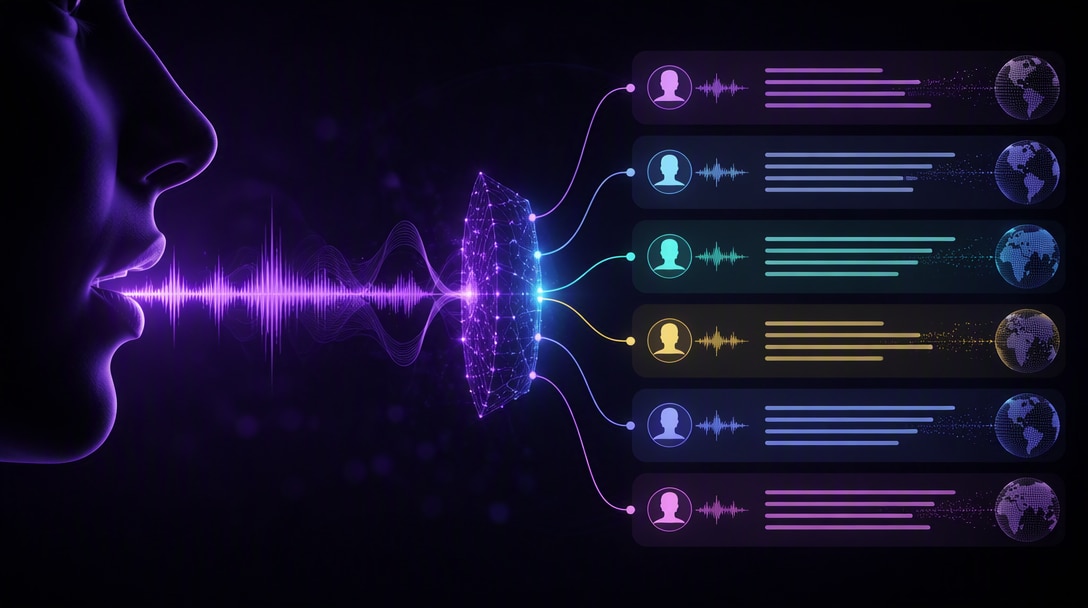
Muse Voice Transcribe est un modèle de transcription vocale IA axé sur la compréhension de la voix en temps réel. Ses capacités mettent en lumière les tendances clés de l'ASR moderne : transcription à faible latence, reconnaissance vocale multilingue, diarisation des locuteurs, changement de code et meilleure gestion des conversations réelles.
Importez un podcast, une interview, une réunion, une conférence, un tutoriel ou une vidéo sociale contenant la parole que vous souhaitez convertir en texte.
Ajouter votre média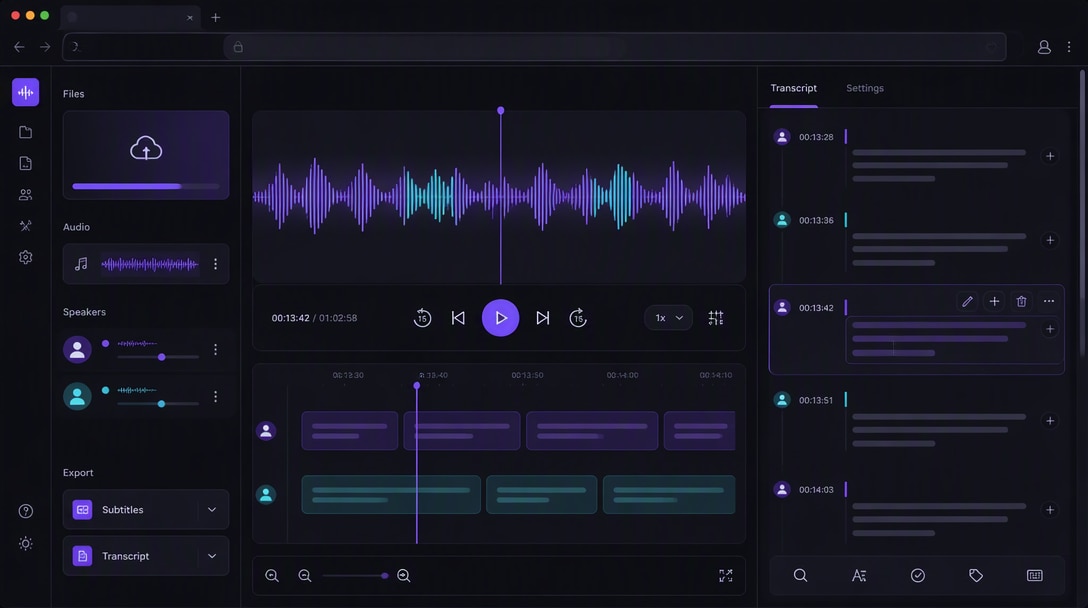
Utilisez un flux de travail de transcription IA ou de sous-titres pour détecter le contenu parlé et le convertir en texte éditable. Vérifiez les noms, les termes techniques et les changements de locuteurs.
Générer la transcription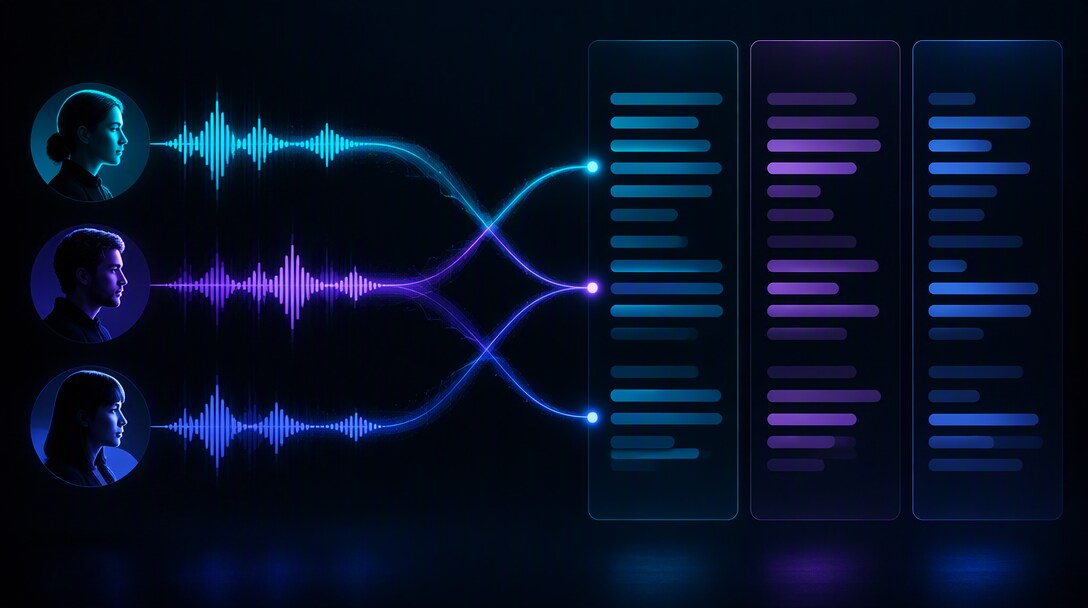
Transformez la transcription en sous-titres, notes d'émission, articles, résumés, clips sociaux ou contenu traduit. Exportez le résultat vers la plateforme de votre choix.
Réutiliser votre contenu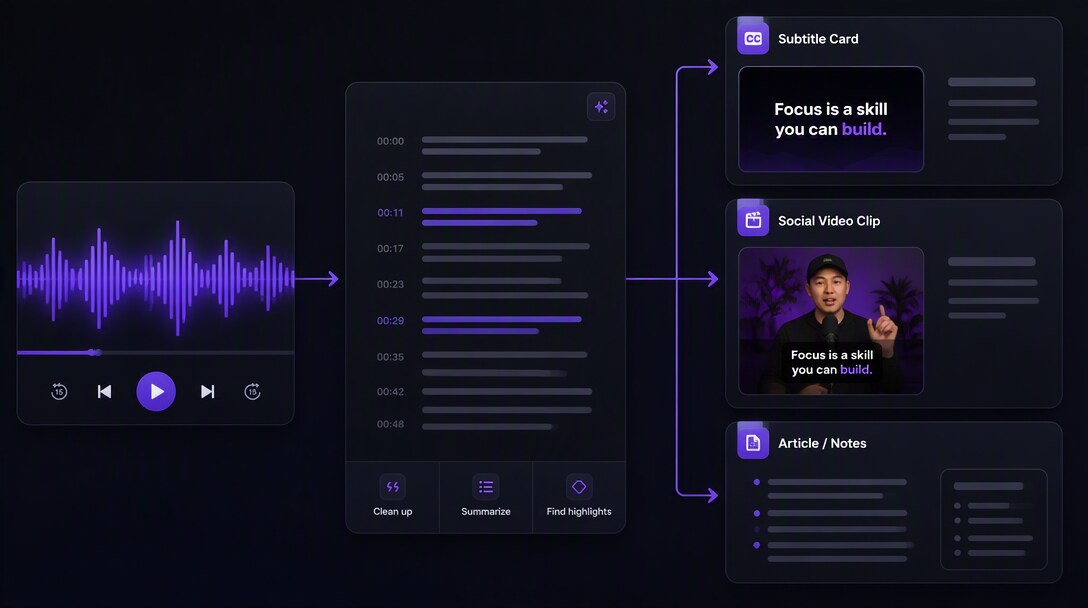
Comprenez d'abord la tendance du modèle, puis connectez-la aux flux de travail des créateurs utilisables aujourd'hui.
L'ASR à faible latence rend la conversion parole-texte plus utile pour les réunions, les conversations en direct, les interviews et les flux de travail interactifs.
La transcription sensible aux locuteurs aide à distinguer qui a dit quoi dans les podcasts, réunions, panels et interviews.
Les modèles de transcription modernes prennent de plus en plus en charge plusieurs langues et des conversations qui changent de langue naturellement.
Utilisez les transcriptions comme point de départ pour les sous-titres, résumés, articles, légendes et la réutilisation de vidéos sociales.
Le modèle et Media.io servent des objectifs différents. Utilisez cette comparaison pour choisir le flux de travail qui correspond à votre objectif réel.
| Flux de travail | Muse Voice Transcribe | Media.io |
|---|---|---|
| Objectif principal | Transcription vocale en temps réel et compréhension de la voix | Flux de travail pratiques de transcription, sous-titres, audio et vidéo |
| Diarisation des locuteurs | Capacité principale pour séparer les locuteurs | Utile pour transformer les interviews et réunions en ressources pour créateurs |
| Parole multilingue | Conçu pour la parole multilingue et le changement de code | Prend en charge une localisation multimédia plus large et la réutilisation du contenu |
| Utilisation en temps réel | Optimisé pour la reconnaissance vocale à faible latence | Les flux de travail créateurs basés sur navigateur constituent le principal objectif |
| Meilleure entrée | Voix et audio parlé | Audio, vidéo et médias créatifs |
| Idéal pour | Systèmes ASR et compréhension de la parole | Les créateurs souhaitant des transcriptions utilisables, des sous-titres et des médias réutilisés |
Media.io n'intègre pas actuellement le modèle Muse Voice Transcribe. Media.io est un produit indépendant et n'est ni affilié ni approuvé par le fournisseur du modèle référencé sur cette page.
Utilisez la tendance du modèle pour comprendre ce qui devient possible, puis choisissez un flux de travail Media.io dédié lorsque votre objectif réel est de créer, éditer, sous-titrer, améliorer ou réutiliser des médias.
Un modèle de recherche spécialisé n'est pas toujours l'outil le plus rapide pour les tâches créatives. Media.io se concentre sur des flux de travail basés sur navigateur qui aident à transformer les idées et les médias sources en résultats utilisables.
Réutilisez une idée en plusieurs formats — vidéo, image, sous-titres, transcriptions ou ressources sociales — sans dépendre du modèle discuté sur cette page.
Muse Voice Transcribe est un modèle de transcription vocale IA conçu pour la compréhension de la voix en temps réel, avec des capacités pertinentes pour la parole multilingue, la diarisation des locuteurs et la transcription à faible latence.
La diarisation des locuteurs identifie différents locuteurs dans un enregistrement et sépare leur parole afin que la transcription puisse indiquer qui a parlé à quel moment.
Oui. Les systèmes de transcription IA avec diarisation peuvent séparer les locuteurs dans les réunions, interviews, podcasts et conversations. La précision peut varier selon les chevauchements de parole, le bruit, les accents et la qualité de l'enregistrement.
Oui. Certains modèles de parole modernes prennent en charge la transcription multilingue et les conversations qui alternent entre les langues. Les langues prises en charge et la précision varient selon le modèle.
Non. Media.io n'intègre pas actuellement Muse Voice Transcribe. Vous pouvez toujours utiliser les outils médias existants de Media.io pour la transcription, les sous-titres, l'audio, la vidéo et les flux de travail de réutilisation de contenu.